




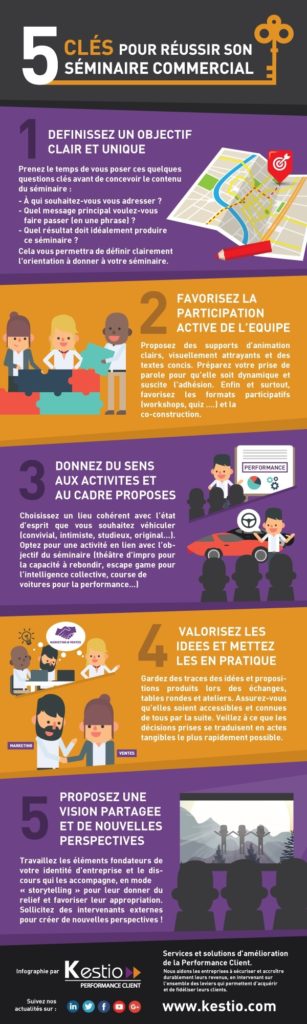
1. Define a clear and unique objective for your corporate seminar
Before diving headfirst into the logistical organization of your company seminar and the production of animation materials, take the time to reflect and clearly define the objective you set for this particular seminar: is it about communicating new strategic directions? Allowing team members to get to know each other to work better together? Undertaking an ambitious shift in the definition of your service offering? Updating the skills of your employees to establish commercial excellence?
Take the time to ask yourself these key questions before designing the content of the seminar: who do you want to address? What main message do you want to convey (in one sentence)? What result should this seminar ideally produce?
2. Encourage Active Team Participation
The annual company seminar is a symbolically strong moment in the life of the team and a unique opportunity to bring all its members together and exchange collectively on key subjects for the company. Nothing is more damaging to the group dynamic than to animate it in the manner of a lecture, with leaders who speak and collaborators who take notes without participating, expressing their opinions or communicating their ideas. More than ever, take care of your communication, and your sales management must think 'collaborative'!
Offer clear, visually appealing presentation materials and concise texts. Prepare your speech if necessary so that it is dynamic and encourages buy-in. Finally, and above all, promote participatory formats (workshops, quizzes, etc.).
3. Give meaning to the activities and framework offered.
Seminars are generally an opportunity to offer team members a moment that is out of the ordinary, to allow them to get to know each other, to relax and create common "good memories". You can also approach these more informal moments of relaxation as an additional opportunity to convey a strong message related to the main objective of your seminar: as Victor Hugo said, "form is content that rises to the surface"! Be aware of the unconscious impact of the chosen location and proposed activities.
Choose a venue that aligns with the mindset you want to convey (convivial, intimate, studious, original, etc.). Opt for an activity related to the seminar's objective (improvisational theater for the ability to adapt, escape game for collective intelligence, etc.).
4. Put into practice the ideas generated during your corporate seminar
The company seminar is often a fairly intense moment in terms of exchanging ideas and producing avenues for reflection and action to redefine your sales strategy. It would be a real shame if the energy and proposals born from this shared team moment were forgotten upon returning to daily life and remained a dead letter! Formalize the fruit of these exchanges, preferably in collaborative mode and on shared media... And above all, translate the proposals validated with the team into concrete actions. If the ideas raised have no concrete impact on the reality back in the office, the teams will not maintain their commitment.
Keep track of product ideas and suggestions during discussions, round tables, and workshops. Ensure they are accessible and known to everyone afterward. Make sure the decisions made translate into tangible actions as quickly as possible.
5. Offer a shared vision and new perspectives.
For team engagement to be real, during the seminar and in the months that follow, it is essential that the content is based on a solid "foundation" and a shared vision: the company's value proposition, strategic vision, customer commitment, company culture and identity, etc. These elements must be known to the team and make sense to everyone in order to generate collective momentum. Also, take advantage of the seminar to call on external speakers (lecturers, trainers, etc.) offering an original approach to develop new skills internally.
Work on the foundational elements of your company identity and the accompanying narrative, using a « storytelling » approach to add depth and encourage ownership. Invite external speakers to create new perspectives!
To go further, download the COMMERCIAL SEMINAR white paper: