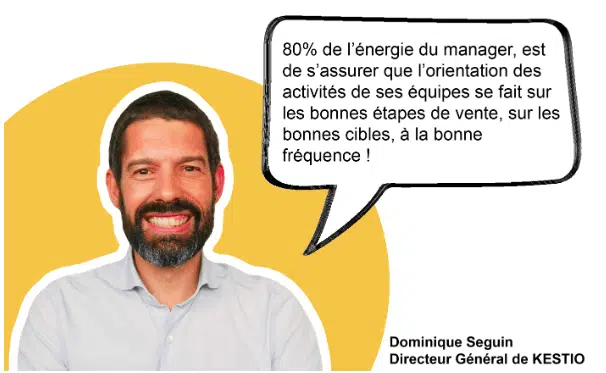




Ask a leader if their company's sales strategy is clear to their employees, and they will tell you "yes!" without any hesitation.
Now, ask one of their sales representatives if they know why they need to get 5 appointments per week, and the answer will be much less clear!
This difference in perception reflects a challenge you likely face: getting your teams to buy into your sales strategy.
Achieving your goals depends on your employees implementing your company strategy.
How then to make your teams perceive the benefits of this strategy and implement it in the field?
*Source: Forbes survey
KEY #1 – Translate your strategy into actions
One of the most frequent mistakes when discussing sales strategy with sales representatives is focusing solely on the results achieved.
Why? Because you can no longer influence the results! They only represent the visible part of the sales activity.
However, you can influence the various commercial actions that lead to these results.
Implementing a Commercial Action Plan will allow you to define 3 essential levers for your commercial activity, reflecting your strategy:
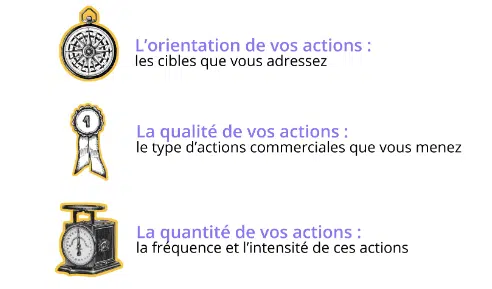
By focusing on the sales activities of your teams, you provide your sales representatives with two key elements: a clear understanding of your strategy and concrete ways to achieve the established goals.
Because it's one thing to ask your sales representatives to sell 5,000 units of your flagship product... It's quite another for your teams to achieve that goal.
By detailing the steps in your sales process and associating them with concrete sales activities, you help your employees identify their strengths and areas for improvement.
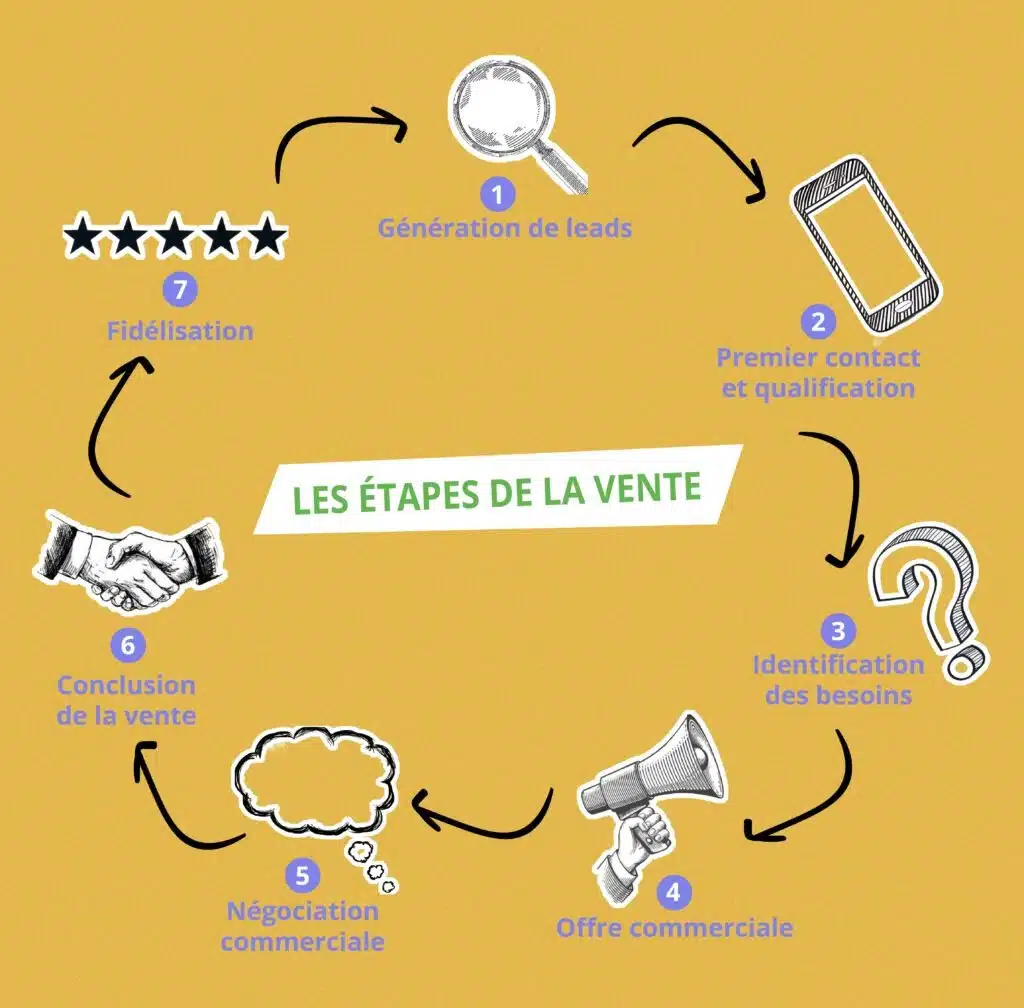
To enable your teams to optimize their sales efforts, we share our “Go/No go” scoring table.
This tool, to be completed daily, helps you select the opportunities with the most potential thanks to various criteria covering the main stages of a sales process!
KEY #2 – Enhance your resources
Today, customer expectations have greatly evolved in terms of sales. Influenced by technological changes and purchasing habits, customers are increasingly demanding and have expectations that include:
- A personalized experience: sales representatives must identify unique needs by providing added value.
- Real-time communication: customers want to be able to communicate with sales representatives quickly and efficiently.
- Transparency : sales representatives must be transparent about the products and services they sell, including prices and conditions.
- In-depth knowledge: Sales representatives must have in-depth knowledge of the products and services they sell, including the advantages and disadvantages.
From this perspective, it's important for sales representatives to adapt to these new expectations in order to maintain their relevance and competitiveness in the market. Therefore, promote the resources you make available to sales representatives so that they can implement the sales strategy in the field.
List these resources with two objectives: firstly, to make them known to your sales representatives so they can take ownership of them, and secondly, to boost their motivation by showing them that the company is investing to give them the means to achieve the targeted results.
Examples of resources:
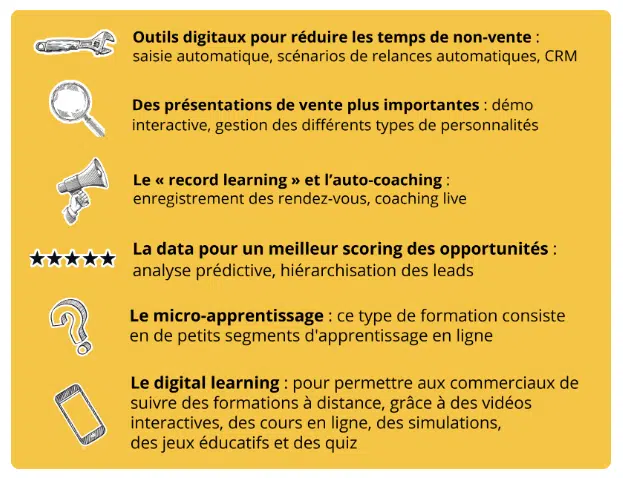
At Kestio, our digital learning team offers interactive and engaging training modules to meet the personalized expectations of our clients. If this still seems unclear to you, watch a video presenting our approach.
And if you are interested, you can chat with one of our digital learning experts!
Talk to a digital
learning expert
KEY #3 – Work on your mindset
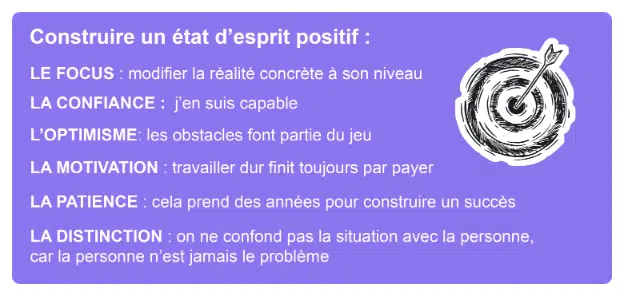
The mindset of sales teams plays a key role in achieving their goals. A positive attitude can lead to successful negotiations and customer satisfaction.
The manager's role will be to give a positive boost to their team, by celebrating successes and offering positive prospects for the future. This can be accomplished by asking the team about their victories of the week, by exchanging on the new things that have worked, by being empathetic with the team members and by seeking out the unspoken.
Link the sales strategy and objectives for the coming months to the victories won over the past year by asking yourself the following questions:
- What lessons have you learned from it?
- How are these leveraged in the current strategy?
- How can you duplicate them or draw inspiration from them to build a scalable model from the variables observed on a certain scale?
Webinar – Which motivational levers to adopt for
each employee?
KEY #4: Expert advice