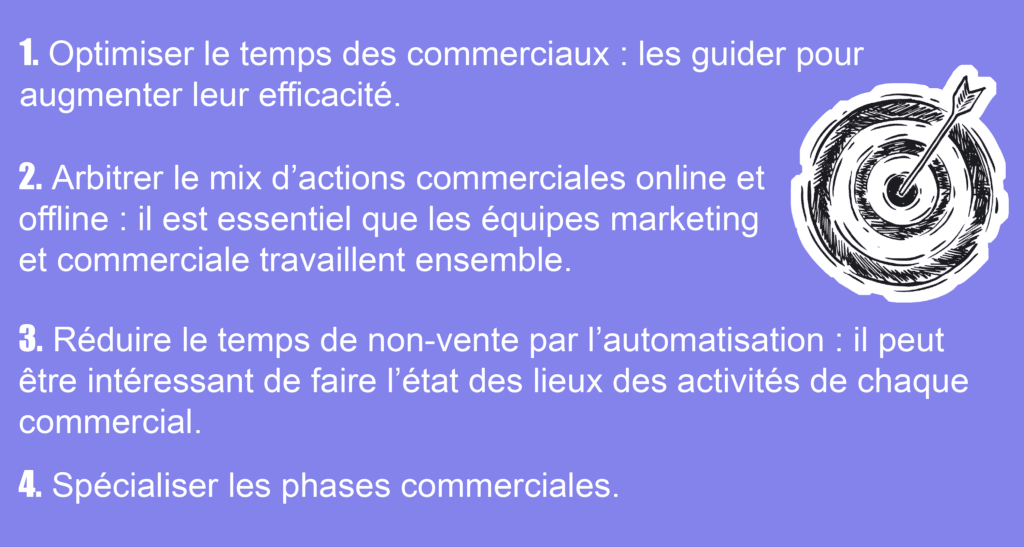
This figure reflects a real problem of alignment between a company's commercial strategy and the actions of its sales representatives.
How to build a sales action plan adapted to your strategy AND your teams?
As a leader, director, or manager, you often think you know your company inside out and don't need to take stock to define your future sales action plan. But this is a mistake!
Conducting an "assessment" of your organization is a crucial step to ensure your plan aligns with your company's resources and performance.
We strongly advise completing this phase of introspection before defining the targets, actions, and sales cycle of your plan!
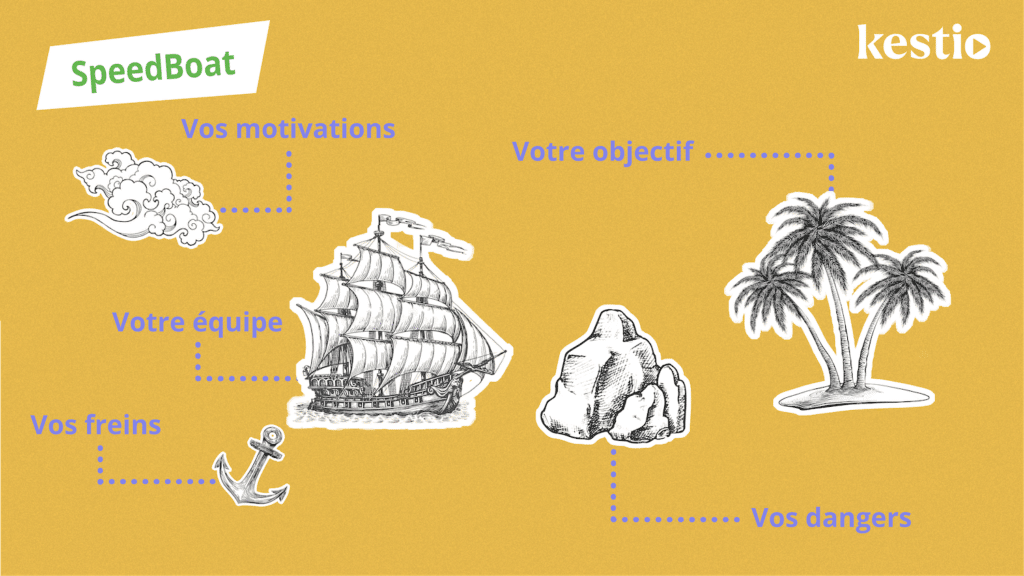
If the inimitable "SWOT" bores you, discover the "SpeedBoat" method!
Using the image of a boat, identify your organization's objective, resources, motivations, and obstacles:

Our advice: carry out this exercise with your teams to develop your collective intelligence and involve your employees!
However, gaining this perspective can be complex for people within the company.
The presence of an external perspective helps to frame this retrospective and reveals new elements of analysis!
That's why at KESTIO, we start our support programs by conducting a diagnostic of your sales organization.
In direct collaboration with you, your KESTIO expert has reviewed your practices through various interviews, questionnaires, and data analyses.
The outcome: identification of your growth opportunities and areas for improvement, and the development of a personalized program to leverage these drivers!
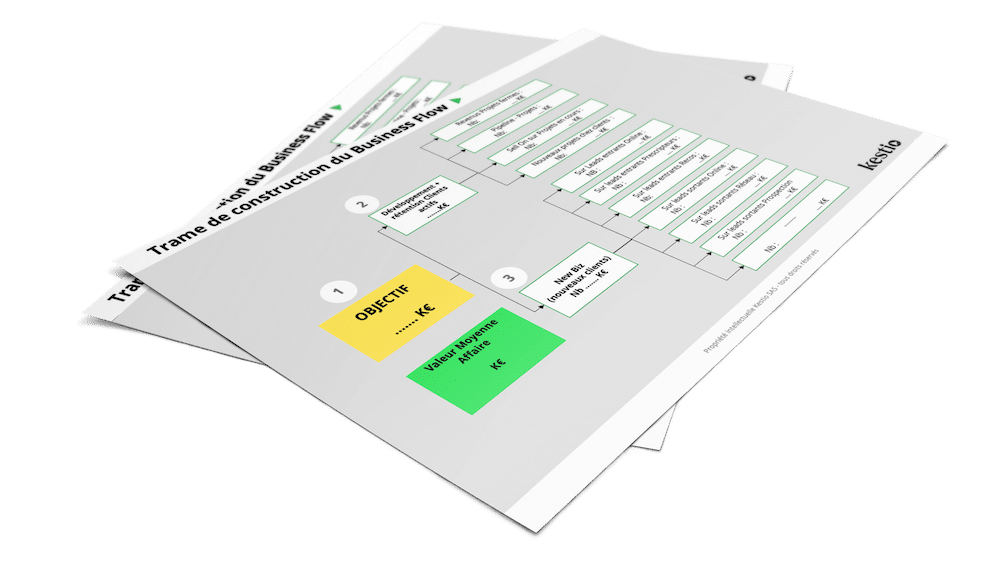
A 'Business Flow' is a tree structure, usable collectively or individually, allowing you to link and compare the implementation of your actions. In other words, it's the roadmap that will allow you to achieve your goal!
For active clients, it will be interesting to focus on:
• Revenue from ongoing projects
• New projects
For new clients, the "Business Flow" helps establish assumptions about the number of leads from different acquisition channels (to be adapted based on the channels you will use):
• Incoming leads « online »
• Incoming leads from referrers
• Incoming leads from networks
• Recommendations of entrants
• Prospecting campaigns for incoming leads