



KESTIO

Before fully enjoying your vacation, we want to help you prepare for your return in the best possible way.


Discover our 6 essential keys to assess your summer activities, learn from them, and prepare for a successful return to work.


To end this last newsletter before the summer break on a high note, KESTIO has an exceptional offer for you. We offer you the opportunity to schedule a session with one of our Executive Committee members upon your return. This session will be specially designed to help you prepare for the resumption of activities and address the topic of your choice.


Take advantage of this unique opportunity to benefit from expert advice and start the next season with confidence.

KEY #1: Lay the foundation for your sales strategy

While it may seem obvious, a clear sales strategy for all sales teams is a prerequisite for controlling development and achieving objectives.


Many leaders still believe that recruiting a 'good salesperson' is the solution to achieving sales performance... 


Unfortunately, it's not that easy, as other components come into play.

Are you sure you took them into account when establishing your sales strategy for the new business year?


    • Objectives and monitoring indicators: Set clear performance goals and define associated measurement indicators to assess their achievement throughout the year. 📈


    • Means and resources: Determine the resources needed to acquire and retain your customers, including sales channels, marketing activities, and lead flows. ✅


    • Priority targets and allocation of efforts: Segment your customers and prospects based on their development potential, then allocate sales efforts in a way that is appropriate for each segment. 🎯

KEY #2 - Organize an impactful seminar

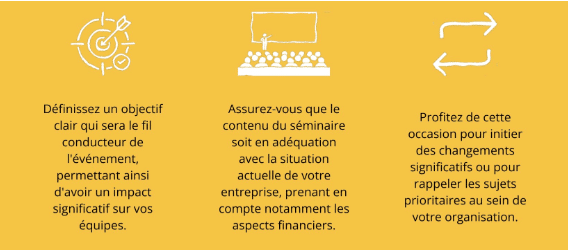
After a well-deserved vacation, the return to work is the perfect opportunity to bring your teams together and strengthen cohesion within your company. Seminars play a vital role in developing company culture and fostering a sense of belonging among employees.


Take the time to plan this event and create a memorable experience for all your employees.

KEY #3 – Optimize your sales productivity through automation

In a high-performing sales activity, some time-consuming tasks are essential but can be optimized through automation

    • Be present and generate conversations
      on social networks by using automation tools to optimize prospecting on LinkedIn, detect your targets and save time thanks to the automatic sending of messages.


    • Take advantage of an essential prospecting tool
      to get contacts and their details by accessing millions of verified emails and phone numbers of your prospects.


    • Use automated scheduling software
      to easily schedule appointments with your prospects and customers, by giving a third party access to your available time slots.


    • Explore a leading prospecting automation tool
       that allows you to prospect by sending email sequences, find prospect contact information, automate contact initiations, and increase your appointments.


By discovering these automation tools, you will be able to save valuable time and significantly improve your commercial productivity.

KEY #4 - Optimize your copywriting to generate more leads

68% of online buyers appreciate reading content published by a company they are interested in.

By refining the copywriting of your content, you maximize the impact of your Inbound Marketing strategy. You will attract qualified leads and create lasting relationships with your prospects. 

To effectively craft your copywriting and generate quality leads:

    • Know your target audience: Understand their needs and adapt your tone and language accordingly.


    • Use catchy titles: Spark interest with impactful titles.


    • Use CTAs: Guide prospects towards conversion by using clear and compelling CTAs.


    • Provide valuable content: Offer relevant information and showcase your expertise to build trust.


By putting these copywriting principles into practice, you will significantly improve your ability to generate quality leads and establish strong relationships with your prospects.

Key 5: Personalize your approach for relevant customer engagement

As a sales professional, you know it's essential to understand and communicate effectively with your customers. Each customer is unique, and to establish a solid relationship, it is crucial to adapt your approach to their profile.


To be truly customer-centric, adopt a sales approach oriented towards coaching

Instead of focusing solely on collecting information and presenting products, initiate constructive questioning and envision the future with the client. Emphasize generating interest and creating value.


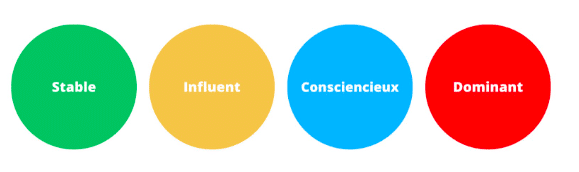
To do this, you can use the DISC model, a behavioral analysis tool that identifies four basic emotional styles. Each client has a unique combination of these styles, and by understanding their profile, you can personalize your approach to meet their specific needs. This will allow you to establish a better connection with your clients and optimize your sales interactions.

35%.

Amazon generates 35% of its revenue through upselling!*


Cross-selling and up-selling can thus represent a real growth lever for your company, even if you are not a web giant!

*Source: The Future of Commerce

Cross-selling and up-selling, what is it?

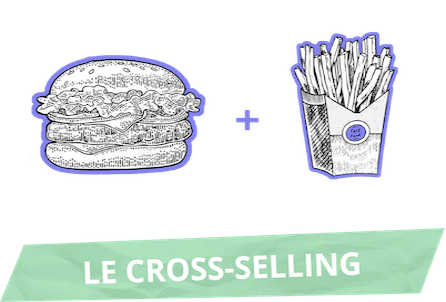
Cross-selling is a sales technique that consists of offering a customer to buy products or services that complement those they have already purchased or are in the process of purchasing.

Without even realizing it, you encounter these techniques every day! "And with this?" when you buy your baguette, "As a maxi best-of menu?" when you order your favorite hamburger...


However, cross-selling and up-selling are not only applicable to the B to C sector.
This sales strategy can be applied in B to B, regardless of the sector or size of your company.

KEY #1 - Information Gathering

After several exchanges with your client, you often think you know them. You even sometimes know their next vacation destination!
But in reality, your client rarely shares more strategic information specific to the operation of their company. However, this type of information is necessary in a cross- and up-selling strategy.

You should therefore take advantage of already being in contact with your client to gather as much useful information for your sale as possible.


By collecting as much data as possible on your contact, their company, and their environment, you will identify their objectives and weaknesses preventing them from achieving their goaland you can then demonstrate how your new offer could solve their problems!
This information gathering will help you create awareness in your client's mind: an awareness between what they are currently doing and what they could be doing, and therefore an awareness of new needs!


To do this, it is necessary to go beyond the simple functional need expressed by your contact.
Head towards the "Why?" of their action, challenge them!
You will then be able to question the initial plan conceived by your client in order to offer them a more suitable solution, and thus sell more and provide more value!

For example, for a professional training organization:

A Sales Director who uses Excel files for their customer relationship management will not necessarily be aware that their organization could be optimized. The current situation suits them!
It is by questioning them about their practices that you can suggest that training on a CRM tool will have a better ROI than simple Excel training. An awareness in their mind can thus be created!


To gather the most information about your contact and encourage them to question their habits and needs, various sales techniques and marketing tools exist.
At KESTIO, we particularly educate our clients on the art of questioning to spark awareness in their prospects. We also use various data enrichment tools to obtain relevant information during our interactions.
If you'd like to learn more about these methods and tools, we invite you to discuss this topic with us!

KEY #2 - Added value

The second key to promoting cross-selling and up-selling is to offer a perspective of added value that complements a service already accessible to the client. In other words, it is necessary to highlight the ROI by showcasing the potential gain.

Situational Exercise & Example

For example, if you offer a solution that solves a major problem, such as the time wasted by a manager manually distributing alerts, you can show how your solution can improve productivity, process, and overall results.


By giving concrete examples of how your solution can help solve your client's problems, you can convince them of the importance of your offer. Continuing with our example, you can explain how the solution's settings allow alerts to be automatically dispatched to people according to certain criteria, which leads to better customer satisfaction thanks to faster alert processing and better distribution of work among employees.


In summary, the key here is to show your client how your additional solution can bring real added value to their business, by enabling them to accomplish more, optimize their time, and better distribute their work.

We previously explained how to initiate this process during the webinar on Thursday, March 16th at 2 PM. This webinar focused on techniques to implement a cross- and up-selling strategy. Click the button below to review the webinar.

KEY #3 - Personalization

Adapt your speech to the profile of your interlocutor! It is important to understand that each customer is different and has specific needs. To be successful in selling effectively, it is essential to know the customer's personality profile in order to present the cross and up-sell from the right angle.


The advantage of cross-selling and up-selling is that you know your client better, you have had several meetings with them, and you potentially work with them. Therefore, you should leverage this knowledge of their profile and tailor your arguments by highlighting the most relevant points for the person in front of you.


For example, if we rely on the personality styles of the DISC model, which presents 4 main emotions through a composition of colors:


  • D – Dominance
  • I – Influence
  • S – Stability
  • C – Compliance


For example, the proposal of an automated prospecting service will differ depending on the profiles. For a blue profile, we will emphasize the improvement of the process; for a red profile, we will insist on better achievement of objectives; while for a green profile, we will highlight a better experience for the employees.


In addition to understanding the client's personality profile, it's important to continuously gather information to understand their organizational structure, their objectives, and any gaps your solution can fill. From a sales perspective, information is always key!

Ultimately, there are two levels to consider in order to sell effectively:

  • What needs to be done to attract the customer's attention? 
  • Once they're interested, what do we need to do to tip the decision?


Want to learn more about the DISC model to tailor your communication to your audience's profile and better understand their thinking, feeling, and operating modes? Click the button below to watch our webinar on the DISC profile.

KEY #4: Expert advice

7,2.

On average, it takes more than 7 meetings to successfully complete a complex sale, with no fewer than 6 different stakeholders!*


But what exactly is a complex sale?


A so-called complex sale is characterized by two aspects:


  • The complexity of the product or service offered, thus requiring a long sales cycle to clearly define the benefits of the product or service for the prospect.
  • The complexity of the buying environment: a multitude of stakeholders, both internally and within the prospect's organization, all having a role to play in the purchasing decision. Complex sales is a real team sport!


But how do you assess your ability to win a complex sale?
How do you mobilize the different stakeholders to ensure the success of your sale?


Today, we are sharing our 3 keys to success. 

*Source: Nomination 2021

KEY #1 - Identify the Components

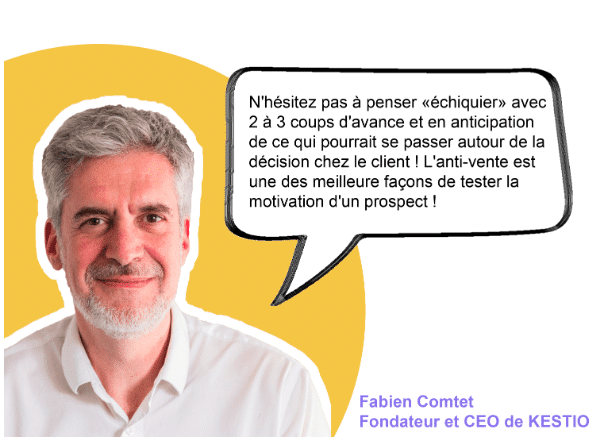
What do a game of chess and a complex sale have in common?
In both cases, there are behavioral rules and tactics to win the game! Each move represents a cost and must produce the desired outcome.


This analogy to the game of chess is at the heart of our approach to complex sales, the Chessboard Method.

In the Chessboard Method, we compare the stakeholders in a complex sale to the pieces in a game of chess. Knight, Rook, Queen, King... they all have their own specific characteristics and roles to play!

However, this account analysis exercise requires a precise methodology and tools.
Our complex sales training, based on the Chessboard Method, provides you with the methods to successfully approach your prospects.


À l’issue de cette formation, vos commerciaux seront à même de déceler les différentes parties prenantes d’une décision et de gérer les étapes de progression de leurs affaires.


To learn more about the Chessboard Method, visit our dedicated page.

KEY #2 - Have allies

Pour gagner une vente complexe, il est crucial d’avoir un ou plusieurs interlocuteurs intéressés par votre service ou produit. Cet allié du côté du client vous permettra d’avoir accès à des données factuelles qui vous aideront à identifier les enjeux et le contexte.

Having allies during your sales is therefore a key success factor! 

This requires identifying and understanding the dynamics of the players involved (based on behavioral and relational aspects).


At Kestio, we help you define a strategy (that's the overall plan) and adopt a tactic (that's adapting to the field, to the unexpected). To learn more, you can talk to one of our experts on complex sales.

KEY #3 - Balance the power dynamic

Deux conseils cruciaux :

  • It is important to have strong self-esteem and good self-assertion to strike a fair balance in the relationship with the client, without forcing or being aggressive.


  • It is essential to have absolute certainty that your product or service provides strong added value to your customers.

How to operate to structure such an approach and converge everyone's efforts?


Kestio apporte une réponse à travers un webinar faisant l’analogie avec la série « Le jeu de la Dame ». En associant les règles comportementales et les méthodes d’analyse pour prendre les bonnes décisions, vous serez en capacité de surmonter tous les obstacles potentiels lors de vos ventes complexes.

You can discover our dedicated webinar via the link below.

KEY #4: Expert advice

Ask a leader if their company's sales strategy is clear to their employees, and they will tell you "yes!" without any hesitation.
Now, ask one of their sales representatives if they know why they need to get 5 appointments per week, and the answer will be much less clear!

This difference in perception reflects a challenge you likely face: getting your teams to buy into your sales strategy.
Achieving your goals depends on your employees implementing your company strategy.

How then to make your teams perceive the benefits of this strategy and implement it in the field?

*Source: Forbes survey

KEY #1 – Translate your strategy into actions

One of the most frequent mistakes when discussing sales strategy with sales representatives is focusing solely on the results achieved.
Why? Because you can no longer influence the results! They only represent the visible part of the sales activity.

However, you can influence the various commercial actions that lead to these results.
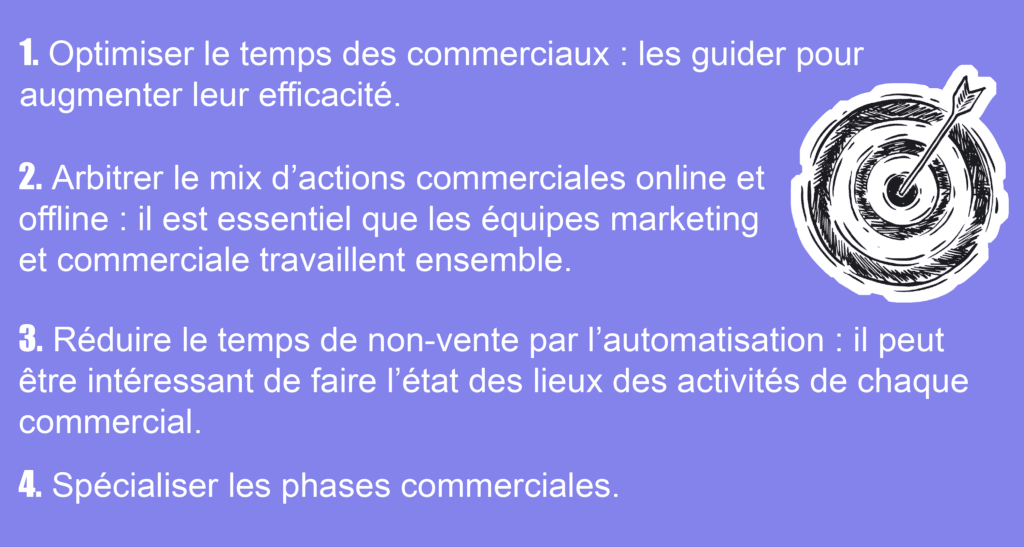
Implementing a Commercial Action Plan will allow you to define 3 essential levers for your commercial activity, reflecting your strategy:
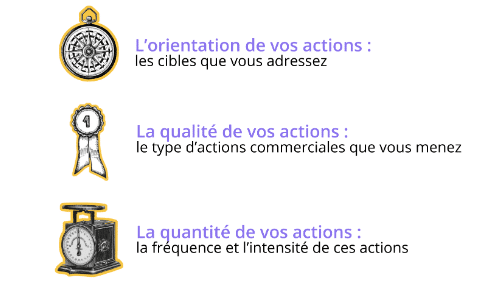

By focusing on the sales activities of your teams, you provide your sales representatives with two key elements: a clear understanding of your strategy and concrete ways to achieve the established goals.

Because it's one thing to ask your sales representatives to sell 5,000 units of your flagship product... It's quite another for your teams to achieve that goal.
By detailing the steps in your sales process and associating them with concrete sales activities, you help your employees identify their strengths and areas for improvement.
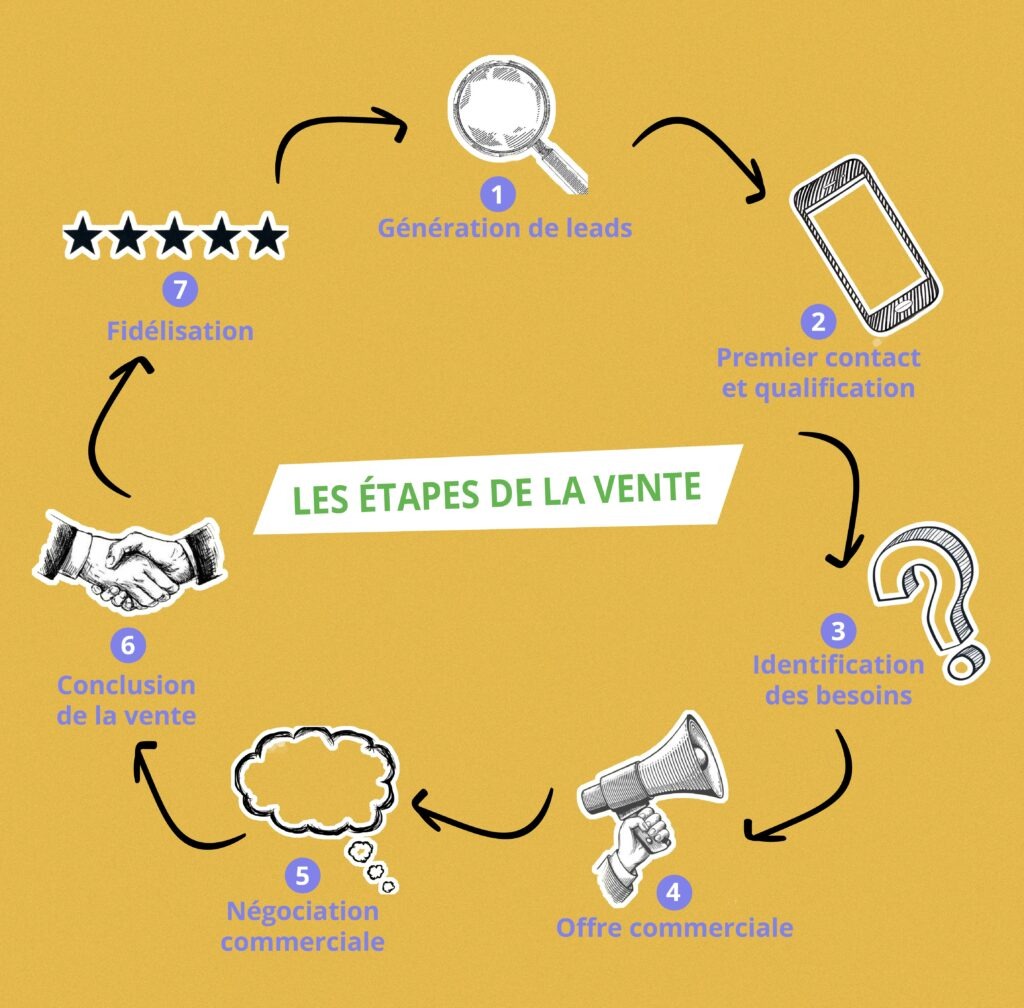

To enable your teams to optimize their sales efforts, we share our “Go/No go” scoring table.

This tool, to be completed daily, helps you select the opportunities with the most potential thanks to various criteria covering the main stages of a sales process!


Download the scoring table

KEY #2 – Enhance your resources

Today, customer expectations have greatly evolved in terms of sales. Influenced by technological changes and purchasing habits, customers are increasingly demanding and have expectations that include:

  • A personalized experience: sales representatives must identify unique needs by providing added value.
  • Real-time communication: customers want to be able to communicate with sales representatives quickly and efficiently.
  • Transparency : sales representatives must be transparent about the products and services they sell, including prices and conditions.
  • In-depth knowledge: Sales representatives must have in-depth knowledge of the products and services they sell, including the advantages and disadvantages.

From this perspective, it's important for sales representatives to adapt to these new expectations in order to maintain their relevance and competitiveness in the market. Therefore, promote the resources you make available to sales representatives so that they can implement the sales strategy in the field.

List these resources with two objectives: firstly, to make them known to your sales representatives so they can take ownership of them, and secondly, to boost their motivation by showing them that the company is investing to give them the means to achieve the targeted results.
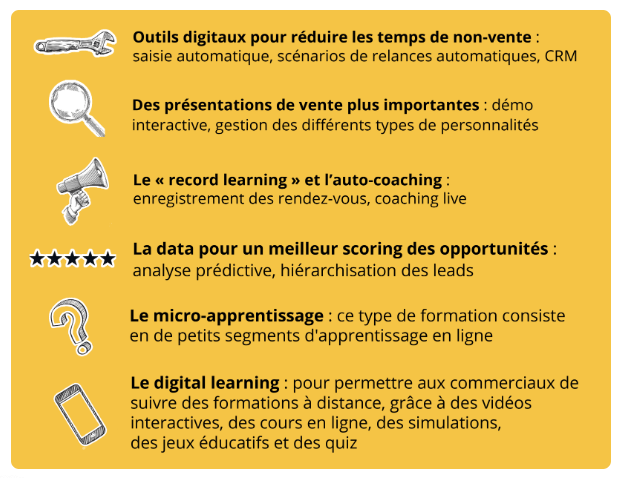
Examples of resources:


At Kestio, our digital learning team offers interactive and engaging training modules to meet the personalized expectations of our clients. If this still seems unclear to you, watch a video presenting our approach.

And if you are interested, you can chat with one of our digital learning experts! 


Talk to a digital
learning expert

KEY #3 – Work on your mindset

The mindset of sales teams plays a key role in achieving their goals. A positive attitude can lead to successful negotiations and customer satisfaction.

The manager's role will be to give a positive boost to their team, by celebrating successes and offering positive prospects for the future. This can be accomplished by asking the team about their victories of the week, by exchanging on the new things that have worked, by being empathetic with the team members and by seeking out the unspoken.

Link the sales strategy and objectives for the coming months to the victories won over the past year by asking yourself the following questions:
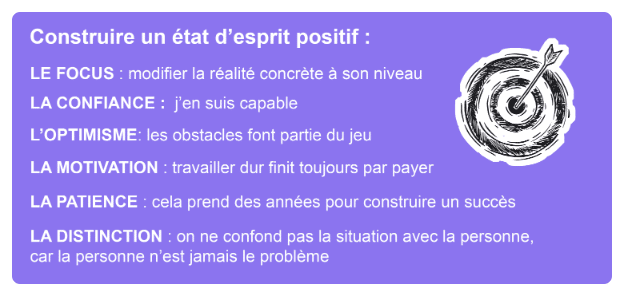
  • What lessons have you learned from it?
  • How are these leveraged in the current strategy?
  • How can you duplicate them or draw inspiration from them to build a scalable model from the variables observed on a certain scale?


Webinar – Which motivational levers to adopt for
each employee?
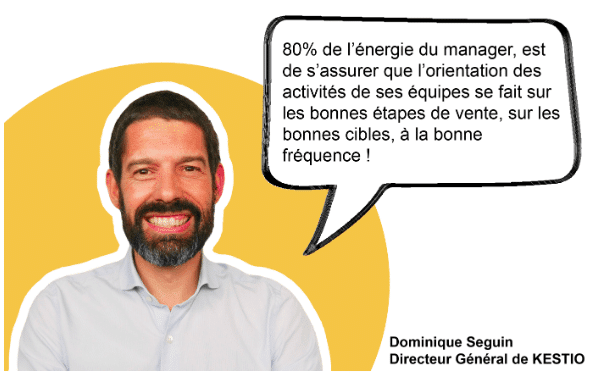
KEY #4: Expert advice


50% of salespeople's time is spent
on clients with no potential.

This figure reflects a real problem of alignment between a company's commercial strategy and the actions of its sales representatives.


How to build a sales action plan adapted to your strategy AND your teams?

KEY #1: Where do we start?

As a leader, director, or manager, you often think you know your company inside out and don't need to take stock to define your future sales action plan. But this is a mistake!


Conducting an "assessment" of your organization is a crucial step to ensure your plan aligns with your company's resources and performance.
We strongly advise completing this phase of introspection before defining the targets, actions, and sales cycle of your plan!


If the inimitable "SWOT" bores you, discover the "SpeedBoat" method!

Using the image of a boat, identify your organization's objective, resources, motivations, and obstacles:

Our advice: carry out this exercise with your teams to develop your collective intelligence and involve your employees!


However, gaining this perspective can be complex for people within the company.
The presence of an external perspective helps to frame this retrospective and reveals new elements of analysis!


That's why at KESTIO, we start our support programs by conducting a diagnostic of your sales organization.
In direct collaboration with you, your KESTIO expert has reviewed your practices through various interviews, questionnaires, and data analyses.


The outcome: identification of your growth opportunities and areas for improvement, and the development of a personalized program to leverage these drivers!

KEY #2: How do we get there?

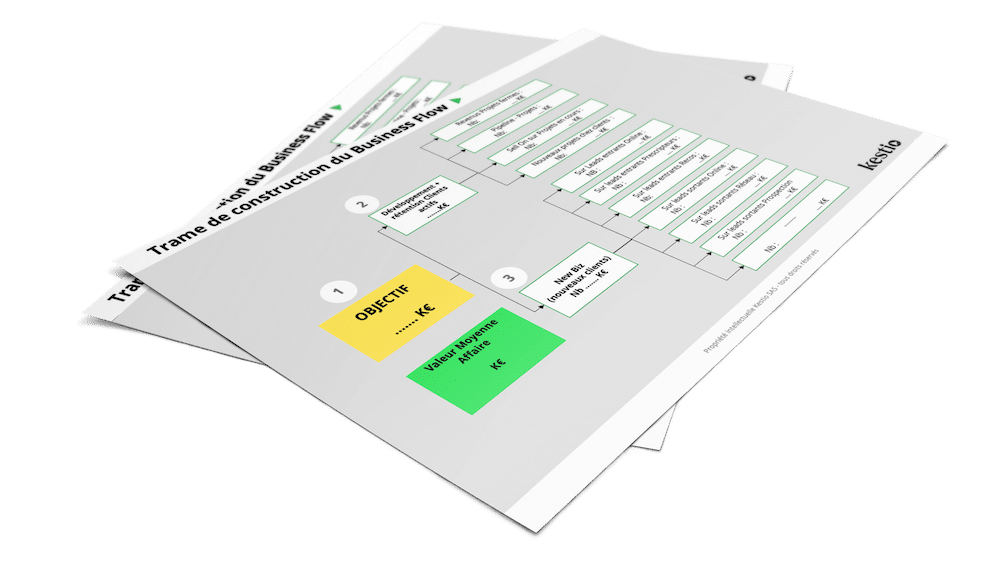
A 'Business Flow' is a tree structure, usable collectively or individually, allowing you to link and compare the implementation of your actions. In other words, it's the roadmap that will allow you to achieve your goal!

What is it? 


This simple and powerful tool allows you to define your main objective, which will be divided between the development and retention of active customers and the development of new customers.

For active clients, it will be interesting to focus on:


    • Revenue from ongoing projects

    • New projects


For new clients, the "Business Flow" helps establish assumptions about the number of leads from different acquisition channels (to be adapted based on the channels you will use):


    • Incoming leads « online »    

    • Incoming leads from referrers

    • Incoming leads from networks

    •  Recommendations of entrants

    •  Prospecting campaigns for incoming leads

Why use this tool?

KEY #3: Expert advice

Et vous, êtes-vous « accro » à vos meilleurs commerciaux ?

De quoi parle-t-on quand on évoque la menace d’une « trop forte dépendance à ses meilleurs commerciaux » ?

Il ne s’agit pas ici d’addiction (malgré ce titre de paragraphe un peu provocateur !) mais bien de la notion de dépendance au sens premier, définie comme « un rapport de liaison étroite entre quelque chose et ce qui le conditionne ». 

En d’autres termes :

Vous pouvez (et devez !) vous considérer comme dépendant de vos meilleurs commerciaux si un faible nombre de membres de votre équipe commerciale représente à lui seul une part vitale de votre chiffre d’affaire.

La question à vous poser est donc : y a-t-il parmi mes commerciaux un ou plusieurs membres dont le départ ou l’invalidité mettrait directement et dangereusement à mal la rentabilité de mon entreprise ?

Si la réponse est oui, vous avez tout intérêt à faire évoluer la situation (et à lire la suite de cet article !) pour rester maître de votre réussite commerciale !


Les dangers de la dépendance envers quelques commerciaux

Dans la pratique, il est courant d’observer des écarts de résultat entre les membres d’une équipe commerciale.

Lorsqu’on évalue la performance des commerciaux (uniquement) sur la base du chiffre d’affaire généré, voici le type de répartition que l’on observe le plus souvent :

    •  5 à 10 % de commerciaux « sur-performants », dont les résultats se situent très nettement au-dessus de la moyenne de l’équipe
    •  80 à 90 % de commerciaux « dans la moyenne » des résultats attendus et de ceux réalisés par leurs collègues
    •  5 à 10 % de commerciaux en « sous-performance » par rapport aux autres (à l’instant T ou plus durablement)

La situation commence à s’avérer inquiétante, lorsque la catégorie des « sur-performers » porte à elle seule 30 à 40% de votre chiffre d’affaires.


Vous entrez alors en zone de risques :

    •  Risque économique, d’abord : en cas de défaillance de leur part, la pérennité de votre entreprise peut être dangereusement mise à mal.
    •  Risque RH, ensuite : crainte de perdre l’un de ces précieux « piliers », difficulté à retrouver quelqu’un « d’aussi bon » en cas de départ, et sentiment d’inégalité (concurrence, jalousies…) au sein de l’équipe.


Alors, comment éviter d’aboutir à ce type de situation, ou en sortir si vous vous y trouvez actuellement ?


Discover KESTIO webinars, where we discuss

All topics related to sales performance with our experts: 

Fabien Comtet, CEO

Dominique Seguin, CEO

Nicolas Boissard, Marketing Director


Talents individuels et efficacité collective


          1. DÉFINIR « DES POSTES » AU SEIN DE L’ÉQUIPE COMMERCIALE

Vous pensez que tous vos commerciaux ne peuvent pas être des performers, et vous vous êtes résignés à cette idée ?

Et si ce n’était en définitive qu’une question de point de vue ?

C’est vrai, vos commerciaux ne performent pas tous, tout le temps, sur tous les plans et dans tous les contextes, mais en réalité ce sont TOUS de potentiels performers :  dans certains domaines et sous certaines conditions… qu’il faudra découvrir pour permettre à leurs points forts de s’exprimer et de se développer.

Définissez un process commercial bien segmenté dont l’efficacité ne reposera pas sur la maîtrise de l’ensemble des étapes par quelques individus particulièrement talentueux.

Concentrez-vous plutôt sur la maîtrise d’une à deux étapes bien définies par chacun d’entre eux.

Vous pourrez alors les affecter prioritairement – voire exclusivement – aux phases de votre process de vente sur lesquelles ils excellent : nourrir le fichier prospects, générer des leads, qualifier les opportunités, construire les propositions commerciales…

En bref, et pour employer une métaphore footbalistique : pour faire gagner l’équipe, mieux vaut distinguer les défenseurs des attaquants, et éviter de cantonner votre avant-centre dans les cages en lui demandant d’arrêter les buts adverses (il risque d’en souffrir… et le résultat du match, de s’en ressentir) !


          2. JOUER COLLECTIF

Cette répartition claire et précise des rôles individuels permet in fine de viser la plus grande efficacité collective.

Le découpage des tâches et l’affectation des rôles en fonction des talents et affinités vous assurent un haut niveau d’efficience à chaque étape et le meilleur résultat global au final, là où auparavant, chaque commercial devait maîtriser l’ensemble de la chaîne et se trouvait fortement pénalisé par les étapes pour lesquelles il avait moins d’aisance.

Pour que cette stratégie porte ses fruits, cependant, l’ensemble doit fonctionner de façon fluide et cohérente, ce qui suppose de travailler sur l’esprit d’équipe !

Diffusez une culture de la réussite collective en favorisant la confiance, le partage de bonnes pratiques, le « mentorat » entre collaborateurs, la solidarité dans l’action, et la communication interne.

Évitez de survaloriser un membre de l’équipe pour ses résultat individuels en oubliant les autres : non seulement cela pourrait nuire à l’équilibre général de l’équipe (en favorisant les jalousies et tensions), mais cela pourrait aussi générer d’autres effets pervers, comme l’amener à se recentrer son sur son intérêt individuel, ou le rendre plus « vulnérable » aux difficultés futures.

Le meilleur d’un jour n’est pas forcément celui du lendemain, et il est préférable de valoriser les réussites, les initiatives positives et les efforts (individuels et collectifs) que les personnes.


          3. FAIRE EN SORTE QUE CHACUN SE SENTE UN CHAMPION

L’intérêt d’une telle organisation caractérisée par des rôles individuels clairs au sein d’une tactique de jeu collective efficace, quand elle « fonctionne à plein », c’est de permettre à chacun de se sentir un champion.

Cela suppose d’adopter un nouveau point de vue sur la notion même de « performance » et de changer de perspective sur ce qu’elle recouvre : si l’on considère que le chiffre d’affaire directement généré n’est pas la seule façon de créer de la valeur pour l’entreprise (alimenter un fichier de prospects qualifiés est essentiel à la réussite des étapes suivantes du process de vente, et ce fichier en tant que tel représente un véritable capital pour l’entreprise, par exemple), alors le chiffre de vente n’est plus le seul axe de performance à évaluer. Et ceux qui produisent d’autres formes de valeur que celle-ci peuvent également prendre place au « tableau d’honneur » !

Cela amène en définitive les managers commerciaux à remplacer la survalorisation des « Performers » individuels par la recherche des profils que l’on appelle les « A Players »

Ces derniers sont caractérisés par leur capacité à :

    •      Percevoir les opportunités et les saisir
    •      Accepter de se remettre en question
    •      Faire preuve d’humilité et avoir conscience de l’aspect éphémère des succès
    •      Trouver en eux-mêmes leurs ressources et s’auto-motiver
    •      Transmettre aux autres, partager et « jouer collectif »


Bref, là où auparavant vous étiez focalisé sur les chiffres réalisés par vos commerciaux, accordez aujourd’hui une grande partie de votre attention à leur état d’esprit.

Ainsi, la charge globale sera plus équitablement répartie entre tous les membres de l’équipage, et le navire sera beaucoup moins soumis aux aléas individuels !


To discover more about using specialized and adapted tools to adopt, check out this webinar on optimizing the performance of your commercial asset:

And the results speak for themselves: in just a few months, we managed to save our sales representatives 50% of their working time! They now dedicate this time exclusively to selling, finally freed from the less interesting tasks. This provides a triple benefit for the company: optimizing salary costs, increasing sales, and improving the motivation of sales representatives. Would you also like to optimize your sales representatives' working time?


Here are 3 key steps on how to save them valuable time, for both them and you.


STEP 1: Specify your objectives

First and foremost, it's important to specify the objective you wish to achieve by optimizing your sales team's working time. This will directly impact the choice of levers to activate subsequently: the stage of the sales cycle concerned, the nature of the tasks to be "lightened", the new processing method adopted for these tasks, etc.

Generally, optimizing the working time of sales representatives falls under one of these 3 objectives:


« DO AS MUCH WITH LESS »:

Are you, for example, forced to manage a constant workload with fewer salespeople, following the unexpected departure of a member of your sales team.

The other team members must then divide the absent salesperson's client portfolio and the corresponding workload among themselves. To prevent them from putting these new accounts on the back burner or neglecting their current clients due to lack of time, it is necessary to relieve them of some of their daily tasks.


« DO MORE WITH AS MUCH »:

Do you want your sales representatives to be able to dedicate time to a new strategic priority, alongside their usual activities?

For example, your company is launching a brand new offer that you are betting heavily on. You want your sales representatives to "go all out" on this offer, and on the targets it addresses. Since their other activities have not disappeared, they will have to find a way to free up time in their usual schedule…


« DO BETTER WITH AS MUCH »:

Have you identified that you regularly lose opportunities due to the disorganization of your sales representatives, and you want them to remain as focused as possible on their core business and your customers.

Have you noticed, for example, that your salespeople spend up to 50% of their time on tasks other than selling (searching for data to enrich their contact files, following up with prospects after a missed appointment, sending follow-up emails, updating the CRM, etc.)?

Not only do these tasks take up a lot of their time (time they don't spend selling), but this time is also costly for you, even though many of these tasks don't require the skills of a salesperson!

Once your main objective is clarified, it's time to move on to step two and identify the priority areas for optimization that will allow you to achieve it. 


STEP 2: Identify areas for optimization

To identify the levers for optimizing your salespeople's working time with the greatest impact, a preliminary inventory of their daily tasks is essential.

Several methods can be used to carry out this inventory:

  • Start from a typical day in the life of a salesperson and note one by one all the tasks performed during the day.
  • Start from the key stages of the sales cycle (lead generation, prospecting, discovery, closing...) and list all the operations attached to them.

Once your list (as exhaustive as possible) is established, you can assess the potential for optimization of each activity.

This evaluation is based on 4 criteria:

  •   The average task duration (short / medium / high)
  •   Usual frequency (daily / weekly / monthly)
  •   Estimated complexity (low / medium / high)
  •   The sales representative's "added value" in their performance (low / medium / high)

For example, you could assign a degree of "potential for optimization" from 1 to 3 to the task, based on each of these criteria, to then obtain an overall score, as in the example shown below: 


potential_optimization_sales_task


The longer and more frequent it is, the more beneficial it is to optimize the time spent on a task, as the impact of this optimization on the overall working time of your sales representatives will be greater.

But don't stop at these two criteria alone: the degree of complexity of a task and the added value brought by the salesperson in its realization are also to be taken into account. The higher these two values are, in fact, the more difficult the task will be to delegate or automate. And therefore, the less you should consider it as a priority in your optimization process.

In our example, three tasks stand out as having a high potential for optimization: qualifying the prospect file, making an appointment with a prospect after a missed first appointment, and sending follow-up emails after an appointment.

Once your priority areas for optimization are defined, all that remains is to define how you can reduce the time spent by sales representatives on each of these tasks. This is the purpose of step 3.


STEP 3: Optimize the sales process

Regardless of the areas for improvement identified, you generally have several options available to optimize the time your sales representatives spend on these tasks.

They mainly fall into 3 categories:


INTERNAL REORGANIZATION:

It involves redistributing certain tasks internally – usually according to a logic of "specialization" – to maximize efficiency.

A purely administrative task, such as entering sales representatives' travel expenses, for example, can be reassigned to the administrative team. Or, entering customer information into the CRM can be entrusted to the sales administration team.


OUTSOURCING:

You can also choose to outsource certain tasks (preferably the most time-consuming ones and those for which salespeople bring the least added value).

This is the case with qualifying contact files, for example. Indeed, many companies specialize in collecting and enriching qualified data to populate prospecting files.


AUTOMATION:

Finally, we can also automate certain tasks, or even certain stages of the sales process. When possible, this option is often the most effective and the least expensive, since it no longer requires any human resources once it is set up.

Various tools can be used for this purpose, depending on the task to be automated: tools linked to the sales representatives' calendars to facilitate appointment scheduling, to their mailbox to set up automated workflows, to their accounts on social networks to automate the publication of posts on LinkedIn / Facebook or Twitter, for example.

However, CRM remains the leader in this area, as it generally combines all these possibilities and options into a single tool, allowing for centralized monitoring of these different actions.


In our case, it is a mix of these three options (depending on the tasks to be optimized) that has allowed us to achieve the enviable result of 50% of our sales representatives' working time being re-allocated to sales!

You will find more details on our internal optimization approach in the article "Optimize your sales process: stop paying your sales representatives not to sell!" published previously on this blog. You can draw inspiration from it to save your sales representatives time and optimize your sales efficiency. So, when are you going to start?


Is optimization your watchword? Then discover in this webinar how to maximize the performance of your sales representatives by saving them 50% of their time:


Faced with this situation, some employers end up resigning themselves and abandoning their recruitment project or choosing profiles that do not fully meet their expectations. However, alternatives to recruiting a new salesperson exist, and they may even prove more profitable for your company. Here are some of them.

1. Improve the sales efficiency of your current team

Did you know that the average conversion rate for sales representatives in the B2B sector is around 10%? This means that 90% of the working time of sales representatives is spent on deals that are destined to be lost!

This is enough to make business leaders feel dizzy... The good news is that it is entirely possible to significantly improve this result, as we prove daily in the field.

Aiming for an average success rate of 30% on commercial proposals is entirely realistic, even in B2B, and it's a desirable minimum.

If your sales representatives are not at this level today, there's no need to recruit new ones to boost your growth: you already have considerable room for improvement with the same human resources (and therefore salary costs)!

We generally manage to significantly improve the success rates of our clients by supporting their sales teams in their progress, particularly in 2 areas: the quality of targeting and the quality of sales actions carried out with their prospects.

The advantage of such an approach is that it not only increases your turnover, but also, and more importantly, optimizes your profitability, which a new hire would not necessarily have achieved.

2. Opting for a more segmented sales organization.

Here's what we most often observe with our clients regarding sales organization: the salesperson is multi-tasking and handles the entire sales chain, from lead generation to closing, including appointment setting, needs analysis, commercial proposal creation, and follow-ups.

This organization presents several disadvantages:

  • On the one hand, versatility can lead to a certain 'scattering' between the various tasks and therefore a loss of efficiency.
  • Furthermore, it is rare to find sales professionals who are proficient in all these tasks, which complicates the search for the ideal candidate.
  • Finally, not all of these tasks offer the same level of interest to an "experienced" salesperson, which can encourage talent turnover.

Formalizing and segmenting the sales process by breaking it down into different phases, then distributing these phases among several people according to their skills and inclinations, is often much more effective.

This generally leads to a significant productivity gain, as each person is focused on a single type of task, gradually gaining experience, speed, and efficiency.

We generally advise breaking down the sales process into at least four phases (identifying prospects, making appointments, conducting interviews and preparing the sales proposal, for example), and then assigning each of these phases to a team member, without exceeding two phases per person.

This type of organization can, in some cases, "spare" you an additional recruitment, thanks to the productivity gains achieved. Failing that, and at a minimum, it simplifies your recruitment process by narrowing the range of skills required for each position.


Discover KESTIO webinars, where we discuss

All topics related to sales performance with our experts:

Fabien Comtet, CEO

Dominique Seguin, CEO

Nicolas Boissard, Marketing Director


Access our webinars


3. Use substitute or supplementary sales forces.

Another alternative to hiring versatile salaried sales representatives is to use an outsourced sales force: a specialized company (in telephone prospecting, for example), or a freelance business developer.

Using external sales forces has several advantages: with a lower cost price than a permanent recruitment, it can be stopped more simply and is generally accompanied by a commitment to results.

It also offers more flexibility: external sales representatives can intervene permanently or occasionally, on a part-time basis, provide reinforcement during a period of high workload, or be dedicated to a particular target...

Compared to hiring a permanent employee, it represents a financial saving and a controlled risk.

Another advantage of this approach is that the outsourced tasks are generally the least complex (generating contact files, telephone prospecting, etc.), which allows the permanent sales team to concentrate on tasks with 'higher added value'.

However, to be effective, the use of an outsourced sales force must:

  • Focus on a well-defined scope and follow an established, internally controlled process
  • Ensure regular monitoring of key performance indicators via a CRM or ad hoc dashboards.
  • Rely on sales support tools designed and validated internally: sales book, standard emails, references and arguments per target, etc.)

This implies having well-documented your sales cycle, but also demonstrating a certain agility to ensure a smooth handover between external and internal teams.

At one of our clients, this strategy made it possible to optimally manage an activity marked by strong seasonality, by reducing the number of permanent recruitments initially planned from 5 to 2, to achieve a higher objective!

4. Retain your current sales representatives!

The three alternative solutions we have just presented aim to address the business development situations that motivate a large proportion of sales recruitment projects. Another part of these recruitment projects is, however, linked to the sometimes significant turnover observed in these positions.

Since the demand from companies for experienced sales profiles is significantly higher than the supply, market conditions favor talent volatility: 38% of salespeople have received job offers without actively searching, according to a study on sales employment conducted by Stepstone.3

To retain your sales representatives in general, and the best among them in particular, it is therefore essential to value the sales function as such.

Compensation is obviously an important motivator, but competition is fierce in this area as well: salespeople's salaries are 57% higher than the average salary in France, according to a study by the Uptoo firm4

To stand out, ensure that your sales representatives' daily work is interesting and stimulating: high-quality working environment and conditions, effective tools, a clear and relevant sales action plan, a management style that promotes personal growth, internal opportunities for advancement, recognition of initiatives and successes... All these elements matter to your employees and encourage their long-term commitment!

By working on all or part of these 4 areas, you can significantly reduce the number of sales recruitments to be carried out for your company, while effectively meeting your growth and sales development objectives.

To stay competitive and maximize your chances of converting leads into future customers, it is important to optimize the performance of your commercial assets. Find out how by watching this webinar:

1: According to the 2018 talent shortage survey conducted by ManPowerGroup: http://www.manpowergroup.fr/penurie-talents-recrutement-2018/

2: Source ParisJob: https://www.parisjob.com/actualites/commercial-chiffres-paris.htmls://www.parisjob.com/actualites/commercial-chiffres-paris.html

3 : Quoted by France Info : https://www.francetvinfo.fr/replay-radio/c-est-mon-boulot/la-grande-penurie-de-commerciaux_1766077.html

As we told you last week1, a business model is not fixed in time. On the contrary, its ambition is to evolve and improve: indeed, your customers change, working methods change, your company changes, your salespeople change... Finally, as you will have understood, your entire environment evolves - and consequently - your business model must also evolve to remain relevant.


How to analyze my model?

If you have followed our series from the beginning, you are applying your sales model to the letter in your CRM. This also means that all the data painstakingly collected during this period is centralized and usable

And precisely, you "only" have to exploit this data!


Following the definition of your business model, you were able to define the indicators to follow in order to know the impact of the actions implemented, make relevant adjustments and strengthen the success factors. You will therefore need one or more dashboards to have a precise view of these different indicators.


Ideally, you should have a CRM tool that allows you to customize these dashboards to highlight the analyses you need. Fortunately, with Koban, for example, you can customize your dashboards with the necessary indicators. 


Perform a daily analysis.

As KESTIO mentioned in the previous article, the goal is not to analyze your entire business model every day and make significant changes in the first week of implementation. 

But still, we like to have a daily view of the main indicators (KPIs), just in case.

These "flash figures," as we like to call them at Koban, are a good alternative. They represent the KPIs that you decide to track daily: number of opportunities won, number of opportunities lost, time spent, conversion rate, costs of opportunities, etc. They are calculated automatically and in real time. And very often, it is at this precise moment that we are very happy to have invested in a CRM (those who have experienced pivot tables will understand!). 


The little bonus in all of this? You can display these flash figures right on your homepage (among other places), which allows you to have a direct view by monitoring the proper execution of your business model on a daily basis and to be very reactive in adjusting elements with low impactif needed.


These indicators can be both common or individual to measure the performance of each of your sales representatives. This is very important as a manager. 


These indicators also allow you to manage your sales model on a daily basis and implement small corrective actions before it's too late. For example, you notice that your sales representative X is very far from his monthly targets. You can then schedule time with him to manage him and understand what is "holding him back." 


Conduct a more in-depth analysis - The "ANALYSIS" Module.

Beyond daily monitoring, you can – in fact, you mustmanage and evaluate sales effectiveness and the sales effort provided by the company (in other words, your business model). To do this, your CRM will once again be your best friend. 


Let's take the example of Koban and its specific analysis module. It allows you, among other things, to analyze all your data by creating personalized dashboards: pie charts, curves, tables, histograms, etc. 


You can analyze almost everything very easily. More comprehensive than flash figures, dashboards really allow you to highlight relevant analyses: what worked in your model / what worked less well / which segment generates the most revenue / a summary table of sales for each of your sales representatives, etc. Because just as "working a lot" does not necessarily mean "earning money", it is necessary for any company, small or large, to calculate the effectiveness and profitability of its commercial actions in order to focus effort on the best actions.


But remember, your CRM isn't just for managing sales activities; it's also for your marketing efforts to generate qualified leads for your sales team. This data should be an integral part of your analysis to identify areas for improvement and optimization, such as the conversion rate of leads from marketing, the number of prospects generated by marketing, etc. The goal is to compare all sales and marketing data to identify areas for improvement.


Let's not forget that the goal of all this is to evolve your business model.


We cannot stress enough that a business model is forged over time through experience and feedback. It will never be fixed. Hence the importance of having a tool that centralizes all your data and allows you to keep the history in order to compare and challenge the data. This is how you will improve performance, and consequently, increase revenue. 


Key indicators not to be missed 

Well, obviously too many indicators kill the indicators. The risk is getting lost in a pile of useless studies and not coming up with any relevant analysis. With KESTIO, we have selected the indicators that you must - at a minimum - follow if you want to extract relevant analyses. Of course, other indicators will need to be added depending on your environment and organization: 

  • CUSTOMER ACQUISITION COST

This one is truly The must-have!

Customer acquisition cost is the average amount spent to convert a prospect into a customer. This investment can include marketing expenses as well as the cost of time spent by the sales representative to convert the prospect into a customer.


Your business model is largely based on the customer segments to prioritize in order to generate the most margin. But to do this, you have to take into account the cost of customer acquisition.

Indeed, if I realize that my "Gold" clients cost me almost as much money as they bring in (because I have a high acquisition cost), this may lead me to review certain elements of my business model: if, at the same time, my "Silver" clients are certainly less interesting in terms of "pure" revenue, but cost me almost nothing in acquisition compared to what they bring me (thanks to a low acquisition cost), this ultimately makes them more interesting than expected...


What do I do? Clearly, we would be tempted to switch the "Gold" clients to "Silver" and vice versa. 

Understand that your "GOLD" clients may have had a lower acquisition cost when your business model was set up, but again, the environment evolves as well as your costs... Hence the importance of analyzing your model after a certain time and implementing appropriate corrective actions. 


  • SALES EFFORT BY TARGET

This indicator allows you to optimize your sales representatives' time. Thanks to it, you can judge the effort of each sales representative on a type of target. You can also make a comparison between your sales representatives, to see who allocates their effort best. This is not to "monitor" your sales representatives. But it is interesting to know, for example, that sales representative A has made an average of 10 physical appointments on a target while sales representative B has made 15 for the same result. 


Beyond that, it allows you to identify the targets on which your sales representatives are allocating far too much effort for little result and, conversely, those for which you are not devoting enough effort. As a result, you can adjust your business model accordingly (if necessary).


  • SALES CONVERSION RATE

The conversion rate helps identify the performance of a salesperson or team in converting a prospect into a customer.

You can not only analyze the overall conversion rate (i.e., for all your sales representatives), but also the individual conversion rate (i.e., sales representative by sales representative). Again, this is not to "spy" on your sales representatives, but rather to identify the sources that hinder development and thus implement appropriate actions. 


  • AVERAGE BASKET PER ACCOUNT TYPE

The average basket defines the average amount spent by each customer. This indicator can be tracked per order or for a given period, for the entire lifetime of the customer. It allows you to identify on which customer segment the average purchase basket is the highest, for example – or conversely – on which customer segment the average purchase basket is the lowest. 


  • NUMBER OF OPPORTUNITIES CREATED

The number of opportunities created is a simple indicator to track the effectiveness of marketing and sales.


Indeed, a high number of opportunities created will reflect several things: 

  • Marketing generates a lot of qualified leads
  • And/or do your salespeople have opportunities with existing clients or through a channel other than marketing (word-of-mouth, client recommendations, etc.)?

In short, your sales and marketing teams are well aligned and doing a good job!


On the contrary, a small number of opportunities created will force you to analyze other indicators. In particular, where do the opportunities come from?


Do they come from marketing or from the sales representatives themselves?

As a result, you'll know which channel to focus on to generate more opportunities. 

Again, this list is by no means exhaustive (we are thinking in particular of indicators linked to margin!). These are "standard" indicators that any company can analyze to develop its business model. But there will obviously be other indicators to take into account depending on your internal strategy and your environment


So, we've reached the end of this joint series between Koban and KESTIO... We hope you enjoyed it and, above all, that these articles have helped you! In any case, we have greatly enjoyed combining our skills and visions to offer you a complete and operational methodology. 


And to go further, we have even more surprises in store for you very soon, including a summary white paper and a webinar to discuss the topic with you live and answer your questions directly! 


To learn more about CRMs and help you with your projects, find all of our methods and tools here:

1 : Did you miss the previous episodes? Don't panic! Treat yourself to a little catch-up session:


Article 1: What is a business model and how do you build one?

Article 2: How to translate your sales strategy into a CRM tool?

Article 3: 3 key points for building an effective business model

Article 4: Structuring and optimizing your business model in your CRM

Article 5: How to effectively deploy your business model


KESTIO and KOBAN, it's a partnership that feels natural: the former supports SMEs in their commercial development through an online sales coaching platform for leaders, managers and sales representatives; the latter helps them to effectively deploy their strategy and commercial actions by generating maximum ROI, via a high-performance CRM solution.


From this meeting was born an idea (which became a desire, then a reality): to combine our skills and visions to support you in defining and implementing your business model!

Thanks to our previous articles, you have all the keys in hand to build your business model, translate it operationally into your CRM tool, and apply it daily. 


This week, we're continuing our momentum by discovering how to successfully structure your sales model and data in your CRM. Indeed, a good sales model can only last if it is based on accessible, relevant, reliable, and usable data! Here's how to make sure they are.


Collect and structure data in your CRM.

The problem with data is that it can change very quickly, and it often needs to be enriched to remain relevant.

Let's take a simple example: employee turnover in a company.

How many responses have you already received to your emails indicating that the contact has "left the company, etc." This is why updating your data is ESSENTIAL, and even VITAL, to sustain your business model.


COLLECT DATA VIA THE CRM

We have already discussed the importance of using relevant data for the proper functioning of your business model. Aside from centralizing all your available data, your CRM tool will allow you to automatically collect very interesting data.


Firstly, some data is easily accessible and available, but not worth entering manually: "generic" data such as turnover, for example, is tedious and time-consuming to enter manually. Fortunately, you can automate the receipt of this type of data via connectors with external sites (such as Corporama). This allows you to automatically retrieve a lot of information and frees up your sales representatives to focus on more "sensitive" information. 


In addition to receiving "external" data, you're sure to have internal data in your company that's present in other tools (customer invoicing, production tool, etc.). It may be worthwhile to "bring up" some of this information into your CRM to make the data accessible and usable. 

Similarly, by synchronizing your CRM with your information system, you will be able to import the information it contains into other tools, thus avoiding tedious and error-prone double entries. The goal is for relevant information to benefit everyone. 


Secondly, a CRM tool will allow you to collect so-called 'personal' data on your customers' / prospects' behaviors. Thanks to the marketing part of your tool, your customers / prospects will be tracked in order to collect information automatically, allowing you to see for each contact: 

  • The pages of the site he visited – when – and how many times
  • If they have opened your quote.
  • If they have read the latest email the salesperson sent them.
  • If it's a return visit (i.e., if a prospect returns to your site after X amount of time) 
  • If they have opened, read, or clicked on a button in an email campaign. 
  • Etc…

In short, this is data that you would not have been able to collect without a tool that does it automatically for you. And this data is very valuable for salespeople. It allows them to judge the level of interest of a contact, their "potential", and thus to refine and enrich your customer knowledge. A "Bronze" customer who reads all your new product emails, clicks on ALL your buttons, and visits your service presentation pages may deserve to be re-qualified as a "Silver" customer? Or at least, it's worth taking a closer look...


Finally, there is the data collected directly by your sales representatives. They are an invaluable source for feeding the CRM with information that you will not find anywhere else (number of machine tools installed, internal validation process, etc.). This data is very heterogeneous and will have to be made usable.

However, we know that sales representatives are often very busy and (sometimes) don't take the time to enter all the data into the CRM. Yet, they know your customers best... To overcome this problem, we can easily add mandatory fields when a sales representative creates a new record. This is quite practical when it comes to data that is essential to the proper functioning of your business model and we realize after 6 months that no one has filled in this field!


STRUCTURE YOUR DATA WITH A CRM 

Once again, having data is good, but it is still necessary that this data is centralized, structured and usable. Without this, your business model may not last long...

That's perfect, your CRM is precisely there for that: to centralize data on a single platform and make it accessible.


CRMs offer many practical tips to assist you in this process. Take the example of Koban (with all objectivity, of course! : ))

  • You have X contacts on an account record. Perfect, but not all contacts are created equal... Indeed, you're not going to chase up the accountant for your quote, nor the marketing manager for an unpaid invoice. To avoid this kind of mishandling, our CRM displays tags above each contact indicating whether they are the billing contact, the decision-maker, etc. 

  • Another scenario is that you may want to enter information that is specific to your environment and therefore does not exist 'out-of-the-box' in your tool. Fortunately, any good CRM allows you to add custom fields or objects that you can display on your customer's record.

Let's take a very concrete example: you sell printers to your customers. Some of them have several machines in the company. It is therefore important that you have a clear and direct view of the machine fleet on each of your customer records. In this case, you can create a custom field dedicated to this information and display it in your contact records to collect this data via your sales representatives and make it accessible and usable for your future actions (marketing campaign, segmentation of your base, etc.).


Structure your business model

SALES PROCESSES 

Your business model necessarily integrates the management of the sales cycle and the various processes. And that's a good thing, because a good sales tool is there to help you generate more revenue, and more efficiently. 


In your CRM, you will be able to implement your sales process according to the segmentation defined by the commercial model (by type of client, by market, by type of offer, etc.). This process, built around the stages of the sales cycle, will allow you to group together all commercial opportunities of the same nature, to monitor their evolution in the commercial process and to easily identify the opportunities that you should prioritize (for example by classifying them by segments: Gold, Silver and Bronze). This gives you a clear and direct view of all your current opportunities, with their probability of success and their level of progress. 


The CRM will act as a true assistant for sales representatives, enabling them to monitor all their sales activities, ensure no opportunity is missed, and focus their efforts on the most promising ones (defined according to your business model, of course).

INTERNAL COMMUNICATION


Last important point, communication!


Yes, your business model is based on data but also on its proper execution by your teams.

The goal is to have all your teams working hand in hand and on the same wavelength. No more situations where each salesperson is the only one who holds (in their head) the knowledge of the clients they are in charge of, or where salespeople and marketers don't speak the same language!


Your CRM tool will help you overcome these difficulties and improve internal communication, thereby facilitating the execution of the business model on a daily basis. 


Firstly, you obviously have the entire history of your actions / appointments / calls, etc. on your client files, as well as a "comments" field allowing you to add notes, or specific / important points that will be accessible to all users. Are you on vacation for two weeks?


Does a "GOLD" customer contact you during this time? No problem, your colleague can easily take over thanks to the history of actions and your comments on the record!


But that's not all; there are many other features that allow you to improve data communication within your company. The news feed, which includes all the important actions to stay informed every minute of the day, the ability to attach documents to your files... 


In short, your CRM tool will support the deployment of your sales model by allowing you to centralize and leverage all your data and by structuring your sales processes.

All this, of course, with one goal: to facilitate the work of your teams, who will be able to rely on a relevant tool to monitor sales activity on a daily basis!


To learn more about CRMs and help you with your projects, find all of our methods and tools here:

1 : And for those who wish to (re-)discover the previous articles in this series, written in collaboration by KESTIO and KOBAN, it's here:

Article 1: What is a business model and how do you build one?

Article 2: 3 key points for building an effective business model


KESTIO and KOBAN, it's a partnership that feels natural: the former supports SMEs in their commercial development through an online sales coaching platform for leaders, managers and sales representatives; the latter helps them to effectively deploy their strategy and commercial actions by generating maximum ROI, via a high-performance CRM solution.

From this meeting was born an idea (which became a desire, then a reality): to combine our skills and visions to support you in defining and implementing your business model!