
















Envoyer des emails à froid ne suffit plus.
En 2025, les équipes commerciales B2B doivent s’appuyer sur les bons outils pour cibler mieux, personnaliser plus, et convertir plus vite.
Voici les 7 outils incontournables pour passer à une prospection augmentée et bâtir un pipeline solide.
Pourquoi moderniser sa prospection commerciale ?
Les attentes des prospects ont changé : ils sont mieux informés, plus sollicités, et attendent des échanges personnalisés et pertinents.
En parallèle, l’IA et l’automatisation permettent désormais d’augmenter la performance des ventes en ciblant plus finement, en gagnant du temps et en optimisant chaque interaction.
L’objectif ? Une prospection plus efficace, plus humaine, et mieux adaptée aux enjeux du B2B en 2025.
Les 7 outils indispensables pour une prospection commerciale performante en 2025.
Optimiser sa prospection grâce à l’IA : pourquoi et comment ?
La Prospection IA transforme aujourd’hui la prospection commerciale. Elle permet d’automatiser les tâches chronophages, d’enrichir les données prospects, de personnaliser les messages à grande échelle et de prioriser les leads les plus prometteurs.
Le tout, en renforçant l’efficacité des équipes commerciales et en leur permettant de se concentrer sur ce qui compte : la relation humaine et la conversion.
Voici 6 types d’outils concrets à intégrer pour passer à la vitesse supérieure.
1. Outil de sourcing et d’enrichissement de leads.
Exemples : Kaspr, Dropcontact, Apollo.io, useArtemis…
Ces outils permettent d’identifier rapidement de nouveaux prospects et de compléter automatiquement leurs informations (email, téléphone, poste, entreprise…).
Fini les recherches manuelles fastidieuses : vous partez sur une base de données propre et qualifiée.
2. Outil de CRM nouvelle génération.
Exemples : Hubspot, Pipedrive, Salesforce Essentials…
Un CRM moderne centralise les interactions avec vos prospects, automatise les relances et donne une vision claire du pipeline commercial.
En bonus : des fonctionnalités d’IA intégrées pour mieux prioriser vos actions et optimiser le suivi.
3. Outil de séquences multicanales automatisées.
Exemples : Lemlist, LaGrowthMachine, Outreach.io…
Ces solutions permettent de concevoir des séquences de prospection combinant emails, LinkedIn, appels… de façon automatisée et personnalisée.
Vous touchez vos prospects sur plusieurs canaux, au bon moment, sans effort manuel.
4. IA générative pour la personnalisation des messages.
Exemples : ChatGPT + Zapier, Copy.ai, Lavender…
Grâce à l’IA générative, vous créez des messages sur-mesure pour chaque prospect, en fonction de son profil et de ses besoins.
Résultat : plus d’engagement, plus de réponses et des échanges qui font mouche.
5. Outil de lead scoring prédictif.
Exemples : MadKudu, Cognism, Clearbit…
Le lead scoring assisté par IA permet d’évaluer automatiquement le potentiel de chaque prospect.
Vous identifiez ainsi les leads les plus “chauds” et concentrez vos efforts sur ceux qui ont le plus de chances de convertir.
6. Analyse conversationnelle et coaching commercial assisté par IA.
Exemples : Gong.io, Modjo, Chorus.ai…
Ces outils analysent les échanges commerciaux (appels, visios, emails) pour détecter les points forts et les axes d’amélioration.
Ils permettent de former les équipes en continu et d’optimiser l’efficacité des conversations de vente.
7. Chatbots conversationnels pour la capture et la qualification de leads.
Exemples : Drift, Intercom, Botnation…
Les chatbots conversationnels interagissent en temps réel avec les visiteurs de votre site ou de vos landing pages.
Ils captent les leads, répondent aux premières questions, et qualifient automatiquement les prospects avant de les transmettre aux équipes commerciales.
Un gain de temps et un canal de plus pour générer des opportunités.
Comment choisir les bons outils pour votre prospection commerciale ?
Pas de recette unique : les bons outils dépendent avant tout de vos objectifs et de la maturité de votre équipe commerciale.
Commencez par définir ce que vous voulez optimiser : volume de leads, taux de conversion, gain de temps, personnalisation des échanges…
Pensez ensuite à l’intégration avec vos outils existants (CRM, marketing automation, outils de reporting). Une prospection efficace repose sur un écosystème fluide et connecté.
Enfin, ne négligez pas l’accompagnement : pour tirer pleinement parti de ces outils, il est essentiel de former les équipes et de les aider à adopter ces nouvelles pratiques.
1.Outil de sourcing et d’enrichissement de leads : trouvez et qualifiez vos prospects B2B plus vite.
Avant de contacter un prospect, encore faut-il le trouver… et bien le connaître.
Les outils de sourcing et d’enrichissement de leads vous aident à cibler les bons contacts et à bâtir des bases de données fiables et qualifiées, essentielles pour une prospection efficace.
Kaspr : L’outil idéal pour récupérer les emails et téléphones de vos prospects LinkedIn en 1 clic.
Kaspr est un outil connecté à LinkedIn (via extension Chrome) qui permet d’extraire en un clic les emails, téléphones et informations de postes des profils. Il propose aussi des enrichissements en masse de fichiers CSV et une intégration fluide avec les CRM (HubSpot, Pipedrive, Salesforce…) pour automatiser l’alimentation des contacts.
Détail des indicateurs :
| Critère | Détail |
| Prix | Free (15 crédits email + 5 téléphones/mois), Starter : €45–59/utilisateur/mois, Business : €79–99/utilisateur/mois |
| Facilité d’utilisation | ⭐⭐⭐⭐☆ 4/5 – Interface simple, extension Chrome intuitive. Note G2 : très bon UX |
| Efficacité | ⭐⭐⭐⭐☆ 4/5 – Données fiables et à jour ; vous accélérez le sourcing et gagnez beaucoup de temps |
Dropcontact : Le SaaS français 100 % RGPD pour nettoyer et enrichir votre base CRM en continu.
Dropcontact est une solution SaaS européenne qui enrichit, nettoie, vérifie et dédoublonne automatiquement vos contacts dans votre CRM (HubSpot, Pipedrive, Salesforce…) ou via upload CSV. Contrairement aux outils basés sur des bases de données externes, il utilise des algorithmes propriétaires, garantissant une conformité totale au RGPD tout en mettant à jour en temps réel des données telles que l’email, le numéro SIREN, le titre du poste, le téléphone et le lien LinkedIn.
| Critère | Détail |
| Prix | €29 pour 500 adresses trouvées, sur-mesure pour intégration CRM (enrichissement + dedupe automatique) |
| Facilité d’utilisation | ⭐⭐⭐⭐⭐ (4,8/5) : upload CSV, extensions, intégrations plug‑and‑play, pas besoin d’intervention humaine |
| Efficacité | ⭐⭐⭐⭐⭐ (4,7/5 via Capterra) : données fiables (emails, SIREN, poste), nettoyage automatique, fusion de doublons, gains jusqu’à 15 h/semaine selon témoignages |
2. Outil de CRM nouvelle génération : centralisez votre prospection et pilotez vos opportunités.
Un CRM moderne ne se contente plus de stocker des contacts.
Il devient le cœur de votre prospection commerciale : il centralise les échanges, automatise les relances et vous aide à prioriser les leads les plus chauds pour maximiser vos conversions.
Pour approfondir le sujet, lisez notre article : Passez à la vitesse supérieure avec un CRM efficace pour votre prospection.
HubSpot : Le CRM puissant pour centraliser vos ventes et marketing sur une seule plateforme.
Résumé :
HubSpot offre un CRM gratuit, idéal pour gérer jusqu’à 1 000 contacts et suivre les interactions (emails, rendez-vous, chat) sans limite dans le temps. Pour aller plus loin, ses Sales Hub améliorés et automatisés sont disponibles en version payante, et son Marketing Hub permet de créer des campagnes, automation et landing pages intégrées.
Cette configuration rend HubSpot très pertinent pour les PME cherchant un CRM connecté, une gestion de pipeline unifiée, et des campagnes marketing intégrées, le tout accessible dès le plan gratuit et évolutif selon vos ambitions.
Pipedrive : Le CRM simple et intuitif pour automatiser et accélérer vos ventes.
Pipedrive est un CRM en ligne qui simplifie le suivi du pipeline commercial. Il permet de générer des leads, de gérer les affaires et d’automatiser les processus de vente.
Grâce à ses outils intégrés d’IA et d’automatisation, vous gagnez du temps et vous concentrez sur l’essentiel : conclure des ventes.
Idéal pour les équipes qui veulent un outil rapide à prendre en main, évolutif, et sans complexité inutile.
| Critère | Détail |
| Prix | Essentiel : 14 €/utilisateur/mois (facturation annuelle)
Avancé : 39 €/utilisateur/mois Professionnel : 49 €/utilisateur/mois Power : 64 €/utilisateur/mois Entreprise : 99 €/utilisateur/mois |
| Facilité d’utilisation | ⭐⭐⭐⭐⭐ (5/5) — Interface ultra intuitive, paramétrage rapide, adoption facile même pour des équipes peu habituées aux CRM |
| Efficacité | ⭐⭐⭐⭐☆ (4,5/5) — Gestion fluide des pipelines, automatisations puissantes, outils d’IA pertinents pour prioriser les leads et optimiser le suivi |
3. Outil de séquences multicanales automatisées : touchez vos prospects sur plusieurs canaux, au bon moment.
La prospection efficace en 2025, c’est du multicanal : email, LinkedIn, téléphone…
Les outils de séquences automatisées vous permettent de créer des parcours de prospection fluides et personnalisés, en s’appuyant sur les leviers de l’automatisation commerciale adaptée aux PME, pour augmenter vos taux de réponse et multiplier les points de contact.
Lemlist : L’outil ultime pour automatiser vos campagnes multicanales et personnaliser à grande échelle.
Résumé :
Lemlist est un outil de prospection multicanale qui permet d’automatiser l’envoi de campagnes emails, de messages LinkedIn et même d’appels téléphoniques.
Grâce à son moteur de personnalisation avancée par IA, chaque message est ultra-ciblé pour améliorer l’engagement.
Il offre aussi une base de +450 millions de prospects, du lead scoring et une parfaite intégration avec les CRM (HubSpot, Salesforce, Pipedrive).
Idéal pour scaler vos efforts de prospection sans perdre en qualité.
| Critère | Détail |
| Prix | Email Pro : 69 €/mois/utilisateur (ou 55 €/mois si facturation annuelle)
Multichannel Expert : 99 €/mois/utilisateur (ou 79 €/mois annuel) Enterprise : sur-mesure (tarif personnalisé) |
| Facilité d’utilisation | ⭐⭐⭐⭐☆ (4,5/5) — Interface claire, prise en main rapide, nombreuses automatisations prêtes à l’emploi |
| Efficacité | ⭐⭐⭐⭐⭐ (5/5) — Idéal pour les campagnes multicanales, personnalisation IA performante, boost de déliverabilité très apprécié par les utilisateurs |
La Growth Machine : La plateforme multicanale pour automatiser votre prospection B2B et tripler vos réponses.
La Growth Machine (LGM) est une solution de prospection multicanale tout-en-un.
Elle permet de :
✅ trouver des leads et enrichir automatiquement les contacts,
✅ envoyer des séquences personnalisées sur LinkedIn, emails, appels, X (ex-Twitter),
✅ gérer toutes les réponses via une boîte de réception unifiée.
La plateforme met l’accent sur la sécurité sur LinkedIn et sur une approche ABM efficace pour cibler les bons décideurs.
Très appréciée pour sa simplicité d’usage et sa puissance multicanale.
| Critère | Détail |
| Prix | Basic : 50 €/mois par identité
Pro : 100 €/mois par identité Ultimate : 150 €/mois par identité |
| Facilité d’utilisation | ⭐⭐⭐⭐☆ (4,5/5) — Interface fluide, création de séquences intuitive, nombreuses automatisations prêtes à l’emploi |
| Efficacité | ⭐⭐⭐⭐⭐ (5/5) — Excellente solution pour prospection multicanale, enrichissement email illimité, signaux d’intention LinkedIn, taux de réponse moyen de 24 % observé |
Ces solutions permettent de concevoir des séquences de prospection combinant emails, LinkedIn, appels… de façon automatisée et personnalisée.
Vous touchez vos prospects sur plusieurs canaux, au bon moment, sans effort manuel.
4. IA générative pour la personnalisation des messages : captez l’attention avec des emails vraiment sur-mesure.
Les prospects sont inondés de messages génériques.
Grâce à l’IA générative, vous pouvez produire des emails et des messages hautement personnalisés, adaptés au contexte et aux besoins de chaque contact — un levier puissant pour booster vos taux d’ouverture et de réponse.
Copy.ai : L’IA générative sur-mesure pour industrialiser vos contenus commerciaux et marketing.
Copy.ai est une plateforme d’IA générative pensée pour accélérer les process Go-to-Market (GTM).
Elle permet de :
✅ rédiger des emails commerciaux et marketing personnalisés,
✅ créer du contenu à grande échelle (articles SEO, landing pages, posts réseaux sociaux),
✅ automatiser des workflows complexes pour les équipes Sales et Marketing.
Copy.ai se distingue par sa capacité à s’adapter aux besoins des entreprises, avec un paramétrage avancé des workflows et une gestion sur-mesure des projets IA.
| Critère | Détail |
| Prix | Free : 0 $ (2 000 mots, limité)
Starter : 49 $/mois (1 siège, usage illimité en chat) Advanced : 249 $/mois (jusqu’à 5 sièges, workflows avancés, 15+ templates Sales & Marketing) Enterprise : sur-mesure (tarification personnalisée selon besoins & intégrations CRM complexes) |
| Facilité d’utilisation | ⭐⭐⭐☆☆ (3/5) — Plateforme puissante mais nécessite une prise en main sérieuse pour exploiter tout son potentiel. Heureusement, une démo personnalisée est proposée pour accompagner le déploiement. |
| Efficacité | ⭐⭐⭐⭐⭐ (5/5) — Idéal pour industrialiser la personnalisation des messages commerciaux, booster la production de contenu, et automatiser des process GTM complexes (Sales enablement, ABM, CRM enrichment). |
Lavender : L’IA au service de vos emails commerciaux : plus engageants, plus efficaces.
Lavender est un assistant IA qui s’intègre directement dans Gmail ou Outlook pour améliorer en temps réel vos emails de prospection.
Il analyse vos messages, propose des recommandations d’amélioration (ton, structure, pertinence), et vous aide à personnaliser votre approche grâce à des fonctionnalités avancées d’AI Email Writer et de scoring dynamique.
Très utile pour augmenter les taux d’ouverture et de réponse, sans changer vos outils habituels.
| Critère | Détail |
| Prix | Basic : Gratuit (5 emails analysés/perso./mois)
Starter : 29 $/mois (illimité, support chat) Individual Pro : 49 $/mois (illimité + support prioritaire) Team Plan : 99 $/mois/siège (intégrations avancées + coaching + analytics) |
| Facilité d’utilisation | ⭐⭐⭐⭐☆ (4/5) — S’installe facilement en extension Gmail / Outlook, interface fluide. Une démo personnalisée est possible pour les équipes. |
| Efficacité | ⭐⭐⭐⭐☆ (4,5/5) — Très efficace pour booster la qualité et la personnalisation des emails de prospection, aide précieuse pour augmenter les taux de réponse. |
5. Outil de lead scoring prédictif : identifiez les prospects les plus chauds en un clin d’œil.
Tous les leads n’ont pas la même valeur ni le même niveau de maturité.
Les outils de lead scoring prédictif, dopés à l’IA, analysent le comportement et les données des prospects pour vous permettre de prioriser vos efforts commerciaux et de concentrer vos actions sur les opportunités les plus prometteuses.
MadKudu : Le lead scoring prédictif pour concentrer vos efforts sur les meilleurs prospects.
MadKudu est un outil d’IA en lead scoring prédictif. Il analyse vos données internes (CRM, marketing, produit) et externes pour identifier les prospects les plus susceptibles d’acheter .
Résultat : vos équipes commerciales se focalisent sur les leads à haut potentiel au moment où il faut, ce qui augmente le taux de conversion et accélère le pipeline.
| Critère | Détail |
| Prix | Sur devis : généralement adapté aux PME et ETI avec intégration CRM, scoring personnalisé. Demande de démo obligatoire pour obtenir une offre. |
| Facilité d’utilisation | ⭐⭐⭐⭐☆ (4/5) — Intégrations fluides (Salesforce, HubSpot, Outreach), interface puissante mais nécessite un accompagnement initial pour paramétrer les modèles. |
| Efficacité | ⭐⭐⭐⭐⭐ (5/5) — Très performant pour prioriser les leads, avec modèles personnalisables, signaux puissants et gain de temps confirmé par les utilisateurs . |
Cognism : La base de données B2B enrichie pour prospecter plus vite et plus efficacement.
Cognism est une plateforme de prospection B2B qui fournit des données de contact vérifiées et enrichies (emails, téléphones mobiles, signaux d’intention, changements de poste…).
Son point fort : le Diamond Data®, des numéros de téléphone vérifiés manuellement pour garantir une qualité de contact supérieure.
Cognism s’intègre avec les principaux CRM (Salesforce, HubSpot…) et outils d’engagement.
Objectif : accélérer le sourcing de leads et améliorer la joignabilité des prospects.
| Critère | Détail |
| Prix | Sur devis : dépend du nombre de licences, du volume de données et des options (Grow ou Elevate). Une démo personnalisée est obligatoire pour obtenir un tarif. |
| Facilité d’utilisation | ⭐⭐⭐⭐☆ (4/5) — Interface fluide, intégrations CRM natives, onboarding et formation inclus pour faciliter la prise en main. |
| Efficacité | ⭐⭐⭐⭐⭐ (5/5) — Excellente qualité de données, numéros mobiles vérifiés, signaux d’intention puissants, gros gain de temps sur le sourcing et la qualification de leads. |
6. Analyse conversationnelle et coaching commercial assisté par IA : améliorez vos échanges et faites progresser vos équipes.
Chaque appel, chaque échange est une mine d’or pour progresser.
Les outils d’analyse conversationnelle décryptent vos appels, emails et visios, identifient les bonnes pratiques et fournissent des retours concrets pour aider vos commerciaux à mieux vendre et à convertir plus.
Gong.io : L’IA conversationnelle qui transforme vos échanges commerciaux en leviers de croissance.
Résumé :
Gong.io est une plateforme d’analyse conversationnelle et de Revenue Intelligence.
Elle enregistre et analyse automatiquement vos appels, visios, emails et messages pour :
- Identifier les bonnes pratiques commerciales,
- Détecter les signaux d’achat et risques dans les deals,
- Coacher vos équipes en continu.
Grâce à son IA avancée, Gong permet de raccourcir les cycles de vente, d’augmenter les taux de conversion et de rendre les prévisions commerciales plus fiables.
| Critère | Détail |
| Prix | Sur devis : Licence par utilisateur + frais de plateforme selon la taille de l’équipe. Devis personnalisé obligatoire. |
| Facilité d’utilisation | ⭐⭐⭐⭐☆ (4/5) Outil très complet, nécessite un accompagnement initial pour bien exploiter tout le potentiel. Intégration fluide avec les CRM et outils de visio. |
| Efficacité | ⭐⭐⭐⭐⭐ (5/5) Très puissant pour coacher les commerciaux, optimiser les discours de vente et fiabiliser le pipeline. Taux de résultats constatés : 4x conversion pipeline, 80 %+ email response rate. |
Chorus.ai : L’analyse conversationnelle au service de la performance commerciale.
Chorus.ai (solution de ZoomInfo) est une plateforme d’intelligence conversationnelle.
Elle enregistre et analyse vos appels de vente, emails et interactions client pour :
- Détecter les meilleurs leviers d’engagement.
- Optimiser les discours commerciaux.
- Renforcer le coaching des équipes Sales.
Chorus permet de structurer l’apprentissage commercial, d’améliorer la prévision des ventes et de donner de la visibilité sur ce qui fait réellement gagner des deals.
| Critère | Détail |
| Prix | Sur devis : modèle flexible via ZoomInfo, dépend de la taille de l’équipe et du périmètre (intégré au pack Sales/RevOps de ZoomInfo). |
| Facilité d’utilisation | ⭐⭐⭐⭐☆ (4/5)
Interface intuitive, intégrations natives avec CRM et outils de communication, nécessite un onboarding initial pour paramétrer les analyses. |
| Efficacité | ⭐⭐⭐⭐⭐ (5/5)
Très efficace pour améliorer les performances des commerciaux et rendre les processus de vente plus prédictifs. Adoption forte chez les équipes Sales B2B exigeantes. |
7. Chatbots conversationnels pour la capture et la qualification de leads : générez des opportunités 24/7 sur votre site.
Votre site web est visité en continu, mais sans contact humain, de nombreuses opportunités se perdent.
Les chatbots conversationnels permettent d’engager les visiteurs en temps réel, de répondre à leurs questions clés et de qualifier automatiquement les leads pour alimenter votre CRM et votre pipeline.
Drift : Le chatbot conversationnel pour engager les visiteurs en temps réel et générer des leads qualifiés.
Drift est un outil de chat conversationnel B2B qui permet de capturer et qualifier automatiquement des leads depuis votre site web.
Grâce à ses capacités d’IA conversationnelle, il engage les visiteurs, répond à leurs questions, et redirige les leads chauds vers les équipes commerciales.
Depuis son rachat par Salesloft, Drift est parfaitement intégré à un écosystème de Revenue Intelligence, avec une forte synergie avec les outils CRM et de sales engagement.
| Critère | Détail |
| Prix | Sur devis : inclus désormais dans les packages Salesloft (plans Advanced et Premier). Contact nécessaire pour obtenir une offre personnalisée. |
| Facilité d’utilisation | ⭐⭐⭐⭐☆ (4/5)
Interface intuitive, mise en place rapide. Nécessite un brief initial pour bien aligner le chatbot sur les parcours clients. |
| Efficacité | ⭐⭐⭐⭐☆ (4,5/5)
Excellent pour capturer des leads en temps réel, augmenter le taux de conversion des visiteurs et accélérer la qualification des prospects. Très complémentaire à un CRM ou à un stack ABM. |
Botnation : La solution française de création de chatbots pour automatiser la génération de leads.
Botnation est une plateforme française (développée à Paris et Rennes) qui permet de créer des chatbots conversationnels sans compétence technique.
Elle permet de :
- Automatiser la capture de leads sur votre site web,
- Gérer des scénarios de qualification, de support, ou d’animation commerciale,
- S’intégrer facilement à votre stack (CRM, emailing, paiement…).
Compatible avec site web, Facebook Messenger, WhatsApp, Instagram, WordPress, elle offre aussi des intégrations avancées avec OpenAI, ChatGPT, Dall-E et outils de marketing automation.
| Critère | Détail |
| Prix | Gratuit (construction de chatbot, sans publication)
Basic : 39 €/mois (500 utilisateurs/mois) Pro : 59 €/mois (1 000 utilisateurs/mois) Entreprise : à partir de 249 €/mois (offre sur-mesure avec accompagnement dédié) |
| Facilité d’utilisation | ⭐⭐⭐⭐☆ (4/5)
Interface no-code intuitive, prise en main rapide, assistance disponible. Convient aux équipes PME/PMI. |
| Efficacité | ⭐⭐⭐⭐☆ (4,5/5)
Parfait pour automatiser la qualification de leads et engager les visiteurs 24/7, excellent rapport qualité-prix pour une solution 100 % française. |
L’équilibre gagnant : automatisation + relation humaine.
L’IA et l’automatisation permettent aujourd’hui de gagner un temps précieux en prospection : sourcing, enrichissement de leads, personnalisation des messages, scoring…
Mais dans le B2B, l’humain reste central pour créer la confiance, détecter les besoins réels et négocier les opportunités.
Le commercial augmenté utilise les outils pour se concentrer là où il a le plus d’impact : la relation, l’écoute et la conversion.
C’est cet équilibre qui fait la différence entre une prospection purement automatisée… et une prospection réellement performante.
Conclusion : Passez à l’action pour booster votre prospection commerciale en 2025.
Vous l’avez vu : les outils de Prospection IA et d’automatisation offrent aujourd’hui des leviers concrets pour gagner du temps, cibler mieux et convertir plus.
Mais l’essentiel reste d’orchestrer intelligemment cet écosystème et de le mettre au service d’une approche humaine et personnalisée.
- Priorisez vos besoins
- Choisissez les bons outils
- Formez vos équipes
Et si vous voulez aller plus loin, les experts KESTIO peuvent vous aider à structurer une prospection augmentée, adaptée à votre maturité et vos objectifs business.
Passez à l’action dès maintenant pour faire de 2025 une année de croissance commerciale !
Comment Kestio accompagne les PME dans l’optimisation de leur prospection commerciale ?
Chez KESTIO, nous accompagnons chaque année des centaines de dirigeants de PME et leurs équipes commerciales pour structurer, tester et déployer des stratégies de prospection performantes.
Notre approche est simple : combiner les meilleurs outils de Prospection IA avec un accompagnement humain sur-mesure pour construire un canal régulier de prospection et générer un pipeline solide.
Accompagnement entreprise : un Business Developer dédié + un consultant expert travaillent avec vous pour définir vos cibles, construire vos pitchs, et piloter les campagnes de prospection.
Accompagnement individuel : coaching personnalisé pour les commerciaux et dirigeants qui souhaitent monter en compétence sur les outils et les techniques de prospection augmentée.
Formations : des parcours certifiants pour apprendre à orchestrer une prospection multicanale, tirer le meilleur parti de l’automatisation, et garder l’humain au cœur de la conversion.
Publications et événements : webinaires, livres blancs, démonstrations en live (par exemple : session de cold call avec nos experts).
Notre promesse : vous aider à passer d’une prospection artisanale à une prospection structurée, efficace et régulière, en mettant l’IA au service de l’humain.
Vous voulez en savoir plus ?
Planifiez une démo avec nos experts
Obtenez un devis personnalisé pour votre entreprise.
FAQ : les questions fréquentes sur les outils de prospection commerciale.
Quels outils sont adaptés aux PME ?
Les PME n’ont pas besoin d’une usine à gaz.
Les outils les plus adaptés sont ceux qui sont :
- Simples à prendre en main.
- Interopérables avec l’existant (CRM, email).
- Scalables selon la maturité de l’équipe.
En général, un combo gagnant pour PME serait :
- Un outil de sourcing (ex : Kaspr, Dropcontact)
- Un CRM simple (ex : HubSpot, Pipedrive)
- Un outil de séquences multicanales (ex : Lemlist, LaGrowthMachine)
- Et, en bonus, un assistant IA pour personnaliser les messages (Copy.ai, Lavender).
Quel budget prévoir ?
Petite équipe (1 à 3 commerciaux) :
Comptez environ 150 à 300 €/mois/utilisateur pour une stack complète (sourcing + CRM + séquences + IA).
Équipe en croissance (5 à 10 commerciaux) :
Budget autour de 200 à 400 €/mois/utilisateur, selon le niveau d’automatisation et les options choisies.
Accompagnement externe (type KESTIO) :
À partir de quelques centaines à quelques milliers d’euros/mois selon le degré de délégation et l’accompagnement souhaité.
Bon à savoir : la plupart des outils proposent des versions essai gratuit pour tester avant d’investir.
Quels KPIs suivre avec ces outils ?
Les outils de Prospection IA permettent de suivre très facilement les bons indicateurs :
- Nombre de leads contactés
- Taux d’ouverture des emails
- Taux de réponse
- Nombre de rendez-vous pris
- Taux de conversion en opportunités
- Valeur du pipeline généré
- Cycle de vente moyen
- Temps commercial gagné grâce à l’automatisation
Le plus important : ne pas se noyer dans la donnée. Choisissez 3 à 5 KPIs clés et suivez-les régulièrement pour piloter vos actions.
Pourquoi optimiser son fichier de prospection en B2B ?
Le rôle clé du fichier de prospection dans le pipeline commercial.
Dans un environnement B2B de plus en plus concurrentiel, disposer d’un fichier de prospection commerciale bien structuré est une condition sine qua non pour maximiser son efficacité commerciale. Ce fichier constitue le socle de toute stratégie de prospection réussie : il regroupe les informations critiques sur les entreprises à adresser, les décideurs clés, et les données contextuelles permettant de qualifier les leads.
Un fichier de qualité permet de :
- cibler précisément les entreprises à potentiel,
- adapter ses messages aux enjeux spécifiques de chaque cible,
- accélérer le cycle de vente en facilitant la prise de contact et la personnalisation.
Il ne s’agit pas simplement d’une liste de contacts, mais d’un outil stratégique de pilotage du pipe commercial, utile aussi bien aux équipes marketing qu’aux commerciaux terrain ou sédentaires.
L’évolution des pratiques avec l’IA.
L’intelligence artificielle transforme en profondeur la manière de constituer, enrichir et exploiter un fichier de prospection. Elle permet notamment :
- d’automatiser la recherche et l’enrichissement de données (données SIRENE, réseaux sociaux, signaux d’intention…),
- de segmenter dynamiquement les prospects selon des critères comportementaux ou sectoriels,
- d’effectuer un lead scoring intelligent pour prioriser les cibles les plus matures,
- de déclencher automatiquement des actions de prospection personnalisées (emails, appels, messages LinkedIn).
Avec l’IA, la pertinence du fichier de prospection ne repose plus uniquement sur l’exhaustivité des données, mais sur leur actualité, leur profondeur, et leur capacité à alimenter des scénarios commerciaux efficaces.
IA et prospection commerciale B2B : ce qui change vraiment.
L’intelligence artificielle a bouleversé les codes de la prospection B2B, en offrant une puissance d’automatisation sans précédent. Mais attention : plus que jamais, la personnalisation reste la clé pour capter l’attention.
Envoyer un message générique à 300 contacts peut générer quelques réponses, mais combien d’opportunités mieux ciblées sont ainsi perdues ?
Le vrai levier se situe dans l’automatisation après avoir qualifié ses données. L’IA peut vous aider à identifier les bons prospects (par exemple, les animateurs de podcasts B2B qui reçoivent des invités) mais c’est la personnalisation de l’approche (nom du podcast, référence à un épisode, lien avec leur ligne éditoriale) qui déclenche la conversion.
En clair : Utiliser l’automatisation pour libérer du temps pour vos commerciaux, la personnalisation vous fait gagner des clients. Séparément, elles sont utiles. Ensemble, elles sont redoutables.
De la donnée brute à l’intelligence commerciale.
Collecter des données ne suffit plus : tout l’enjeu est de les transformer en intelligence exploitable. Trop d’entreprises se contentent de listes de contacts issues de LinkedIn ou d’annuaires professionnels, sans réellement qualifier leur pertinence.
Résultat ? Des messages mal ciblés, ignorés ou perçus comme du spam. L’intelligence artificielle permet aujourd’hui de filtrer, croiser, enrichir ces données brutes pour identifier les bons interlocuteurs, au bon moment, avec le bon message.
En structurant cette donnée (secteur, rôle, comportement digital, signaux faibles) vous ne faites plus de prospection, vous entrez dans une logique d’approche stratégique.
Ce n’est plus qui je peux contacter, mais avec qui ai-je une vraie chance d’ouvrir une conversation utile.
Comment construire un fichier de prospection B2B avec l’IA : étapes clés.
1. Ciblage et définition du ICP (Ideal Customer Profile).
Construire un bon fichier de prospection B2B avec l’IA commence toujours par une étape clé : définir précisément son Ideal Customer Profile (ICP), c’est-à-dire le type d’entreprise qui tirera le plus de valeur de votre produit ou service.
Pour cela, il faut s’appuyer sur des données dites firmographiques : secteur d’activité, taille de l’entreprise (en nombre d’employés), chiffre d’affaires estimé, localisation géographique ou encore rythme de croissance.
Ces critères vous permettent d’exclure d’emblée les contacts hors cible et d’automatiser intelligemment la suite. L’IA devient alors un atout puissant pour extraire ces informations, les croiser (via LinkedIn, bases de données professionnelles, etc.) et identifier rapidement les comptes les plus pertinents.
Cette étape permet aussi de distinguer l’entreprise cible (ICP) des buyer personas, à savoir les décideurs à l’intérieur de ces structures, pour affiner encore davantage votre approche.
2. Recherche et enrichissement des données.
Une fois votre ICP défini, l’étape suivante consiste à identifier les entreprises correspondantes et à enrichir les données associées. L’intelligence artificielle permet aujourd’hui de gagner un temps précieux en croisant automatiquement plusieurs sources : LinkedIn, bases open data, annuaires professionnels, outils comme Clearbit, Dropcontact ou Apollo.
L’objectif est double : qualifier chaque lead avec des données fiables (secteur, effectif, CA, technologies utilisées…) et identifier les bons interlocuteurs (nom, fonction, email, activité récente).
Plus vos données sont précises, plus votre prospection est pertinente. L’IA peut également détecter des signaux faibles (recrutements, levées de fonds, publications LinkedIn) pour repérer les comptes “chauds” à contacter en priorité. C’est à cette étape que vous transformez une base brute en un levier d’intelligence commerciale.
3. Qualification automatique des leads.
Grâce à l’IA, la qualification des leads n’est plus un processus manuel et chronophage. Des outils d’automatisation intelligents permettent désormais d’analyser les données récoltées et d’attribuer un score à chaque prospect selon des critères objectifs : adéquation avec l’ICP, niveau hiérarchique du contact, engagement digital, signaux d’intention d’achat…
Cette approche par scoring permet de prioriser les leads les plus prometteurs et d’éviter de gaspiller du temps sur des profils peu pertinents. En analysant les comportements (clics, téléchargements, interactions sur LinkedIn), l’IA affine aussi la segmentation en temps réel.
Résultat : un tunnel de prospection plus fluide, plus réactif, et des commerciaux qui se concentrent sur les leads à forte probabilité de conversion.
4. Segmentation intelligente pour personnaliser les approches.
Une fois les leads qualifiés, l’intelligence artificielle permet de les segmenter finement en fonction de multiples variables : secteur d’activité, maturité digitale, enjeux spécifiques, comportement récent…
Cette segmentation intelligente est essentielle pour adapter le bon message à la bonne cible. Plutôt que d’envoyer un message générique à tous, vous pouvez créer des séquences personnalisées selon les problématiques identifiées (ex : recrutement, croissance rapide, transformation digitale).
L’IA peut également suggérer des angles d’approche pertinents à partir des données disponibles (posts LinkedIn, articles, technologies utilisées).
Cette personnalisation à l’échelle renforce l’impact de vos campagnes, améliore les taux de réponse et installe une relation plus authentique avec vos prospects.
Quels outils d’IA utiliser pour votre prospection commerciale B2B ?
Pour optimiser votre prospection commerciale B2B, l’intelligence artificielle vous permet d’automatiser les tâches chronophages tout en personnalisant l’approche. Voici trois catégories d’outils indispensables pour gagner en efficacité à chaque étape du tunnel de prospection :
Outils d’enrichissement de base de données.
Ces outils comme Kaspr, Dropcontact ou Apollo.io permettent de détecter rapidement de nouveaux prospects et de compléter automatiquement leurs informations : email, téléphone, fonction, entreprise, etc. En un clic, vous passez d’une donnée brute à une fiche prospect qualifiée, prête à être contactée.
Outils de scoring prédictif.
Des solutions comme MadKudu, Cognism ou Clearbit analysent vos données et celles du marché pour vous indiquer quels leads sont les plus susceptibles de convertir. Vous concentrez ainsi vos efforts sur les opportunités à plus fort potentiel, et optimisez votre temps commercial.
Outils de génération de messages personnalisés.
Grâce à des IA comme Copy.ai, Lavender ou ChatGPT intégré à Zapier, vous pouvez rédiger des emails de prospection adaptés au profil et au contexte de chaque contact. Résultat : des taux d’ouverture et de réponse en forte hausse.
Pour une vue d’ensemble détaillée des meilleurs outils à intégrer dans votre stratégie de Prospection IA, consultez notre guide complet :
Les outils clés pour booster votre prospection IA B2B en 2025
Erreurs courantes à éviter dans l’automatisation de la prospection B2B.
L’automatisation permet de gagner en efficacité, mais mal utilisée, elle peut rapidement nuire à vos résultats. Voici les erreurs les plus fréquentes à éviter pour une prospection IA réellement performante :
1. Automatiser sans stratégie claire.
Lancer des séquences automatisées sans savoir à qui vous vous adressez ni pourquoi, c’est courir à l’échec. Une prospection efficace commence toujours par une stratégie bien définie : ICP, messages, objectifs commerciaux et parcours client. Sans cela, même les meilleurs outils ne serviront à rien.
2.Négliger la personnalisation.
Envoyer un message générique à des centaines de contacts ? C’est le meilleur moyen de finir en spam. L’automatisation ne doit pas tuer la personnalisation. Utilisez l’IA pour adapter vos messages à chaque cible : prénom, entreprise, secteur, besoin… Des outils comme Lavender ou Copy.ai permettent de le faire à grande échelle.
3. Bombarder de messages trop tôt.
L’IA vous permet d’aller vite, mais pas de brûler les étapes. Envoyer un message de vente dès le premier contact est souvent perçu comme intrusif. La prospection B2B efficace repose sur une montée en valeur progressive, via du contenu utile et des points de contact bien dosés.
Vers une prospection plus humaine grâce à l’IA : le rôle du commercial augmenté.
Contrairement aux idées reçues, l’intelligence artificielle ne déshumanise pas la prospection commerciale, elle la rend plus pertinente. En automatisant les tâches répétitives (enrichissement, qualification, relances), l’IA libère du temps pour ce qui compte vraiment : la relation.
Le commercial augmenté n’est pas un robot assisté d’outils, mais un expert de l’écoute et de la personnalisation, épaulé par la technologie. Il intervient au bon moment, avec le bon message, auprès des bons interlocuteurs.
Il connaît mieux ses prospects, adapte son discours à leurs enjeux, et peut se concentrer sur la création de valeur. Grâce à l’IA, la prospection redevient ce qu’elle aurait toujours dû être : une conversation entre humains.
FAQ : Réponses aux questions fréquentes sur la prospection commerciale B2B avec l’IA.
L’IA remplace-t-elle les commerciaux ?
Non. L’IA ne remplace pas les commerciaux, elle les complète. Elle prend en charge les tâches répétitives et chronophages (sourcing, enrichissement, scoring…), ce qui permet aux commerciaux de se concentrer sur la relation client, l’écoute active et la négociation. Le « commercial augmenté » reste au cœur du processus de vente.
Quelle est la différence entre un CRM et un outil d’IA ?
Un CRM (comme HubSpot ou Pipedrive) centralise les données clients et structure le suivi commercial. Un outil d’IA, quant à lui, va analyser, prévoir ou générer des actions : par exemple, noter les leads selon leur potentiel, générer des messages personnalisés ou recommander des actions à prioriser. Les deux sont complémentaires.
Peut-on automatiser 100 % de la prospection ?
Non, et ce n’est pas souhaitable. L’IA peut automatiser jusqu’à 70-80 % du processus (sourcing, qualification, envoi de messages…), mais la phase de contact humain reste essentielle pour comprendre les besoins réels, ajuster l’approche et bâtir une relation de confiance.
Quels sont les meilleurs KPIs pour suivre l’efficacité de cette approche ?
Voici les indicateurs clés à suivre :
- Taux d’ouverture des emails
- Taux de réponse
- Nombre de rendez-vous pris
- Taux de conversion en opportunités commerciales
- Cycle de vente moyen
- Temps commercial gagné grâce à l’automatisation
Ces KPIs vous permettent de mesurer à la fois l’efficacité de l’IA et la performance humaine qui l’accompagne.
Aller plus loin : comment Kestio accompagne les PME dans leur prospection B2B augmentée.
Chez Kestio, nous aidons les PME à passer d’une prospection artisanale à une prospection structurée, régulière et performante. Grâce à une approche mêlant stratégie, outils d’IA et accompagnement humain, nous vous aidons à bâtir un canal de prospection solide, adapté à vos objectifs business.
Vous voulez structurer votre démarche et générer plus d’opportunités qualifiées ?
👉 Planifiez un échange avec un expert Kestio dès maintenant pour faire le point sur votre stratégie de prospection et découvrir comment l’IA peut devenir un véritable levier de croissance pour votre entreprise.
Pourquoi l’activité commerciale entre dans une nouvelle ère avec l’IA ?
Pendant longtemps, les équipes commerciales ont dû composer avec des processus lourds et fragmentés : bases de données incomplètes, relances manuelles, CRM sous-exploités, manque de visibilité sur les priorités…
L’arrivée des outils d’intelligence artificielle pour les ventes change la donne.
L’IA permet désormais de :
- Automatiser les tâches chronophages.
- Enrichir la connaissance client.
- Prioriser les leads avec un lead scoring prédictif.
- Personnaliser les parcours clients à grande échelle.
C’est une véritable transformation commerciale qui s’opère : on passe d’un modèle centré sur l’effort humain à un modèle de commercial augmenté.
L’humain reste au cœur du cycle de vente B2B, mais il s’appuie sur une IA commerciale pour être plus efficace, plus pertinent et mieux aligné avec les attentes des prospects.
Résultat : une activité commerciale plus fluide, plus performante, et mieux connectée aux enjeux business d’aujourd’hui.
Les 5 leviers de transformation commerciale par l’IA.
L’IA commerciale ouvre de nouveaux horizons pour les équipes B2B.
Au-delà de la simple automatisation, elle permet de transformer en profondeur les processus de vente, de la prospection IA jusqu’à l’optimisation du pipeline commercial.
Voici les 5 leviers clés pour réussir votre transformation commerciale grâce à l’intelligence artificielle, et bâtir une activité commerciale plus performante en 2025.
1. Automatisation intelligente de la prospection.
En B2B, la prospection reste un levier majeur de développement. Mais sans outils adaptés, elle peut vite devenir chronophage et peu scalable.
Grâce à l’automatisation commerciale, les équipes peuvent désormais :
- Industrialiser les campagnes de prospection multicanales (emails, LinkedIn, appels),
- Personnaliser les séquences à grande échelle,
- Suivre en temps réel les performances et ajuster les actions.
Les outils de prospection IA permettent de coupler cette automatisation à de l’intelligence prédictive : le ciblage devient plus fin, et les efforts sont concentrés sur les leads à plus fort potentiel.
Pour aller plus loin, découvrez comment l’automatisation commerciale permet aux PME de gagner en efficacité.
Résultat : un gain de temps majeur pour les commerciaux, et une prospection plus régulière, plus personnalisée et plus performante.
2. Qualification et scoring prédictif des leads.
Dans un environnement B2B où les cycles de vente peuvent être longs et complexes, la capacité à prioriser les efforts commerciaux est un levier essentiel de performance.
Le scoring prédictif des leads, dopé par l’intelligence artificielle, permet de prédire la probabilité qu’un prospect passe à l’acte d’achat.
Contrairement au scoring traditionnel basé uniquement sur des critères déclaratifs ou statiques, le scoring prédictif s’appuie sur l’analyse croisée de données comportementales, CRM et contextuelles : navigation sur le site, interactions avec les campagnes, engagement sur les contenus, historique des échanges commerciaux, signaux d’intention…
Cela permet aux équipes commerciales :
- de concentrer leur temps sur les prospects à plus forte valeur,
- d’optimiser les ressources allouées à chaque segment,
- d’accélérer les cycles de vente,
- et d’améliorer la prévisibilité du pipeline.
Le scoring prédictif devient ainsi un véritable moteur de la transformation commerciale : il aligne les équipes marketing et ventes autour de prospects communément identifiés comme prioritaires, et contribue à renforcer l’efficacité globale du processus commercial.
3. Personnalisation à grande échelle des interactions commerciales.
Dans un environnement B2B de plus en plus concurrentiel, les acheteurs attendent des interactions commerciales réellement pertinentes et contextualisées.
L’IA commerciale permet aujourd’hui d’aller bien au-delà de la simple segmentation ou de la personnalisation basique par champ dynamique.
Elle permet de mettre en œuvre une hyper-personnalisation, c’est-à-dire la capacité à adapter en temps réel les messages, les canaux et les parcours en fonction du comportement, des besoins et du contexte propre à chaque prospect.
Grâce à l’analyse avancée des données clients et prospects, et à l’automatisation des contenus, les équipes commerciales peuvent désormais :
- personnaliser le ton, le timing et le contenu des messages,
- adapter les scénarios de relance en fonction de l’engagement réel,
- synchroniser les actions marketing et commerciales pour offrir une expérience cohérente sur tous les points de contact.
Cette capacité à personnaliser à grande échelle les interactions permet non seulement d’augmenter les taux de réponse et de conversion, mais aussi de renforcer la relation client sur le long terme.
Elle constitue l’un des piliers de la transformation des processus de vente B2B.
4. Optimisation continue des cycles de vente par l’analyse des données.
L’analyse avancée des données permet aujourd’hui d’optimiser en continu les processus de vente B2B.
Grâce à un fichier de prospection commercial optimisée grâce à l’IA, chaque interaction avec un prospect devient une source d’insights : comportements d’achat, signaux d’engagement, timing des décisions.
En exploitant ces données en temps réel, les équipes commerciales peuvent ajuster leur approche, fluidifier le cycle de vente et concentrer leurs efforts là où ils sont les plus efficaces.
Loin de se substituer à l’humain, l’analyse des données renforce la capacité des commerciaux à prendre des décisions éclairées, au bon moment.
5. Formation et montée en compétence des équipes via l’IA.
Dans un contexte de transformation commerciale, le développement des compétences reste un facteur clé de succès.
L’IA ne remplace pas le commercial, elle l’augmente — à condition qu’il soit formé à ces nouveaux outils et à ces nouvelles pratiques.
Aujourd’hui, l’intelligence artificielle permet de personnaliser les parcours de formation, de proposer des feedbacks en temps réel (notamment via l’analyse conversationnelle) et de renforcer le coaching commercial.
Comme le souligne cet article sur l’importance du coaching commercial pour les PME en 2025, il est essentiel d’accompagner les équipes dans cette montée en compétence continue.
L’objectif est clair : doter les commerciaux des outils et des réflexes nécessaires pour tirer pleinement parti des apports de l’IA commerciale, tout en conservant ce qui fait la valeur de l’humain dans la relation client.
IA et alignement sales & marketing : un nouveau modèle de collaboration.
L’alignement entre les équipes marketing et commerciales (ou smarketing) est depuis plusieurs années un enjeu clé pour optimiser la performance commerciale des entreprises B2B.
L’IA vient aujourd’hui renforcer cette dynamique en facilitant le partage de données, en synchronisant les parcours clients et en créant une vision unifiée du pipeline.
Ce nouveau modèle de collaboration permet de décloisonner les actions, d’assurer une meilleure qualification des leads et de fluidifier l’ensemble du cycle de vente.
Avec l’IA commerciale, le smarketing devient un levier stratégique de la transformation commerciale.
Comment l’IA fluidifie le parcours client B2B.
Dans un cycle de vente B2B, le parcours client est souvent long et complexe, jalonné de multiples points de contact, en ligne et hors ligne.
L’IA commerciale joue aujourd’hui un rôle clé pour en fluidifier chaque étape.
En centralisant et en analysant en continu les données issues du CRM, des interactions marketing et des échanges commerciaux, l’IA permet de mieux comprendre le comportement et les attentes des prospects.
Elle optimise ainsi la synchronisation entre les actions marketing et les actions de prospection ou de relance commerciale.
Le passage d’un lead marketing (MQL) à un lead qualifié pour les ventes (SQL) devient plus fluide, car basé sur des signaux d’engagement précis et actualisés.
L’IA facilite également la personnalisation des interactions tout au long du parcours, ce qui améliore l’expérience client et renforce les chances de conversion.
En bref, elle permet aux équipes alignées sales & marketing de piloter un parcours client plus cohérent, plus réactif, et plus performant.
Vers un marketing conversationnel piloté par les données.
Le marketing conversationnel s’impose aujourd’hui comme un levier stratégique pour renforcer l’expérience client et optimiser les conversions en B2B.
Il repose sur une approche plus interactive et humaine, où les échanges entre l’entreprise et ses prospects ou clients se font en temps réel via des canaux comme les chatbots, les messageries instantanées ou les live chats.
L’apport de l’IA et de l’analyse des données permet de franchir un cap. Les interactions ne sont plus uniquement réactives : elles deviennent proactives et pilotées par les signaux comportementaux détectés tout au long du parcours client.
Deux bonnes pratiques clés émergent pour intégrer efficacement cette approche :
- Multiplier les points de contact interactifs : en étant présent sur les canaux privilégiés par les prospects (site web, WhatsApp, LinkedIn, email…), les équipes peuvent engager la conversation au bon moment.
- Exploiter les données conversationnelles pour affiner le parcours : chaque échange enrichit la connaissance client. En croisant ces insights avec les données CRM et marketing, il devient possible de personnaliser les prochaines interactions et de mieux guider le prospect vers la conversion.
L’IA permet donc de passer d’un marketing conversationnel artisanal à un marketing conversationnel piloté par les données, plus fluide, plus personnalisé et plus efficace.
Cas d’usage concrets : comment des PME accélèrent grâce à l’IA.
Au-delà des discours, de nombreuses PME tirent déjà des bénéfices très concrets de l’IA commerciale. Voici trois exemples d’usages qui transforment leur quotidien.
Enrichissement de fichiers de prospection B2B grâce à l’IA commerciale.
Beaucoup de PME disposent de bases de contacts incomplètes ou obsolètes.
Grâce à des outils comme Dropcontact ou Kaspr, il est désormais possible d’enrichir automatiquement des fichiers de prospection : ajout d’emails vérifiés, de numéros de téléphone, de postes actualisés, ou encore de données légales (SIREN…).
Ce traitement automatisé permet de partir sur une base propre et qualifiée, sans mobiliser de ressources internes sur des tâches fastidieuses.
Résultat : les commerciaux ciblent mieux, gagnent du temps et augmentent leur taux de transformation.
Campagnes de nurturing B2B automatisées et personnalisées avec l’IA.
Une fois les prospects identifiés, l’IA permet de personnaliser et d’automatiser le nurturing.
Par exemple, des PME industrielles ou dans les services B2B utilisent aujourd’hui des outils comme HubSpot ou Lemlist, combinés à de l’IA générative, pour créer des séquences emails sur-mesure en fonction du comportement des prospects (ouverture d’emails, visite de pages, clics…).
Les campagnes sont ainsi pilotées par les données et s’ajustent en temps réel, avec des contenus toujours pertinents.
C’est un levier puissant pour garder le lien avec les prospects, même sur des cycles de vente longs.
Prédiction des opportunités commerciales B2B avec l’IA.
Grâce aux solutions de lead scoring prédictif (ex : MadKudu, Cognism), certaines PME structurent désormais leur pipeline en priorisant les leads les plus chauds.
L’IA analyse le profil et le comportement des prospects pour prédire leur probabilité de conversion.
Cela permet aux commerciaux de concentrer leur énergie là où elle est la plus rentable.
Résultat : un pipeline plus lisible, des cycles de vente raccourcis et un meilleur taux de closing.
Les erreurs à éviter dans l’adoption de l’IA commerciale.
Si l’IA commerciale ouvre des perspectives très prometteuses, son adoption n’est pas sans pièges. Certaines entreprises, en voulant aller trop vite, compromettent la qualité de leur approche commerciale. Voici deux écueils fréquents à éviter.
Trop d’automatisation, pas assez d’humain.
L’IA permet d’automatiser de nombreuses tâches : prospection, scoring, relances, contenu personnalisé… Mais attention à ne pas tomber dans l’illusion d’une prospection “100 % automatisée”.
Dans le B2B, la relation humaine reste clé pour instaurer la confiance, comprendre les besoins complexes des clients et conclure des ventes.
Le bon équilibre consiste à utiliser l’IA pour libérer du temps sur les tâches à faible valeur ajoutée, afin que les commerciaux puissent se concentrer sur ce qui fait vraiment la différence : l’écoute, l’échange et le conseil.
Sous-exploiter les outils IA en place.
Autre écueil courant : investir dans des outils d’IA commerciale performants… sans les exploiter pleinement.
Un CRM enrichi par l’IA, un scoring prédictif ou un outil d’analyse conversationnelle n’apportent de valeur que si les équipes les utilisent de façon régulière et structurée.
Cela suppose de former les équipes, de piloter les usages, et d’intégrer ces outils dans les rituels commerciaux.
La transformation commerciale est d’abord une transformation des pratiques : sans accompagnement au changement, même les meilleurs outils restent sous-utilisés.
Le rôle du commercial augmenté : quelle valeur humaine à l’ère de l’IA ?
À mesure que l’IA commerciale automatise et optimise de nombreuses tâches, le rôle des commerciaux évolue. On parle désormais de commercial augmenté : un professionnel qui s’appuie sur les outils d’IA pour se concentrer sur les dimensions les plus stratégiques et humaines de la vente.
Relation client augmentée par l’IA en B2B.
Dans un environnement B2B où les décisions d’achat sont complexes, la qualité de la relation client reste déterminante.
L’IA aide à préparer les échanges, à personnaliser les interactions, mais c’est le commercial qui crée le lien de confiance et qui porte les valeurs de l’entreprise dans la relation.
Conseil expert et IA commerciale au service de la vente B2B.
Les prospects attendent des échanges à forte valeur ajoutée.
Le commercial augmenté doit être capable d’apporter un conseil expert, de contextualiser les solutions, et de guider le client dans ses choix, en s’appuyant sur les insights générés par l’IA.
Gestion des moments-clés du cycle de vente B2B avec l’appui de l’IA.
Certaines étapes du cycle de vente nécessitent une intervention humaine : compréhension fine du besoin, négociation, levée des objections, conclusion de l’affaire.
C’est sur ces moments-clés que le commercial fait la différence. L’IA ne remplace pas ces échanges, elle les prépare et les enrichit.
En résumé, l’IA ne déshumanise pas le métier commercial : elle permet au contraire de recentrer le rôle du commercial sur ce qui a le plus de valeur pour le client et pour l’entreprise.
Comment se lancer ? Les étapes pour intégrer l’IA dans votre activité commerciale
Adopter l’IA commerciale ne se résume pas à ajouter quelques outils dans sa stack.
Pour réussir sa transformation commerciale, il est essentiel de structurer la démarche étape par étape, en tenant compte de la maturité de l’entreprise et des besoins réels du terrain. Voici comment procéder concrètement.
Audit des processus commerciaux en PME pour intégrer l’IA.
Avant tout, il est indispensable de réaliser un audit de votre processus commercial existant.
Quelles sont aujourd’hui les étapes de votre prospection, de votre suivi client, de votre closing ?
Quels outils utilisez-vous déjà ? Quelles tâches sont chronophages ou peu productives ?
Cet état des lieux permet d’identifier les points de friction, les manques de données, et les opportunités d’automatisation.
Identification des cas d’usage IA les plus pertinents en prospection B2B.
L’IA n’a pas vocation à tout transformer en un coup de baguette magique.
L’étape suivante consiste à cibler les bons cas d’usage : là où l’IA peut réellement apporter de la valeur.
Exemples : automatiser les relances, enrichir les leads, prédire le potentiel des prospects, personnaliser les messages, analyser les échanges commerciaux…
Prioriser ces cas d’usage permet de concentrer l’effort sur les leviers les plus impactants.
Choix des outils d’IA commerciale adaptés aux PME B2B.
Le marché des solutions d’IA commerciale est vaste.
Pour une PME, le bon réflexe est de choisir des outils :
- simples à intégrer à l’écosystème existant (CRM, outils de prospection),
- adaptés à la taille de l’équipe et à son niveau de maturité,
- évolutifs (pour accompagner la montée en puissance).
Exemples d’outils adaptés : CRM nouvelle génération avec IA intégrée, plateformes de séquences multicanales, solutions de lead scoring, outils d’analyse conversationnelle.
Pour aller plus loin, découvrez quels sont les 7 outils incontournables pour booster votre prospection commerciale avec l’IA.
Formation des équipes commerciales PME et conduite du changement IA.
L’intégration de l’IA commerciale ne peut réussir sans un véritable accompagnement humain.
Au-delà de la maîtrise des outils, il s’agit d’aider les équipes à faire évoluer leurs pratiques commerciales et à adopter une nouvelle posture de commercial augmenté.
Cela passe par une démarche structurée de formation et de coaching, afin que les commerciaux s’approprient progressivement les usages de l’IA, développent leurs compétences en analyse de données, et renforcent leur capacité à créer de la valeur dans la relation client.
Comme le souligne très justement cet article sur l’importance du coaching commercial pour les PME en 2025, c’est en accompagnant le changement humain que l’on transforme durablement la performance commerciale.
L’enjeu est clair : faire de l’IA un véritable allié au service des équipes, et non un facteur subi ou déconnecté du terrain.
Comment Kestio accompagne les PME dans la transformation commerciale par l’IA.
Chez KESTIO, nous accompagnons les dirigeants de PME et leurs équipes pour tirer pleinement parti des opportunités offertes par l’IA commerciale.
Notre approche est pragmatique et sur-mesure : nous combinons les meilleurs outils technologiques avec un accompagnement humain personnalisé.
Concrètement, nous intervenons sur plusieurs axes :
- Audit et diagnostic des processus commerciaux existants
- Identification des cas d’usage pertinents pour l’IA, adaptés à la maturité de l’entreprise
- Sélection et déploiement des outils les plus adaptés aux PME (CRM augmenté, lead scoring, automatisation de la prospection, analyse conversationnelle…)
- Coaching et formation des équipes pour assurer une appropriation progressive et durable des nouvelles pratiques
- Pilotage des résultats et amélioration continue
Notre objectif : aider les PME à construire une activité commerciale augmentée, où l’IA renforce les compétences humaines sans les remplacer.
Nous croyons à une transformation progressive, alignée sur les réalités terrain de chaque entreprise.
Vous souhaitez structurer votre démarche et accélérer votre transformation commerciale ?
Nos experts sont à votre disposition pour échanger sur vos enjeux et vous proposer un accompagnement adapté.
Découvrez comment dynamiser votre prospection commerciale avec l’accompagnement Kestio.
FAQ : L’IA appliquée à l’activité commerciale en 2025
Quels outils IA pour une PME ?
Les PME n’ont pas besoin d’une “usine à gaz” pour bénéficier de l’IA commerciale.
Les outils les plus accessibles et efficaces sont :
- un CRM nouvelle génération avec des fonctionnalités IA intégrées (ex : HubSpot, Pipedrive),
- un outil de prospection multicanale automatisée (ex : Lemlist, LaGrowthMachine),
- un outil de scoring prédictif ou d’enrichissement de leads (ex : MadKudu, Dropcontact),
- un assistant de personnalisation des messages (ex : Copy.ai, Lavender),
- et éventuellement un outil d’analyse conversationnelle (ex : Modjo, Gong.io).
Le tout en s’assurant que ces solutions s’intègrent facilement avec l’écosystème existant.
Quels ROI attendre ?
Les retours sur investissement dépendent du niveau de maturité de l’entreprise et des cas d’usage ciblés.
Sur les premières mises en œuvre, les PME constatent généralement :
- un gain de temps commercial significatif (20 à 40 % de tâches répétitives automatisées),
- une augmentation du taux de conversion (10 à 30 % selon les secteurs),
- une meilleure qualité des leads traités,
- un pilotage plus précis du pipeline.
L’important est de piloter le projet par cas d’usage et de mesurer l’impact sur les KPI commerciaux.
Faut-il remplacer son CRM ?
Pas nécessairement.
Beaucoup de CRM existants peuvent évoluer avec des modules ou des intégrations IA.
Avant d’envisager un remplacement complet, il est conseillé de vérifier :
- si votre CRM permet l’intégration d’outils IA externes,
- s’il dispose d’une roadmap IA cohérente,
- s’il répond toujours aux besoins de vos équipes.
Un audit simple permet de trancher. Le remplacement ne se justifie que si votre CRM actuel freine vraiment la transformation commerciale.
Est-ce réservé aux grandes entreprises ?
Absolument pas.
Les PME sont même parmi les structures qui ont le plus à gagner avec l’IA commerciale :
- elles peuvent automatiser des tâches qui consomment beaucoup de ressources,
- professionnaliser rapidement leur approche commerciale,
- et aligner plus efficacement marketing et ventes.
L’IA commerciale n’est plus un sujet réservé aux grands groupes.
Avec les bons outils et un accompagnement adapté, une PME peut parfaitement intégrer ces pratiques et en tirer des bénéfices concrets.
Demandez votre formation Augmentez de 30% la performance de vos commerciaux grâce à l’IA générative financée par l’OPCO
Communication fragmentée, objectifs divergents, manque de visibilité…
Dans de nombreuses PME, marketing et commercial avancent chacun de leur côté. Pourtant, quand ces deux équipes collaborent réellement, les résultats sont spectaculaires : plus de leads, plus de clients, et moins de perte d’énergie.
Cet article vous donne les clés concrètes pour passer d’une logique en silo à une dynamique collective performante.
Sommaire
Marketing et ventes : deux fonctions, un objectif commun.
Comprendre pourquoi ces deux équipes doivent s’aligner pour faire croître votre activité.
Le rôle du marketing : attirer, convertir, collaborer.
Analyse du marché, création de contenu, génération de leads… Le marketing pose les fondations de la relation client.
Le rôle des ventes : convaincre, conclure, fidéliser.
Les commerciaux transforment l’intérêt en signature, avec un suivi qui assure la rentabilité sur le long terme.
Pourquoi la collaboration échoue souvent.
Silos, incompréhensions, données éparpillées : les principaux freins à l’alignement marketing-commercial.
Les 5 leviers pour créer une synergie efficace.
Réunions, outils, KPI communs, co-création… Les étapes concrètes pour construire une vraie collaboration.
Ce que vous gagnez à aligner vos équipes.
Plus de conversions, moins de coûts, une meilleure expérience client et une réactivité stratégique renforcée.
Conclusion : Faites de la collaboration un levier de croissance.
Et profitez d’une heure de consulting gratuite pour aligner vos équipes et structurer votre stratégie.
Marketing vs Ventes : deux fonctions, un objectif commun.
Avant de chercher à créer une synergie entre marketing et ventes, il est essentiel de bien comprendre les spécificités de chaque fonction.
Si elles poursuivent un objectif commun, à savoir développer l’activité, leurs méthodes, leurs outils et leurs priorités diffèrent.
C’est justement la complémentarité de ces approches qui fait leur force, à condition d’être alignées.
Les 4 missions essentielles du marketing en entreprise.
Le rôle du marketing en PME ne se limite pas à “faire de la publicité”.
C’est un levier stratégique pour comprendre son marché, attirer les bons prospects et générer des opportunités commerciales concrètes.
Pour bien visualiser ce rôle, on peut le découper en quatre piliers essentiels :
1. Connaître.
Avant d’agir, il faut comprendre.
Cela passe par l’étude de marché, l’analyse concurrentielle et la définition précise des personas.
Postes concernés : Responsable marketing, chargé d’études, analyste data.
2. Attirer.
Faire venir les bons prospects au bon moment.
Cela inclut le référencement naturel (SEO), la publicité, la stratégie de contenu, les réseaux sociaux et l’email marketing.
Postes concernés : Content manager, social media manager, traffic manager, responsable acquisition.
3. Convertir.
Transformer l’intérêt en opportunité commerciale.
Cela passe par la génération de leads, le lead nurturing, l’automatisation marketing et l’optimisation des pages d’atterrissage.
Postes concernés : Marketing automation specialist, CRM manager, responsable lead generation.
4. Collaborer.
Travailler main dans la main avec les équipes commerciales.
Cela implique le partage des données, le suivi des leads, l’alignement des messages et des objectifs.
Postes concernés : Responsable marketing & commercial, chef de projet, sales enablement manager.
La fonction commerciale : moteur du développement de l’entreprise.
Le rôle des ventes dans une PME est souvent au cœur de l’activité.
Mais pour être efficace, la fonction commerciale ne peut plus avancer seule. Elle doit s’appuyer sur les données, les outils et les contenus fournis par le marketing.
Voici les quatre piliers qui structurent l’action commerciale dans une PME moderne :
1. Comprendre.
Une vente réussie commence par une bonne connaissance du client.
Cela passe par la maîtrise du persona, la compréhension du contexte d’achat et l’analyse des besoins spécifiques.
Postes concernés : Commercial terrain, inside sales, account manager.
2. Convaincre.
Transformer une prise de contact en opportunité qualifiée.
Cela implique l’écoute active, la reformulation des enjeux, la capacité à démontrer la valeur et à lever les objections.
Postes concernés : Business developer, technico-commercial, responsable grands comptes.
3. Conclure.
C’est la phase de négociation et de finalisation.
Elle nécessite une bonne gestion du cycle de vente, la maîtrise des offres et services, et un suivi rigoureux.
Postes concernés : Responsable commercial, sales manager, négociateur BtoB.
4. Fidéliser.
Avec la vente conseil, la vente ne s’arrête pas à la signature.
Le suivi client, la satisfaction, les ventes additionnelles et la recommandation font partie intégrante du rôle commercial.
Postes concernés : Customer success manager, responsable fidélisation, conseiller client.
Pourquoi le lien entre marketing et ventes est souvent rompu ?
Malgré leur interdépendance, les équipes marketing et commerciales peinent encore souvent à travailler main dans la main, en particulier dans les PME. Plusieurs freins structurels expliquent ces difficultés.
Le premier obstacle est une communication insuffisante entre les équipes, qui évoluent souvent en silos, avec peu d’échanges formels sur les attentes, les retours terrain ou les résultats. Cette déconnexion mène rapidement à une seconde problématique : des objectifs non alignés. Là où le marketing cherche à générer des leads, les ventes visent la signature rapide, sans forcément partager la même définition de ce qu’est un prospect “qualifié”.
S’ajoute à cela une utilisation de terminologies différentes, source d’incompréhensions. Par exemple, un “lead chaud” n’a pas toujours la même signification d’un service à l’autre. Enfin, le manque de partage des données clients et des insights prive chacun d’une vision globale de l’expérience prospect. Résultat : des efforts doublés, des pertes d’efficacité, et des opportunités commerciales manquées.
Pour lever ces freins, un alignement stratégique, des processus communs et des outils collaboratifs sont indispensables.
5 stratégies concrètes pour aligner marketing et ventes.
Une synergie durable entre le marketing et les ventes ne se décrète pas, elle se construit. On appelle cela le smarketing.
Voici cinq étapes concrètes issues des meilleures pratiques terrain pour aligner les deux fonctions et maximiser leur impact commun :
1. Décloisonner les équipes.
La méconnaissance mutuelle entre les services marketing et commerciaux crée souvent frustration et inefficacité. Mettre en place des réunions régulières, des temps d’échange formalisés et des retours d’expérience partagés permet d’instaurer une culture de coopération et de faire émerger des stratégies réellement centrées sur les besoins clients.
2. Co-construire les personas et messages.
Les commerciaux sont en contact direct avec le terrain. Leurs retours sont précieux pour affiner les profils types (personas), identifier les objections fréquentes et définir les bons leviers de communication. Cette collaboration permet de produire des contenus pertinents, adaptés au niveau de maturité des prospects.
3. Créer des supports réellement utiles aux ventes.
Il ne suffit pas de produire des plaquettes ou des livres blancs. Il faut créer des outils adaptés au quotidien des commerciaux : études de cas, business cases, témoignages clients… Autant de contenus concrets qui répondent aux attentes du terrain et facilitent la conversion.
4. Suivre les actions et assurer la continuité.
Un bon alignement passe aussi par la fluidité du suivi. Cela implique un CRM partagé, des alertes automatisées, une gestion rigoureuse des leads, et une approche proactive du nurturing. Le but : ne jamais laisser une opportunité sans suite, et entretenir la relation client dans la durée.
5. Mesurer les résultats avec des KPI partagés.
Enfin, la mesure de la performance ne peut plus se faire séparément. Le nombre de leads générés ou les taux de clics sont des indicateurs utiles, mais insuffisants. Il est essentiel de suivre l’impact marketing en lien direct avec le chiffre d’affaires généré, en fixant des objectifs communs dès le départ.
Synergie marketing-ventes : un levier puissant de performance commerciale.
Mettre en place une collaboration efficace entre les équipes marketing et commerciales permet d’améliorer significativement les performances globales de l’entreprise. En premier lieu, cela se traduit par une augmentation du taux de conversion des leads en clients.
Mieux qualifiés en amont, ces prospects arrivent aux équipes commerciales avec un niveau de maturité plus élevé, facilitant ainsi leur transformation en opportunités concrètes. À cela s’ajoute une amélioration notable de l’expérience client : en travaillant à partir d’une vision partagée du parcours d’achat, les équipes délivrent des messages cohérents, des réponses plus pertinentes et un accompagnement plus fluide. Résultat : une satisfaction accrue et une meilleure fidélisation.
Réactivité, cohérence, performance : les apports d’une collaboration renforcée.
Au-delà de l’aspect purement commercial, cette synergie permet aussi une optimisation des ressources. Les efforts sont mieux coordonnés, les supports mieux utilisés, les actions mieux ciblées. Cela se traduit par une réduction des coûts d’acquisition, un meilleur retour sur investissement des campagnes marketing, et une utilisation plus stratégique du temps des équipes commerciales.
Enfin, l’alignement entre marketing et ventes offre à l’entreprise une plus grande agilité face aux évolutions du marché. Les retours du terrain et les données comportementales peuvent être croisés pour ajuster rapidement les messages, adapter les offres, ou repositionner la stratégie. Dans un environnement concurrentiel, cette capacité d’adaptation est un avantage concurrentiel majeur.
Conclusion : Marketing et ventes unifiées : un avantage concurrentiel décisif
L’alignement entre le marketing et les ventes ne relève plus du simple “bon sens”, mais d’un impératif stratégique pour toute PME qui souhaite croître de manière structurée et rentable. Comme nous l’avons vu, ces deux fonctions poursuivent un objectif commun : développer l’activité. Pourtant, elles agissent souvent séparément, avec des outils, des objectifs et des méthodes distincts.
Comprendre les rôles respectifs de chaque service, identifier les freins structurels à leur collaboration, et surtout, mettre en œuvre des actions concrètes pour les faire travailler ensemble sont autant de leviers puissants pour améliorer la conversion, la fidélisation et l’efficacité globale de l’entreprise. Les bénéfices d’une telle synergie sont nombreux : meilleurs taux de transformation, réduction des coûts d’acquisition, meilleure expérience client et plus grande agilité stratégique face aux évolutions du marché.
Vous souhaitez aligner vos équipes marketing et commerciales mais ne savez pas par où commencer ?
👉 Nous vous proposons 1 heure de consulting offerte pour faire le point sur votre organisation actuelle et identifier les premières actions à mettre en place.
Un échange concret, opérationnel et sur-mesure pour enclencher une vraie dynamique de collaboration.
Prenez rendez-vous dès maintenant et passez à l’action.
Si vous n’avez pas encore intégré l’intelligence artificielle dans votre stratégie commerciale, il est temps de vous poser la bonne question : combien de temps vos concurrents ont déjà d’avance sur vous ?
L’IA est partout. Et dans la vente, elle n’est plus un “plus”, c’est un accélérateur de performance devenu incontournable. Les équipes qui l’utilisent gagnent du temps, signent plus de contrats… et s’éloignent. Vite.
Mais rassurez-vous : il n’est jamais trop tard pour bien faire. Ce guide vous explique comment utiliser l’IA de façon concrète, efficace et adaptée à votre entreprise.
Sommaire :
Introduction : Pourquoi l’IA est devenue incontournable pour les ventes
Explosion des usages, pression sur les équipes, gain de performance : le contexte et les enjeux.
Qu’est-ce que l’IA appliquée à la vente ?
Comprendre les bases, les types d’IA et leur rôle dans le cycle commercial.
Quels bénéfices concrets attendre de l’IA commerciale ?
Temps gagné, meilleure personnalisation, suivi client plus fin… et résultats mesurables.
Les outils d’IA les plus utilisés par les équipes commerciales
Les incontournables du marché et leur utilité concrète, testés et validés.
Comment intégrer l’IA dans votre stratégie de vente (même en PME)
Les étapes clés pour réussir votre transition, sans complexifier votre quotidien.
Les erreurs à éviter quand on se lance avec l’IA dans la vente
Automatiser sans personnaliser, oublier l’humain, négliger l’intégration… ce qu’il ne faut pas faire.
Ce que l’IA ne remplace pas : l’humain au cœur de la vente
Négociation, intelligence émotionnelle, adaptation… les compétences irremplaçables.
Conclusion : L’IA, un copilote, pas un pilote automatique
Et une offre de consulting gratuite pour vous aider à passer à l’action, sereinement.
IA & vente : comprendre la révolution avant de passer à côté.
L’intelligence artificielle, dans un contexte commercial, désigne des outils capables d’analyser des données clients, de repérer des opportunités et d’automatiser certaines tâches répétitives. L’objectif ? Aider vos équipes à vendre plus efficacement, en leur faisant gagner du temps et en améliorant la qualité de leurs actions.
Mais toutes les intelligences artificielles ne se ressemblent pas. L’IA classique est conçue pour analyser des données, repérer des modèles, prédire des comportements ou automatiser des actions précises (ex. : relancer un prospect après 5 jours d’inactivité).
L’IA générative, plus récente, est capable de créer du contenu original à partir d’un simple prompt : emails, scripts d’appel, propositions commerciales, etc. C’est elle qui alimente des outils comme ChatGPT, votre allié commercial et marketing, ou Jasper. Elle est particulièrement utile pour personnaliser vos échanges à grande échelle, sans repartir de zéro à chaque fois.
En résumé :
- IA classique = analyse, automatisation, recommandations
- IA générative = création de contenus adaptés et sur mesure
Et les deux peuvent être complémentaires dans votre stratégie commerciale.
De la prospection au closing : les IA qui transforment chaque étape du cycle de vente.
- Analyse prédictive
Anticipe le comportement des prospects (ex. : probabilité de conversion, moment idéal pour relancer). - Chatbots intelligents
Répondent automatiquement aux questions des visiteurs sur votre site, 24h/24, et qualifient les leads en temps réel. - Générateurs de contenu IA
Rédigent des emails de prospection, des messages LinkedIn, ou des scripts d’appel personnalisés en quelques secondes. - Automatisation des workflows
Enchaînent automatiquement plusieurs tâches (ex. : envoyer un email après une inscription, créer un contact dans le CRM, planifier un rappel). - Outils d’analyse conversationnelle
Écoutent et transcrivent les appels de vos commerciaux, identifient les objections fréquentes et proposent des axes d’amélioration. - Scoring intelligent des leads
Classe automatiquement vos prospects selon leur potentiel de conversion, pour que vos équipes se concentrent sur les bons contacts. - CRM augmentés par l’IA
Proposent des suggestions d’actions, détectent les deals à risque, ou pré-remplissent des champs pour faire gagner du temps.
Comment l’IA transforme la productivité de vos commerciaux au quotidien.
L’IA n’est pas là pour remplacer vos commerciaux, mais pour leur faire gagner en temps, en précision et en efficacité. En automatisant les tâches à faible valeur ajoutée et en analysant les données plus vite que n’importe quel humain, elle permet à vos équipes de se concentrer sur ce qui compte vraiment : vendre mieux, et plus.
Gain de temps sur les tâches répétitives.
Exemple : relances automatiques après une proposition commerciale non signée, saisie automatique des données dans le CRM.
Bénéfice : les commerciaux gagnent plusieurs heures par semaine, qu’ils peuvent réinvestir dans la prospection ou les RDV clients.
Outil : HubSpot, Make, Pipedrive Workflows
Personnalisation à grande échelle.
Exemple : génération automatique d’emails de prospection adaptés au profil du lead ou à son comportement (comme la visite d’une page produit).
Bénéfice : plus de réactivité, de pertinence et de taux de réponse plus élevés sans effort manuel.
Outil : Lemlist, ChatGPT intégré à une séquence, Copy.ai
Meilleur scoring et qualification de leads.
Exemple : attribution automatique d’un score aux prospects selon leur comportement (clics, visites, réponse…) et leur profil (poste, entreprise).
Bénéfice : les commerciaux savent instantanément qui appeler en priorité, et avec quel argument.
Outil : Zoho CRM, Salesforce Einstein, Brevo Lead Scoring
Suivi client renforcé.
Exemple : synthèse automatique des appels, relances programmées selon les échanges précédents, alertes en cas d’inactivité prolongée.
Bénéfice : pas d’oubli, une relation plus fluide, et une fidélisation améliorée.
Outil : Gong.io, Aircall + CRM, Otter.ai
Amélioration globale des performances commerciales.
Exemple : cycles de vente plus courts, taux de closing plus élevé, prévision des ventes plus fiable.
Bénéfice : des résultats mesurables : +20 à +30 % d’efficacité selon les cas, sans recruter plus.
Outil : Salesforce, Apollo.io, Pipedrive Insights
Zoom sur les outils IA qui transforment vraiment la performance commerciale.
Il existe aujourd’hui des centaines d’outils d’intelligence artificielle conçus pour faciliter le travail des équipes commerciales. Certains permettent de mieux prospecter, d’autres d’automatiser les relances ou d’analyser les performances. Voici les plus utilisés, et surtout les plus utiles, pour booster vos ventes sans complexifier votre quotidien.
Lemlist.
Outil d’emailing qui utilise l’IA pour personnaliser automatiquement les séquences de prospection à grande échelle.
Idéal pour : envoyer des messages qui sortent du lot sans y passer des heures.
ChatGPT, Jasper, Copy.ai.
Des générateurs de contenus boostés à l’IA, parfaits pour rédiger emails, scripts de vente, messages LinkedIn ou relances.
Idéal pour : ne jamais partir d’une page blanche et gagner du temps.
HubSpot, Salesforce Einstein.
Des CRM intelligents capables de prioriser les leads, prédire les chances de closing, générer des tâches automatiques ou analyser les performances.
Idéal pour : structurer et automatiser le suivi commercial avec précision.
Drift, Intercom, Botpress.
Des chatbots puissants qui qualifient les prospects dès leur visite sur le site, répondent aux questions fréquentes et capturent les leads 24/7.
Idéal pour : ne jamais laisser passer une opportunité, même en dehors des heures de bureau.
Gong, Chorus.
Outils d’analyse d’appels qui transforment chaque conversation en source d’apprentissage : objections fréquentes, temps de parole, engagement client…
Idéal pour : coacher ses commerciaux avec du concret et identifier ce qui marche.
Make, Zapier + IA.
Des plateformes d’automatisation qui permettent de connecter vos outils et d’automatiser vos process sans code (relances, enrichissement de fiche, scoring, etc.).
Idéal pour : gagner un temps fou sans recruter un développeur.
Commencer avec l’IA en vente : 5 pas concrets pour les petites équipes.
Bonne nouvelle : pas besoin d’être une multinationale pour profiter de l’intelligence artificielle. Même avec des moyens limités, une PME peut intégrer des outils IA à forte valeur ajoutée… à condition d’avancer avec méthode. Voici les étapes clés :
Étape 1 : Identifier les points de friction dans le cycle de vente.
Analysez le parcours commercial de vos prospects : où perdez-vous du temps ? Quelles tâches sont répétitives ou manquent de suivi ? Relances oubliées, saisie manuelle dans le CRM, appels non qualifiés… ce sont souvent là que l’IA peut intervenir.
Étape 2 : Déterminer ce qui peut être automatisé ou optimisé par l’IA.
Tout n’est pas à automatiser. L’enjeu, c’est de repérer les tâches à faible valeur ajoutée qui peuvent être déléguées à des outils : relances, qualification, analyse de données, rédaction de contenu, etc.
Étape 3 : Choisir des outils accessibles et adaptés à votre maturité digitale.
Pas besoin de Salesforce ou d’une IA surpuissante. Des solutions simples et abordables existent, même pour les petites structures (ex : HubSpot Free, Make, Lemlist…). L’essentiel, c’est que l’outil réponde à un vrai besoin.
Étape 4 : Former les équipes et intégrer progressivement.
La meilleure technologie ne sert à rien si elle n’est pas adoptée. Privilégiez une mise en place progressive, avec une formation concrète sur les usages. Montrez rapidement les gains pour favoriser l’adhésion.
Étape 5 : Mesurer les résultats et ajuster.
Fixez des KPIs clairs (temps gagné, taux de réponse, leads qualifiés, taux de closing…) et suivez l’évolution. L’IA n’est pas figée : ajustez vos scénarios en fonction des retours terrain et des performances observées.
L’IA ne fait pas tout : 5 erreurs qui ruinent vos efforts commerciaux.
L’intelligence artificielle peut faire des merveilles… mais mal utilisée, elle peut aussi nuire à votre image et à vos résultats. Voici les pièges les plus courants à éviter :
Automatiser sans personnaliser.
Envoyer des messages automatiques, c’est bien. Mais si tout sonne robotique et impersonnel, vos prospects décrochent vite. L’IA doit servir la personnalisation, pas l’effacer.
Laisser l’IA parler sans validation humaine.
Un message mal formulé, un ton inadapté, une erreur de contexte… Laisser une IA générer du contenu sans aucun contrôle peut vous faire perdre en crédibilité. Gardez toujours un œil critique.
Ne pas former les équipes.
Un outil puissant ne vaut rien sans les bons réflexes d’utilisation. Vos équipes doivent comprendre comment fonctionne l’IA, ce qu’elle fait (et ne fait pas), et comment l’utiliser intelligemment dans leur quotidien.
Surcharger les prospects d’emails générés.
Ce n’est pas parce qu’on peut automatiser 10 relances qu’il faut le faire. La qualité prime toujours sur la quantité. Trop de messages tuent l’attention… et parfois la relation.
Ne pas relier l’IA au CRM ou au pipeline de vente.
Si vos outils ne se parlent pas, vous perdez le principal intérêt de l’IA : le gain de temps et de cohérence. L’IA doit être connectée à votre CRM, vos données de vente, et vos priorités business.
Empathie, adaptation, relation : le trio que l’IA ne maîtrise pas.
L’IA impressionne. Elle automatise, prédit, rédige, analyse. Mais dans la vente, tout ne peut (et ne doit) pas être délégué à une machine. Certaines compétences humaines restent irremplaçables — et sont justement ce qui fait la différence.
La négociation stratégique.
Face à un client exigeant, hésitant ou complexe, rien ne vaut l’intuition humaine. Adapter son discours, improviser une contre-proposition, décoder les signaux faibles : c’est là que le commercial brille.
La relation long terme.
L’IA peut suivre des interactions. Mais construire une vraie relation de confiance, basée sur des échanges sincères et une connaissance fine du client, reste l’apanage de l’humain.
L’intelligence émotionnelle.
Reconnaître l’humeur d’un client, comprendre ses frustrations, apaiser ses doutes : tout cela demande une écoute active et une empathie qu’aucun algorithme ne reproduit parfaitement.
L’adaptation contextuelle.
Un client change de stratégie ? Le marché bouge ? L’humain s’ajuste en temps réel, avec agilité. L’IA, elle, suit ce pour quoi elle a été programmée.
En résumé : l’IA est un copilote puissant. Mais c’est l’humain qui garde le volant.
Conclusion : L’IA, un allié (pas un remplaçant) pour vos équipes commerciales.
L’intelligence artificielle n’est pas là pour faire disparaître le métier de commercial. Elle est là pour le renforcer, lui faire gagner du temps, de la précision, et de l’impact. En automatisant les tâches répétitives et en enrichissant la connaissance client, elle libère l’humain là où il est le plus utile : dans la relation, l’écoute, la stratégie.
Mais encore faut-il savoir par où commencer… et choisir les bons outils, au bon moment.
Besoin d’un coup de main pour y voir clair ?
Profitez d’une heure de consulting offerte avec l’un de nos experts pour identifier les premiers leviers IA adaptés à votre entreprise.
Réservez votre session ici ➜
Pourquoi l’automatisation commerciale devient indispensable
Ils ne le disent pas toujours… mais ils en rêvent.
Moins de tâches ingrates, plus de temps pour vendre.
Moins d’administratif, plus de relations client.
L’automatisation commerciale n’est pas là pour les remplacer — elle est là pour leur faciliter la vie, et vous faire gagner en efficacité. Parce qu’en 2024, les équipes commerciales sont sous pression : objectifs élevés, cycles de vente plus complexes, outils trop nombreux…
Et si vous leur rendiez 6 heures par semaine… sans recruter ?
Ce guide vous explique comment faire de l’automatisation un vrai levier de performance, pas une usine à gaz.
Sommaire
Quelles tâches peut-on automatiser dans une équipe commerciale ?
Liste des tâches les plus chronophages à déléguer aux outils
Automatiser les process, pas les relations.
Ce que vos commerciaux doivent continuer à faire eux-mêmes
5 outils pour automatiser sans exploser votre budget.
CRM, outils de signature, marketing automation, IA… le bon outil selon vos besoins
Moins d’administratif, plus de business : le vrai gain de l’automatisation.
Tous les bénéfices concrets observés sur le terrain
5 étapes simples pour transformer votre équipe commerciale
Une méthode claire et progressive, même pour les PME
Faites mieux que 80 % des PME : évitez ces erreurs courantes
Les pièges classiques à contourner pour réussir son automatisation
Conclusion : Automatisez ce qui bloque, libérez ce qui vend.
Quelles tâches peut-on automatiser dans une équipe commerciale ?
Automatiser, ce n’est pas déshumaniser. C’est se concentrer sur l’essentiel : la relation client, la stratégie commerciale, la vente. Les équipes commerciales sont aujourd’hui freinées par des tâches chronophages et répétitives, qui n’apportent ni valeur ajoutée, ni performance. Résultat : une partie de leur énergie est gaspillée, et les vraies opportunités ne sont pas toujours traitées à temps.
Grâce aux outils d’automatisation, il est désormais possible de déléguer intelligemment ces tâches à faible valeur, tout en conservant une expérience client fluide, personnalisée et réactive. De la relance automatique à la prise de rendez-vous en ligne, en passant par le suivi des devis ou la mise à jour du CRM pour la prospection, chaque minute gagnée est une minute rendue à la vente.
Faites gagner 6 heures par semaine à chaque commercial : voici comment.
Toutes les tâches répétitives qui grignotent le temps des commerciaux peuvent (et doivent) être automatisées. L’objectif n’est pas de faire “à leur place”, mais de leur permettre de se concentrer sur ce qu’ils font de mieux : vendre, convaincre, créer du lien. Voici les principales actions à automatiser pour gagner en efficacité au quotidien :
- Relances emails / nurturing : envoi automatique de messages selon le comportement du prospect (formulaire rempli, devis non signé, inactivité…).
- Prises de rendez-vous : intégration d’agendas intelligents (Calendly, Appointlet…) pour éviter les allers-retours par email.
- Suivi de propositions commerciales : notifications automatiques quand un devis est ouvert, relances planifiées sans intervention manuelle.
- Qualification de leads : scoring automatique selon l’origine, le comportement ou le profil du prospect.
- Saisie et mise à jour CRM : ajout automatisé des contacts depuis les formulaires, enrichissement des fiches, synchronisation des données.
- Rapports et tableaux de bord : génération automatique de rapports de performance pour piloter l’activité en temps réel.
Automatiser les process, pas les relations.
Mais même les meilleurs outils ne remplaceront jamais certaines compétences humaines clés. Voici ce qu’il vaut mieux garder entre les mains de vos commerciaux :
- La négociation : chaque client a ses objections, son contexte, ses enjeux. C’est là que la finesse relationnelle est irremplaçable.
- Le closing stratégique : finaliser un contrat important demande souvent une discussion sur mesure, une adaptation en temps réel.
- La gestion des objections complexes : là où l’écoute active, l’empathie et l’intelligence émotionnelle font toute la différence.
- La relation à long terme : entretenir une vraie relation client ne s’automatise pas, elle se cultive.
5 outils pour automatiser sans exploser votre budget.
Automatiser, oui, mais pas avec n’importe quoi. Le marché regorge d’outils… encore faut-il choisir ceux qui correspondent à vos besoins réels, à la taille de votre entreprise, et au niveau de maturité de vos équipes.
Voici une sélection des outils les plus utilisés (et utiles) pour automatiser efficacement vos processus commerciaux :
- CRM avec automatisation intégrée : HubSpot, Pipedrive, Zoho ou Salesforce permettent d’automatiser les relances, les workflows commerciaux ou les suivis.
- Outils de signature électronique et CPQ (Configure Price Quote) : comme PandaDoc, GetAccept ou DocuSign, pour simplifier et automatiser l’envoi, la signature et le suivi des devis.
- Prise de rendez-vous intelligente : Calendly ou Appointlet évitent les échanges interminables pour trouver un créneau.
- Plateformes de marketing automation : comme Brevo (ex-Sendinblue), Mailchimp ou ActiveCampaign, pour automatiser vos campagnes selon le comportement des prospects.
- Solutions IA ou low-code : comme Make (ex-Integromat) et Airtable, ou des chatbots connectés à votre CRM, pour créer des automatisations sur mesure sans écrire une ligne de code.
Astuce PME : mieux vaut un petit outil bien utilisé qu’une usine à gaz inutilisée. Commencez simple, et faites évoluer vos outils au rythme de vos besoins.
Moins d’administratif, plus de business : le vrai gain de l’automatisation.
Automatiser les tâches répétitives permet avant tout de redonner du temps aux équipes commerciales. Moins occupés à saisir des données ou à envoyer des relances manuelles, ils peuvent se concentrer sur la prospection, la vente et la relation client, en résumé, sur ce qui crée vraiment de la valeur.
C’est aussi un excellent moyen de réduire les erreurs humaines. Un devis oublié, un mauvais destinataire, une relance mal programmée : ce sont des détails qui coûtent cher. L’automatisation sécurise le process et fiabilise les échanges.
Le suivi client devient plus fluide et plus précis. Chaque interaction est enregistrée, chaque étape est suivie automatiquement. Plus besoin de fouiller dans des fichiers Excel ou de chercher dans une boîte mail ce qui a été dit ou fait.
L’expérience côté client s’en trouve transformée. Moins d’attente, des réponses plus cohérentes, une communication mieux rythmée : tout cela renforce la perception de professionnalisme… et la conversion.
Enfin, l’automatisation simplifie le reporting et le pilotage de l’activité. Plus besoin de compiler les chiffres à la main : les tableaux de bord sont mis à jour automatiquement, prêts à guider les décisions.
Pour faire court, l’automatisation libère les commerciaux de la logistique pour les recentrer sur la performance.
5 étapes simples pour transformer votre équipe commerciale.
Mettre en place l’automatisation dans une PME ne se fait pas du jour au lendemain. Il ne s’agit pas de tout révolutionner, mais de structurer une démarche progressive, concrète et alignée avec vos priorités commerciales. En suivant quelques étapes simples, vous pouvez maximiser l’impact de vos outils, sans perturber le quotidien de vos équipes.
Étape 1 : Identifier les tâches chronophages.
Avant de foncer sur les outils, commencez par observer le quotidien de vos commerciaux. Quelles sont les tâches qu’ils répètent chaque jour ? Les relances, la saisie CRM, la planification de rendez-vous ou encore le suivi des devis sont souvent les premières sources de perte de temps. Dressez une liste précise des actions à faible valeur ajoutée qui pourraient être déléguées à une machine.
Étape 2 : Choisir les bons outils.
Une fois les tâches à automatiser identifiées, sélectionnez des outils simples, accessibles et adaptés à votre structure. Pas besoin de solutions complexes ou surdimensionnées : l’efficacité vient d’une bonne adéquation entre vos besoins et les fonctionnalités de l’outil (CRM, emails, rendez-vous, signatures, etc.). Vérifiez aussi l’interopérabilité avec vos outils actuels.
Étape 3 : Former les équipes et accompagner le changement.
Un outil, même puissant, ne sert à rien s’il n’est pas utilisé. Prenez le temps de former vos équipes, de leur expliquer l’intérêt concret de chaque automatisation, et surtout de les rassurer : il ne s’agit pas de remplacer, mais de faciliter. Misez sur une appropriation progressive, et valorisez les premiers bénéfices.
Étape 4 : Mettre en place des KPIs pour mesurer les gains.
Sans mesure, pas de progrès. Définissez des indicateurs simples et actionnables pour suivre l’impact de l’automatisation : temps gagné, nombre de relances automatiques, taux de transformation, délais de réponse… Ces KPIs vous permettront d’objectiver les résultats et de prouver le retour sur investissement.
Étape 5 : Ajuster selon les retours terrain.
L’automatisation n’est jamais figée. Récupérez les feedbacks des équipes, observez ce qui fonctionne ou non, et faites évoluer vos workflows au fil du temps. Une bonne automatisation est celle qui s’adapte à vos process réels, pas l’inverse.
Faites mieux que 80 % des PME : évitez ces erreurs courantes.
Automatiser sans objectif clair
Mettre en place des automatisations “parce que c’est tendance” est une erreur fréquente. Chaque automatisation doit répondre à un besoin précis : gagner du temps, améliorer le suivi, accélérer le cycle de vente… Sinon, vous risquez d’ajouter de la complexité inutile.
Saturer les clients de messages impersonnels
L’automatisation ne doit pas rimer avec spam. Enchaîner les relances génériques ou les newsletters trop fréquentes nuit à l’expérience client. Mieux vaut envoyer moins de messages, mais plus ciblés, basés sur les données et les comportements.
Négliger l’intégration des outils entre eux
Utiliser plusieurs outils sans les connecter entre eux crée des silos. Résultat : des doublons, des informations perdues, et des commerciaux qui passent plus de temps à recouper qu’à vendre. L’interopérabilité est clé pour une automatisation fluide.
Ne pas impliquer les équipes dans la mise en place
Une automatisation imposée sans concertation génère de la méfiance, voire du rejet. Associez vos équipes commerciales dès le départ, écoutez leurs besoins, impliquez-les dans les tests. Leur adhésion est indispensable à la réussite.
Sous-estimer la formation
Un outil même génial ne sert à rien s’il est mal utilisé. Trop de PME installent un CRM ou un outil d’automatisation… sans former vraiment les utilisateurs. La formation doit être continue, concrète et adaptée au terrain. Apprenez à surmonter les résistances de vos équipes à l’adoption d’un CRM.
Oublier d’évaluer et d’ajuster
Une automatisation n’est pas gravée dans le marbre. Sans suivi régulier ni adaptation, elle peut vite devenir contre-productive. Analysez les résultats, récoltez les retours, et ajustez vos scénarios pour rester performant.
Conclusion : Automatisez ce qui bloque, libérez ce qui vend.
L’automatisation commerciale n’est pas un luxe réservé aux grandes entreprises. C’est un levier puissant et accessible pour libérer du temps, gagner en efficacité, et recentrer vos équipes sur ce qui compte vraiment : la relation client et la vente.
Mais pour que ça fonctionne, encore faut-il avancer avec méthode : des objectifs clairs, les bons outils, une vraie implication des équipes… et un suivi rigoureux.
Vous ne savez pas par où commencer ?
Profitez d’une consultation gratuite d’une heure avec l’un de nos experts pour faire le point sur vos besoins et poser les bases d’une automatisation vraiment utile.
👉 [Prenez rendez-vous dès maintenant]
In this article, you will find:
Pourquoi le coaching commercial est essentiel pour les PME en 2025 : les défis à relever dans un environnement ultra-compétitif.
Les 5 raisons pour les PME d’adopter le coaching commercial : structurer, prospecter, fidéliser, former et performer.
Techniques modernes de prospection : comment maximiser l’impact avec une approche multicanal (LinkedIn, e-mailing, inbound, social selling).
Les clés pour structurer une stratégie commerciale performante et assurer une croissance durable.
La puissance de la vente-conseil : pourquoi la relation client est la clé de la fidélisation et de l’augmentation du panier moyen.
Le Sales Score : un diagnostic pour évaluer la santé commerciale de votre PME et identifier vos axes d’amélioration.
Découvrez le Catalogue des Formations Commerciales 2025 de Kestio pour accompagner votre croissance avec des stratégies modernes et adaptées.
1. Introduction: Sales Coaching, a Key Lever for SMEs in 2025.
In an increasingly competitive market, SMEs must structure their sales approach to avoid being left behind. Between digitalization, evolving customer expectations, and pressure on performance, selling is no longer enough; you must know how to convince and build loyalty. This is where sales coaching becomes a key lever for transforming opportunities into lasting success.
An increasingly competitive B2B environment.
The B2B world is evolving at an unprecedented speed, forcing companies, especially SMEs, to reinvent their sales approach to remain competitive.
Accelerated Digitalization: Buyers are now highly informed, compare options with a few clicks, and expect seamless, personalized, and responsive interactions. A sales cycle that is too long or poorly structured can lead to a lost opportunity in an instant.
Customer expectations are rapidly changing: The sales relationship no longer relies solely on the product or service offered but on the overall experience and perceived value. Customers want strategic partners who can support them and precisely address their challenges.
Increasing pressure on performance: Faced with stronger competition and more complex buying cycles, SMEs need to structure their sales strategy and optimize their processes to maximize their conversion rate and build long-term loyalty. Failure to adapt risks falling behind.
2. The challenges of SMEs: Every opportunity counts.
SMEs operate in an environment where every business opportunity counts. However, many encounter major obstacles that hinder their growth.
Structuring their sales strategy: Too many companies move forward without a clear process, with disorganized prospecting and irregular customer follow-up. Without a solid methodology, sales cycles lengthen, and opportunities are lost.
Improve sales performance: There is strong pressure to close more deals faster, but without appropriate support, sales teams struggle to optimize their approach, handle objections, or convert effectively. Continuous training and appropriate tools make all the difference.
Build customer loyalty: Acquiring new clients is essential, but profitability also comes from building loyalty. Offering a personalized experience, anticipating needs, and creating a relationship of trust are strategic levers for transforming a one-time client into a long-term partner.
Augmented Salesperson: The business revolution is underway.
Traditional sales methods are no longer sufficient. Digitalization, AI, marketing-sales alignment, consultative selling... the commercial landscape is evolving rapidly. Companies that do not adapt risk falling behind.
What does this white paper contain?
AI in commerce: how it is revolutionizing sales and boosting performance.
The role of marketing in 2024: from simple support to engine of commercial growth.
Consultative selling & co-construction: how to sell differently to build long-term loyalty.
Sales enablers: the tools that transform the efficiency of sales teams.
Why read this white paper?
Whether you're a manager, salesperson, or marketing manager, you'll find concrete strategies to structure your approach, maximize your sales, and align your teams.
Download it now and get a head start on sales transformation.

3. Top 5 Reasons for SMEs to Adopt Sales Coaching in 2025.
SMEs can no longer rely on an intuitive sales approach. Structuring their processes, professionalizing their prospecting, and effectively building loyalty have become imperatives to ensure their growth.
Sales coaching helps companies through this transition by giving them the tools and methods to perform sustainably.
3.1. Structure a Clear and Effective Sales Strategy.
A company in good commercial health is an organization that generates revenue in a predictable, stable, and scalable manner. However, many SMEs and mid-sized companies still operate with an opportunistic, reactive, and poorly structured approach, which weakens their growth and profitability.
Why a clear sales strategy is essential for the health of your business?
Team alignment: Without a shared commercial vision, each department advances in silos, which generates lost opportunities.
Effectiveness of actions: A well-defined strategy allows resources (human, budgetary, technological) to be allocated to the right growth levers.
Predictability of results: Thanks to an approach based on clear indicators, it becomes possible to anticipate performance and quickly correct deviations.
Keys to optimal commercial health:
–A structured and repeatable sales process, to prevent performance from relying solely on a few individuals.
–Well-utilized tools and data: CRM, sales enablement, and automation to increase efficiency and track the right metrics. Teach your teams to adopt a CRM seamlessly.
–Strong alignment between marketing and sales, to maximize the impact of prospecting and nurturing efforts.
–Agile management, allowing for real-time adaptation of the strategy based on market changes and field feedback.
A company with a well-structured sales strategy doesn't just react to the market; it controls it. To ensure the commercial health of your organization, it is essential to build a methodical and scalable approach.
Is your company in good commercial health? Take the test!
The Sales Score is a quick and effective diagnostic tool to assess the commercial health of your organization. In just a few minutes, identify your strengths and areas for improvement to structure your growth and maximize your performance in 2025.
Why take this test?
Increase your commercial results
Optimize your marketing actions with a superior ROI
Strengthen the mobilization of your sales force around your 2025 objectives
Get your Sales Score now

3.2. Develop the Sales Skills of Your Team.
In today's rapidly changing business landscape, training is no longer optional, but a necessity. Traditional sales methods are no longer sufficient for dealing with increasingly autonomous, informed, and demanding buyers. So, how can you help your teams sell better in 2025?
-Adopting new sales techniques: Far from simple product pitches, sales representatives must master consultative selling, relationship intelligence, and a data-driven approach to convince effectively.
-Leveraging Social Selling: LinkedIn and social networks have become essential levers for capturing prospects and building a relationship of trust even before the first meeting.
-Reducing sales cycles: By training your teams to better qualify leads and use more effective closing techniques, you optimize every sales opportunity.
-Improving team retention and motivation: A well-trained sales representative is a more confident, more efficient, and less prone to turnover sales representative.
Découvrez le Catalogue des Formations Commerciales 2025 de Kestio.
Download our 2025 Training Catalog and give your sales representatives the keys to success.

3.3. The 4 pillars of modern and effective prospecting.
Multichannel prospecting: Be visible wherever your prospects are active.
Today, a prospect can discover your company via a LinkedIn post, receive a targeted email, and then be followed up with a personalized call. The challenge is to create a fluid and coherent experience across multiple channels:
LinkedIn: To create an initial point of contact and establish a relationship.
E-mailing: To send high value-added content and generate interest.
Telephone: To qualify leads and establish a direct connection.
Social Selling: To interact with prospects and build trust over time.
Inbound Marketing: Attract prospects instead of chasing them.
With inbound marketing, the logic is reversed: rather than going out to find cold prospects, we attract qualified leads through relevant and engaging content.
Blog posts & white papers: Provide answers to your target audience's challenges.
Webinars & online events: Showcase your expertise and capture leads.
LinkedIn posts and Social Selling: Build relationships and spark interest even before contacting a prospect.
LinkedIn: a powerful tool for targeted and personalized prospecting.
80% of B2B leads from social networks come from LinkedIn. However, few sales representatives really exploit its potential.
Optimize your profile to inspire confidence and demonstrate your expertise.
Use Sales Navigator to target and contact the right people.
Share relevant content to engage and nurture the relationship even before the first contact.
Smart emailing: no more spam, just hyper-personalization.
Generic emails no longer interest anyone. To capture attention and get responses, you need to:
–Personalize each message: Mention specific elements related to the company or prospect.
–Provide value from the first contact: Share a case study, a relevant insight, or ask a targeted question.
–Automate without dehumanizing: Thanks to marketing automation, use intelligent sequences that follow the prospect's journey without overwhelming them with follow-ups.
Modern prospecting is a smart combination of several levers, orchestrated with method and agility.
4 – 2025 Sales Trends: Advisory selling, where customer relationships are built.
A loyal customer is more profitable than a new customer, and here's why:
–Reduced acquisition cost: Converting a prospect costs 5 to 7 times more than retaining an existing customer.
–Increased average basket: A satisfied customer buys more often and with a higher average spend.
–Word-of-mouth effect: Loyal customers become ambassadors, actively recommending your company.
–Predictable revenue: A base of recurring customers ensures more stable and sustainable growth.
Discover the trends of 2025 to boost lead generation.
4.1. Improve Customer Loyalty and Relationships: The Power of Consultative Selling.
Rather than selling a product transactionally, consultative selling is based on an approach grounded in listening and value creation. It's no longer just about closing a sale, but about supporting the customer in the long term by addressing their actual problems.
4.2. The 3 pillars of consultative selling for lasting customer loyalty.
1. Understand needs to offer tailor-made solutions.
A good salesperson doesn't push a product; they listen, analyze, and guide the client towards the solution that truly meets their needs. This involves:
-Active listening and in-depth questioning to identify the client's challenges.
-A personalized approach, adapted to the specific problems of each client.
-The ability to anticipate future needs to offer solutions before a problem even arises.
2. Support the Customer Well After the Sale
Too many companies focus solely on conversion, forgetting the importance of follow-up. However, loyalty is built after the purchase:
–Implementation of regular follow-up: Post-sale touchpoints, proactive check-ups, and personalized recommendations.
–Continuous education: Provide useful content (guides, webinars, training) to maximize the use of the product/service.
–Loyalty program or exclusive offers: Reward loyalty to strengthen engagement.
3. Turn a satisfied customer into an ambassador.
A loyal customer doesn't just come back; they talk about you. How do you encourage this word-of-mouth effect?
–Create memorable experiences: Responsive and attentive customer service, small gestures that make a difference.
–Encourage testimonials and reviews: A satisfied customer is your best sales argument.
–Involve the customer in the relationship: Request their feedback, give them access to exclusive content, and make them a partner, not just a buyer.
Customer loyalty is not a consequence of the service provided, but a commercial strategy in its own right. Consultative selling helps build strong relationships based on trust and value creation.
Explore our sales consulting training program and learn how to turn your clients into true partners.

Conclusion: Get Ahead with Sales Coaching.
Dans un marché B2B en constante évolution, les PME ne peuvent plus se permettre d’improviser leur stratégie commerciale. La concurrence s’intensifie, les attentes des clients évoluent, et les techniques de vente doivent s’adapter. C’est là que le coaching commercial de Kestio devient un levier essentiel.
Why invest in sales coaching today?
Structure a high-performance sales approach:
A clear and repeatable sales process to scale efficiently.
A strategy aligned with new purchasing behaviors.
Boost team performance:
Salespeople trained in new prospecting and closing techniques.
A consultative sales approach that builds loyalty as much as it converts.
Ensure sustainable growth in 2025:
Agile and data-driven sales management.
Optimal alignment between marketing and sales to maximize efficiency.
L’accompagnement Kestio, c’est une méthode agile, concrète et adaptée à chaque PME, avec un suivi permanent pour transformer vos défis en opportunités.
Dans l’univers ultra-concurrentiel de la vente, tous les commerciaux ne se ressemblent pas. Certains excellent dans la prospection et l’acquisition de nouveaux clients, tandis que d’autres brillent par leur capacité à entretenir une relation-client durable. Chaque profil joue un rôle clé dans la force de vente, influençant la stratégie commerciale d’une entreprise.
Pour mieux comprendre votre style de vente, la méthode DISC est un outil puissant. Elle classe les individus en quatre grands profils comportementaux :
Dominant (D) : Axé sur les résultats, direct et orienté challenge, comme le Commercial Challenger.
Influent (I) : Communicatif et persuasif, à l’image du Commercial Explorateur.
Stable (S) : Patient, relationnel et attentif à ses clients, proche du Commercial Relationnel.
Consciencieux (C) : Analytique et méthodique, à l’instar du Commercial Conseil.
De l’Explorateur, toujours en quête d’opportunités, au Challenger, maître de la négociation, en passant par le Relationnel et le Conseil, découvrez les 4 grands types de commerciaux et trouvez celui qui correspond le mieux à votre style !
In this article, you will find:
Les 4 grands types de commerciaux : Quel est votre profil ?
Découvrez comment chaque type de commercial joue un rôle clé dans la force de vente et influence la stratégie commerciale d’une entreprise.
Le Commercial Explorateur : L’Art de la Conquête
Un chasseur de nouveaux clients, dynamique et orienté résultats. Mais comment éviter de négliger le suivi et la fidélisation ?
Le Commercial Challenger : Défier pour Convaincre
Un maître de la négociation qui bouscule les croyances de ses clients. Jusqu’où aller sans créer de résistance ?
Le Commercial Relationnel : L’Architecte de la Confiance
Un expert en fidélisation et en suivi client. Mais comment éviter de se reposer sur son portefeuille existant et manquer d’initiative en prospection ?
Le Commercial Conseil : L’Expert de la Vente Stratégique
Un conseiller attentif à la création de valeur sur le long terme. Comment gagner en assurance dans la négociation et le closing ?
Comment déterminer son profil commercial ?
Auto-évaluation, feedbacks, analyse des expériences… Identifiez votre style de vente et découvrez votre profil en réalisant notre questionnaire.
Développer ses compétences commerciales en fonction de son profil
Formations, mentorat, pratiques régulières… Comment progresser et maximiser son potentiel en fonction de son style de vente ?
Faites notre test pour découvrir quel type de commercial vous êtes et comment exploiter pleinement vos talents !
Commercial Explorateur : L’art de conquérir sans regarder derrière.
Son ADN : Prospection, conquête, vitesse d’exécution.
Ses superpouvoirs : Persuasif, dynamique, excellent en accroche.
Son point faible : Le suivi client quasi inexistant.
Aventurier de la force de vente, le commercial explorateur est un véritable chasseur. Son objectif ? Acquérir de nouveaux clients en multipliant les opportunités commerciales. Dynamique et orienté résultats, il maîtrise l’art de la prospection et de la négociation, cherchant toujours à conclure rapidement ses ventes de produits et services.
Persuasion et Énergie : Les armes secrètes du commercial explorateur.
Persuasif et énergique, le commercial explorateur excelle dans les phrases d’accroche, sait capter l’attention et engager ses prospects efficacement. Son sens du défi le pousse à repousser ses limites pour décrocher toujours plus de contrats.
Le Suivi Client : Le talon d’Achille du commercial explorateur.
En se concentrant uniquement sur l’acquisition, le Commercial Explorateur néglige une source de revenus essentielle : les clients existants. Pourtant, fidéliser un client coûte cinq fois moins cher que d’en acquérir un nouveau. Un client satisfait peut générer du repeat business, recommander votre produit ou service, et même devenir un ambassadeur de votre marque.
Are you an explorer salesperson?

Défier pour Convaincre : L’approche gagnante du commercial challenger.
Son ADN : Challenge, négociation, remise en question.
Ses superpouvoirs : Influenceur, créateur de valeur, structuration des deals.
Son point faible : Peut braquer le client en étant trop frontal.
Le Commercial Challenger ne se contente pas de répondre aux besoins exprimés par ses clients : il les pousse à repenser leurs attentes et à envisager de nouvelles opportunités. Son objectif est clair : apporter une valeur ajoutée “business” en proposant des solutions qui font réellement la différence. Contrairement aux vendeurs traditionnels, il ne craint pas de remettre en question les croyances du client pour l’amener à voir au-delà de ses propres limites.
Créer de la valeur : La force du commercial challenger.
Là où d’autres commerciaux se contentent d’écouter et de répondre aux demandes, le Challenger excelle dans l’enseignement et la guidance stratégique. Il sait structurer la conversation pour influencer les décisions et démontrer comment ses solutions peuvent transformer les enjeux business de son client. Sa capacité à créer une forte valeur perçue en fait un atout incontournable dans les cycles de vente complexes.
Aller trop loin ? Le danger de remettre tout en question.
Mais cette approche comporte un risque : vouloir trop challenger peut braquer un client. Remettre en question ses choix ou sa vision sans la bonne dose de diplomatie peut créer une résistance, voire un rejet total.
Are you a challenger salesperson?
Le Commercial Relationnel : L’architecte de la confiance.
Son ADN : Fidélisation, écoute, suivi client.
Ses superpouvoirs : Empathie, gestion des détails, réseau solide.
Son point faible : Manque de prospection active.
Le Commercial Relationnel est le gardien de la fidélisation. À l’écoute et attentif aux moindres besoins de ses clients, il construit des relations solides et durables, favorisant ainsi la croissance des comptes existants. Son approche repose sur un service irréprochable et un suivi minutieux, garantissant une satisfaction client optimale. Plus qu’un simple vendeur, il est un partenaire de confiance, toujours prêt à anticiper les attentes et à assurer une continuité dans la relation commerciale.
Créateur de Lien : La force du commercial relationnel.
Son principal atout réside dans sa capacité à instaurer un climat de confiance. Grâce à son sens du détail et son approche bienveillante, il assure un suivi impeccable et fidélise ses clients sur le long terme. Son talent pour comprendre en profondeur les enjeux de ses clients lui permet d’adapter ses propositions avec précision, renforçant ainsi leur engagement.
Trop axé sur la relation ? Le risque du manque d’initiative.
Toutefois, cette approche a ses limites. Le Commercial Relationnel peut avoir tendance à éviter la prospection et à se concentrer exclusivement sur son portefeuille existant. Cette réticence à aller chercher de nouvelles opportunités peut freiner sa performance commerciale et l’empêcher d’élargir sa base de clients.
Are you a relationship-oriented salesperson?
Le Commercial Conseil : L’expert de la vente humaine et stratégique.
Son ADN : Analyse, pédagogie, accompagnement.
Ses superpouvoirs : Vision long terme, compréhension fine des enjeux clients.
Son point faible : Manque d’assurance en closing.
Le Commercial Conseil ne cherche pas à vendre à tout prix, mais à comprendre profondément son client pour lui proposer des solutions qui ont un réel impact sur son activité. Véritable partenaire stratégique, il s’attache à construire une relation commerciale humaine et durable, où l’échange et la confiance priment sur la transaction. Son approche repose sur une écoute active et une volonté d’apporter de la valeur sur le long terme, plutôt que de privilégier les gains immédiats.
Architecte de la Confiance : La Force du Commercial Conseil.
Grâce à son empathie naturelle et son aisance relationnelle, il sait établir des connexions solides avec ses clients. Son approche consultative fait de lui un véritable guide, capable d’aider son interlocuteur à prendre du recul et à explorer des solutions adaptées à ses enjeux. Il excelle dans la fidélisation, assurant ainsi une croissance stable et durable pour son entreprise.
Manque d’assurance ? Le risque d’un closing trop doux.
Toutefois, cette posture de conseiller peut parfois jouer contre lui. Le Commercial Conseil a tendance à privilégier la relation au détriment de la vente, ce qui peut le rendre moins percutant en négociation.
Êtes-vous un commercial conseil ?
Comment déterminer son profil ?
Identifier son profil de commercial demande une réflexion sur ses compétences, son style de vente et ses expériences passées. Pour cela, commencez par une auto-évaluation : êtes-vous plus à l’aise avec la prospection et la conquête de nouveaux clients ou préférez-vous bâtir des relations durables ? Analysez vos succès passés, demandez des feedbacks à vos collègues et observez comment votre approche s’aligne avec les objectifs de votre entreprise.
Il n’existe pas de profil parfait, mais connaître le vôtre vous aidera à développer vos forces et à travailler sur vos axes d’amélioration. Faites notre questionnaire pour découvrir quel type de commercial vous êtes et maximisez votre potentiel !
Comment développer ses compétences commerciales en fonction de son profil ?
Une fois votre profil commercial identifié, il est essentiel de l’affiner et de progresser en continu. Pour cela, investissez dans la formation continue afin d’améliorer vos techniques de vente, de prospection ou de négociation selon vos points faibles.
Trouvez un mentor ou échangez avec des collègues plus expérimentés pour bénéficier de leurs conseils. Appliquez régulièrement ce que vous apprenez et faites des auto-évaluations pour ajuster votre approche. Sollicitez des feedbacks clients et managers et restez à l’affût des évolutions du secteur pour toujours être au top de votre jeu !
In the world of sales, there is a profile that perfectly embodies the spirit of conquest: the Explorer Salesperson. Always on the move, he is motivated by prospecting, acquiring new clients, and rapidly developing his portfolio. His driving force? The challenge. He excels in making contacts, crafting impactful opening lines, and negotiating quickly.
But this constant pursuit of new opportunities has its downside. The Explorer Salesperson tends to prioritize quantity over quality and neglects follow-up with acquired clients, which can deprive them of valuable long-term opportunities. However, with a more balanced approach, they can transform their occasional successes into sustainable and explosive commercial growth.
Discover in detail his strengths, his weaknesses, and how to optimize his potential to maximize his commercial impact.
The Prospecting King: Always one step ahead of opportunities.
The Explorer Salesperson is above all a hunter. They don't back down from any challenge, know how to open doors and create opportunities where others see obstacles. Their main driver? Prospecting. They follow up calls, appointments, and reminders without getting discouraged, convinced that each exchange is a step towards a sale. Making 50 calls a day, pushing to get appointments, and multiplying sales opportunities doesn't scare them.
With an innate sense of persuasion, they have mastered their sales pitch and know how to capture attention from the first few seconds. They set the pace, drive commitment, and are not afraid to challenge their contacts to get them to consider their offers. Their results-oriented approach drives them to always seek to close a sale, making them a formidable salesperson in the initial outreach and rapid conversion phases.
However, his enthusiasm and conviction can sometimes overshadow his listening skills. Instead of seeking to thoroughly understand the client's needs, he tends to impose his point of view and deliver his arguments with an intensity that, in some cases, may lack subtlety. But with a balance between persuasion and active listening, his potential becomes limitless.
The Explorer Salesperson: A Sprinter in a Marathon.
Lack of Follow-up and Loyalty
Focused on acquisition, it often neglects existing customer follow-up, forgetting that a satisfied customer can generate recurring sales and recommendations. The result? A loss of opportunities and commercial instability.
Too Focused on Convincing, Not Enough on Listening
The Explorer masters the art of persuasion but often imposes their point of view without really listening to the client's real needs. This approach can create resistance and harm conversion.
Difficulty Structuring Their Work
Always in the moment, they prioritize action over organization. They may become scattered, juggling appointments without optimizing their sales pipeline, and forgetting to follow up with promising prospects.
How to determine if your profile is that of an Explorer Salesperson?
Are you always on the lookout for new opportunities, and is your motivation driven by challenge and conquest? Do you enjoy prospecting, convincing, and closing deals quickly? If these elements resonate with you, there is a strong chance that you are an Explorer Salesperson.
Ask yourself these questions to be sure:
–Is prospecting one of your greatest strengths?
–Do you prefer signing a new contract over managing long-term customer relationships?
–Do you feel more comfortable opening a sale than following up on it?
–Is your motivation based on immediate results and quick wins?
–Do you tend to skip follow-ups after a deal is signed?
If you answered yes to several of these questions, then you very likely have the profile of an Explorer Salesperson.
Want to be sure? Take our test and discover your sales profile now!
Are you an explorer salesperson?
Commercial Explorateur : Les pistes pour mieux performer.
Cette quête permanente de nouveaux prospects s’accompagne de défis majeurs. Sans une gestion optimisée de son travail, il peut perdre en efficacité et voir ses résultats stagner. Voyons ensemble les principales pistes pour aider le Commercial Explorateur à performer davantage.
Find a balance between prospecting and retention.
Le problème : Obsédé par l’acquisition, l’Explorateur oublie souvent ses clients existants une fois la vente conclue. Il préfère investir du temps dans la recherche de nouveaux leads plutôt que dans le suivi des clients. Résultat ? Une perte de récurrence et un manque de recommandations.
Solution : Structurer son suivi avec un CRM comme HubSpot ou Pipedrive et planifier des relances automatiques après chaque vente. Un simple appel post-vente peut suffire à créer une relation durable et générer des opportunités de revente (upsell & cross-sell).
Don't let refusals discourage you.
Le problème : La prospection implique beaucoup de rejets. Certains commerciaux explorateurs finissent par perdre confiance après une série d’échecs et ralentissent leur activité.
Solution : Accepter que chaque “non” rapproche d’un “oui”. Adopter une mentalité de résilience et analyser ses taux de conversion permet de comprendre où ajuster son pitch. Utiliser des outils comme Gong.io pour revoir ses interactions commerciales peut être un excellent moyen d’identifier les points d’amélioration.
Structure your work to avoid spreading yourself too thin.
Le problème : Trop d’énergie mal canalisée. L’Explorateur peut passer d’un prospect à un autre sans véritable plan structuré, ce qui diminue son efficacité et prolonge inutilement son cycle de vente.
Solution : Mettre en place un processus clair :
-
Bloquer des créneaux dédiés à la prospection (ex : 9h-11h chaque matin pour les appels)
-
Qualifier ses leads pour éviter de perdre du temps avec des contacts peu intéressants
-
Utiliser un pipeline de vente organisé pour suivre chaque étape du cycle de vente et éviter d’abandonner des opportunités en cours de route.
Moving from an opportunistic seller to a strategic seller.
Le problème : L’Explorateur est souvent dans une logique de vente rapide, mais manque parfois de vision stratégique pour optimiser son approche commerciale et bâtir une croissance à long terme.
Solution : Développer une approche plus stratégique en se posant les bonnes questions :
-
Quels sont les prospects qui offrent le plus de valeur sur le long terme ?
-
Quels secteurs ou types de clients ont le meilleur taux de conversion ?
-
Comment puis-je structurer mon discours pour mieux convaincre mes cibles ?
En analysant ses données de vente et en se formant sur des techniques de closing et de relation client, il peut passer un cap et générer un chiffre d’affaires plus stable et récurrent.
How to develop skills as a Prospecting Salesperson?
Prospecting is good. Converting, building loyalty, and structuring your approach is better. To optimize performance, one must refine sales techniques, improve organization, and use the right tools and methods.
What are the key skills to develop? How to avoid mistakes that limit its impact? What tools and strategies can help maximize results?
Improve Your Performance: Skills to develop right now.
Mastering Customer Follow-up
Why? The Explorer excels in acquisition but struggles to build loyalty. Good follow-up helps to transform a one-off into a lasting relationship.
How? Use a CRM (HubSpot, Pipedrive) to automate reminders and never lose sight of a customer.
Improve Your Active Listening
Why? Too focused on persuasion, they risk imposing their pitch without truly understanding the client's needs.
How? Practice the open-ended questioning method and rephrase the prospect's needs before proposing a solution.
Structure Your Prospecting
Why? An effective Explorer doesn't just do « a lot » of prospecting, they do it in a targeted manner.
How?
Identify high-potential prospects to avoid wasting time with unqualified leads.
Block out specific time slots for calls and follow-ups.
Strengthen Your Closing Techniques
Why? They may be excellent at securing appointments, but lose deals due to a lack of structure in the closing.
How? Practice with the Inverted Closing technique:
Confirm the need → “We agree that your priority is X, correct?”
Address concerns → “What is holding you back?”
Create a sense of urgency → “If we finalize today, I can guarantee you X benefit.”
Manage Your Energy and Your Organization
Why? The Explorer can become scattered and lack structure, which leads them to lose efficiency.
How?
Use tools like Trello or Notion to plan and prioritize their actions.
Set weekly goals to maintain an effective prospecting pace without sacrificing client follow-up.
Tools and methods to advance as an Explorer Sales Representative.
Training & Coaching: Train in new sales techniques and ask for regular feedback.
Management Tools: CRM, automation platforms, and organizational tools to optimize work.
A Clear Process: Define a prospecting, follow-up, and reminder plan to avoid improvisation.
A Progression Mindset: Accepting to refine your approach and experiment with new strategies to always improve efficiency.
Why is it important to know your sales profile?
Your sales profile is a strategic lever that allows you to optimize your performance, avoid recurring mistakes, and adapt your approach to sell more effectively.
Maximize your results.
An Explorer excels in prospecting but neglects follow-up. A Challenger influences but can alienate clients. A Relationship-builder builds loyalty but struggles to prospect. Knowing your profile means adjusting your strategy and converting more.
Better manage and motivate your team
Understanding sales profiles allows you to assign the right tasks, boost engagement, and adapt management to maximize productivity.
Build customer loyalty and serve them better.
A salesperson who adapts their approach creates a lasting relationship with their clients, strengthens trust and increases loyalty.
Avoid costly mistakes.
Ignoring one's profile means moving forward blindly. An Explorer who forgets follow-up or a Challenger who neglects listening loses opportunities.
Dans le monde de la vente, il existe un profil qui mise avant tout sur la crédibilité et la précision : le Commercial Conseil. Véritable expert de son produit ou service, il ne se contente pas de vendre, il accompagne, éclaire et guide ses clients vers la meilleure solution. Son moteur ? La valeur ajoutée et la relation de confiance. Il excelle dans l’analyse des besoins, la pédagogie et la démonstration de son expertise.
Mais cette approche pointue a aussi ses limites. Trop focalisé sur les détails techniques, il peut manquer d’impact émotionnel et avoir du mal à déclencher l’adhésion immédiate de son interlocuteur. Son obsession de la précision peut parfois ralentir la prise de décision du client ou le noyer sous trop d’informations. Pourtant, en équilibrant expertise et persuasion, il peut transformer son savoir en un puissant levier commercial et bâtir des relations solides et durables.
Découvrez ses forces, ses faiblesses et comment optimiser son potentiel pour maximiser son impact commercial.
Le Maître du Conseil : L’Expert Qui Transforme la Vente en Partenariat.
Le Commercial Conseil est avant tout un expert. Il ne se contente pas de vendre un produit ou un service, il accompagne ses clients dans une réflexion stratégique, les aidant à identifier leurs véritables besoins et à choisir la solution la plus pertinente. Son approche repose sur une connaissance approfondie de son offre et une capacité à rassurer ses interlocuteurs, notamment les clients techniques qui recherchent un discours précis et crédible.
Doté d’un sens aigu de l’analyse, il excelle dans l’art de poser les bonnes questions et de fournir des recommandations adaptées aux enjeux spécifiques de chaque client. Il préfère que les prospects viennent à lui, convaincus par la valeur technique de son produit après l’avoir découvert par eux-mêmes. Véritable consultant, il adopte une posture de partenaire de confiance, offrant bien plus qu’un simple produit : une vision et des solutions durables, appuyées sur des preuves concrètes et des données factuelles. Son argumentaire repose sur la data et les faits tangibles, permettant à ses clients de prendre des décisions objectives et rationnelles.
Son objectif n’est pas seulement de conclure une vente, mais de créer une valeur ajoutée sur le long terme. Cependant, sa passion pour la précision peut parfois freiner son impact commercial. À force de vouloir tout expliquer en détail, il peut perdre l’attention de ses interlocuteurs ou rendre son discours trop technique. Mais en trouvant le bon équilibre entre expertise et persuasion, il devient un commercial redoutable, capable de convertir par la crédibilité et de fidéliser par la confiance.
Le Commercial Conseil : Un expert qui peut manquer d’impact.
Trop de détails, pas assez d’émotion.
Passionné par son produit, le Commercial Conseil peut parfois se perdre dans les détails techniques, oubliant que la vente repose aussi sur l’émotion et la persuasion. En cherchant à tout expliquer avec précision, il risque de surcharger son client d’informations, au point de ralentir la prise de décision et de diluer son message principal.
Une posture de consultant qui peut freiner le closing.
Axé sur l’analyse et le conseil, il prend le temps de décortiquer les besoins, mais peut parfois manquer de dynamisme dans la conclusion d’un deal. À force d’informer et d’éduquer son client, il peut oublier de provoquer l’engagement, laissant la décision en suspens plutôt que d’amener naturellement vers la signature.
Un discours trop technique qui perd certains clients.
Si son expertise rassure les clients techniques, elle peut décourager ou noyer ceux qui recherchent une approche plus directe et accessible. En privilégiant l’argumentation rationnelle au détriment de la simplicité et de l’impact commercial, il risque de créer une distance avec certains prospects et de passer à côté d’opportunités.
Comment savoir si vous êtes un Commercial Conseil ?
Vous êtes un expert de votre produit et misez sur la crédibilité pour convaincre ? Vous privilégiez une approche analytique et pédagogique plutôt qu’une vente agressive ? Vous aimez aider vos clients à prendre du recul et à identifier la meilleure solution avec eux ? Si ces éléments vous parlent, il y a de fortes chances que vous soyez un Commercial Conseil.
Ask yourself these questions to be sure:
–Votre connaissance approfondie de votre produit est-elle votre principal atout pour convaincre ?
–Avez-vous tendance à analyser en détail les besoins du client avant de proposer une solution ?
–Préférez-vous adopter une posture de consultant plutôt que de chercher à vendre à tout prix ?
–Vos clients vous perçoivent-ils comme un expert capable de les guider stratégiquement ?
–Avez-vous parfois du mal à simplifier votre discours et à créer un impact émotionnel dans la vente ?
Si vous avez répondu oui à plusieurs de ces questions, alors vous avez très probablement le profil d’un Commercial Conseil.
Want to be sure? Take our test and discover your sales profile now!
Êtes-vous un commercial conseil ?
Commercial Conseil : Les pistes pour mieux performer.
Son expertise technique et son approche consultative font du Commercial Conseil un atout clé pour accompagner les clients dans des décisions stratégiques. Mais s’il ne structure pas son approche commerciale, il risque de manquer d’impact et d’efficacité. Voici les pistes à explorer pour mieux performer.
Simplifier son discours pour ne pas perdre son client
Le problème : Trop concentré sur les détails techniques, le Commercial Conseil risque d’inonder son client d’informations, au point de ralentir la prise de décision ou de générer de la confusion.
Solution : Travailler son storytelling commercial pour mettre en avant les bénéfices concrets avant d’entrer dans les détails techniques. Utiliser la méthode FAB (Features, Advantages, Benefits) pour structurer ses arguments de manière plus percutante.
Gagner en impact émotionnel pour convaincre plus rapidement
Le problème : Sa posture d’expert le pousse à privilégier la logique et la rationalité, mais il manque parfois d’émotion et d’urgence dans son discours, ce qui peut freiner l’engagement du client.
Solution : Introduire plus de scénarios d’usage et de cas concrets pour aider le client à se projeter. Travailler des techniques de closing plus dynamiques, comme l’engagement progressif ou la contrainte temporelle.
Éviter d’être perçu comme un formateur plutôt qu’un vendeur
Le problème : À force de vouloir éduquer et conseiller, il peut tomber dans un rôle trop pédagogique et ne pas assez orienter la conversation vers la signature.
Solution : Passer d’une approche purement informative à une approche plus engageante, en posant des questions orientées vers l’action, en introduisant des éléments de comparaison pour faire ressortir la valeur de son offre.
Structurer son approche commerciale pour accélérer la prise de décision
Le problème : À force de vouloir explorer tous les aspects d’une solution, il peut rallonger inutilement le cycle de vente.
Solution : Définir un processus commercial plus structuré, fixer un cadre de décision clair dès le départ, limiter les détails techniques à l’essentiel et maintenir l’élan commercial avec un plan d’action post-rendez-vous.
En trouvant le bon équilibre entre expertise, clarté et persuasion, le Commercial Conseil peut transformer sa crédibilité en impact commercial durable.
Comment développer ses compétences en tant que Commercial Conseil ?
Maîtriser son produit, c’est bien. Le vendre efficacement et convaincre son client, c’est encore mieux. Pour maximiser son impact, le Commercial Conseil doit apprendre à simplifier son discours, intégrer plus de persuasion et structurer ses échanges pour accélérer la prise de décision.
Quelles sont les compétences clés à développer ?
Comment éviter les erreurs qui freinent sa performance ?
Quels outils et méthodes peuvent l’aider à mieux convertir ?
Améliorez vos performances : les compétences à travailler dès maintenant.
Simplifier son discours pour gagner en clarté.
Pourquoi ? Un excès de détails techniques peut noyer le client et rendre la décision plus complexe qu’elle ne l’est.
Comment ?
Utiliser la méthode FAB (Features, Advantages, Benefits) pour mettre en avant les bénéfices avant les caractéristiques.
Travailler des analogies et des scénarios concrets pour rendre l’offre plus accessible et engageante.
Se limiter aux 3 points clés essentiels lors d’une présentation commerciale.
Développer un impact émotionnel pour convaincre plus rapidement.
Pourquoi ? Se reposer uniquement sur la logique et la technique peut manquer de persuasion.
Comment ?
Intégrer plus de storytelling : expliquer comment son produit/service a changé la donne pour d’autres clients.
Poser des questions orientées action : “Qu’est-ce qui changerait concrètement si vous adoptiez cette solution ?”
Utiliser la technique de l’engagement progressif : obtenir de petits “oui” pour faciliter la signature finale.
Structurer son approche pour accélérer la décision.
Pourquoi ? Trop d’analyse peut ralentir le cycle de vente et créer des hésitations chez le client.
Comment ?
Fixer un cadre de décision clair dès le départ : échéances, étapes clés, prochaines actions.
Introduire un sentiment d’urgence en montrant ce que le client perd à attendre.
Utiliser un plan d’action post-rendez-vous pour maintenir l’élan commercial et éviter l’inertie.
Maîtriser son closing pour transformer son expertise en signature.
Pourquoi ? Être perçu comme un expert est une chose, convertir cet avantage en une vente est un autre défi.
Comment ?
Appliquer la technique du Closing Collaboratif : “D’après ce qu’on a vu ensemble, est-ce que cette solution vous semble être la meilleure option ?”
Travailler la levée des doutes en anticipant les objections les plus fréquentes.
Encourager un engagement concret avec une offre limitée dans le temps ou une preuve sociale forte (témoignages, chiffres concrets).
Exceller dans la création de contenu pour attirer les clients.
Le Commercial Conseil ne cherche pas à aller vers ses prospects, il veut qu’ils viennent à lui, convaincus par son expertise. Pour cela, il doit développer un personal branding fort et produire du contenu à haute valeur ajoutée.
Comment ?
Rédiger des articles de blog, études de cas et guides techniques pour démontrer son expertise et apporter des insights concrets.
Publier des posts LinkedIn percutants qui soulignent les tendances du secteur et les solutions qu’il propose.
Créer des webinaires et vidéos explicatives pour partager son savoir et capter l’attention des clients potentiels avant même qu’ils ne soient en phase d’achat.
Les outils et méthodes pour passer au niveau supérieur en tant que Commercial Conseil.
Mentorat et formation continue.
Échanger avec des mentors et des experts du secteur est une excellente façon d’acquérir des insights précieux et d’apprendre à équilibrer expertise et impact commercial.
Pratique régulière et auto-évaluation.
L’expertise technique ne suffit pas, il faut aussi la mettre en pratique. Tester de nouvelles approches, travailler ses techniques de persuasion et s’entraîner à rendre son discours plus percutant sont essentiels pour progresser. Une auto-évaluation régulière permet d’identifier ses points forts et les axes d’amélioration.
Feedback constructif et ajustements.
Demander des retours clients, collègues et managers est un levier puissant pour affiner son approche. Un Commercial Conseil doit savoir adapter son discours en fonction des retours reçus, en équilibrant rigueur technique et engagement émotionnel pour mieux convaincre.
Un coaching commercial sur-mesure.
Un accompagnement personnalisé avec un coach commercial aide à travailler ses points faibles, à rendre son approche plus dynamique et à perfectionner ses techniques de closing. Un regard externe permet d’optimiser sa posture commerciale et d’accélérer ses performances.
Why is it essential to know your sales profile?
Votre profil commercial vous permet d’optimiser vos performances, éviter les erreurs fréquentes et améliorer votre efficacité commerciale.
Maximisez vos résultats Le Commercial Conseil maîtrise son produit et convainc par son expertise, mais son approche très technique peut manquer d’impact émotionnel. Identifier votre profil vous aide à équilibrer expertise et persuasion pour mieux conclure vos ventes.
Managez mieux votre expertise Connaître votre style de vente vous permet d’exploiter pleinement vos talents. Un Commercial Conseil excelle dans les ventes complexes mais doit apprendre à simplifier son discours pour toucher efficacement tous ses interlocuteurs.
Renforcez l’expérience client Votre posture de consultant rassure vos clients sur le long terme. Toutefois, dynamiser votre approche en mettant en avant la valeur perçue plutôt que les détails techniques accélère les décisions d’achat.
Évitez les pièges du Commercial Conseil S’appuyer uniquement sur l’expertise technique limite vos résultats. Stimuler davantage l’émotion et l’engagement dans vos échanges augmente vos chances de succès face à des concurrents plus persuasifs.
Découvrez votre profil commercial en réalisant notre test dès maintenant !
In the world of sales, some salespeople stand out for their ability to create strong and lasting relationships with their clients: this is the Relational Salesperson. More than just a salesperson, he is a trusted partner, capable of establishing genuine proximity with his contacts. His driving force? Customer satisfaction and long-term development. He excels in account management, customer loyalty, and knows how to transform a one-off sale into a long-lasting business relationship.
But this strength can also be a limitation. Uncomfortable with high-pressure sales, they may avoid confrontations and lack structure in their sales approach. Their commitment to the relationship can sometimes lead them to prioritize listening over action, or neglect pure prospecting. However, by developing more proactive reflexes and structuring their sales process, they can optimize their potential and combine relationship building with sales performance.
Discover their strengths, weaknesses, and how to maximize their impact to boost their effectiveness.
The Relational Salesperson: Sell less, get more buying.
The Relationship Salesperson is a true builder of trust. Their major asset? Their ability to create and maintain strong relationships with their clients. More than just a salesperson, they are a long-term partner who puts satisfaction and loyalty at the heart of their approach.
With active listening skills and a strong sense of customer service, they know how to anticipate expectations and offer solutions tailored to the specific needs of each contact. Their proactive approach allows them to enhance the business relationship, transforming a simple client into a loyal partner, ready to recommend their company. They prioritize networking and referrals to gain new opportunities, relying on the power of word-of-mouth and customer satisfaction to generate new business.
An expert in account management, they excel in customer follow-up, reassurance, and upselling. Their work does not stop at signing the contract: they know how to nurture the relationship, maximize satisfaction, and generate recurring sales. Their impact on the company's growth and stability is therefore considerable.
Although he is less comfortable in tense sales situations or aggressive prospecting, his ability to inspire confidence and build loyalty makes him an essential asset for any sales team.
The Relational Salesperson: The Expert in Loyalty, but at what cost?
Avoids confrontations and tense negotiations.
Focused on harmony and customer satisfaction, the Relational Salesperson may avoid difficult discussions for fear of compromising the relationship. As a result, they may hesitate to negotiate firmly, impose favorable conditions, or challenge a client on their decisions. This overly conciliatory stance can sometimes limit their commercial impact and lead them to accept disadvantageous compromises.
Dependence on their client portfolio.
Their business relies heavily on building loyalty and maintaining their network, which makes them vulnerable to market fluctuations. A change in strategy, an acquisition, or the loss of a major client can seriously impact their performance. They may also lack self-reflection, preferring to capitalize on existing relationships rather than explore new opportunities.
Difficulty prospecting and stepping outside of their comfort zone.
Unlike hunter salespeople, the Relationship-Oriented Salesperson lacks the prospecting drive. Less comfortable acquiring new clients, they may rely on their existing portfolio without actively seeking to expand it. Faced with more aggressive and daring competitors, they risk losing market share and seeing their sales growth stagnate.
To maximize their potential, they must learn to structure their approach, dare to step out of their comfort zone, and integrate more proactivity into their sales development.
How to know if you are a Relationship Salesperson?
Do you excel in account management and customer loyalty? Do you enjoy building strong relationships and ensuring regular follow-up to maximize customer satisfaction? If these elements resonate with you, there is a strong chance that you are a Relationship Salesperson.
Ask yourself these questions to be sure:
–Do you prioritize long-term customer relationships over pure prospecting?
–Do you feel more comfortable maintaining a portfolio of clients than acquiring new ones?
–Does your strength lie in listening and anticipating needs rather than direct persuasion?
–Do you prefer to develop a relationship of trust rather than pushing for a quick sale?
–Do you avoid tense negotiation situations and confrontations with your clients?
If you answered yes to several of these questions, then you very likely have the profile of a Relationship Salesperson.
Want to be sure? Take our test and discover your sales profile now!
Are you a relationship-oriented salesperson?
Commercial Relationnel : Les pistes pour mieux performer.
How to develop skills as a Relationship Salesperson?
Retaining customers is good. Structuring, prospecting, and optimizing your commercial impact is even better. To maximize results, the Relational Salesperson must refine their approach, learn to step out of their comfort zone, and balance account management with acquisition.
What are the key skills to develop?
How to avoid mistakes that limit its effectiveness?
What tools and strategies can help boost performance?
Boost your skills: Areas for improvement to work on now.
Develop your ease in prospecting.
Why? The Relationship-oriented salesperson excels in building loyalty but may lack initiative in acquiring new customers. Limiting themselves to their current portfolio can hinder their commercial growth.
How?
Define a prospecting routine with dedicated weekly slots.
Use LinkedIn Sales Navigator and qualified databases to identify new prospects suited to their relationship-building expertise.
Adopt a soft-selling approach, more natural and focused on building trust.
Structure your customer management and optimize your follow-up.
Why? Their excellent interpersonal skills are not always enough if they lack clear processes to manage their portfolio effectively.
How?
Automate reminders and follow-ups with a CRM (HubSpot, Salesforce).
Implement a structured loyalty plan (regular check-ins, proactive updates on offers, personalized support).
Anticipate future customer needs to maximize upselling and cross-selling opportunities.
Strengthen your impact in negotiation and closing.
Why? Anxious to preserve the relationship, they may avoid confrontations and lack assertiveness when closing.
How?
Use the "Collaborative Closing" method: rather than convincing, co-build the solution with the client so they commit naturally.
Practice assertive negotiation: defend your proposals without fear of highlighting the real value of your offer.
Train with negotiation scenarios to increase impact and confidence when facing objections.
Step outside your comfort zone and challenge your clients.
Why? Too focused on customer satisfaction, they may sometimes avoid challenging their contacts to avoid straining the relationship.
How?
Adopt a "consultant" stance, providing strategic insights to the client instead of simply responding to their requests.
Don't hesitate to ask more challenging questions to help your client see an opportunity from a different angle.
Incorporate consultative selling techniques like SPIN Selling to guide client decisions toward more effective solutions.
Improve organization and efficiency.
Why? Their relationship-based approach can sometimes lack structure and clear objectives, which hurts their effectiveness.
How?
Define precise KPIs (conversion rate, frequency of follow-ups, value of key accounts).
Plan actions with tools like Notion or Trello to better organize customer follow-up and opportunities.
Set portfolio expansion goals, balancing loyalty and acquisition to avoid relying solely on their current network.
Tools and methods to advance as a Relationship Sales Representative.
Management Tools: Use an effective CRM (HubSpot, Salesforce) to automate reminders and structure customer follow-up. Tools like Trello or Notion help organize actions and optimize portfolio management.
A Structured Process: Define a clear plan for loyalty, follow-up, and business development. Schedule regular check-ins with clients to identify new opportunities (upsell, cross-sell) and avoid dependence on a fixed portfolio.
A Progression Mindset: Learn to step out of your comfort zone, develop your skills in prospecting and closing, and experiment with more direct strategies to balance relationship and sales performance.
Tailored Sales Coaching
Personalized support helps to improve one's sales approach, increase impact in negotiation, and optimize the management and expansion of one's client portfolio. An external perspective can transform a good relational salesperson into a true driver of growth.
Why is it essential to know your sales profile?
Your sales profile is key to optimizing your results, refining your approach, and avoiding common mistakes.
Capitalize on your strengths: Each profile has its strengths and challenges. The Relationship-Oriented Salesperson excels in building loyalty but may struggle with prospecting or quick closing. Identifying your profile helps you strengthen your skills while working on your weaknesses.
Strengthen your sales team Understanding sales profiles improves collaboration: a Relational profile is ideal for long-term relationships, an Explorer for rapid acquisition. Properly distributing roles boosts the efficiency of the entire team.
Build a lasting customer relationship: The Relationship-Oriented Salesperson excels at listening and building trust but must also structure their actions and proactively seize opportunities. This approach transforms each client into a loyal partner.
Avoid the Pitfalls of the Relational Approach A Relational salesperson who is too passive in prospecting or not assertive enough in closing can hinder their growth. Developing these skills is essential to becoming a complete and effective sales professional.
Want to better understand your sales style? Take our test and discover your sales profile now!
In the world of sales, there is a profile that doesn't just meet customer needs: it challenges them. The Challenger Salesperson doesn't just sell a product or service, they rethink the way their customer perceives their own business.
Methodical and analytical, he immerses himself in his prospect's ecosystem to understand their challenges in depth. His objective? To bring added value that goes beyond the simple transaction, even if it means questioning his interlocutor's certainties. He excels in complex sales cycles, perfectly mastering consultative selling techniques.
However, this approach also has its limitations. Its in-depth analysis can sometimes slow down decision-making, and its lack of commercial aggressiveness prevents it from exploiting certain opportunities. Yet, when it finds the right balance, it becomes a true business strategist, capable of transforming a simple sale into a solid and lasting partnership.
Discover its strengths, weaknesses, and how to maximize its impact to close high value-added deals.
Challenger Salesperson: The ultimate asset for closing high-value deals.
The Challenger Salesperson doesn't just sell; they transform the client's perception and redefine their business priorities. Their approach is based on an in-depth analysis of each prospect, allowing them to tailor their message and propose solutions that go far beyond the expressed needs. Strategic and results-oriented, they are interested in the real issues of their clients, anticipating their problems before they even become aware of them.
Where others are content to execute, they challenge. They don't hesitate to confront their interlocutor, question their certainties, and steer the discussion towards a more profitable or innovative perspective. Their strength? Providing tangible business value that goes beyond simple product arguments to be rooted in the client's strategic vision.
This positioning is based on three fundamental pillars:
Teach: The Challenger provides impactful insights that challenge the client's preconceived notions. Rather than waiting for the client to express a need, they anticipate their expectations by providing them with a new vision of the market and trends. They lead the client to see their needs from a new angle, often by identifying opportunities or risks that they had not yet fully perceived.
Adapt: Their approach is never standardized. They know how to adjust their approach based on the context and the specific issues of each prospect. Their goal? To offer a solution that resonates with the client's real challenges by tailoring their sales pitch in a highly targeted manner.
Control: Unlike traditional salespeople who take a passive listening approach, the Challenger confidently leads the conversation. They guide decision-making, unafraid to address difficult discussions or challenge the client's assumptions. They don't seek to please but to influence constructively.
Thanks to this approach, the Challenger triggers a realization in the prospect and leads them to reconsider their strategic choices, which significantly enhances their impact in the sales process. This method enables them to achieve the best results in complex sales cycles. They actively influence decisions, create a strong perceived value, and transform each sale into a long-term business opportunity.
The Challenger Salesperson: The Strategist Who Can Hold Themselves Back.
Risk of Slowing Down Decision-Making
Their analytical and methodical approach leads them to deeply investigate each opportunity, sometimes at the expense of responsiveness. By trying too hard to optimize their sales pitch or anticipate all objections, they can unnecessarily lengthen the sales cycle and miss faster opportunities.
Too Analytical, Not Instinctive Enough
The Challenger always seeks to understand before acting. This rigor allows them to offer ultra-personalized solutions, but it can also make them hesitant and overly cautious. In a commercial environment where speed is key, they risk being outpaced by more responsive competitors.
Lack of Commercial Aggressiveness
Focused on strategy and business value, they may be too consultative and not enough closing-oriented. They prioritize the quality of the discussion over closing the deal, which can prevent them from stepping on the gas at the right time to turn an opportunity into a concrete sale.
How to know if you are a Challenger Salesperson?
Do you thoroughly analyze each client before proposing a solution? Do you enjoy arguing, challenging conventional wisdom, and guiding the thinking of your contacts? Does your strength lie in your ability to sell through value rather than brute persuasion? If these elements resonate with you, there is a high chance that you are a Challenger Salesperson.
Ask yourself these questions to be sure:
-Before selling, do you first seek to understand your client's challenges in detail?
-Do you readily challenge their assumptions to help them see a new perspective?
-Do you prefer to convince through logic and business value rather than through emotion or urgency?
-Are you more comfortable with complex sales involving multiple stakeholders?
-Do you sometimes take too long to analyze an opportunity before taking action?
If you answered yes to several of these questions, then you very likely have the profile of a Challenger Salesperson.
Want to be sure? Take our test and discover your sales profile now!
Are you a challenger salesperson?
Commercial Challenger : Les pistes pour mieux performer.
Sa capacité à challenger les clients et à vendre par la valeur est une arme redoutable, mais elle peut aussi se retourner contre lui s’il ne parvient pas à trouver le bon équilibre. Trop d’analyse, un manque de rapidité dans la prise de décision ou une approche parfois trop consultative peuvent freiner son efficacité. Voici les pistes pour l’aider à performer davantage.
Accélérer la prise de décision sans sacrifier l’analyse
Le problème : Son approche méthodique et sa volonté de bien comprendre les enjeux du client peuvent l’amener à ralentir le processus de vente. À force de vouloir tout analyser, il risque de perdre du temps et de voir certaines opportunités lui échapper.
Solution : Fixer des deadlines internes pour ne pas sur-analyser chaque deal. Utiliser des méthodes comme le BANT (Budget, Authority, Need, Timing) pour qualifier plus rapidement les prospects et éviter de perdre du temps sur des opportunités peu rentables.
Gagner en impact commercial sans être trop consultatif
Le problème : Le Challenger est excellent pour construire des relations et challenger son client, mais il peut parfois être trop dans la pédagogie et pas assez dans l’action commerciale.
Solution : Intégrer une notion d’urgence dans ses échanges commerciaux pour accélérer le closing. Par exemple, en introduisant des offres limitées dans le temps ou en mettant en avant l’impact immédiat de la solution. Adopter une approche plus directe sur certains deals peut l’aider à conclure plus rapidement.
Trouver le bon équilibre entre argumentation et écoute
Le problème : Son envie de challenger ses interlocuteurs peut parfois être perçue comme une opposition ou une confrontation, ce qui peut braquer certains prospects.
Solution : Affiner son approche en utilisant la méthode du “questionnement socratique” : poser des questions ouvertes qui amènent naturellement le client à reconsidérer sa vision, plutôt que d’imposer une remise en question brutale.
Éviter de sous-estimer l’importance du closing
Le problème : Axé sur la réflexion et la valeur ajoutée, le Commercial Challenger peut parfois négliger la conclusion du deal.
Solution : Travailler ses techniques de closing en appliquant des stratégies comme l’engagement progressif (obtenir un premier “oui” sur un petit engagement avant d’aller vers la vente principale) ou l’utilisation de scénarios comparatifs pour rendre la décision plus évidente.
En structurant son approche, en ajoutant des leviers d’urgence et en équilibrant réflexion et action, le Challenger peut conclure plus vite… et mieux.
How to develop skills as a Challenger Salesperson?
Analyzing and challenging your client is good. But to maximize its effectiveness, the Challenger Salesperson must learn to accelerate their sales cycles, to better dose their consultative approach, and to adopt more incisive strategies. This involves optimizing their closing techniques, better managing their time, and using tools adapted to their methodology.
What are the key skills to develop?
How to avoid pitfalls that limit its effectiveness?
What tools and strategies can help close deals faster and better?
Refine your sales techniques to be more impactful.
The challenge: A Challenger salesperson excels in argumentation but can waste time over-analyzing or unnecessarily challenging their prospect. They must learn to get to the point and close more effectively.
– The solution: Work on closing techniques such as the "Assumptive Close" (assuming the sale is closed and guiding the client towards signing) or the SPIN method (Situation, Problem, Implication, Need) to structure their interactions in a faster and more efficient way.
Increase speed without losing relevance.
The challenge: The Challenger's in-depth analysis is a strength, but it should not hinder the sales process. Finding the right balance between reflection and action is key.
– The solution: Use frameworks like MEDDIC (Metrics, Economic Buyer, Decision Criteria, Decision Process, Identify Pain, Champion) to quickly assess the potential of a deal and avoid dwelling on unpromising opportunities.
Structure your approach to avoid over-analysis.
The challenge: By wanting to understand everything before acting, they can waste time on complex deals. A more structured approach will help them be more effective.
– The solution: Implement a rapid lead qualification system (e.g., scoring prospects based on their potential) and use tools like Gong.io or Salesloft to analyze their own interactions and identify areas for improvement.
Develop a sense of timing and commercial urgency.
The challenge: The Challenger focuses on reflection, but in a commercial environment, reactivity is essential. They must learn to accelerate their prospect's decision-making.
– The solution: Introduce elements of urgency into their offers (e.g., limited access to certain features, bonus for quick signing) and structure an automated follow-up plan via a CRM like HubSpot or Pipedrive.
Tools and methods to advance as a Challenger Sales Representative.
Refine your sales pitch: Train in consultative selling techniques (SPIN, MEDDIC, Insight Selling) to better influence and structure your interactions.
Optimize your Sales Management: Use a high-performance CRM (Salesforce, HubSpot) and tools like Gong.io to analyze and improve your sales conversations.
Accelerate decision-making: Define a clear framework (rapid lead qualification, structured follow-up, internal deadlines) to avoid over-analysis and shorten sales cycles.
Boost Your Closing Impact: Refine your sense of timing and urgency, experiment with more direct closing techniques, and learn to transition from contemplation to action.
Get support: A customized sales coaching helps adjust their strategy, avoid analytical blocks, and maximize their performance.
A Challenger who combines strategy and speed becomes a machine for closing high-value deals!
Why is it essential to know your sales profile?
Your sales style determines your success. By precisely understanding your profile, you capitalize on your strengths, correct your weaknesses, and increase your success rate.
Leverage your strengths: Each profile has its advantages and challenges: the Explorer excels at prospecting but neglects client follow-up. The Challenger influences forcefully but can alienate prospects. Identifying your strengths and weaknesses is key to boosting your sales results.
Effectively manage your teams Understanding sales profiles allows you to place each team member where they excel: an Explorer in prospecting, a Challenger in negotiation. The result? A motivated team and optimized sales.
Avoid Costly Mistakes Ignoring your profile means repeating the same costly errors. The Explorer risks losing clients due to a lack of follow-up, while the Challenger may lose a sale due to an overly direct approach. By anticipating these pitfalls, you maximize your effectiveness.
Discover your profile: Take our test to determine your sales type and learn how to leverage your unique style.
Mastering your profile means selling better, faster, and smarter.
Les entreprises qui structurent leur approche commerciale et mettent en place des stratégies de coaching commercial sont celles qui performent sur le long terme. Pourtant, beaucoup de PME et ETI peinent à optimiser leur prospection, à gérer efficacement leur pipeline et à fidéliser leurs clients, ce qui freine leur croissance.
In this article, you will find:
Pourquoi structurer sa stratégie de vente est essentiel ? : Les défis commerciaux des PME et ETI, les erreurs fréquentes et les bénéfices d’un process bien défini.
Le coaching commercial, un levier de croissance : Comment structurer, former et accompagner les équipes pour améliorer leur performance et maximiser leur taux de conversion.
Les 5 étapes clés pour construire une stratégie de vente performante : De la gestion du pipeline à la fidélisation, les bonnes pratiques pour optimiser chaque interaction commerciale.
Pipeline de vente : comment structurer un processus efficace ? : Définition, étapes du cycle de vente et outils indispensables (CRM, scoring des leads, automatisation des tâches).
Les meilleures stratégies de prospection multicanal : LinkedIn, inbound marketing, cold emailing, appels sortants et social selling pour toucher les bons prospects, au bon moment.
La puissance de la vente-conseil pour fidéliser ses clients : Pourquoi un client fidèle est plus rentable, comment personnaliser son approche et transformer la satisfaction client en levier de croissance.
Former ses équipes commerciales en continu : Techniques de closing, gestion des objections et impact du coaching commercial sur la motivation et la performance des équipes.
L’importance d’un CRM pour suivre et optimiser sa performance commerciale : Comment centraliser les interactions, automatiser les relances et piloter ses ventes avec précision.
Coaching commercial : pourquoi investir dès aujourd’hui ? : Scalabilité et performance commerciale, alignement marketing et ventes, optimisation du ROI pour accélérer la croissance.
1. Pourquoi structurer sa stratégie de vente est essentiel ?
Dans un marché ultra-compétitif, les PME et ETI doivent faire face à de nombreux défis commerciaux : pression sur la performance, évolution des comportements d’achat, concurrence accrue… Pourtant, beaucoup d’entreprises peinent à structurer efficacement leur approche commerciale, ce qui entraîne des cycles de vente trop longs, une prospection inefficace et une difficulté à fidéliser les clients.
Les erreurs les plus fréquentes ? Une absence de méthodologie claire, des commerciaux livrés à eux-mêmes, un pipeline de vente mal défini et un suivi client irrégulier. Résultat ? Des opportunités perdues, un chiffre d’affaires imprévisible et une croissance freinée.
– À l’inverse, une stratégie commerciale bien définie offre des bénéfices concrets : un processus de vente fluide et reproductible, des équipes mieux alignées, une meilleure qualification des prospects et une fidélisation accrue. Structurer ses ventes, c’est gagner en efficacité, en visibilité et en rentabilité sur le long terme.
1.1 Le coaching commercial : un levier de croissance pour les entreprises.
Les entreprises ne peuvent plus se contenter de méthodes commerciales classiques. Le coaching commercial permet de structurer, former et accompagner les équipes de vente pour améliorer leur performance et s’adapter aux nouvelles attentes du marché. Grâce à un accompagnement structuré et une formation continue, les commerciaux développent des compétences clés qui impactent directement le taux de conversion, la fidélisation client et la rentabilité.
2. Les étapes clés pour construire une stratégie de vente performante.
De la gestion du pipeline à la fidélisation, en passant par la prospection multicanal et la formation des équipes, chaque étape joue un rôle clé dans la performance commerciale. Une approche efficace repose sur des processus clairs, des outils adaptés et un suivi rigoureux pour optimiser chaque interaction avec les clients et garantir un chiffre d’affaires prévisible et scalable.
Dans cette section, nous détaillons les étapes incontournables pour structurer une stratégie de vente performante, afin d’aider votre entreprise à prospecter plus efficacement, convertir plus rapidement et fidéliser durablement.
2.1. Structurer son pipeline de vente.
Un pipeline de vente est un processus structuré qui représente le parcours d’un prospect depuis la première interaction jusqu’à la conclusion de la vente. Il permet de visualiser l’état d’avancement des opportunités, de prioriser les actions commerciales et d’optimiser les conversions à chaque étape.
Un pipeline efficace doit être :
Clair et bien défini : Chaque étape doit être standardisée pour que l’ensemble de l’équipe commerciale suive la même approche.
Mesurable : Des indicateurs clés doivent permettre de suivre la progression des deals et d’identifier les points de friction.
Évolutif : Il doit s’adapter aux changements du marché et aux retours d’expérience des commerciaux.
Les 5 étapes du cycle de vente pour un pipeline structuré.
1. Prospection : Identifier et entrer en contact avec des leads qualifiés via des canaux variés (LinkedIn, e-mailing, appels, inbound marketing).
2. Qualification : S’assurer que le lead correspond aux critères définis (budget, besoin, timing, décisionnaire). Une mauvaise qualification entraîne des pertes de temps et une baisse du taux de conversion.
3. Proposition : Présenter une offre adaptée aux besoins du prospect, en mettant en avant la valeur perçue plutôt que les caractéristiques du produit ou service.
4. Négociation : Répondre aux objections, ajuster l’offre si nécessaire et établir une relation de confiance avec le prospect.
5. Closing : Finaliser la vente et assurer une transition fluide vers la phase d’onboarding ou de mise en œuvre.
Les outils et méthodes pour fluidifier le processus.
Un pipeline de vente efficace repose sur des outils adaptés et une méthodologie rigoureuse pour optimiser chaque étape du cycle de vente.
Outils indispensables :
– CRM (Customer Relationship Management) : Centraliser toutes les interactions clients et automatiser le suivi des opportunités. Exemples : Salesforce, HubSpot, Pipedrive.
– Outils de scoring et d’intelligence commerciale : Prioriser les leads les plus qualifiés et maximiser le taux de conversion.
– Automatisation des tâches répétitives : Relances automatiques, segmentation des leads, suivi personnalisé.
2.2. Mettre en place une prospection multicanal efficace.
Les PME doivent combiner plusieurs canaux pour capter efficacement l’attention de leurs prospects et les convertir en clients.
Inbound marketing, social selling, cold emailing, appels sortants… chaque levier a son importance et doit être intégré dans une stratégie globale pour obtenir des résultats durables.
Prospection digitale : attirer plutôt que chasser.
La prospection digitale repose sur une approche inbound (attirer les prospects vers vous) et outbound (aller chercher activement des leads).
Inbound Marketing : devenir une référence pour vos prospects.
L’inbound marketing consiste à générer des leads qualifiés en créant du contenu à forte valeur ajoutée qui répond aux problématiques de vos prospects.
– Publications LinkedIn & blog : Articles, études de cas, infographies, vidéos pédagogiques.
– Livres blancs & webinaires : Offrir du contenu premium en échange d’un contact qualifié.
– SEO & Lead Magnets : Optimiser votre visibilité et convertir vos visiteurs en prospects qualifiés.
LinkedIn : un levier incontournable pour la prospection B2B.
80% des leads B2B issus des réseaux sociaux proviennent de LinkedIn. Pourtant, seuls 5% des commerciaux exploitent réellement son potentiel.
– Optimiser son profil pour inspirer confiance et démontrer son expertise.
– Utiliser LinkedIn Sales Navigator pour cibler les bons prospects et interagir avec eux stratégiquement.
– Partager du contenu engageant et commenter les publications de vos cibles pour créer un lien avant la prise de contact.
Cold emailing : privilégier la qualité à la quantité.
Contrairement aux idées reçues, le cold emailing et les appels sortants restent des outils puissants à condition d’être bien utilisés. L’objectif est de capter l’attention avec un message personnalisé et impactant.
Un email froid mal ciblé = 95% de chances d’être ignoré.
– Personnalisation maximale : Mentionner un élément spécifique à l’entreprise ou au prospect.
– Proposition de valeur claire : Montrer immédiatement comment vous répondez à un besoin précis.
– CTA engageant : Donner une raison claire de répondre (ex : une ressource exclusive, une question ouverte).
Les bonnes pratiques des appels sortants.
Un bon appel de prospection dure moins de 2 minutes et doit capter l’intérêt dès les premières secondes.
– Script agile et non robotisé : S’adapter à la réaction du prospect.
– Approche question-réponse : Plutôt que de vendre, poser des questions ouvertes pour engager la conversation.
– Follow-up efficace : Si le prospect n’est pas prêt maintenant, planifier un suivi plutôt que d’abandonner.
Social Selling : transformer l’engagement en opportunités commerciales.
Le social selling consiste à utiliser les réseaux sociaux pour créer et entretenir des relations commerciales avant même la première prise de contact.
Pourquoi le social selling est essentiel ?
– Les acheteurs font 70% de leur parcours d’achat avant même de parler à un commercial.
– Construire de la crédibilité et de la confiance grâce à une présence régulière et engageante.
– Créer des points de contact naturels avant de proposer un rendez-vous.
Comment réussir son social selling ?
– Engager plutôt que vendre : Laisser des commentaires pertinents sur les posts de vos prospects.
– Envoyer des messages personnalisés et non automatisés : Fini les pitchs génériques, place à la conversation humaine.
– Créer du contenu qui répond aux problématiques des prospects : Partager des insights, poser des questions, donner des conseils concrets.
2.3. Miser sur la vente-conseil pour fidéliser ses clients.
La vente-conseil repose sur trois piliers essentiels : une écoute active pour comprendre les besoins réels du client, une personnalisation de l’offre pour apporter une vraie valeur ajoutée, et un accompagnement post-vente pour renforcer la relation et maximiser la satisfaction. Une PME ayant adopté cette approche a augmenté son taux de réachat de 30 % en un an, prouvant que fidéliser, c’est aussi vendre mieux et plus durablement.
2.4. Les stratégies de coaching commercial en continu.
La formation continue des équipes commerciales est essentielle pour maintenir un haut niveau de performance. En maîtrisant les techniques de closing et la gestion des objections, les commerciaux augmentent leur taux de conversion. L’optimisation des rendez-vous commerciaux permet de maximiser l’impact de chaque interaction.
Enfin, le coaching commercial renforce la motivation et la confiance des équipes, ce qui se traduit par une amélioration globale des résultats. Une équipe bien formée est une équipe capable de transformer chaque opportunité en succès durable.
2.5. Suivre et optimiser sa performance commerciale grâce au CRM.
Un CRM (Customer Relationship Management) est bien plus qu’une simple base de données clients : c’est le cœur de la gestion commerciale. Il permet de centraliser toutes les interactions avec les prospects et clients, d’assurer un suivi structuré du pipeline de vente et d’optimiser les relances au bon moment. Apprenez à évitez les résistances à l’adoption d’un CRM par vos équipes.
Grâce aux données en temps réel, les commerciaux prennent des décisions plus éclairées et ajustent leur stratégie en fonction des performances. Sans CRM, une entreprise navigue à l’aveugle ; avec un CRM bien utilisé, elle transforme chaque opportunité en succès durable.
3. Stratégie de Coaching Commercial : Pourquoi investir dès aujourd’hui ?
Les entreprises qui ne structurent pas leur stratégie de coaching commercial prennent du retard sur la concurrence. Le coaching commercial permet d’améliorer la performance des équipes, d’optimiser les processus de vente et d’aligner les efforts entre marketing et commerce.
Grâce à une méthodologie agile et des outils adaptés, les entreprises gagnent en scalabilité, maximisent leur ROI et accélèrent leur croissance durable. Investir aujourd’hui, c’est garantir un avantage concurrentiel pour demain.
Scalabilité et performance commerciale.
La croissance d’une entreprise ne repose pas seulement sur l’acquisition de nouveaux clients, mais sur sa capacité à scaler efficacement son activité commerciale. Une stratégie de vente performante doit être réplicable et optimisable pour permettre une montée en puissance sans perte d’efficacité.
Pourquoi la scalabilité est essentielle ?
– Éviter la dépendance aux top-performers : Une équipe commerciale efficace ne doit pas reposer uniquement sur quelques talents, mais sur un processus structuré qui garantit des résultats cohérents.
– Gagner en efficacité sans exploser les coûts : Une organisation scalable permet d’augmenter le chiffre d’affaires sans multiplier les ressources humaines et opérationnelles.
– Accélérer le cycle de vente : Avec un pipeline bien défini et des outils adaptés (CRM, automatisation), chaque opportunité est traitée plus rapidement et avec plus d’impact.
Le coaching commercial joue un rôle clé dans cette scalabilité en structurant les process, en formant les équipes à des techniques éprouvées et en les aidant à exploiter les bons outils pour vendre mieux et plus vite. Une entreprise qui maîtrise sa performance commerciale peut grandir sans friction et atteindre ses objectifs de croissance durablement.
Alignement marketing et ventes.
Trop souvent, les équipes marketing et commerciales fonctionnent en silos, ce qui entraîne un manque de coordination, une perte de leads qualifiés et une baisse des taux de conversion. Pourtant, l’alignement de ces deux pôles, appelé Smarketing, est un levier stratégique puissant pour maximiser l’efficacité commerciale et accélérer la croissance.
Que peut vous apporter le smarketing ?
– Générer des leads plus qualifiés : Un marketing bien ciblé permet d’attirer des prospects réellement intéressés, facilitant ainsi le travail des commerciaux.
– Améliorer le taux de conversion : En partageant des données et des insights précis, les équipes commerciales peuvent adapter leur approche et répondre plus efficacement aux attentes des prospects.
– Optimiser le parcours client : Une communication fluide entre marketing et ventes garantit une expérience client homogène et engageante, depuis la première interaction jusqu’à la fidélisation.
Le coaching commercial joue ici un rôle clé, en instaurant des process et des outils communs (CRM, scoring des leads, feedbacks réguliers) et en favorisant une collaboration étroite entre les deux équipes. Quand marketing et ventes travaillent ensemble, les résultats sont décuplés.
Améliorer son ROI et accélérer sa croissance.
Investir dans une stratégie commerciale performante ne doit pas être vu comme une dépense, mais comme un levier de rentabilité et de croissance accélérée. Un bon coaching commercial permet d’optimiser chaque étape du cycle de vente pour augmenter le chiffre d’affaires sans exploser les coûts.
Comment le coaching commercial améliore le ROI ?
– Optimisation des ressources : En formant les équipes aux meilleures pratiques et en éliminant les actions inefficaces, chaque euro investi en prospection et en vente génère un meilleur retour.
– Réduction du cycle de vente : Un processus bien structuré permet de convertir plus rapidement les prospects en clients, réduisant ainsi le coût d’acquisition.
– Fidélisation des clients : Un client fidélisé coûte 5 à 7 fois moins cher qu’un nouveau client. Miser sur la vente-conseil et l’accompagnement post-vente garantit une croissance plus stable et durable.
Avec un coaching commercial efficace, les entreprises maximisent leur ROI en générant plus de ventes, plus vite, et avec moins de ressources. Un investissement qui se traduit par une croissance accélérée et une compétitivité renforcée.
Conclusion : Passez à l’action avec Kestio.
Dans un marché de plus en plus exigeant, les entreprises qui structurent leur approche commerciale et forment leurs équipes sont celles qui performent sur le long terme. Le coaching commercial n’est pas un luxe, mais un véritable accélérateur de business, permettant d’améliorer la prospection, la conversion et la fidélisation des clients.
Faced with a constantly evolving business environment, SMEs must adapt their sales strategies to remain competitive. With digitalization, changing customer expectations, and increased competition, structuring your sales approach becomes essential.
Sales coaching is a key solution for improving the performance of sales teams, optimizing processes, and accelerating your company's growth. But how exactly can it help you? What benefits can you expect and how can you effectively integrate it into your strategy?
In this article, discover:
Sales Coaching: A strategic lever for SMEs in 2025.
Why high-performing companies rely on sales team support to stay competitive.
The concrete benefits of sales coaching.
Improved conversion rate, better structuring of sales actions, upskilling of teams... Discover how to boost your results.
The most effective coaching methods for SMEs.
Individual coaching, group training, on-the-ground support: which approaches should you prioritize based on your needs?
Integrate sales coaching into your growth strategy.
The key steps to align coaching with your sales objectives and ensure a lasting impact.
Mistakes to avoid in a sales coaching program.
Lack of follow-up, absence of clear objectives, poor adaptation to team needs. Learn how to avoid these pitfalls.
How KESTIO supports you in your sales transformation.
Coaching adapted to SMEs to improve your sales performance and achieve your goals.
1. Why Realistic Sales Goals are Essential to Your Team's Performance.
Well-defined objectives directly influence your team's motivation, guide sales actions, and enhance the effectiveness of your sales strategy. By giving your sales representatives a clear and achievable direction, you enable them to stay focused and optimize their performance.
So, how do you set sales goals that stimulate without discouraging? Discover the keys to aligning ambition and realism, boosting your team's motivation, and structuring a high-performance sales strategy.
1.1. Ambitious vs. achievable sales goals: Finding the right balance.
Setting sales goals is a strategic exercise that directly influences the motivation and performance of your team. If the goals are too ambitious, they can quickly become discouraging, leading to frustration and loss of commitment. Conversely, goals that are too easily achievable may limit the involvement of your employees and hinder the growth of your company.
1.2. The impact of objectives on employee motivation and performance.
It's natural to want to push your team to excel. However, an unrealistic goal can generate stress, loss of confidence, and increased turnover within sales teams. If your employees feel that the set goal is unattainable, they may quickly become demotivated. Read our article "What management style should you adopt to promote your team's performance?" to learn more about this topic.
Example: A goal of +50% turnover in one year in a saturated market without additional resources may be discouraging.
Conversely, an easily achievable objective does not challenge your team and can lead to a lack of motivation. Your sales representatives may adopt a passive approach, contenting themselves with the bare minimum to meet their objectives, without seeking to optimize their performance.
1.3. Why setting specific goals improves your sales strategy.
Specific objectives facilitate the organization of sales activities, alignment with marketing objectives, and monitoring through dashboards and a CRM. They also ensure better coordination between teams and optimize performance management through key indicators.
By setting clear, measurable, and achievable goals, you give your team an effective roadmap to retain existing customers, attract new customers, and achieve your growth objectives.
2. The Infallible Method to Set Sales Goals Adapted to Your Company
Setting sales goals should not be improvised. To be effective, they must be clear, measurable, and aligned with the reality of your market. A structured approach allows you to give your team a precise direction and maximize your chances of success.
Thanks to the SMART method, the right performance indicators, and rigorous monitoring via your CRM and dashboards, you can precisely manage your sales strategy. Discover how to structure your objectives to ensure they are achieved and accelerate your growth.
2.1. Define SMART objectives: The key to an effective sales strategy.
Ideally, set goals that are both ambitious and realistic, stimulating engagement without causing frustration. To do this:
– Analyze your past performance using your CRM and dashboards to identify realistic trends.
– Adapt your objectives to the market context: growth, competition, seasonality, etc.
– Involve your team in defining the objectives to ensure their buy-in.
– Set progressive milestones to allow for monitoring and adjust the strategy along the way.
A good sales objective must be SMART: Specific, Measurable, Achievable, Relevant, and Time-bound.
By finding this balance, you give your sales representatives a clear and motivating roadmap, while ensuring continuous progress towards your strategic ambitions. 🚀
2.2. Rely on the right indicators to manage performance.
To manage your team's performance, it's essential to track key indicators (KPIs) that truly reflect the impact of your sales efforts. These indicators vary depending on your market, your industry, and your sales model.
The KPIs to monitor depend on the specific characteristics of your company:
Setting sales goals is one thing, but it is also necessary to ensure rigorous monitoring to measure progress and adjust your strategy in real time. This is where dashboards and a high-performance CRM become essential for effectively managing your business.
CRM: A central tool for structuring your sales tracking.
B2B with a long sales cycle → Focus on lead conversion rate, the number of qualified appointments, and the average sales cycle length.
B2C or SaaS with fast sales → Importance of closing rates, customer acquisition cost (CAC), and customer lifetime value (LTV).
Ultra-competitive sector → Monitoring the number of opportunities generated, the response rate to sales actions, and the retention rate.
How to structure your follow-up process to improve performance?
Good monitoring involves clear and accessible dashboards, integrated into your CRM. These tools allow you to measure progress against set objectives in real time, quickly identify areas for improvement, and adjust the action plan if necessary.
2.3. Dashboards and CRM: Your best allies for tracking your objectives.
A good CRM (Customer Relationship Management) allows you to centralize all customer and prospect data, track the progress of opportunities, and evaluate the impact of sales activities. Thanks to it, your team has a clear view of individual and collective performance, which facilitates strategic decision-making.
Automation of prospect and customer follow-up
Analysis of sales cycles and sales team performance
Better collaboration between marketing and sales teams
Dashboards: Visualize performance to better adjust strategy.
Dashboards provide an overview of key indicators and allow you to quickly assess goal achievement. They should be simple, easy to read, and updated regularly to give your team a clear view of their progress.
Examples of indicators to track in your dashboards:
Lead conversion rate
Turnover generated per salesperson
Number of new clients signed
Average sales cycle length
2.4. Set objectives aligned with your marketing goals and sales activities.
A misalignment between sales and marketing objectives can lead to a loss of efficiency, with poorly qualified leads, a low conversion rate, and a dispersion of efforts. By coordinating these two poles, you ensure a smooth and effective approach to the customer journey.
Example of alignment:
Marketing objective: Generate 500 qualified leads per month via inbound marketing.
Commercial objective: Convert 20% of these leads into new customers via targeted commercial actions.
Each sales objective must be accompanied by concrete actions that enable the achievement of the desired results.
Prospecting and qualification: Implementation of an emailing and social selling strategy to contact leads generated by marketing.
Opportunity tracking: Using the CRM to prioritize the most engaged prospects.
Closing optimization: Sales actions tailored to customer segments identified by marketing.
By integrating smarketing into your strategy and translating them into clear sales actions, you create a high-performing ecosystem where every effort contributes to the company's growth.
3. How to Engage and Motivate Your Employees to Achieve Set Goals?
Setting sales goals is one thing, but ensuring your team is fully committed to achieving them is another. Employee motivation plays a key role in the success of your sales strategy. By transforming goals into stimulating challenges, adopting inspiring management, and implementing appropriate rewards, you create an environment conducive to performance and achieving results. Discover how to boost your team's engagement and maximize its sales effectiveness.
3.1. Transform sales objectives into motivating challenges for your team.
A sales objective should not be perceived as a constraint, but as a stimulating challenge that pushes your team to excel. To avoid weariness and maintain a high level of engagement, it is essential to make achieving objectives motivating and rewarding.
Sales representatives are more engaged when they understand the direct impact of their efforts on the company's growth. Explain to them the 'why' behind each objective, linking it to the overall vision and expected results.
Example: Instead of saying, “You must sign 10 new clients this month,” present it as “By achieving this goal, you contribute to the company's expansion and open the door to new career opportunities.”
3.2. The role of management: Encourage, support, and boost performance.
Motivation primarily comes from valuing efforts. A salesperson who feels recognized is more engaged and performs better.
Best practices:
– Publicly congratulate successes, even partial ones.
– Give regular feedback, both constructive and encouraging.
– Celebrate small victories to maintain a positive dynamic.
Example: Organize a weekly meeting to highlight top performers and share best practices.
The manager must also support the upskilling of their team by offering support tailored to each salesperson.
Best practices:
– Organize individual coaching sessions to identify areas for improvement.
– Implement regular training (sales techniques, CRM tools, sales pitch).
– Encourage mutual support between employees by promoting the sharing of experiences.
Example: A salesperson struggling with closing could benefit from a specific workshop led by an expert colleague.
3.3. Rewards and incentives: How to stimulate the achievement of sales goals.
An ambitious goal may seem daunting if it is not broken down into intermediate steps. Set weekly or daily mini-goals to maintain momentum and celebrate each progression. But how do you engage your sales team beyond compensation levers?
Example: Transforming a goal of 100 sales in a quarter into 8 sales per week, which seems more achievable and motivating.
Internal challenges foster engagement and motivation. Organize sales contests with rankings, badges, or rewards to recognize individual performance.
Example: A "Best Conversion Rate of the Month" or "Top Closer of the Week" contest with public recognition and rewards.
4. Build a concrete action plan to achieve your business goals.
Having clear sales objectives is not enough: they must also be translated into concrete and measurable actions. A structured action plan makes it possible to prioritize efforts, adapt the strategy according to the results, and find the right balance between retaining existing customers and acquiring new customers. Discover how to transform your ambitions into tangible results through effective execution.
4.1. Break down objectives into operational sales actions.
A sales objective is only valuable if it is translated into concrete actions. To ensure its achievement, it is essential to break it down into precise, measurable, and achievable tasks for your team.
1. Transform objectives into actionable steps.
Each overall objective must be broken down into specific sales actions that your sales representatives can execute daily.
Example:
Objective: Sign 20 new clients in three months.
Sales Actions:
– Contact 50 qualified prospects per week via email and LinkedIn.
– Make 10 prospecting calls per day.
– Organize 5 weekly sales appointments.
Then, it goes without saying that each salesperson has their own strengths and expertise. Distributing tasks based on individual skills and specializations optimizes performance.
Example: Entrust LinkedIn prospecting to sales representatives comfortable with social selling, and cold calls to those who excel at telephone pitching.
4.2. Monitoring and Adjustment: Adapt your action plan based on results.
A sales action plan should never be set in stone.Markets evolve, performances vary, and unforeseen events occur: it is therefore essential to regularly adjust your strategy based on the results obtained.
If certain results are not achieved, it is crucial to analyze the causes and readjust sales activities.
Example:
If the email response rate is low → Optimize subject lines and personalize messages.
If sales representatives are securing few appointments → Enhance coaching on the prospecting pitch.
Performance analysis should be followed by concrete adjustments to maximize sales effectiveness.
Best practices:
– Organize weekly performance reviews to identify areas for improvement.
– Test and adjust prospecting channels (e-mailing, LinkedIn, calls, etc.).
– Reallocate resources based on the most profitable opportunities.
4.3. Retain your existing customers while developing new customer acquisition.
An effective sales strategy is not solely based on acquiring new customers: retaining your existing customers is just as essential to ensure sustainable growth. Finding the right balance between these two levers allows you to optimize your profitability and maximize your revenue.
Retaining a customer costs 5 to 7 times less than acquiring a new one. A loyal customer buys more often, recommends your company, and generates a better ROI.
Actions to build customer loyalty:
– Implement personalized and regular follow-up.
– Offer exclusive offers and customer benefits.
– Use your CRM to anticipate their needs and follow up at the right time.
– Request opinions and feedback to improve your offer and strengthen customer relationships.
I want support with sales coaching!
5. The 5 Mistakes Preventing You From Reaching Your Sales Goals.
Even with a good strategy, certain errors can hinder your team's performance and compromise the achievement of your sales goals. Lack of clarity, absence of follow-up, misalignment with the market... These pitfalls are common but avoidable! To create an elite sales team, discover the 5 most frequent errors and how to correct them to maximize your results.
5.1. Setting overly vague objectives: Why precision is crucial.
A vague objective like "increase sales" or "find more customers" provides neither a clear direction nor measurable indicators. Without precision, your team risks spreading itself thin and lacking efficiency.
Example of a vague vs. precise objective:
"Gain more clients this quarter."
- "Sign 10 new B2B clients in three months via LinkedIn and email."
A clear and measurable objective is an achievable objective!
5.2. Underestimating the importance of data and indicators.
Steering a sales strategy without relying on precise data is like navigating blindly. Without clear indicators, it’s impossible to measure the effectiveness of implemented actions or optimize your team's performance.
Examples of key indicators to monitor:
Conversion rate of prospects into customers
Customer Acquisition Cost (CAC)
Number of sales appointments generated
5.3. Failing to align sales objectives with market reality.
Setting sales goals without considering the reality of the market often leads to unrealistic expectations and demotivation of teams. An in-depth analysis of the economic context, competition, and customer behavior is essential to define achievable goals.
For example, aiming for +50% growth in a slowing sector may prove unrealistic, while an overly conservative goal in a booming market may hinder your progress. By aligning your ambitions with concrete data and market trends, you ensure your team has a motivating and realistic roadmap.
5.4. Forgetting to monitor and adapt objectives along the way.
A sales objective should not be fixed: it must evolve based on the results obtained, feedback from the field, and market fluctuations. Without regular monitoring, you risk missing out on opportunities for optimization or persisting in an ineffective direction.
Implementing periodic reviews, analyzing key KPIs, and adjusting the strategy in real-time optimizes performance and maintains team engagement. Good follow-up, via dashboards and a CRM, transforms objectives into a real engine for growth.
5.5. Neglecting the motivation and commitment of employees.
Neglecting the motivation and engagement of your employees can directly impact the achievement of your sales goals. Even the clearest and most realistic goals will not be achieved if your team does not feel involved and supported. It is essential to create an environment where each member feels valued and recognized for their efforts.
Providing regular feedback, offering motivating rewards, and involving sales representatives in the goal-setting process helps maintain a high level of engagement and performance. A motivated team is a high-performing team!
7. Conclusion: Take Action and Make Your Sales Goals a Driver of Growth.
Setting realistic and motivating sales goals is the key to a successful sales strategy. By combining clear objectives, rigorous monitoring, and involved management, you empower your team to achieve (and even exceed) its ambitions.
To achieve this:
– Define specific goals aligned with your market.
– Break them down into concrete and measurable sales actions.
– Track your performance using the right indicators and adjust your strategy in real time.
– Engage and motivate your employees to transform them into true growth drivers.
It's time to take action! By applying these best practices, your sales goals will no longer be mere numbers, but real drivers of growth for your company.
Fini le temps où une seule méthode suffisait pour prospecter efficacement. Aujourd’hui, les PME doivent multiplier les points de contact via la prospection multicanale pour capter l’attention de prospects ultra-sollicités et maximiser leurs chances de conversion.
La prospection multicanale combine intelligemment e-mailing, LinkedIn, appels téléphoniques, inbound marketing et publicité digitale pour atteindre le bon prospect, au bon moment, avec le bon message. Résultat : un meilleur engagement, des cycles de vente plus courts et une fidélisation renforcée.
Mais comment structurer une approche efficace sans s’éparpiller ? Quels canaux privilégier selon votre secteur d’activité ?
In this article:
Pourquoi la prospection multicanale est essentielle aux PME.
Les limites de la prospection classique et les opportunités offertes par une approche combinant e-mailing, LinkedIn, appels, inbound marketing…
Les impacts d’une stratégie multicanale bien structurée.
Comment cette approche optimise l’acquisition de prospects, accélère la conversion et renforce la fidélisation client.
Quels canaux utiliser selon votre secteur d’activité ?
Les meilleures pratiques pour les cycles de vente longs (SaaS, consulting, industrie) ou courts (services, commerce, formation).
Les étapes clés pour une prospection multicanale performante.
De la définition de votre prospect idéal (ICP) à l’automatisation de votre prospection pour générer des leads qualifiés en continu.
Les outils et l’automatisation pour gagner en efficacité.
Comment un CRM, l’e-mailing automatisé et le social selling boostent votre prospection et améliorent votre ROI.
Les erreurs à éviter pour une prospection efficace.
Messages impersonnels, manque de suivi, absence de coordination entre marketing et commercial… les pièges à contourner.
1. Pourquoi la Prospection Multicanale Révolutionne la Stratégie Commerciale des PME.
Les PME ne peuvent plus compter sur une prospection classique limitée à l’e-mailing ou aux appels téléphoniques. Ces approches, trop linéaires, peinent à capter l’attention de prospects ultra-sollicités.
Avec la prospection multicanale, l’entreprise multiplie les points de contact (e-mailing, LinkedIn, appels, inbound marketing…) pour toucher le bon prospect, au bon moment, avec le bon message.
Résultat : un meilleur taux d’engagement et une fidélisation accrue.
Mais attention, toutes les PME ne doivent pas utiliser les mêmes canaux. Le choix dépend du secteur d’activité et du type de prospects visés. Adapter sa stratégie est donc essentiel pour maximiser son impact.
1.1. Prospection classique vs. prospection multicanale : Pourquoi votre PME doit évoluer.
La prospection classique repose souvent sur un canal unique : cold calling, e-mailing de masse ou démarchage physique. Si ces méthodes ont longtemps fonctionné, elles atteignent aujourd’hui leurs limites face à des prospects sursollicités et des cycles d’achat plus complexes.
À l’inverse, une stratégie de prospection multicanale combine plusieurs points de contact (e-mail, LinkedIn, téléphone, inbound marketing…) pour multiplier les opportunités d’engagement.
Le bon canal, au bon moment, permet d’augmenter le taux de réponse et de guider le prospect jusqu’à la conversion.
Pour une PME, adopter cette approche, c’est gagner en efficacité commerciale et s’assurer que chaque prospect reçoit un message pertinent adapté à son niveau de maturité dans le parcours d’achat.
1.2. L’impact d’une stratégie multicanale sur l’acquisition et la fidélisation des prospects B2B.
Une prospection multicanale bien structurée ne se contente pas de générer des leads, elle permet aussi de les convertir plus rapidement et de les fidéliser sur le long terme.
En combinant plusieurs canaux (e-mailing, LinkedIn, appels téléphoniques, contenus inbound…), les PME maximisent leurs chances de toucher leurs prospects là où ils sont actifs et d’augmenter leur taux de réponse. Un prospect qui ne réagit pas à un e-mail pourra être relancé sur LinkedIn ou via un appel, évitant ainsi de le perdre trop tôt dans le cycle de vente.
Côté fidélisation, une communication régulière et adaptée à chaque canal renforce la relation avec le client, créant un sentiment de proximité et de confiance qui favorise la rétention et les ventes additionnelles.
1.3. PME et prospection : Comment adapter ses canaux en fonction de son secteur d’activité.
Toutes les PME n’ont pas les mêmes cibles ni les mêmes cycles de vente. Une stratégie de prospection efficace doit tenir compte du secteur d’activité pour choisir les canaux les plus pertinents.
- B2B avec des cycles de décision longs (consulting, logiciels SaaS, industrie) : privilégier LinkedIn, l’e-mailing personnalisé et le contenu inbound pour éduquer les prospects avant la prise de contact.
- B2B avec des cycles courts (services aux entreprises, commerce, formation) : combiner cold calling, e-mailing et publicité digitale pour générer des leads rapidement.
- Secteurs techniques ou spécialisés : utiliser les webinaires, le social selling et les études de cas pour asseoir son expertise et convaincre plus facilement.
Une prospection multicanale bien ciblée permet d’adresser le bon message, au bon moment, sur le bon canal, et ainsi maximiser son impact commercial.
2. Construire une Stratégie de Prospection Multicanale qui Génère des Leads Qualifiés.
Une prospection multicanale efficace repose sur une approche structurée qui optimise chaque interaction avec vos prospects. Pour maximiser vos résultats, il est essentiel de :
- Définir précisément votre prospect idéal (ICP) afin de cibler les bonnes entreprises et les bons décideurs.
- Choisir les canaux adaptés à votre secteur d’activité pour maximiser l’impact de votre prospection.
- Combiner différentes approches (Inbound, e-mailing, LinkedIn, appels) pour créer un parcours fluide et efficace.
- Automatiser certaines tâches pour gagner du temps et améliorer la productivité de vos équipes commerciales.
- Analyser et optimiser vos performances en continu afin d’ajuster votre stratégie et améliorer votre retour sur investissement (ROI).
En appliquant ces étapes, votre PME pourra générer des leads qualifiés, améliorer son taux de conversion et structurer une stratégie commerciale durable.
2.1. Définir son prospect idéal (ICP) : La base d’une prospection efficace.
Un ICP (Ideal Customer Profile) permet de cibler les prospects les plus susceptibles de convertir. Il se définit en fonction de critères précis :
- Données démographiques : taille d’entreprise, secteur d’activité, localisation.
- Critères économiques : chiffre d’affaires, budget alloué à votre solution.
- Besoins et pain points : quels problèmes votre offre résout ?
- Profil des décideurs : fonction, niveau hiérarchique, canaux de communication préférés.
Un ICP bien défini permet d’optimiser vos efforts et d’adresser des messages plus pertinents à vos prospects.
2.2. Quels canaux privilégier selon votre secteur d’activité pour maximiser les conversions ?
Le choix des canaux dépend du secteur d’activité et du cycle de vente :
- B2B avec des cycles longs (SaaS, consulting, industrie) : LinkedIn, e-mailing, inbound marketing.
- B2B avec des cycles courts (services, commerce, formation) : cold calling, publicité digitale, e-mailing automatisé.
- Secteurs techniques ou spécialisés : webinaires, cas clients, contenus experts.
L’essentiel est d’adopter une approche hybride, combinant plusieurs canaux selon la maturité du prospect.
2.3. De l’Inbound au Cold Calling : Comment combiner e-mailing, LinkedIn et appels commerciaux.
Une prospection multicanale réussie repose sur une séquence cohérente :
- Inbound marketing : Attirez des prospects avec des contenus engageants (articles, livres blancs, webinaires).
- E-mailing personnalisé : Contactez les prospects avec des messages adaptés à leur besoin.
- Social selling (LinkedIn) : Engagez vos prospects via des interactions et du contenu ciblé.
- Cold calling : Finalisez la prise de contact avec un appel stratégique.
L’objectif est de créer plusieurs points de contact pour maximiser les chances de conversion.
2.4. Automatiser sa prospection pour générer des leads sans effort.
L’automatisation permet de gagner du temps et d’améliorer l’efficacité commerciale :
- E-mails et relances automatiques avec des outils comme Lemlist ou Woodpecker.
- CRM intelligent pour suivre les prospects et prioriser les opportunités (HubSpot, Pipedrive).
- Scraping et enrichissement de données (PhantomBuster, Dropcontact) pour cibler les bons contacts.
- Scénarios automatisés (LinkedIn + e-mail + relance téléphonique) pour fluidifier le parcours prospect.
Un bon équilibre entre automatisation et personnalisation maximise l’impact de votre prospection.
2.5. Mesurer et optimiser ses performances pour un ROI maximal.
Sans analyse, impossible d’améliorer sa prospection. Les KPI à suivre :
- Taux d’ouverture et de réponse des e-mails : ajuste le contenu et l’objet si nécessaire.
- Taux de conversion par canal : identifie les leviers les plus performants.
- Durée moyenne du cycle de vente : optimise les étapes pour accélérer la conversion.
- Nombre de rendez-vous générés par canal : mesure l’efficacité des actions mises en place.
L’analyse régulière permet d’ajuster sa stratégie, d’éliminer les canaux peu rentables et d’améliorer son ROI en continu.
3. Les Canaux Indispensables pour une Prospection Multicanale Performante en B2B.
Utiliser plusieurs canaux de prospection permet d’atteindre ses prospects à différents moments de leur parcours d’achat et d’optimiser les chances de conversion. Mais pour être efficace, il faut savoir quel canal activer, quand et comment.
L’e-mailing B2B reste un levier puissant pour engager les prospects, tandis que le social selling sur LinkedIn et Twitter permet d’instaurer une relation plus naturelle. Le cold calling, bien utilisé, reste un moyen direct et efficace pour déclencher des rendez-vous. En parallèle, l’inbound marketing attire des prospects qualifiés grâce à du contenu pertinent, et la publicité digitale et le retargeting permettent de capter des leads à forte intention d’achat.
Chaque canal a ses spécificités : l’enjeu est de les combiner intelligemment pour maximiser l’impact de votre prospection B2B.
3.1. E-mailing B2B : Comment rédiger des séquences qui transforment vos prospects en clients.
L’e-mailing reste l’un des canaux les plus performants en prospection B2B, à condition de structurer des séquences percutantes et personnalisées. Un bon e-mail doit capter l’attention, susciter l’intérêt et inciter à l’action, sans tomber dans l’approche agressive ou impersonnelle.
1. Construire une séquence d’e-mails efficace.
Une séquence d’e-mails permet de toucher le prospect plusieurs fois avec un message évolutif :
- Premier e-mail : L’accroche
- Objet court et impactant
- Présentation rapide du problème du prospect
- Proposition de valeur claire
- Call-to-action (prise de rendez-vous, téléchargement d’un contenu…)
- Relance n°1 : Apport de valeur
- Partage d’un contenu pertinent (étude de cas, article, webinaire)
- Explication de comment votre solution répond à son besoin
- Invitation à échanger
- Relance n°2 : Approche plus directe
- Rappel du premier message
- Mise en avant d’un bénéfice clé
- Proposition d’un rendez-vous rapide
- Relance finale : Dernière opportunité
- Ton plus direct et court
- Proposition d’une alternative (essai gratuit, démonstration, échange rapide)
- FOMO (Fear of Missing Out) : mise en avant d’une opportunité limitée
2. Personnalisation : Clé de l’efficacité.
Un e-mail de prospection ne doit pas ressembler à un message générique envoyé en masse. Chaque e-mail doit être personnalisé avec :
– Le nom et la fonction du destinataire
– Une référence à son entreprise ou secteur
– Une accroche sur un problème spécifique qu’il rencontre
– Un ton humain et naturel, sans jargon commercial excessif
3. Les erreurs à éviter
Un objet trop long ou trop générique
Un e-mail trop centré sur votre produit au lieu du besoin du prospect
Un texte trop long sans mise en avant des points clés
Un manque de suivi après le premier envoi
4. Les outils pour automatiser et optimiser ses e-mails B2B.
Pour maximiser votre efficacité, utilisez des outils d’e-mailing comme :
- Lemlist : Personnalisation avancée et suivi des ouvertures
- Woodpecker : Automatisation des séquences et gestion des relances
- HubSpot : CRM et gestion des campagnes d’e-mailing intégrées
3.2. Social Selling : Exploitez LinkedIn et Twitter pour une prospection plus efficace.
Le social selling sur LinkedIn et Twitter permet aux PME B2B de capter l’attention des prospects avant même la prise de contact directe. Plutôt que d’envoyer des messages à froid, cette approche consiste à créer de la visibilité et instaurer une relation de confiance en interagissant avec des décideurs via des contenus pertinents et des échanges stratégiques.
LinkedIn est idéal pour cibler des dirigeants, responsables commerciaux ou acheteurs, tandis que Twitter fonctionne bien dans les secteurs tech, SaaS et marketing, où l’actualité et les discussions publiques sont clés. En intégrant le social selling à votre stratégie, vous chauffez vos prospects en amont, rendant ensuite vos e-mails ou appels plus naturels et mieux reçus.
3.3. Cold Calling : Les nouvelles techniques pour capter l’attention et déclencher des rendez-vous.
Le cold calling, souvent perçu comme intrusif, reste un levier puissant lorsqu’il est bien exécuté. Plutôt que de décrocher son téléphone sans préparation, les nouvelles approches privilégient une prospection ciblée et personnalisée, où chaque appel s’intègre dans une stratégie multicanale. En amont, les prospects ont déjà été exposés via e-mailing, LinkedIn ou contenu inbound, rendant l’échange plus naturel et pertinent.
Cette méthode est particulièrement efficace pour les cycles de vente courts, les PME en B2B et les secteurs où la prise de décision est rapide (services, formation, logiciels). Bien préparé et structuré, le cold calling permet d’engager le dialogue, de valider l’intérêt et de décrocher des rendez-vous qualifiés plus rapidement.
3.4. L’Inbound Marketing : Transformer votre contenu en machine à générer des prospects.
L’inbound marketing permet d’attirer naturellement des prospects qualifiés en leur offrant du contenu à forte valeur ajoutée. Deux leviers majeurs se démarquent : le SEO et les réseaux sociaux. Le SEO (articles de blog, études de cas, livres blancs) assure une visibilité durable en attirant des prospects via Google, mais demande un travail de fond et du temps pour générer du trafic.
À l’inverse, les réseaux sociaux (LinkedIn, Twitter, YouTube) permettent une diffusion rapide et interactive de contenus engageants, mais nécessitent une animation constante. En combinant ces deux approches, une PME peut capter l’attention sur le court terme via les réseaux sociaux, tout en bâtissant une audience stable grâce au SEO, transformant ainsi son contenu en véritable machine à générer des prospects.
3.5. Publicité digitale et retargeting : Accélérez votre acquisition avec des campagnes ultra-ciblées.
La publicité digitale et le retargeting sont des accélérateurs puissants pour la prospection multicanale, permettant d’atteindre rapidement des prospects qualifiés. Contrairement aux stratégies organiques, elles offrent un contrôle précis du ciblage (secteur, fonction, comportement) et un effet immédiat sur l’acquisition de leads.
LinkedIn Ads, Google Ads et Meta Ads permettent de toucher des audiences stratégiques, tandis que le retargeting maintient la visibilité auprès des prospects déjà exposés à votre marque. Mais le succès repose sur une itération constante : tester différents formats (carrousel, vidéo, lead ads), ajuster les messages et les offres, et analyser les performances pour maximiser le ROI. Plus vous testez, plus vous optimisez votre budget et augmentez vos conversions.
4. Outils et Automatisation : Gagnez du Temps et Boostez votre Prospection Multicanale.
Une prospection efficace repose sur des process bien structurés et des outils adaptés pour maximiser l’impact de chaque action. Le CRM permet d’organiser et suivre les opportunités, l’e-mailing automatisé améliore l’engagement des prospects, et l’enrichissement de données cible les bons contacts avec précision. Le reporting et l’analyse aident à ajuster la stratégie, tandis que l’automatisation et l’IA optimisent les efforts commerciaux pour un gain de temps considérable. Bien utilisés, ces outils transforment la prospection en un mécanisme fluide et scalable.
4.1. CRM et gestion des prospects : Comment structurer et suivre efficacement vos opportunités.
Un CRM (Customer Relationship Management) est un outil essentiel pour structurer et piloter sa prospection multicanale. Il permet de centraliser les informations, d’automatiser le suivi des leads et d’optimiser la gestion des opportunités commerciales.
Attention cependant a bien préparer auprès de vos équipes l’arrivée d’un CRM.
1. Pourquoi un CRM est indispensable en prospection multicanale ?
Organisation des contacts : Toutes les interactions avec les prospects sont stockées au même endroit.
Suivi des opportunités : Visualisation claire de l’avancement des leads dans le pipeline de vente.
Automatisation des tâches : Relances, notifications, scoring des leads pour prioriser les actions.
Collaboration optimisée : Alignement des équipes marketing et commerciales sur les prospects actifs.
2. Comment structurer son CRM pour une gestion efficace ?
- Créer des étapes de pipeline claires : Ex. Prospects → Contact établi → Proposition envoyée → Négociation → Clôturé.
- Attribuer des critères précis à chaque lead (secteur, taille d’entreprise, niveau d’intérêt).
- Automatiser les relances via des séquences personnalisées (e-mails, appels, messages LinkedIn).
- Utiliser un scoring des leads pour prioriser les prospects avec le plus fort potentiel.
3. Quels CRM utiliser pour une PME ?
- HubSpot CRM : Gratuit, simple et efficace pour les petites structures.
- Pipedrive : Idéal pour un suivi commercial visuel et intuitif.
- Salesforce : Puissant mais plus adapté aux entreprises en croissance.
4.2. E-mailing automatisé : Les meilleures solutions pour engager et relancer vos leads.
L’automatisation de l’e-mailing permet de maintenir l’engagement des prospects sans effort grâce à des séquences programmées. Plutôt que d’envoyer des e-mails manuellement, les outils automatisés assurent un suivi régulier et personnalisé, augmentant ainsi les taux de réponse et de conversion.
1. Pourquoi automatiser l’e-mailing ?
✔ Gagner du temps : Relances et suivis gérés automatiquement.
✔ Maximiser l’engagement : Envoi de messages adaptés au comportement du prospect.
✔ Augmenter la conversion : Suivi structuré avec des e-mails ciblés et progressifs.
2. Les meilleurs outils d’automatisation.
- Lemlist : E-mails ultra-personnalisés et séquences automatisées.
- Woodpecker : Idéal pour la prospection B2B.
- HubSpot : Intégré à un CRM pour un suivi complet.
4.3. Enrichissement de données : Trouver et cibler les bons prospects sans perdre de temps.
L’enrichissement de données permet d’identifier et de qualifier rapidement les bons prospects en récupérant des informations clés comme leur fonction, leur secteur ou la taille de leur entreprise. En automatisant cette tâche, vous évitez de perdre du temps avec des contacts non pertinents et pouvez personnaliser vos messages pour augmenter vos taux de réponse.
1. Quels outils d’enrichissement de données utiliser pour une PME ?
Des outils comme Dropcontact, Lusha ou Kaspr facilitent cette démarche en intégrant directement ces données dans votre CRM, rendant votre prospection plus ciblée et efficace.
4.4. Reporting et analyse : Mesurer l’efficacité de chaque canal et ajuster sa stratégie de prospection.
Le reporting et l’analyse sont essentiels pour optimiser sa prospection multicanale. Suivre les KPIs clés (taux d’ouverture des e-mails, taux de réponse, conversion par canal) permet d’identifier ce qui fonctionne et d’ajuster sa stratégie en conséquence. Sans mesure précise, impossible d’améliorer son ROI.
1. Quels outils d’analyse de données utiliser pour une PME ?
Des outils comme Google Data Studio, HubSpot ou Klipfolio offrent une vision claire des performances, facilitant la prise de décision et l’optimisation continue des actions commerciales.
4.5. Automatisation et IA : Le futur de la prospection commerciale B2B.
L’automatisation et l’intelligence artificielle révolutionnent la prospection B2B en permettant aux entreprises de gagner du temps, d’optimiser leur ciblage et de personnaliser leurs actions à grande échelle. Grâce à ces technologies, les équipes commerciales peuvent automatiser des tâches chronophages tout en maintenant un haut niveau d’engagement avec leurs prospects.
1. Automatiser la gestion des leads et des relances.
Les outils comme Make et Airtable permettent de créer des workflows automatisés qui connectent différentes plateformes (CRM, e-mailing, LinkedIn, reporting). Par exemple :
- Lorsqu’un lead remplit un formulaire, il est automatiquement ajouté à Airtable et assigné à un commercial.
- Un scénario Make déclenche ensuite une séquence d’e-mails et de relances LinkedIn en fonction de son comportement.
- Les résultats sont suivis en temps réel dans un tableau de bord Airtable pour ajuster la stratégie.
2. L’IA pour une prospection plus intelligente.
L’intelligence artificielle permet d’aller encore plus loin en analysant les données des prospects pour :
- Prédire les leads les plus susceptibles de convertir (lead scoring).
- Personnaliser les messages en fonction du profil et des interactions passées.
- Automatiser l’envoi de contenus adaptés selon la maturité du prospect.
3. Vers une prospection plus efficace et moins chronophage.
En intégrant automatisation et IA, les PME peuvent structurer une prospection plus fluide, plus ciblée et plus performante, tout en libérant du temps pour les actions à forte valeur ajoutée, comme les appels de qualification et la négociation.
5. Les 5 Pièges qui Ruinent votre Stratégie de Prospection Multicanale.
Mettre en place une prospection multicanale est une excellente approche pour maximiser votre acquisition de prospects B2B. Cependant, certaines erreurs peuvent rapidement compromettre vos efforts et nuire à vos résultats. Messages impersonnels, manque de suivi, absence de synergie entre les équipes… Ces pièges sont plus fréquents qu’on ne le pense et peuvent entraîner une perte d’efficacité commerciale.
Découvrez les 5 erreurs les plus courantes et nos conseils pour les éviter afin d’optimiser votre stratégie de prospection et maximiser votre taux de conversion.
5.1. Envoyer des messages génériques : Pourquoi la personnalisation est essentielle.
Un message générique est immédiatement perçu comme un démarchage standard et n’apporte aucune valeur au prospect. Pour capter son attention, il faut aller au-delà du simple prénom et parler directement de ses enjeux spécifiques. Une approche hyper-personnalisée repose sur :
- L’identification des problématiques réelles du prospect en fonction de son secteur et de son rôle.
- L’intégration de références précises (un challenge qu’il rencontre, une actualité de son entreprise, une tendance de son marché).
- Une proposition de valeur ultra-ciblée, expliquant concrètement comment vous pouvez résoudre son problème.
En démontrant une connaissance approfondie de son contexte, vous créez un échange pertinent et maximisez vos chances d’obtenir une réponse.
5.2. Utiliser trop de canaux sans stratégie claire : Comment éviter l’éparpillement.
Utiliser trop de canaux sans une stratégie claire dilue les efforts et crée une communication incohérente. Chaque canal doit avoir un rôle précis dans le parcours du prospect : LinkedIn pour établir un premier contact, l’e-mailing pour approfondir la relation, le téléphone pour finaliser un échange.
Sans cette structure, les messages deviennent redondants ou mal synchronisés, réduisant l’impact de la prospection. Il est essentiel de prioriser les canaux les plus efficaces selon son secteur et d’aligner les actions pour éviter de noyer le prospect sous des sollicitations désorganisées. Une approche bien cadrée permet de gagner en efficacité et d’optimiser les conversions.
5.3. Manquer de suivi et de relance : L’erreur qui fait fuir vos prospects.
Un prospect rarement convertit dès le premier contact. Sans suivi ni relance, vous laissez filer des opportunités précieuses. Beaucoup d’entreprises abandonnent trop vite, alors qu’un prospect a souvent besoin de plusieurs interactions avant de prendre une décision.
Une relance bien structurée (e-mail, message LinkedIn, appel) montre votre engagement et maintient votre offre dans son esprit. Le secret réside dans un équilibre entre persistance et pertinence : une relance trop agressive fait fuir, une absence de suivi vous rend invisible. Un bon timing et un message adapté augmentent considérablement vos chances de conversion.
5.4. Ne pas aligner marketing et commercial : Comment créer une prospection efficace et cohérente.
Un manque d’alignement entre marketing et commercial crée des frictions et nuit à l’efficacité de la prospection. Le smarketing (sales + marketing) vise à synchroniser ces deux équipes pour maximiser la conversion des leads. Le marketing doit fournir des prospects qualifiés via des contenus adaptés et des campagnes ciblées, tandis que le commercial doit exploiter ces leads efficacement avec un suivi structuré.
Sans cette coordination, le marketing attire des contacts non pertinents ou les commerciaux traitent mal des leads pourtant qualifiés. Une stratégie commune (définition des MQL et SQL, suivi des performances, retours terrain) garantit une prospection fluide, cohérente et performante.
5.5. Négliger l’analyse des performances : Pourquoi piloter vos KPI est indispensable.
Négliger l’analyse des performances, c’est avancer à l’aveugle et risquer d’investir du temps et des ressources dans des actions inefficaces. Suivre les bons KPI (taux d’ouverture des e-mails, taux de réponse, coût d’acquisition, conversion par canal) permet d’identifier ce qui fonctionne et d’ajuster sa stratégie en continu.
Sans cette approche data-driven, on répète les mêmes erreurs et on manque des opportunités d’optimisation. Une prospection efficace repose sur un pilotage précis des résultats, afin de concentrer ses efforts sur les canaux et techniques les plus performants.
6. Conclusion : Comment Passer à l’Action et Faire de la Prospection Multicanale un Levier de Croissance.
La prospection multicanale n’est plus une option, mais une nécessité pour les PME qui veulent se démarquer dans un environnement B2B de plus en plus concurrentiel. En combinant intelligemment e-mailing, LinkedIn, appels commerciaux, inbound marketing et publicité digitale, vous maximisez vos chances d’atteindre vos prospects au bon moment, avec le bon message et sur le bon canal.

Adopting a CRM in an SME is a key step to improve customer management, optimize sales, and accelerate the digitalization of processes. This transition can be accompanied by resistance to change from teams, often due to fear of the unknown or increased workload. Inaction is a trap for small and medium-sized businesses.
To avoid these pitfalls and ensure successful implementation, it is crucial to follow a structured approach and involve all stakeholders.
In this article, we explore the essential steps to successfully integrate your CRM, remove obstacles and resistance, and make your tool a lever for transforming your SME's digitalization.
In this article:
Sales Coaching: Why is it crucial for SMEs in 2025?
Discover the current challenges of small and medium-sized enterprises and how coaching can boost their competitiveness.
The tangible benefits of sales coaching
Improved sales performance, structured processes, and enhanced team skills. Focus on the direct impacts.
The most effective coaching methods for SMEs
Individual coaching, group training, on-the-ground support: which approaches should be prioritized?
How to integrate sales coaching into your growth strategy?
Key steps, monitoring indicators, and best practices to ensure a lasting impact.
[Case Study] An SME that doubled its turnover thanks to coaching.
Discover how a company structured its sales force and optimized its prospecting with the help of KESTIO.
Mistakes to avoid in a sales coaching program.
Lack of alignment with the sales strategy, absence of follow-up, vague objectives. Pitfalls to avoid.
How KESTIO supports you in your sales transformation.
Coaching adapted to SMEs to improve your sales performance and achieve your goals.
Download our exclusive guide to structure your approach to sales coaching and take action today!
1. CRM in SMEs: An essential tool to structure your growth.
A CRM (Customer Relationship Management) is more than just a technological tool; it's a strategic lever for SME digitalization. By centralizing customer and prospect data, it optimizes sales processes and strengthens internal collaboration. However, CRM adoption can sometimes encounter resistance to change, making its deployment a key challenge in CRM project management. Why is this system so essential for an SME, and how can its success be ensured?
1.1. The obstacles to SME performance and how to overcome them.
SMEs often have to deal with:
- Limited resources
SMEs rarely have a dedicated team to manage complex databases or implement tools such as a CRM. The lack of time and qualified personnel can lead to resistance to change, with teams perceiving the CRM as an additional workload rather than a driver of efficiency. Good CRM project management, accompanied by tailored CRM training, is essential to overcome this obstacle. - A proliferation of isolated tools
Emails, Excel files, handwritten notes: these isolated solutions lack coherence and make it difficult to get an overview of customers and prospects. Theadoption of a CRM allows you to centralize this data and simplify processes. However, this transition requires structured project management to integrate these fragmented tools into a unified platform. - A need for increased efficiency
SMEs are constantly looking to save time while increasing their performance. Implementing a well-configured CRM can automate repetitive tasks and offer precise insights to guide efforts. However, without adapted CRM training and change management support, adoption is likely to be partial, thus limiting its potential.
A CRM centralizes all this information and automates processes.
1.2. How a CRM can transform your SME.
A well-adopted CRM offers numerous advantages:
- Better organization of customer data: All information is accessible in one place.
- Tracking of sales opportunities: Each stage of the sales cycle is visible and measurable.
- Improved customer relations: Follow-ups are better targeted, and interactions are more personalized.
- Increased productivity: Fewer administrative tasks, more time for selling.
Example: An SME specializing in B2B services reduced its sales cycle by 20% thanks to the use of HubSpot CRM, with rigorous lead monitoring.
2. Why SMEs are still hesitant to integrate a CRM.
Although the advantages of a CRM are undeniable, its adoption within an SME can be a real challenge due to various resistances to change. These resistances, often psychological or organizational, can hinder implementation and limit the potential of this tool, which is nevertheless essential for the digitalization of SMEs.
2.1. Common causes of resistance to change.
- Fear of complexity: Users fear that the CRM will be difficult to understand and use. This apprehension is common in SMEs where teams lack the time to train on new tools.
- Key to Success: CRM Training
Tailored training, starting with simple features before introducing more advanced tools, can dispel this fear. The goal is to show that a CRM is not an insurmountable challenge but a tool that can be learned progressively. - Practical solution: Intuitive interface
Opt for a CRM with a user-friendly interface and offer step-by-step tutorials. Sports comparisons can be useful here: learning to use a CRM is like training before a match – every effort counts towards better performance.
- Fear of being overworked: Many see a CRM as an additional burden rather than a tool to lighten their workload. This perception often stems from a lack of communication about the project's objectives.
- Key to Success: CRM Project Management
Involve teams from the planning phase so they understand how the CRM can simplify their work, such as automating data entry or sending reminders for client follow-ups. - Practical solution: Highlighting the gains
Show concrete examples where the CRM reduces repetitive efforts (for example, automatic report generation or centralization of customer data).
- Deep-rooted habits: In SMEs, traditional methods such as Excel files or handwritten notes are often seen as sufficient. Changing these habits can be a challenge.
- Key to Success: SME Digitalization Awareness
Explain how current methods limit the company's growth and why digitalization is essential to stay competitive. Use concrete examples, such as data loss due to unshared files or poorly synchronized information. - Practical solution: Gradual transition
Implement the CRM in stages, starting with minimal usage (for example, contact management) before extending its use to other features.
- Lack of understanding of benefits: Teams often don't understand how the CRM will improve their daily work or help the company achieve its goals.
- Key to Success: Clear Communication of Benefits
Explain that CRM is not just a tool, but a lever for:- Simplifying administrative tasks.
- Optimize customer follow-up.
- Provide a global view of sales performance.
- Practical solution: Demonstrations and measurable results
Offer practical demonstrations and show figures that illustrate the benefits, such as time saved or the increase in conversion rate after adopting the CRM.
2.2. The dangers of deploying a CRM without a strategy.
The adoption of a CRM represents a strategic step in the digitalization of SMEs, but without proper planning, it can quickly turn into a failure. Poor preparation not only leads to resistance to change among teams but also to financial and operational losses. Here are the main risks associated with poorly planned adoption and how to avoid them.
- Partial or ineffective use of the CRM: When teams are not sufficiently trained, or the project lacks clarity, the CRM is likely to be underutilized. The most useful features, such as data centralization or task automation, remain unexploited.
- Consequences:
- Sales representatives continue to juggle isolated tools (Excel, emails), diluting the benefits of digitalization.
- The company does not see a return on investment, fueling distrust of digital tools.
- Solution: CRM Training
Offer training tailored to the specific needs of the teams to enable them to master the key features of the CRM.
- A complete rejection of the tool, with a return to old methods: The absence of good CRM project management and change management can lead to a complete rejection of the tool. Employees, unconvinced or poorly informed, prefer to return to their old methods.
- Consequences:
- Fragmentation of processes, with information scattered between the CRM and manual files.
- Loss of time and frustration for teams, which can harm their motivation and productivity.
- Solution: CRM project management
Involve the teams from the beginning of the project to identify their needs and integrate them into the implementation process. This promotes their buy-in and commitment.
- A loss of investment in both financial and human resources: adopting a CRM represents a cost, both in terms of tools, training, and time. Poor preparation can turn this investment into a waste if the tool is not adopted or used correctly.
- Consequences:
- Budgets wasted on an unused tool.
- Time wasted on deployment and subsequent corrections, which delays the expected benefits.
- Solution: Gradual digitalization
Plan the CRM integration in stages. Test the tool with a pilot team before deploying it to the entire company. Measure the results to adjust your strategy.
3. How to ensure the success of your CRM from deployment.
The adoption of a CRM in an SME is a strategic process that requires a well-structured project management approach to fully leverage your CRM. To overcome resistance to change and maximize benefits, a methodical and participative approach is essential. Here are the essential steps to achieve this.
3.1. Define your priorities: The first step towards an effective CRM.
Before even choosing a CRM, it is crucial to:
- Analyze your current processes :
- What are the weaknesses in your current customer management?
- Are you wasting time searching for information scattered across different tools?
- Do your teams lack visibility into the progress of opportunities or customer follow-ups?
- What repetitive tasks could you automate to save time?
- Involve end users :
- What frustrations do your teams encounter daily?
- What tools or methods do they currently use to manage leads and customers?
- What types of features would they find most useful in a CRM (contact management, opportunity tracking, reporting)?
- How can you integrate them into the selection and implementation process to strengthen their commitment?
- Define clear objectives :
- What main problem do you want to solve with a CRM (tracking time, conversion rate, data centralization)?
- What performance indicators will you track to evaluate the success of the CRM?
- What concrete results do you hope to achieve within three to six months of its adoption?
- How will you prioritize features based on your team's needs?
Tip: List the essential features for your SME, such as lead management, follow-up automation, or integration with your existing tools.
3.2. Select a CRM tailored to your company: Best practices.
Not all CRM solutions are created equal. For SMEs, prioritize a tool that:
- Easy to get started: An intuitive interface to reduce the learning curve.
- Scalable: Adapts to the growth of your company.
- Compatible with your existing tools: Emailing, marketing automation, etc.
Examples of CRMs for SMEs:
- HubSpot CRM: Free and intuitive, ideal for getting started.
- Pipedrive: Designed for sales pipeline management.
- Zoho CRM: Affordable and flexible.
3.3. Involve users: The key to a successful transition.
To avoid resistance to change, the involvement of end-users is essential:
- Clearly communicate the benefits: Explain how the CRM will make their work easier.
- Organize participatory workshops: Have them contribute to the configuration of the tool.
- Appoint ambassadors: Identify team members to promote the tool to their colleagues.
3.4. Plan CRM training to maximize its use.
The CRM training is crucial to ensure successful adoption. Here's how to structure it:
- Initial training: On basic functionalities, adapted to everyone's role.
- Continuous training: To deepen advanced functionalities and integrate updates.
- Accessible support: Offer guides, tutorial videos, or access to customer service.
Tip: Organize follow-up sessions 3 months after implementation to answer questions and adjust practices.
3.5. Optimize your CRM with targeted personalization.
A generic CRM can seem daunting. Simplify its use by:
- Configuring personalized dashboards for each role.
- Automating repetitive tasks, such as sending reminders or updating statuses.
- Integrating the relevant fields for your activity.
3.6. Monitor KPIs and refine your CRM usage.
Once the CRM is in place, track key indicators to evaluate its effectiveness:
- Team usage rate: How many members are actively using the CRM?
- Average time to complete tasks: Have you gained efficiency?
- Improvement of commercial results: Conversion rate, turnover generated.
Example: An SME measured a 30% increase in its client appointments by using the CRM to automate reminders.
4. Change in business: Transform resistance into opportunities.
Resistance to change is a natural reaction when new methods, tools, or processes are introduced within an organization. Whether it's a CRM, a digital transformation, or an internal reorganization, these resistances often reflect concerns about the unknown. However, with adapted approaches, it is possible to transform these obstacles into opportunities to strengthen team engagement.
4.1. Adopt transparent communication.
Explain clearly:
- Why the CRM is implemented.
- The benefits for each user (time savings, improved performance).
- How it integrates into the company's overall vision.
4.2. Reward good practices.
To encourage adoption, implement rewards and incentives:
- Publicly recognize salespeople who actively use the tool.
- Offer non-financial benefits (e.g., an extra day of remote work).
4.3. Test and adjust gradually.
Avoid deploying the CRM across the entire company all at once. Instead, opt for a phased approach:
- Test the tool with a small pilot group.
- Analyze feedback and adjust features or processes.
- Deploy to all teams once the tool is optimized.
5. Case study: How a small business successfully adopted its CRM.
Initial situation: An SME in the distribution sector faced disorganized customer data and inefficient manual tracking. Sales representatives were skeptical about the introduction of a CRM.
Actions Implemented:
- Choose a simple CRM (Pipedrive) that is compatible with existing tools.
- Tailor-made training to explain the functionalities useful in everyday life.
- Pilot phase with two sales representatives to identify areas for improvement.
- Performance tracking via KPIs such as usage rate and the number of leads tracked.
Results:
- An adoption rate of 85% within the first three months.
- A 25% reduction in time spent on administrative tasks.
- A 15% increase in lead conversion rates.
Conclusion: Make Sales Coaching a Growth Accelerator for Your SME.
Successfully adopting your CRM in a small to medium-sized enterprise (SME) requires careful planning, transparent communication, and tailored training. By involving your teams from the outset and addressing concerns through collaborative approaches, you can transform your CRM into an indispensable tool for your SME's digitalization and reach new heights.
At KESTIO, we support SMEs in CRM project management, from tool selection to successful deployment. Contact us for personalized advice and accelerate your transformation.
Coaching commercial : Une méthode clé pour booster vos équipes de vente.
Le coaching commercial est une méthode d’accompagnement visant à améliorer les compétences, la motivation et l’engagement des équipes de vente. Contrairement à une simple formation ponctuelle, le coaching s’inscrit dans une démarche continue, adaptée aux besoins individuels et collectifs.
Contrairement aux formations ponctuelles, le coaching s’adapte aux besoins spécifiques de chaque commercial, permettant ainsi une amélioration constante des performances. Un programme de coaching efficace aide les commerciaux à identifier et à surmonter leurs faiblesses, favorisant ainsi une appropriation de leurs performances et une réussite durable.
In this article, you will find:
Coaching commercial : Pourquoi cette méthode continue est essentielle pour améliorer les performances et l’engagement des équipes de vente.
Les piliers du coaching : Comment renforcer les compétences techniques et humaines de vos commerciaux pour maximiser leur efficacité.
Techniques de motivation : Stratégies concrètes pour booster la confiance, l’implication et la fidélité de vos vendeurs.
Outils indispensables : CRM, plateformes de formation et solutions collaboratives pour structurer et optimiser votre coaching.
Les erreurs à éviter : Les pièges les plus courants du coaching commercial et comment les contourner pour garantir des résultats.
Indicateurs clés : Les KPI à suivre pour mesurer l’impact du coaching sur la performance et ajuster vos stratégies.
Étude de cas inspirante : Une PME qui a augmenté son chiffre d’affaires de 25 % grâce à un programme de coaching structuré.
Découvrez dans cet article des conseils pratiques, des outils efficaces et des exemples concrets pour transformer votre équipe de vente en moteur de croissance !
1.1. Les piliers du coaching commercial pour des équipes engagées et performantes.
Un coaching commercial efficace repose sur des fondations solides, conçues pour répondre à la fois aux besoins techniques et humains des équipes de vente. Il ne s’agit pas seulement d’améliorer les performances individuelles, mais de créer une dynamique collective durable et alignée avec les objectifs stratégiques de l’entreprise. Voici les principaux axes d’un coaching réussi :
- Renforcer les compétences techniques (prospection, négociation, closing).
- Développer des soft skills comme l’écoute active ou la gestion du stress.
- Favoriser une meilleure compréhension des objectifs de l’entreprise.
- Créer une culture de motivation commerciale et de progrès constant.
1.2. Le coaching, catalyseur de motivation et de succès commercial.
Le coaching commercial va bien au-delà de la simple transmission de compétences : il agit comme un véritable levier pour booster à la fois la motivation et les résultats des équipes de vente.
En valorisant les collaborateurs et en les accompagnant dans leur développement, le coaching crée une dynamique positive qui renforce l’efficacité individuelle, la cohésion collective et la fidélité à l’entreprise.
Voici comment cette approche peut transformer vos équipes :
- Amélioration des performances individuelles : Les commerciaux atteignent leurs objectifs plus facilement.
- Renforcement de la confiance en soi : Le coaching aide les vendeurs à se sentir plus compétents.
- Augmentation de la fidélité des collaborateurs : Les commerciaux coachés se sentent valorisés et soutenus, ce qui réduit le turnover.
- Création d’un cercle vertueux : Des commerciaux motivés inspirent leurs collègues, améliorant l’ambiance et les résultats collectifs.
Exemple concret : Une PME ayant introduit un programme de coaching individuel a constaté une augmentation de 20 % des ventes et une réduction de 15 % des départs volontaires en un an.
2. Les piliers d’un coaching commercial efficace.
Pour booster l’engagement des équipes de vente, un coaching efficace doit reposer sur des bases solides.
Pour maximiser l’engagement et les résultats, le coaching doit s’adapter aux spécificités de chaque individu tout en renforçant la cohésion d’équipe.
Qu’il s’agisse d’améliorer des compétences techniques, de développer des soft skills ou de stimuler la motivation, les piliers d’un coaching efficace sont les fondements qui garantissent une transformation durable et mesurable des performances commerciales.
Lisez notre article si vous souhaitez comprendre quel management adapter pour favoriser la performance de votre équipe commerciale.
Dans cette section, nous explorerons comment identifier les besoins de vos équipes, mettre en place une approche progressive et intégrer des techniques d’engagement pour des résultats optimaux.
2.1. Analyser les besoins pour personnaliser le coaching commercial.
Chaque commercial a des besoins spécifiques en fonction de son expérience, de ses forces et de ses axes d’amélioration. Le coaching doit donc être personnalisé.
Étapes clés :
- Évaluer les compétences actuelles à l’aide d’auto-évaluations ou d’entretiens.
- Identifier les points à travailler : prospection, gestion des objections, closing, etc.
- Fixer des objectifs clairs et atteignables.
Astuce : Utilisez un CRM pour analyser les données de performance et détecter les lacunes dans le processus de vente.
2.2. Adoptez une méthodologie progressive pour transformer vos équipes.
Un coaching efficace ne se fait pas en une seule session. Il doit être progressif et structuré :
- Coaching individuel : Travail sur des problématiques spécifiques à chaque commercial.
- Coaching collectif : Sessions collaboratives pour renforcer la cohésion et partager les meilleures pratiques.
- Suivi régulier : Des points mensuels pour mesurer les progrès et ajuster les objectifs.
2.3. Stimulez l’implication avec des techniques d’engagement performantes.
Le coaching doit inclure des techniques d’engagement pour stimuler les équipes :
- Mise en situation : Jeux de rôle pour simuler des appels ou des rendez-vous.
- Feedback constructif : Soulignez les points forts avant d’aborder les axes d’amélioration.
- Reconnaissance des progrès : Félicitez les commerciaux pour leurs efforts et leurs succès.
Exemple : Lors d’un coaching sur la gestion des objections, un manager peut organiser un jeu de rôle où chaque participant doit répondre à une objection courante, suivi d’un feedback immédiat.
Les méthodes clés pour motiver vos équipes de vente avec le coaching.
Le succès d’un coaching commercial repose sur des techniques de motivation commerciale bien définies.
3.1. Stimulez la réflexion de vos commerciaux avec les bonnes questions.
Le coaching ne consiste pas à donner des réponses toutes faites, mais à guider les commerciaux vers leurs propres solutions. Voici quelques exemples de questions puissantes :
- “Quelles sont les principales difficultés que tu rencontres actuellement ?”
- “Quels outils ou méthodes pourraient t’aider à surmonter ces défis ?”
- “Que pourrais-tu faire différemment lors de ton prochain rendez-vous ?”
Astuce : Posez des questions ouvertes pour encourager la réflexion et l’auto-analyse.
3.2. Utiliser des indicateurs de performance pour guider le coaching.
Dans le coaching commercial, les données ne sont pas seulement des chiffres : elles sont des outils précieux pour comprendre les forces, les faiblesses et les opportunités d’amélioration de vos équipes. Les indicateurs de performance, ou KPI (Key Performance Indicators), permettent de guider le coaching de manière précise et ciblée, en se basant sur des résultats concrets et mesurables.
Ces données offrent une vision claire des performances individuelles et collectives, aidant ainsi à identifier les points à travailler.
Par exemple, un faible taux de conversion peut indiquer des lacunes dans la gestion des objections ou la présentation des solutions, tandis qu’une durée de cycle de vente trop longue peut révéler un besoin de simplification des processus.
Voici les principaux indicateurs à surveiller et comment les intégrer dans votre approche de coaching pour maximiser l’impact.
- Nombre de rendez-vous pris.
- Taux de conversion des leads en opportunités.
- Chiffre d’affaires généré par commercial.
- Durée moyenne des cycles de vente.
Exemple : Si un commercial a un faible taux de conversion lors des rendez-vous, concentrez le coaching sur la manière de poser les bonnes questions et de présenter l’offre.
3.3. L’art de développer la confiance grâce à des techniques d’affirmation.
Un commercial performant est avant tout un commercial confiant. Pour renforcer cette confiance :
- Encouragez les commerciaux à célébrer leurs succès, même les petits.
Chaque réussite, qu’elle soit grande ou petite, mérite d’être reconnue. Qu’il s’agisse d’un appel particulièrement réussi, d’une objection bien gérée ou d’un objectif atteint, ces victoires doivent être mises en lumière. Cela permet aux commerciaux de se focaliser sur leurs progrès plutôt que sur leurs éventuelles erreurs, renforçant ainsi leur sentiment d’accomplissement.
Exemple concret : Organisez un moment hebdomadaire pour que chaque membre de l’équipe partage un succès récent, qu’il soit individuel ou collectif.
- Partagez des exemples de réussite d’autres membres de l’équipe.
Voir des collègues réussir est une source d’inspiration et de motivation. Cela montre que les défis peuvent être surmontés et que les objectifs sont atteignables. Ces exemples créent également une dynamique d’apprentissage où les commerciaux peuvent s’inspirer des bonnes pratiques de leurs pairs.
Exemple concret : Lors des réunions d’équipe, invitez un commercial à présenter une expérience réussie et les étapes qui ont conduit à ce succès.
- Rappelez-leur leurs compétences et leur valeur ajoutée.
Une “boîte à succès” est un outil simple mais puissant pour encourager les commerciaux à noter leurs meilleures réalisations chaque semaine. Cela les incite à se concentrer sur le positif et à reconnaître leurs propres progrès.
Exemple concret : Fournissez une boîte physique ou virtuelle où chaque commercial peut ajouter une note sur une réalisation dont il est fier. À la fin de la semaine ou du mois, revoyez ensemble ces succès pour célébrer les efforts de chacun.
3.4. Motivation et bienveillance : L’impact d’une approche constructive.
Un bon coach inspire et motive plutôt qu’il ne critique. Voici comment maintenir une dynamique positive :
- Reformulez les erreurs comme des opportunités d’apprentissage.
Plutôt que de souligner une erreur de manière négative, présentez-la comme une étape normale du processus d’apprentissage. Cela aide le commercial à se détacher de l’échec et à se concentrer sur ce qu’il peut en tirer.
Exemple concret : Si un commercial perd un client potentiel en raison d’une objection mal gérée, reformulez en disant :
“Cette situation est une occasion parfaite pour travailler sur ta gestion des objections. Que pourrions-nous faire différemment la prochaine fois ?”
- Insistez sur les progrès réalisés.
Mettre en avant les progrès, même petits, est essentiel pour maintenir la motivation. En soulignant ce qui a été accompli, le commercial ressent un sentiment de valorisation et est encouragé à continuer sur cette lancée.
Astuce : Commencez chaque session de coaching par une rétrospective des réussites récentes, aussi modestes soient-elles, avant d’aborder les axes d’amélioration.
- Fixez des défis motivants plutôt que des contraintes écrasantes.
Les objectifs ambitieux sont stimulants lorsqu’ils sont présentés comme des défis à relever plutôt que comme des obligations. Cela permet de transformer la pression en une source de motivation.
Exemple concret : Plutôt que de dire “Tu dois atteindre un taux de conversion de 30 % ce mois-ci”, formulez :
“Et si nous travaillions ensemble pour améliorer ton taux de conversion à 30 % ? Voici quelques stratégies pour y parvenir.”
Adopter une approche positive, c’est cultiver un état d’esprit constructif où les erreurs deviennent des opportunités, les progrès sont célébrés, et les défis sont des sources de motivation. Cette méthode contribue à renforcer l’engagement et la confiance de vos équipes, tout en créant un environnement propice à l’apprentissage et à la réussite.
4. Simplifiez et personnalisez votre coaching avec les bons outils.
Le coaching commercial ne repose pas uniquement sur les compétences humaines : des outils numériques peuvent également maximiser son impact.
4.1. Le CRM pour suivre les performances.
Un CRM comme HubSpot ou Salesforce permet de centraliser les données de performance et d’identifier rapidement les domaines à améliorer :
- Suivi des KPI individuels.
- Analyse des opportunités perdues.
- Historique des interactions avec les clients.
Pour en savoir plus, téléchargez notre livre blanc : Comment passer à la vente conseil à l’ère du digital.
4.2. Les outils collaboratifs essentiels pour un coaching commercial fluide.
Pour les sessions de coaching collectif, utilisez des outils comme :
- Zoom ou Microsoft Teams : Pour organiser des ateliers à distance.
- Miro ou Notion : Pour partager des idées et travailler sur des cas pratiques.
4.3. Les plateformes de formation en ligne en complément.
Proposez des modules d’apprentissage en ligne pour compléter les sessions de coaching :
- LinkedIn Learning pour les techniques de vente.
- Coursera ou Udemy pour les soft skills comme la négociation ou la gestion du stress.
- KESTIO LIVE ! Pour combiner au même endroit le coaching et le contenu dédié à la performance commerciale
5. Comment mesurer l’impact du coaching sur l’engagement commercial ?
L’un des défis du coaching est de démontrer son impact concret sur les équipes de vente. Voici comment évaluer son efficacité.
5.1. Suivre les progrès des commerciaux.
Créez des fiches de suivi pour chaque participant, incluant :
- Les objectifs définis au début du coaching.
Chaque fiche de suivi doit commencer par une liste claire des objectifs fixés au début du coaching. Ces objectifs peuvent inclure des compétences spécifiques à développer, des résultats chiffrés ou des comportements à améliorer.
Exemple :
- Améliorer le taux de conversion des leads de 20 % à 30 %.
- Renforcer les compétences en gestion des objections
- Les progrès observés à chaque session.
Notez les améliorations visibles et les efforts fournis par le commercial lors de chaque session. Cela permet de valoriser les succès, aussi petits soient-ils, et de maintenir la motivation.
Astuce : Intégrez une section pour les retours du commercial lui-même, afin qu’il exprime son ressenti et ses apprentissages.
- Les performances avant et après le coaching.
Mesurez les résultats concrets en analysant les KPI pertinents avant et après la mise en place du coaching. Cela peut inclure :
- L’évolution du chiffre d’affaires généré.
- La durée moyenne des cycles de vente.
- Le nombre de nouveaux clients acquis.
Exemple : Si un commercial a vu son taux de conversion passer de 15 % à 25 % après plusieurs sessions, cela prouve l’efficacité du coaching.
5.2. Optimisez votre coaching en vous appuyant sur les KPI de l’équipe.
Comparez les performances de l’équipe avant et après la mise en place du coaching :
- Augmentation du chiffre d’affaires global.
- Amélioration des taux de conversion.
- Réduction du cycle de vente.
5.3. Valorisez les retours des commerciaux pour affiner votre stratégie.
Interrogez les commerciaux sur leur expérience du coaching :
- Quelles compétences ont-ils le plus améliorées ?
- En quoi le coaching les aide-t-il au quotidien ?
- Quels ajustements pourraient être faits pour maximiser l’impact ?
6. Étude de cas : Une PME qui booste ses ventes grâce au coaching.
Situation initiale : Une PME dans le secteur des services B2B constatait un faible engagement de ses commerciaux et une stagnation des ventes.
Solutions mises en place :
- Coaching individuel mensuel pour identifier les blocages spécifiques.
- Sessions collectives axées sur la prospection et la gestion des objections.
- Introduction d’un CRM pour un suivi rigoureux des performances.
Results:
- Augmentation de 25 % du chiffre d’affaires en 6 mois.
- Engagement des équipes renforcé, mesuré par une hausse de la satisfaction interne de 40 %.
- Une meilleure rétention des commerciaux, avec un turnover réduit de moitié.
Conclusion : Coaching Commercial, transformez Vos Équipes en Acteurs de la Performance.
Un coaching commercial efficace est un levier puissant pour stimuler l’engagement commercial et transformer vos équipes de vente en forces motrices de la performance. En adoptant une démarche structurée, en personnalisant l’accompagnement et en utilisant des outils adaptés, vous pouvez maximiser l’impact de vos efforts et atteindre vos objectifs avec succès.
Chez KESTIO, nous proposons des solutions de coaching commercial sur mesure pour accompagner vos équipes commerciales et booster leur engagement. Contactez-nous pour découvrir comment transformer vos commerciaux en ambassadeurs de votre succès.
La motivation des équipes de vente est l’un des leviers les plus puissants pour atteindre et dépasser les objectifs de vente. Il n’est pourtant pas toujours facile de maintenir un engagement commercial durable dans des environnements de travail exigeants et compétitifs. En 2025, les managers se doivent d’adopter des approches modernes et éprouvées pour inspirer leurs équipes et maximiser leur performance.
Dans cet article, découvrez 7 stratégies de motivation qui fonctionnent vraiment pour dynamiser vos commerciaux, renforcer leur engagement et les aider à exceller dans leurs activités.
Les objectifs qui boostent la performance : Comment définir des objectifs clairs et atteignables pour engager vos commerciaux.
Stratégies de récompense : Des incitations personnalisées et des concours pour dynamiser vos équipes.
Les outils indispensables : CRM, programmes de formation et leads qualifiés pour faciliter le travail des commerciaux.
Esprit d’équipe : Les bonnes pratiques pour renforcer la collaboration et la cohésion.
Suivi des résultats : Les indicateurs clés pour mesurer l’engagement et ajuster vos stratégies.
Étude de cas inspirante : Une PME qui a boosté ses ventes grâce à des initiatives motivantes.
Prêt à transformer la motivation de vos équipes en levier de croissance ? Lisez la suite pour découvrir des solutions concrètes et applicables dès maintenant !
1. Des objectifs qui motivent : Stimulez l’engagement et la productivité.
L’un des piliers essentiels pour maintenir la motivation de votre équipe réside dans la définition d’objectifs clairs, précis et surtout, atteignables. Ces objectifs de vente doivent être non seulement réalistes, mais également suffisamment stimulants pour engager vos collaborateurs dans une dynamique de dépassement de soi.
En intégrant des stratégies de vente adaptées, vous pouvez transformer ces objectifs en véritables moteurs de l’engagement commercial. Une équipe qui comprend parfaitement ce qu’on attend d’elle et qui perçoit la valeur de ses contributions sera naturellement plus motivée.
1.1. Objectifs SMAR(P)T : La méthode pour booster vos performances commerciales.
Les objectifs doivent être :
- Spécifiques : Un objectif clair comme “augmenter les ventes de 15 % dans le secteur X”.
- Mesurables : Fournissez des indicateurs précis pour suivre les progrès.
- Atteignables : Un équilibre entre défi et réalisme est essentiel.
- Pertinents : Alignés avec les priorités stratégiques de l’entreprise.
- Temporellement définis : Fixez des échéances claires.
Exemple : Une équipe peut viser 10 nouveaux clients par trimestre avec un panier moyen supérieur à 5 000 €.
1.2. Diviser les objectifs, multiplier les performances.
Ne visez pas uniquement les résultats annuels ! Les objectifs annuels sont essentiels, mais souvent trop abstraits à court terme.
Segmentez ces objectifs en étapes mensuelles ou hebdomadaires afin de maintenir la dynamique des équipes commerciales au quotidien. Les commerciaux ressentent une satisfaction immédiate lorsqu’ils atteignent des étapes intermédiaires, car ces petites victoires renforcent leur sentiment d’accomplissement et leur motivation. En segmentant les objectifs globaux en étapes plus petites et atteignables, vous leur permettez de visualiser leur progression et de rester engagés tout au long du processus.
Chaque étape réussie apporte de la reconnaissance et motive à relever les prochains défis. Cela crée un cercle vertueux où chaque petit succès renforce leur confiance et leur envie de progresser. Cette méthode aide à atteindre les objectifs tout en augmentant leur implication dans l’équipe et leur engagement dans les ventes.
Astuce : Associez des objectifs collectifs et individuels pour stimuler la collaboration.
2. Un programme de récompenses pour dynamiser vos performances commerciales.
Les récompenses et incitations sont des leviers puissants pour stimuler la motivation d’une équipe. Elles jouent sur le besoin fondamental de reconnaissance et de valorisation, des éléments essentiels pour renforcer l’engagement commercial.
Lorsqu’un commercial voit ses efforts récompensés, qu’il s’agisse de primes financières, de félicitations publiques ou d’avantages spécifiques, cela crée un lien clair entre les résultats obtenus et l’investissement personnel. Ces récompenses agissent aussi comme un catalyseur dans les stratégies de vente, en motivant les collaborateurs à atteindre, voire à dépasser leurs objectifs de vente.
En diversifiant les types d’incitations (financières, symboliques ou pratiques), on favorise une dynamique positive où chaque succès renforce l’envie de se surpasser. Ce système bien structuré contribue non seulement à améliorer les performances individuelles, mais aussi à consolider l’esprit d’équipe et à instaurer une culture de la réussite au sein de l’entreprise.
2.1. Récompenses personnalisées : Laissez chaque commercial trouver son plaisir.
Une approche unique ne suffit pas, car chaque commercial est motivé par des choses différentes. Pour maximiser l’impact des récompenses, il est essentiel de connaître vos collaborateurs : qu’est-ce qui les passionne ? Qu’est-ce qui les motive au quotidien ? Cette compréhension permet de proposer des récompenses personnalisées adaptées à leurs besoins et aspirations.
- Pour les amateurs de loisirs : Offrez des expériences telles qu’un bon pour un dîner, des places pour un événement sportif, ou un abonnement à une plateforme de streaming.
- Pour les orientés carrière : Proposez des formations spécialisées, un mentorat privilégié ou une opportunité de gérer un projet important.
- Pour les motivés par la reconnaissance : Organisez une remise de prix publique, un message de félicitations partagé avec toute l’équipe, ou une mention spéciale dans une newsletter interne.
- Pour les pragmatiques : Préférez des récompenses financières, des primes au résultat, ou des bons cadeaux à utiliser librement.
En adaptant les incitations à chaque profil, vous montrez que vous valorisez l’unicité de chacun et renforcez ainsi leur motivation et leur engagement envers l’équipe. Une telle approche favorise une dynamique positive, où chaque membre se sent reconnu et encouragé à se surpasser.
Exemple : Offrez un voyage ou un dîner étoilé pour les meilleurs performeurs.
2.2. La gamification au service de la vente : Créez des challenges captivants.
Les concours sont une méthode ludique et efficace pour stimuler vos équipes tout en favorisant une saine compétition. Voici quelques exemples supplémentaires pour diversifier vos initiatives :
- Concours de prospection : Récompensez celui qui contacte le plus grand nombre de prospects qualifiés sur une période donnée.
- Défi des produits spécifiques : Attribuez des points pour chaque vente d’un produit ou service clé à promouvoir.
- Challenge de fidélisation : Récompensez le commercial qui obtient le plus grand nombre de renouvellements ou de clients récurrents.
- Compétition de créativité : Offrez une récompense à celui qui propose les meilleures idées pour améliorer les pitchs de vente ou attirer des clients. La vente offre des similitudes innatendues avec les échecs.
- Défi par équipe : Divisez votre force de vente en équipes et lancez un concours pour atteindre des objectifs collectifs.
- Concours des clients satisfaits : Primez le commercial avec le plus d’avis positifs ou de retours clients enthousiastes.
Astuce : Favorisez des concours où tous peuvent briller en alternant les objectifs, pas seulement les meilleurs vendeurs.
3. Allégez les contraintes de vos équipes grâce à des outils adaptés.
Même les commerciaux les plus motivés peuvent être freinés par un manque d’outils adaptés ou des processus inefficaces, ce qui impacte directement leur motivation d’équipe et leur engagement commercial. Pour maximiser leur efficacité et soutenir vos stratégies de vente, il est essentiel de leur fournir des outils modernes et des ressources pratiques. Des CRM intuitifs, des plateformes d’analyse de performance ou encore des outils d’automatisation leur permettent de se concentrer sur leur cœur de métier : atteindre leurs objectifs de vente et conclure des affaires.
Pour en savoir plus sur le sujet, vous pouvez télécharger notre livre blanc : comment passer à la vente conseil à l’ère du digital ?
3.1. Investir dans un CRM performant.
Un CRM bien choisi permet de :
- Suivre les opportunités et relances, en centralisant les informations sur les prospects et clients pour ne jamais manquer une étape clé.
- Automatiser certaines tâches administratives, comme l’envoi de rappels, la gestion des emails ou la mise à jour des données, permettant aux commerciaux de se concentrer sur les ventes.
- Mesurer les performances, en fournissant des rapports clairs et détaillés pour évaluer les progrès par rapport aux objectifs de vente et affiner les stratégies.
Exemple de CRM : HubSpot, Pipedrive, ou Salesforce Essentials.
3.2. Développez vos talents avec des programmes de formation continue.
Les formations sont un levier puissant pour optimiser les performances de vos équipes commerciales. Elles ne se contentent pas de transmettre des connaissances : elles permettent d’acquérir des compétences clés en prospection ou négociation, d’intégrer les dernières tendances du marché et de maîtriser de nouveaux outils technologiques.
En renforçant à la fois la confiance et l’efficacité des commerciaux, elles jouent un rôle central dans l’atteinte des objectifs et la compétitivité de votre entreprise. Une équipe formée est une équipe mieux préparée à relever les défis et à saisir les opportunités.
Les formations permettent de :
- Développer de nouvelles compétences en prospection ou négociation.
- Rester à jour sur les tendances du marché et les outils technologiques.
- Renforcer la confiance et l’efficacité des commerciaux.
Astuce : Combinez des formations en présentiel avec des modules en ligne pour s’adapter aux emplois du temps de vos commerciaux.
3.3. Accélérez vos résultats avec des leads bien ciblés.
Les commerciaux perdent souvent un temps précieux sur des leads peu prometteurs, ce qui peut nuire à leur motivation d’équipe et diminuer leur engagement commercial. Apprenez à faire gagner 50 % de temps de travail à vos commerciaux.
Pour optimiser leur efficacité et leur satisfaction, il est essentiel d’adopter des stratégies de vente centrées sur la qualité plutôt que sur la quantité. En collaborant étroitement avec l’équipe marketing, vous pouvez mettre en place des processus pour identifier et fournir des leads qualifiés, prêts à être contactés.
4. Faites de la reconnaissance un pilier de votre culture d’entreprise.
La reconnaissance est l’un des moyens les plus simples et efficaces pour booster la motivation de l’équipe et maintenir un haut niveau d’engagement commercial. En valorisant les efforts et les réussites, qu’ils soient individuels ou collectifs, vous créez un environnement où chaque membre se sent apprécié et soutenu dans l’atteinte des objectifs de vente.
4.1. Créez une dynamique positive en célébrant chaque étape franchie.
Ne vous limitez pas à féliciter les gros contrats. Appréciez également les efforts et les progrès individuels ou collectifs, comme :
- Une excellente présentation commerciale : Qu’elle ait permis de convaincre un prospect ou simplement démontré une grande maîtrise du sujet.
- Une amélioration significative : Par exemple, un commercial qui augmente son taux de conversion ou améliore son suivi client.
- Un premier contrat signé : Célébrez les premières réussites, qui sont des étapes marquantes dans la carrière d’un commercial.
- Une initiative audacieuse : Comme la création d’une nouvelle approche ou d’un outil de prospection original. Félicitez un commercial capable d’obtenir plus de rendez-vous avec moins d’efforts.
- Une contribution au travail d’équipe : Soutenir un collègue dans une négociation difficile ou partager des astuces efficaces.
- Le dépassement d’un objectif partiel : Même si l’objectif final n’a pas encore été atteint, valorisez les étapes franchies.
Exemple concret : Organisez un déjeuner d’équipe pour célébrer un trimestre réussi.
4.2. Le feedback bienveillant : Un catalyseur pour des performances optimales.
Un feedback régulier aide les commerciaux à progresser en renforçant leurs points forts et en adressant leurs défis. Voici d’autres exemples pour le faire efficacement :
- Personnalisez le feedback : Adaptez vos remarques à chaque commercial en tenant compte de sa personnalité, de ses objectifs et de son style de travail.
- Utilisez des exemples concrets : Illustrez vos retours avec des situations spécifiques (par exemple : « Lors de ta dernière présentation, ta clarté sur les bénéfices du produit a marqué le client. »).
- Posez des questions ouvertes : Stimulez l’auto-réflexion avec des questions comme « Que penses-tu de ta dernière interaction client ? » ou « Que ferais-tu différemment ? ».
- Valorisez les efforts, pas seulement les résultats : Félicitez un commercial pour une prospection intense même si elle n’a pas encore abouti.
Fixez des objectifs mesurables suite au feedback : Par exemple, « Améliorer ton taux de conversion de 10 % sur les trois prochains mois. »
5. Libérez le potentiel créatif de votre équipe grâce à l’autonomie.
Les commerciaux sont souvent plus engagés lorsqu’ils sentent qu’ils ont un contrôle sur leur travail. Donnez-leur l’espace pour prendre des décisions.
5.1. Fixer un cadre clair
Offrez une structure claire pour guider vos commerciaux, tout en leur laissant la liberté de choisir comment atteindre leurs objectifs de vente. En fixant des lignes directrices solides et des outils adaptés, vous créez un cadre sécurisant qui favorise la motivation d’équipe. Cependant, en leur permettant de prendre des décisions sur la manière de mener leurs actions, vous stimulez leur autonomie et leur créativité. Par exemple :
- Proposez des templates d’email ou de messages : Encouragez-les à les adapter selon le profil du prospect ou leur propre style.
- Organisez des sessions de brainstorming : Permettez à l’équipe de proposer des approches nouvelles pour répondre aux objections courantes ou pour aborder des clients difficiles.
- Laissez-leur expérimenter des méthodes alternatives : Par exemple, tester un nouveau format de présentation ou une autre approche dans les réunions clients.
- Donnez de la flexibilité dans la gestion du temps : Autorisez les commerciaux à organiser leur emploi du temps en fonction des moments où ils se sentent les plus productifs.
Permettez la création de mini-projets : Donnez-leur l’opportunité de lancer une initiative, comme tester un marché de niche ou un segment de clientèle spécifique.
5.2. Faites de la prise d’initiative un pilier de la réussite collective.
Lorsque vos commerciaux proposent des idées ou des approches nouvelles, écoutez-les et testez-les. Cela renforce leur sentiment d’appartenance et leur motivation.
- Lancer une campagne pilote : Autorisez un commercial à concevoir et tester une campagne marketing spécifique pour un segment de clientèle qu’il a identifié.
- Personnaliser les outils : Laissez-les proposer des ajustements à un script de vente ou à un argumentaire en fonction de leur expérience terrain.
- Introduire un nouveau produit : Permettez à un commercial de diriger le lancement d’un produit ou service auprès d’un groupe restreint de prospects.
- Proposer des améliorations internes : Encouragez-les à suggérer des changements dans le processus de vente ou dans l’utilisation des outils CRM.
Créer des contenus spécifiques : Donnez-leur la liberté de produire des vidéos, articles ou présentations qui reflètent leur vision du produit et répondent aux besoins des clients.
6. Inspirez la coopération pour des résultats exceptionnels.
Un environnement collaboratif renforce non seulement la motivation de l’équipe, mais aussi la qualité des résultats. En encourageant la coopération entre les membres, vous créez une dynamique où chacun partage ses compétences et ses idées pour atteindre plus efficacement les objectifs de vente. Les échanges réguliers permettent d’identifier des solutions innovantes et d’ajuster les stratégies de vente en fonction des retours du terrain, tout en renforçant la cohésion du groupe.
6.1. Organiser des événements d’équipe
Créez des moments où vos commerciaux peuvent se connecter :
- Sessions de brainstorming collectives : Réunissez l’équipe pour réfléchir à des stratégies innovantes ou résoudre des problématiques spécifiques.
- Défis d’équipe : Organisez des concours ou challenges où les commerciaux doivent collaborer pour atteindre un objectif commun.
- Formations collectives : Proposez des ateliers ou des sessions de formation en groupe pour apprendre ensemble et renforcer la cohésion.
- Partages de succès : Dédié un moment chaque semaine pour que chaque membre partage ses victoires et bonnes pratiques avec l’équipe.
- Mentorat croisé : Associez les commerciaux expérimentés avec les nouveaux pour des échanges de compétences et d’expériences.
Astuce : Intégrez des moments de reconnaissance collective lors de ces événements.
6.2. La force des duos : Allier complémentarité et montée en compétence.
Associer des commerciaux juniors avec des commerciaux seniors est une stratégie de vente puissante qui favorise à la fois le partage des connaissances et le développement des compétences. En créant des binômes ou des relations de mentorat, vous instaurez un environnement d’apprentissage mutuel qui stimule la motivation de l’équipe et renforce leur engagement commercial.
Exemple : Un binôme peut travailler ensemble sur des comptes clés pour maximiser les chances de succès.
6.3. Coaching commercial : le moteur de la motivation et de la performance.
L’engagement des équipes passe par un coaching commercial de qualité. En individuel ou en groupe, il permet de maintenir une dynamique positive, d’aligner les objectifs et de booster la motivation. Un bon coaching, ce n’est pas juste transmettre des techniques de vente, c’est créer un environnement où chacun se sent soutenu, challengé et reconnu. En renforçant les compétences et en donnant des repères concrets, il transforme les efforts en résultats et soude l’équipe autour d’une vision commune.
7. Motivez vos équipes avec un suivi instantané des résultats.
La motivation d’une équipe de vente est un élément dynamique qui évolue en fonction des défis, des réussites et des conditions de travail. Pour maintenir un haut niveau de performance et un engagement commercial durable, il est essentiel de mettre en place des indicateurs clés permettant de suivre son évolution.
7.1. Mesurer l’engagement commercial.
Voici quelques indicateurs pour évaluer la motivation de votre équipe :
- Taux d’engagement dans les outils collaboratifs : Fréquence d’utilisation des CRM, plateformes de chat, ou tableaux de bord partagés.
- Temps moyen de réponse aux prospects : Un temps de réponse rapide peut refléter une forte implication.
- Nombre de leads qualifiés générés : Mesure l’effort en prospection et la qualité des contacts établis.
- Participation aux formations ou ateliers : Taux de présence et d’engagement actif lors des sessions de formation.
- Feedback clients : Nombre de retours positifs ou de mentions directes des commerciaux par les clients.
Taux de propositions envoyées : Indique l’avancée dans le processus de vente et l’effort consenti.
7.2. Écoutez pour progresser : L’impact des enquêtes sur vos équipes.
Demandez à vos commerciaux ce qui les motive ou ce qui pourrait être amélioré. Voici des exemple de questions à intégrer à vos enquêtes de satisfaction :
- Quels outils ou ressources vous manquent pour atteindre vos objectifs ?
- Comment évaluez-vous la communication au sein de l’équipe ?
- Avez-vous des idées pour améliorer nos processus de vente ?
- Quelles formations ou compétences aimeriez-vous développer ?
- Vous sentez-vous soutenu dans l’atteinte de vos objectifs ? Pourquoi ?
- Quel type de feedback trouvez-vous le plus utile ?
Astuce : Analysez les résultats pour identifier les axes d’amélioration et ajustez vos stratégies.
Étude de cas : Une PME qui motive ses commerciaux efficacement.
Prenons l’exemple d’une PME dans le secteur de la distribution :
- Problème initial : Les commerciaux étaient démotivés en raison d’un manque de reconnaissance et d’outils adaptés.
- Stratégies mises en place :
- Mise en place d’un concours trimestriel avec des récompenses attractives.
- Introduction de formations régulières sur les techniques de vente et d’un CRM performant.
- Organisation d’un déjeuner mensuel pour célébrer les petites victoires.
- Résultats :
- Augmentation de 20 % du chiffre d’affaires en un an.
- Meilleur engagement des commerciaux avec une réduction du turnover.
Conclusion : Boostez la motivation commerciale : Des stratégies sur mesure pour des résultats durables.
La motivation des équipes de vente repose sur une combinaison de stratégies bien pensées, adaptées aux besoins et aspirations des commerciaux. Fixer des objectifs de vente stimulants, offrir des récompenses et incitations variées, et créer un environnement collaboratif sont autant de leviers pour renforcer l’engagement commercial et optimiser les performances.
Chez KESTIO, nous accompagnons les PME dans l’élaboration de stratégies de motivation adaptées pour leurs équipes commerciales. Contactez-nous pour découvrir comment dynamiser votre force de vente et atteindre vos objectifs.
Vous souhaitez évaluer la santé commerciale de votre entreprise et identifier vos axes d’amélioration ? Le Score Salesforce vous apporte une analyse détaillée de vos processus de vente et de votre stratégie marketing pour maximiser vos résultats.
Ce diagnostic vous permet de :
Optimiser votre prospection et fidélisation pour accroître vos ventes.
Maximiser votre ROI marketing en adoptant les stratégies et outils les plus efficaces.
Prenez une longueur d’avance et transformez vos performances dès aujourd’hui !
Dans un environnement commercial de plus en plus compétitif, se contenter de vendre un produit ou un service ne suffit plus. Les entreprises doivent adopter une approche client centrée sur la création de valeur, où chaque interaction devient une opportunité d’accompagner, de conseiller et de bâtir une relation de confiance.
C’est ici qu’intervient la vente conseil : bien au-delà de l’acte de vendre, la vente conseil consiste à comprendre les besoins spécifiques du client, à résoudre ses problématiques et à offrir des solutions sur-mesure, adaptées à ses besoins. Cette approche renforce non seulement la satisfaction, mais aussi la fidélisation client, en transformant les interactions en véritables partenariats à long terme.
In this article, you will find:
Vente traditionnelle vs vente conseil : Comprendre les différences fondamentales et pourquoi l’approche conseil est essentielle dans un marché compétitif.
Les clés de la vente conseil : Poser les bonnes questions, apporter des solutions personnalisées et construire une relation de confiance avec vos clients.
Créer de la valeur : Comment transformer vos interactions en partenariats durables grâce à une approche centrée sur la valeur perçue.
Les outils indispensables : CRM, calculatrices de ROI et plateformes de démonstration pour optimiser vos processus de vente.
Fidéliser grâce à la vente conseil : Techniques et stratégies pour transformer vos clients satisfaits en ambassadeurs de votre marque.
Étude de cas : Comment une PME a boosté son taux de réachat de 30 % grâce à l’écoute active, la personnalisation et un suivi proactif.
Rejoignez nos formations : Découvrez comment maîtriser la vente conseil et augmenter vos performances commerciales dès aujourd’hui.
1. Qu’est-ce que la vente conseil et pourquoi est-elle essentielle ?
La vente conseil est une approche commerciale qui place le client au cœur du processus. Plutôt que de se concentrer uniquement sur les caractéristiques du produit ou service, cette méthode cherche à comprendre les besoins du client, à y répondre de manière personnalisée et à offrir des solutions qui génèrent une véritable valeur ajoutée.
1.1. Vendre ou conseiller : Les deux approches qui façonnent la relation client.
Approche :
- Vente traditionnelle : Se concentre sur la promotion des produits ou services de l’entreprise, en mettant en avant leurs caractéristiques et avantages.
- Vente conseil : Adopte une démarche centrée sur le client, cherchant à comprendre ses besoins spécifiques pour proposer des solutions personnalisées.
Relation avec le client :
- Vente traditionnelle : Interaction souvent limitée à la transaction, avec un objectif de vente immédiate.
- Vente conseil : Établit une relation de confiance à long terme, positionnant le vendeur comme un partenaire stratégique du client.
Processus de vente :
- Vente traditionnelle : Suit un schéma standardisé, avec une présentation uniforme des produits ou services à tous les clients.
- Vente conseil : Personnalise le processus de vente en fonction des spécificités et des attentes de chaque client, offrant des solutions sur mesure.
Objectif principal :
- Vente traditionnelle : Atteindre des objectifs de vente prédéfinis, souvent quantitatifs.
- Vente conseil : Apporter une valeur ajoutée au client, en répondant précisément à ses problématiques et en contribuant à son succès.
Rôle du vendeur :
- Vente traditionnelle : Agit principalement comme un représentant des produits ou services de l’entreprise.
- Vente conseil : Se positionne en tant qu’expert et conseiller, aidant le client à identifier et à mettre en œuvre les meilleures solutions pour ses besoins.
Exemple :
Vente traditionnelle : Le produit est présenté comme une liste de fonctionnalités :
“Notre logiciel inclut un tableau de bord, une fonction d’automatisation, et 10 autres outils.”
Vente conseil : Le produit est présenté comme une solution spécifique :
“Votre besoin est de gagner du temps et d’analyser vos données efficacement. Voici comment notre logiciel peut répondre à ces deux points.”
La vente conseil transforme un simple produit en une solution adaptée au contexte du client, rendant la proposition plus pertinente, engageante et différenciante. Cette approche maximise les chances de conversion et de fidélisation.
Si vous êtes intéressé par la vente-conseil, vous pouvez suivre notre webinaire sur le sujet : Les 5 étapes pour transformer vos commerciaux en experts de la vente conseil.
1.2. Les bénéfices durables d’une approche orientée client.
Adopter une stratégie de vente conseil ne se limite pas à conclure des transactions : cela transforme la manière dont les clients perçoivent votre entreprise. En plaçant leurs besoins au centre des interactions, cette approche apporte des avantages qui dépassent largement le simple acte de vente. Voici pourquoi elle représente un levier stratégique incontournable :
- Création de valeur perçue : Le client ne voit pas seulement un produit, mais une solution à ses problèmes.
- Renforcement de la fidélisation client : Une relation basée sur la confiance encourage les clients à rester fidèles.
- Différenciation sur le marché : Dans un environnement saturé, la vente conseil permet de se démarquer.
2. Les éléments essentiels pour réussir avec la vente conseil.
Pour adopter une approche de vente augmentée, il est essentiel de maîtriser les bases de la vente conseil.
2.1. Écouter pour mieux répondre : Identifier les attentes clients.
La première étape consiste à poser les bonnes questions pour identifier :
- Les objectifs du client.
- Les défis qu’il rencontre.
- Les priorités qu’il souhaite traiter en premier.
Technique clé : Utilisez des questions ouvertes comme :
- “Quels sont les principaux enjeux auxquels vous faites face actuellement ?”
- “Si vous aviez une solution idéale, à quoi ressemblerait-elle ?”
2.2. Proposer des solutions uniques pour chaque client.
Une fois les besoins identifiés, la vente conseil consiste à proposer des solutions sur-mesure :
- Montrez comment votre offre répond spécifiquement aux besoins exprimés.
- Adaptez votre discours en fonction des priorités du client.
Exemple : Un fournisseur d’équipements de bureau peut suggérer des solutions ergonomiques spécifiques à une entreprise souhaitant améliorer le bien-être de ses salariés.
2.3. Éducation client : Créer de la valeur par la pédagogie.
Dans la vente conseil, le commercial joue aussi un rôle d’éducateur. Cela signifie :
- Aider le client à comprendre ses propres besoins.
- Présenter des idées ou solutions auxquelles il n’avait pas pensé.
Astuce : Utilisez des études de cas ou des démonstrations pour illustrer vos propos.
2.4. Générer de la fidélité en misant sur la transparence et la fiabilité.
La confiance est la clé de la fidélisation. Voici comment la renforcer :
- Soyez transparent sur ce que votre offre peut ou ne peut pas faire.
- Respectez vos engagements (délais, qualité, suivi).
- Communiquez régulièrement avec le client, même après la vente.
3. Maximisez la valeur perçue par une approche personnalisée et proactive.
La création de valeur est le cœur de la vente conseil. Elle repose sur trois piliers principaux : comprendre, personnaliser et anticiper.
La première étape consiste à poser les bonnes questions pour identifier les véritables besoins et enjeux du client. Cela implique une écoute active et l’utilisation de questions ouvertes telles que :
- “Quels sont vos principaux objectifs à court et long terme ?”
- “Quels défis rencontrez-vous actuellement dans votre secteur d’activité ?”
Comprendre les motivations et les freins permet de bâtir une base solide pour offrir une solution pertinente et adaptée.
Une fois les besoins identifiés, il est essentiel de proposer des réponses sur-mesure. La personnalisation montre au client qu’il est écouté et valorisé. Par exemple :
- Au lieu de proposer une solution standard, adaptez votre offre aux spécificités exprimées par le client.
- Illustrez vos propos avec des cas concrets ou des démonstrations qui correspondent directement à ses attentes.
Cette approche augmente la valeur perçue et renforce la satisfaction du client.
L’anticipation consiste à aller au-delà des attentes exprimées pour identifier des opportunités et des solutions auxquelles le client n’avait pas encore pensé. Cela peut se faire en :
- Analysant les tendances du marché pour proposer des innovations.
- Utilisant des outils comme les CRM pour détecter des besoins latents ou émergents.
Par exemple, suggérer des services complémentaires avant même qu’un problème ne survienne montre au client que vous êtes proactif et engagé dans sa réussite.
3.1. Apprendre à repérer les priorités qui importent vraiment aux clients.
La valeur perçue par le client peut être de différents types :
- Économique : Réduction des coûts ou augmentation de la rentabilité.
- Opérationnelle : Gain de temps ou simplification des processus.
- Émotionnelle : Amélioration de l’expérience ou réduction du stress.
Exemple concret : Un logiciel de gestion peut créer de la valeur en automatisant des tâches administratives, permettant ainsi à l’entreprise de se concentrer sur son cœur de métier.
3.2. Les secrets d’une expérience client exceptionnelle.
La valeur ne réside pas seulement dans le produit, mais aussi dans l’expérience globale offerte au client :
- Simplifiez les interactions : Facilitez l’accès aux informations, aux devis et au support.
- Surprenez le client : Offrez des bonus ou des attentions inattendues.
Exemple : Envoyer un guide ou une ressource supplémentaire après une réunion commerciale peut renforcer l’engagement du client.
3.3. Mieux comprendre demain : Anticiper les besoins futurs de vos clients.
Une approche proactive permet de renforcer la relation client :
- Analysez les tendances du marché pour anticiper les besoins émergents.
- Proposez des solutions avant même que le client n’exprime un besoin.
Astuce : Utilisez des outils comme les CRM pour analyser les données clients et identifier des opportunités de cross-selling ou up-selling.
4. Optimisez votre stratégie avec les meilleurs outils de vente conseil.
Adopter une démarche de vente augmentée nécessite des outils adaptés pour optimiser chaque étape du processus.
Découvrez les stratégies incontournables pour booster votre génération de leads en 2025.
4.1. CRM : Un allié essentiel pour centraliser les informations clients.
Un CRM peut être très efficace pour la prospection, mais est aussi indispensable pour suivre les interactions et personnaliser l’approche :
- Centralisez les données (historique des échanges, préférences, projets en cours).
- Automatisez les relances et le suivi.
- Analysez les performances pour ajuster vos actions.
Exemple de CRM : HubSpot, Salesforce, ou Pipedrive.
4.2. Les technologies clés pour une vente efficace et ciblée.
Ces outils renforcent votre capacité à convaincre et à démontrer votre valeur :
- Solutions de présentation : PowerPoint, Prezi, ou Canva.
- Plateformes de démonstration : Vidéos explicatives ou démonstrations en direct.
- Calculatrices de ROI : Montrez l’impact économique de votre offre.
4.3. Équipes performantes, clients satisfaits : L’impact de la formation continue.
Pour maîtriser la vente conseil, vos équipes doivent être régulièrement formées :
- Techniques de questionnement et d’écoute active.
- Analyse des besoins clients.
- Utilisation des outils numériques pour personnaliser les offres.
5. Fidélisez vos clients en créant de la valeur à chaque interaction.
La fidélisation client est le prolongement naturel de la vente conseil. En créant de la valeur et en maintenant une relation active, vous transformez vos clients en ambassadeurs de votre marque. Le client doit être heureux d’échanger avec votre commercial, convaincu qu’il obtiendra des éléments précieux pour prendre des décisions éclairées et avancer dans ses projets.
5.1. Suivi post-vente : Assurez la satisfaction et renforcez la fidélité.
Le suivi est essentiel pour montrer à vos clients qu’ils comptent pour vous :
- Planifiez des points réguliers pour évaluer leur satisfaction.
- Proposez des ajustements ou des améliorations si nécessaire.
5.2. Fidélisez durablement vos clients avec des récompenses adaptées.
Les programmes de fidélité renforcent l’engagement :
- Offrez des avantages exclusifs aux clients réguliers (remises, contenus premium).
- Proposez des récompenses pour les recommandations.
5.3. Faites évoluer votre offre grâce aux feedbacks de vos clients.
Les clients fidèles sont vos meilleurs conseillers. Interrogez-les régulièrement pour comprendre leurs attentes et améliorer vos services.
Exemple : Envoyez un questionnaire après chaque projet pour identifier les points forts et les axes d’amélioration.
6. Étude de cas : Une PME qui adopte la vente conseil avec succès.
Prenons l’exemple d’une PME dans le secteur des équipements industriels :
- Problème initial : Une approche transactionnelle limitant la fidélisation des clients.
- Solutions mises en place :
- Formation des commerciaux à l’écoute active et à la personnalisation des offres.
- Intégration d’un CRM pour centraliser les données clients.
- Mise en place de rendez-vous de suivi trimestriels.
- Résultats :
- Augmentation de 30 % du taux de réachat en un an.
- Une satisfaction client améliorée, mesurée via des enquêtes post-vente.
Conclusion : La vente conseil, une stratégie gagnante pour fidéliser et se démarquer.
La vente conseil représente bien plus qu’une simple technique commerciale : c’est une philosophie qui place le client et ses besoins au centre des interactions. En adoptant une approche basée sur la création de valeur, les entreprises peuvent renforcer leur fidélisation client, développer des relations durables et se démarquer dans un marché compétitif.
Chez KESTIO, nous accompagnons les entreprises dans la mise en œuvre de stratégies de vente augmentée pour optimiser leurs performances commerciales. Contactez-nous pour transformer vos interactions commerciales et fidéliser vos clients grâce à une approche centrée sur la valeur.
Le monde des PME est exigeant, et piloter une équipe de vente performante est un enjeu stratégique majeur permettant d’assurer une croissance durable et atteindre les objectifs commerciaux.
Le management commercial, c’est bien plus que de simplement définir des objectifs : cela englobe également la capacité à motiver les équipes, à organiser efficacement les ressources communes, et à suivre de près les performances de chacun pour optimiser les résultats.
Les petites et moyennes entreprises ont des défis spécifiques qui nécessitent une approche adaptée tenant compte des contraintes de ressources, de temps et de marché. Une bonne gestion de ses commerciaux repose sur des pratiques bien définies, comme l’instauration d’une communication claire, la mise en place d’outils de suivi, et la création d’un environnement propice à l’atteinte des résultats.
Dans cet article, vous trouverez :
- Management commercial : Pourquoi il est essentiel pour transformer vos objectifs stratégiques en actions concrètes et résultats mesurables.
- Motivation des équipes : Les meilleures pratiques pour libérer le potentiel de vos commerciaux grâce à la reconnaissance, l’autonomie et la formation continue.
- Structuration d’une équipe performante : Comment recruter les bons profils, définir des rôles clairs et optimiser les processus de vente.
- Suivi des performances : Les indicateurs clés (KPI) pour mesurer et ajuster efficacement les efforts commerciaux de votre PME.
- Outils modernes : CRM, plateformes de formation et outils collaboratifs pour maximiser l’efficacité et simplifier la gestion des équipes.
- Étude de cas inspirante : Comment une PME a boosté son chiffre d’affaires de 25 % en optimisant son management commercial.
Prêt à optimiser vos ventes et structurer une équipe gagnante ? Lisez la suite pour découvrir comment transformer votre stratégie commerciale en succès durable.
1. De la stratégie à l’action : Optimisez le management commercial de votre PME.
Le management commercial représente le lien stratégique entre la vision globale de l’entreprise et l’exécution des actions sur le terrain, jouant ainsi un rôle central dans la croissance et la réussite des PME. Dans un environnement où la compétition est rude et où les ressources sont souvent limitées, il est indispensable de mettre en place un pilotage efficace des équipes de vente afin de maximiser vos performances commerciales.
1.1 Transformez vos objectifs stratégiques en succès commerciaux concrets.
Au sein d’une PME, vous jouez en tant que manager commercial un rôle pivot en orchestrant les efforts de vente et en veillant à l’alignement entre la stratégie de l’entreprise et son exécution sur le terrain. Il est important d’assumer plusieurs responsabilités clés pour garantir une performance commerciale optimale et atteindre les objectifs fixés par la direction.
Pour être plus précis, un manager commercial doit :
- Comprendre les objectifs globaux de l’entreprise.
- Les traduire en actions concrètes pour l’équipe de vente.
- S’assurer que chaque membre de l’équipe comprend son rôle dans la réussite globale.
Exemple : Si l’objectif est de conquérir un nouveau marché, le manager commercial doit définir une stratégie de prospection adaptée, identifier les cibles prioritaires et structurer les étapes représente une étape cruciale à la conquête de ce nouveau marché.
1.2 Transformer l’ordinaire en extraordinaire : Libérez le potentiel de vos commerciaux.
Avoir des commerciaux motivés est un levier fondamental pour garantir une performance commerciale optimale. Et dans une PME, où les ressources financières sont souvent limitées, il est crucial de mettre en œuvre des stratégies efficaces et créatives, souvent non financières, pour maintenir un niveau élevé d’engagement et d’enthousiasme au sein de vos équipes de vente. Voici quelques approches pour motiver vos commerciaux tout en optimisant l’organisation de votre PME :
- Reconnaissance des efforts et résultats :
- Mettez en place des rituels de reconnaissance : Par exemple, organisez des réunions hebdomadaires ou mensuelles pour mettre en avant les réussites de chacun.
- Personnalisez vos remerciements : Un simple “merci” accompagné de détails spécifiques sur l’effort ou la réalisation valorisée peut avoir un impact énorme.
- Proposez des récompenses symboliques : Une mention spéciale dans un mail d’équipe, un trophée interne ou même une journée de télétravail offerte peuvent suffire à maintenir une ambiance positive.
- Mettez en place des rituels de reconnaissance : Par exemple, organisez des réunions hebdomadaires ou mensuelles pour mettre en avant les réussites de chacun.
- Autonomie dans les tâches.
- Encouragez la prise d’initiative : Donnez-leur la possibilité de tester de nouvelles stratégies ou d’adapter leur discours en fonction de leurs expériences sur le terrain.
- Fixez des objectifs clairs mais flexibles : Orientez vos commerciaux avec des objectifs précis, mais laissez-leur la liberté de choisir comment les atteindre.
- Responsabilisez-les dans les prises de décision : Par exemple, impliquez-les dans le choix des prospects à cibler ou dans la planification des priorités commerciales.
- Perspectives d’évolution et formations.
- Investissez dans des formations régulières : Qu’il s’agisse de perfectionner leurs compétences en vente, d’apprendre de nouvelles techniques ou de maîtriser des outils numériques, les formations montrent que vous vous souciez de leur progression.
- Proposez un plan de carrière clair : Même dans une PME, il est possible d’identifier des étapes d’évolution, comme devenir responsable d’équipe ou expert dans un domaine particulier.
- Misez sur le mentorat et le coaching : Offrez un accompagnement personnalisé pour aider chaque commercial à identifier ses forces et à travailler sur ses axes d’amélioration.
1.3. Conquérir avec précision : Mesurez, ajustez, réussissez.
Un bon management commercial repose sur un suivi rigoureux des indicateurs de performance (KPIs). Ces indicateurs sont essentiels pour maximiser la performance commerciale tout en alignant les actions de l’équipe de vente sur les objectifs de l’entreprise.
Dans une PME, vos ressources sont souvent limitées. Cette démarche permet donc d’optimiser l’efficience de votre équipe, de la piloter de manière proactive et d’ajuster les stratégies en temps réel.
- Combien de nouveaux clients sont signés chaque mois ?
- Quels sont les taux de conversion par commercial ?
- Quelle est la durée moyenne du cycle de vente ?
Outil utile : Un CRM permet de centraliser ces données et de suivre les performances individuelles et collectives.
2. Optimisez vos ventes : Structurez une équipe gagnante en PME.
Organiser une équipe de vente performante nécessite une approche méthodique tenant compte des particularités de votre entreprise, notamment la taille et les ressources limitées propres à votre PME. Avec une bonne organisation vous pouvez optimiser la performance commerciale, maximiser l’efficience des commerciaux, et garantir une meilleure allocation des ressources pour atteindre les objectifs fixés.
Voici les étapes clés pour structurer une équipe de vente efficace :
2.1. Attirer les meilleurs : Recruter pour construire une équipe performante.
Le recrutement est une étape critique, surtout en PME. Car chaque commercial doit avoir un impact significatif sur les résultats. Voici ce que vous devez rechercher :
- Compétences techniques :
- CRM (Customer Relationship Management) : Savoir utiliser des outils comme Salesforce ou HubSpot pour gérer efficacement les leads, suivre les opportunités et organiser les interactions clients.
- Logiciels de prospection : Connaissance des outils comme LinkedIn Sales Navigator ou des solutions d’automatisation pour identifier et approcher des prospects de manière stratégique.
- Analyse des données : Comprendre et exploiter les données de performance pour affiner leurs actions commerciales.
Ces compétences techniques permettent non seulement de faire gagner du temps à vos commerciaux, mais aussi d’améliorer la productivité et l’efficacité des équipes commerciales.
- Aptitudes relationnelles :
- L’empathie permet de se mettre à la place du client et d’adopter une approche personnalisée.
- La capacité à convaincre repose sur un argumentaire clair et une présentation adaptée, mais aussi sur la construction de relations de confiance.
- Pourquoi c’est important : Dans un monde où les clients recherchent de plus en plus de personnalisation, la capacité à comprendre leurs attentes est un atout essentiel pour conclure des ventes.
- Alignement culturel :
- Partage des valeurs : Le candidat doit comprendre et incarner les valeurs fondamentales de l’entreprise, qu’il s’agisse de transparence, d’innovation ou de service client.
- Vision commune : Il est important que le commercial se projette dans la mission et les objectifs stratégiques de l’entreprise.
- Esprit d’équipe : Travailler en synergie avec le reste de l’équipe pour contribuer à une dynamique positive.
Un commercial aligné avec la culture de l’entreprise sera plus motivé, impliqué et résilient face aux défis.
Astuce : Utilisez des mises en situation pendant le processus de recrutement pour évaluer la capacité des candidats à gérer des cas réels.
2.2. Une organisation claire : Les rôles bien définis pour des performances accrues.
Une équipe performante repose sur une répartition claire des responsabilités :
- Prospecteurs :
- Rechercher des opportunités : Identifier de nouveaux clients à partir de bases de données, de recherches sur Internet ou d’outils de prospection comme LinkedIn Sales Navigator.
- Qualifier les leads : Vérifier que les prospects identifiés correspondent bien au profil du client idéal de l’entreprise.
- Préparer le terrain : Transmettre aux commerciaux les informations clés pour maximiser leurs chances de conclure une vente.
- Commerciaux sédentaires :
- Négocier et vendre à distance : Convertir les prospects fournis par les prospecteurs en clients en utilisant des outils comme les CRM ou les logiciels de visioconférence.
- Assurer un suivi personnalisé : Maintenir une relation avec les clients existants pour fidéliser et identifier de nouvelles opportunités.
- Collaborer avec d’autres équipes : Travailler en synergie avec les équipes marketing pour créer des offres adaptées et pertinentes.
- Commerciaux terrain :
- Visiter les clients : Rencontrer physiquement les prospects ou clients pour mieux comprendre leurs besoins spécifiques et établir une relation de confiance.
- Personnaliser l’approche : Proposer des solutions sur mesure, souvent pour des produits ou services impliquant des cycles de vente plus longs.
- Négocier des contrats complexes : S’assurer que les termes des ventes répondent aux attentes des deux parties.
En PME, les ressources humaines et organisationnelles étant souvent limitées, les rôles au sein de l’équipe commerciale peuvent être cumulatifs.
Un commercial peut, par exemple, être en charge à la fois de la prospection et de la gestion des clients existants. Cependant, pour garantir une performance commerciale optimale et éviter la confusion ou la perte d’efficacité, il est essentiel de fixer des attentes claires pour chaque poste.
2.3. Organisez votre succès : Les étapes essentielles d’un processus de vente efficace.
Un processus de vente bien défini est essentiel pour garantir que les commerciaux restent alignés sur les objectifs de l’entreprise, tout en maximisant leur efficacité. Dans une PME, où les ressources sont souvent limitées, structurer ce processus permet de rationaliser les efforts, d’optimiser le temps de travail, et de garantir une performance commerciale durable. Voici les étapes clés pour concevoir un processus de vente efficace :
- Prospecting :
- Objectif : Trouver des prospects qui correspondent au profil client idéal (ICP – Ideal Customer Profile).
- Méthode : Utilisation d’outils comme LinkedIn Sales Navigator, des bases de données commerciales (par exemple, Kompass ou Apollo.io) ou encore des CRM enrichis.
- Résultat attendu : Une liste de prospects potentiellement intéressés par vos produits ou services.
- Qualification :
- Objectif : Prioriser les prospects les plus prometteurs pour optimiser le temps et les ressources commerciales.
- Méthode : Modèle BANT (Budget, Authority, Need, Timeline) : Vérifiez si le prospect a le budget, l’autorité décisionnelle, un besoin identifié et un calendrier d’achat défini.
- Résultat attendu : Une shortlist de prospects qualifiés, prêts à recevoir une proposition commerciale.
- Proposition commerciale :
- Objectif : Convaincre le prospect de choisir votre produit ou service en mettant en avant la valeur ajoutée et les bénéfices.
- Méthode : Personnalisation de l’offre : Adapter votre proposition aux problématiques spécifiques du client pour montrer que vous comprenez ses besoins.
- Résultat attendu : Un accord verbal ou écrit pour avancer vers la conclusion.
- Conclusion :
- Objectif : Finaliser l’accord tout en garantissant la satisfaction du client pour favoriser sa fidélisation.
- Assurer un suivi post-vente immédiat : Accueil personnalisé, confirmation de la commande et explication des prochaines étapes.
- Résultat attendu : Un client satisfait, prêt à recommander votre produit ou service et à collaborer à long terme.
Outil recommandé : Un CRM comme HubSpot ou Pipedrive peut guider les commerciaux à travers ces étapes.
2.4. Favoriser la collaboration : Clé de la réussite pour votre équipe commerciale.
En PME, les équipes étant souvent réduites, une collaboration étroite entre les commerciaux, le marketing, et parfois même les dirigeants est essentielle pour optimiser la performance commerciale et maximiser les résultats. Cela s’appelle le Smarketing, où comment allier vos équipes marketing et commerciales. Cette synergie permet de mieux aligner les efforts, d’utiliser efficacement les ressources disponibles, et de répondre aux défis spécifiques des petites et moyennes entreprises. Pour favoriser cette dynamique, il est crucial d’encourager :
- Les réunions régulières pour partager les succès et les défis.
- Le partage d’informations via un CRM ou des outils collaboratifs comme Slack ou Trello.
- Le travail en binôme pour les opportunités complexes.
3. Piloter avec succès : Les bases d’un management commercial impactant.
Un bon manager commercial joue un rôle déterminant dans la réussite de l’équipe de vente et la réalisation des objectifs de l’entreprise. En PME, son rôle dépasse largement celui d’un simple superviseur. Il doit inspirer, guider, et soutenir ses équipes, tout en veillant à aligner leurs efforts sur les priorités stratégiques. Voici les pratiques clés pour piloter efficacement une équipe de vente et optimiser la performance commerciale :
3.1. Fixer des objectifs SMART.
Les objectifs doivent être :
- Spécifiques : Ex. “Signer 10 nouveaux clients ce trimestre.”
- Mesurables : Assurez-vous qu’ils soient quantifiables.
- Atteignables : Les objectifs irréalistes démotivent.
- Pertinents : Alignés avec la stratégie globale.
- Temporellement définis : Fixez des délais clairs.
3.2. Bilan et action : Évaluer les performances pour atteindre vos objectifs.
Analyser régulièrement les résultats de votre équipe de vente est une pratique essentielle pour optimiser la performance commerciale et maintenir une dynamique positive au sein de votre PME. Ce suivi rigoureux permet de valoriser les commerciaux les plus performants, de les motiver davantage, tout en identifiant les obstacles rencontrés par d’autres pour leur offrir un accompagnement adapté. Voici comment procéder efficacement :
- Récompenser et valoriser les commerciaux les plus performants :
- Récompenses non financières : Remises de trophées internes, mise en avant dans les communications internes ou externes, félicitations publiques lors de réunions.
- Opportunités professionnelles : Offrir des formations avancées, des responsabilités accrues ou un accès privilégié à des projets stratégiques.
- Reconnaissance individuelle : Une conversation personnelle pour souligner leur impact et leur importance pour l’équipe peut être très motivante.
- Surmonter les obstacles rencontrés par certains membres de l’équipe, pour les aider à progresser.
- Échanges réguliers : Organisez des entretiens individuels pour comprendre les défis spécifiques, qu’ils soient liés à un manque de compétences, des objectifs trop ambitieux ou un besoin de ressources supplémentaires.
- Formations adaptées : Proposez des formations sur mesure pour combler les lacunes identifiées, par exemple en techniques de vente, gestion des objections ou maîtrise d’outils numériques.
- Mentorat et coaching : Assignez un mentor ou un coaching commercial de qualité pour un engagement des équipes et accompagner les membres en difficulté et leur donner des conseils pratiques basés sur l’expérience.
- Réévaluation des objectifs : Si nécessaire, ajustez les attentes pour qu’elles restent motivantes sans devenir décourageantes.
KPI à suivre :
- Les taux de conversion par commercial : Le taux de conversion mesure la capacité d’un commercial à transformer un prospect en client. Cet indicateur est essentiel pour évaluer l’efficacité individuelle et détecter les points forts ou les axes d’amélioration.
- Le chiffre d’affaires généré : Analysez non seulement le montant brut généré, mais aussi la rentabilité associée (coût des ventes, marge brute). Tenez aussi compte des cycles de vente : certains secteurs ou produits nécessitent plus de temps pour générer du chiffre d’affaires.
- Le nombre de leads contactés : Un nombre élevé de leads contactés peut indiquer une activité commerciale soutenue, mais nécessite d’être analysé conjointement au taux de conversion pour en évaluer l’efficacité.
3.3. Coaching personnalisé : Convertissez les obstacles en opportunités
Le coaching est un outil puissant pour développer les compétences des commerciaux, renforcer leur performance commerciale, et les aider à relever les défis spécifiques de leur rôle. En PME, où les équipes se doivent d’être polyvalentes, le coaching joue un rôle clé dans l’optimisation des ressources humaines et la réalisation des objectifs. Voici comment procéder efficacement :
- Feedback individuel : Analysez les forces et faiblesses de chaque commercial.
- Jeux de rôle : Mettez vos commerciaux en situation pour renforcer leurs compétences en négociation.
- Formations spécifiques : Par exemple, sur l’utilisation des outils de prospection.
Exemple concret : Une PME spécialisée dans les services B2B peut organiser une simulation de rendez-vous client pour entraîner ses commerciaux à poser les bonnes questions.
3.4. Le succès partagé : Renforcez l’engagement en valorisant vos équipes.
La reconnaissance est un levier essentiel pour maintenir la motivation et l’engagement de vos équipes commerciales. En PME, où les ressources peuvent être limitées, valoriser les efforts et les succès de vos commerciaux est un moyen puissant d’optimiser leur performance commerciale sans recourir uniquement à des incentives financiers. Voici quelques idées pour intégrer la reconnaissance dans votre management commercial et encourager une dynamique positive :
- Mettez en avant les succès lors des réunions.
- Proposez des récompenses non financières (journée de télétravail, reconnaissance publique).
- Valorisez les efforts, même lorsque les résultats ne sont pas encore visibles.
4. Manager 2.0 : Adoptez des solutions modernes pour piloter vos commerciaux.
Les outils technologiques jouent un rôle central dans la gestion moderne d’une équipe commerciale. Ils permettent de simplifier les tâches administratives, d’optimiser les processus et d’améliorer la performance commerciale en fournissant des données claires et exploitables. Pour une PME, ces outils sont d’autant plus précieux qu’ils permettent de maximiser l’efficacité avec des ressources limitées. Découvrez 7 stratégies pour remédier à une équipe démotivée.
Voici les indispensables pour gérer et piloter efficacement une équipe de vente :
4.1. CRM et performance : Transformez vos données en décisions stratégiques.
Un CRM est essentiel pour :
- Suivre l’avancement des opportunités.
- Centraliser les données clients et prospects.
- Générer des rapports pour mesurer les performances.
Exemples de CRM adaptés aux PME :
- HubSpot CRM : Gratuit et facile à utiliser.
- Pipedrive : Idéal pour les petites équipes.
- Zoho CRM : Solution complète et abordable.
4.2. Fluidifiez le travail d’équipe grâce aux outils de communication avancés.
Les outils collaboratifs jouent un rôle clé dans la gestion moderne des équipes commerciales en permettant de fluidifier les échanges, de renforcer la cohésion et d’optimiser les performances commerciales. En PME, ces outils deviennent indispensables pour améliorer la communication, faciliter le partage d’informations et aligner les efforts sur les objectifs. Voici comment les intégrer efficacement :
- Slack : Communication en temps réel.
- Trello ou Asana : Gestion des tâches et suivi des projets.
4.3. Modernisez l’apprentissage : Les meilleurs outils pour une formation continue réussie.
5. Étude de cas : Une PME qui optimise son management commercial.
Prenons l’exemple d’une PME dans le secteur des technologies de l’information :
- Problème initial : Une équipe de vente démotivée, avec des objectifs peu clairs et des résultats en baisse.
- Solutions mises en place :
- Introduction d’un CRM (HubSpot) pour structurer le pipeline commerciale.
- Révision des objectifs avec des indicateurs SMART.
- Organisation de sessions de coaching hebdomadaires.
- Résultats :
- Augmentation de 25 % du chiffre d’affaires en six mois.
- Meilleur engagement des commerciaux grâce à une culture de la reconnaissance.
Conclusion – Management commercial en PME : de la stratégie à l’exécution, les clés pour une équipe de vente performante
Le management commercial en PME repose sur une combinaison de bonnes pratiques, d’outils adaptés, et d’une vision claire des objectifs. En suivant les conseils de cet article, vous serez en mesure de piloter une équipe de vente performante, d’optimiser la gestion des commerciaux, et d’atteindre vos objectifs de performance commerciale.
Chez KESTIO, nous accompagnons les PME dans la mise en place de stratégies de management commercial efficaces et adaptées à leurs besoins. Contactez-nous pour découvrir comment booster la performance de votre équipe de vente.
Ce livre blanc décrypte le concept du “commercial augmenté”, une approche moderne de la vente qui intègre la digitalisation, l’intelligence artificielle et une collaboration renforcée avec les clients. Il souligne le rôle essentiel du marketing dans la performance commerciale, l’impact des sales enablers (outils technologiques) et l’évolution des stratégies de vente vers une démarche plus data-driven et analytique.
Si vous êtes une PME, optimiser la génération de leads ne se limite plus à multiplier les actions de prospection, mais consiste à mettre en place une stratégie bien pensée. Il s’agit de cibler les bonnes personnes, au bon moment, en utilisant les meilleures pratiques 2025 pour capter l’attention et engager vos prospects de manière efficace. En intégrant des outils performants et une approche basée sur l’analyse des données, vous pouvez non seulement améliorer votre optimisation de la prospection, mais aussi atteindre vos objectifs commerciaux plus rapidement. Une stratégie claire et des actions ciblées sont essentielles pour transformer des prospects qualifiés en clients fidèles, tout en renforçant la compétitivité de votre entreprise.
In this article, you will find:
Buyer Persona : Comprendre vos cibles pour une prospection plus efficace grâce à des outils comme MakeMyPersona et Xtensio.
Créer du contenu engageant : Les formats essentiels (blogs, webinars, guides) pour capter et fidéliser votre audience en 2025.
Réseaux sociaux : Exploiter LinkedIn, Instagram, TikTok et YouTube pour maximiser vos campagnes de génération de leads.
Marketing automatisé : Simplifier vos campagnes grâce à des outils comme HubSpot et ActiveCampaign pour gagner du temps et optimiser vos ressources.
Optimiser votre site web : Transformer votre site en une machine à convertir grâce à des landing pages dédiées et des pop-ups intelligents.
Technologies performantes : Outils et tendances (hyper-personnalisation, IA, vidéos courtes) pour simplifier et optimiser votre prospection.
Étude de cas : Une PME booste ses leads de 30 % grâce à des stratégies innovantes et des outils modernes.
En appliquant ces leviers et tendances clés, vous aurez toutes les cartes en main pour attirer des prospects qualifiés et renforcer votre compétitivité en 2025.
6 leviers indispensables pour optimiser votre génération de leads en 2025.
En 2025, la génération de leads reste un pilier essentiel pour la croissance des entreprises. Que ce soit grâce à une meilleure connaissance de votre audience, des contenus engageants ou des outils performants, ces leviers vous aideront à attirer et convertir efficacement vos prospects. Découvrez comment maximiser votre stratégie avec ces conseils clés.
1 : Buyer Persona : la clé pour viser juste et convertir davantage.
La mise en place d’une génération de leads efficace commence par une compréhension précise de votre audience. Vous devez savoir à qui vous parlez. Alors, pour y voir plus clair, posez-vous ces questions :
- Qui sont mes clients idéaux ?
- Quels sont leurs besoins, défis et objectifs ?
- Où se trouvent-ils (géographiquement mais aussi sur quelles platerformes en ligne) ?
Outil utile : Utilisez des outils comme MakeMyPersona ou Xtensio pour créer des profils détaillés de vos cibles et affiner votre stratégie de génération de leads. Ces outils vous permettent de définir clairement les caractéristiques démographiques, les comportements, les besoins et les motivations de vos prospects. En ayant une vision précise de vos buyer personas, vous pouvez personnaliser vos actions de prospection et aligner vos messages sur les attentes spécifiques de votre audience.
Exemple : Une PME qui vend des solutions SaaS pourrait cibler des directeurs informatiques dans des entreprises de 50 à 200 salariés ayant des problèmes de gestion des données.
2. Créez du contenu qui capte et fidélise votre audience.
En 2025, le contenu reste roi. Produire des contenus pertinents est l’un des moyens les plus efficaces pour optimiser la génération de leads et attirer des prospects qualifiés. En intégrant les meilleures pratiques 2025, les PME peuvent concevoir une stratégie de contenu qui soutient leurs efforts de prospection commerciale tout en augmentant leur visibilité auprès des bonnes audiences. Voici quelques types de contenus à privilégier pour atteindre vos objectifs commerciaux :
- Articles de blog optimisés pour le SEO.
- Webinars pour engager vos prospects et démontrer votre expertise.
- Livrets blancs ou guides pratiques pour éduquer votre audience.
Conseil : Intégrer des appels à l’action (CTA) clairs et efficaces dans tous vos contenus est une étape essentielle pour optimiser la génération de leads et guider vos prospects tout au long de leur parcours d’achat. En utilisant des meilleures pratiques 2025, chaque CTA doit être conçu pour s’aligner sur vos objectifs et encourager une action précise, qu’il s’agisse de télécharger un guide, de demander une démo ou de s’inscrire à une newsletter.
3. Les réseaux sociaux : votre atout pour booster la prospection.
Les réseaux sociaux sont un levier incontournable pour générer des leads et renforcer votre présence en ligne. En 2025, certaines plateformes se démarquent particulièrement pour aider les PME à optimiser leur stratégie et atteindre leurs objectifs commerciaux. Voici les plateformes clés à exploiter :
- LinkedIn : Idéal pour le B2B, LinkedIn reste une plateforme phare pour toucher des décideurs, établir des relations professionnelles et partager des contenus à forte valeur ajoutée.
- Facebook et Instagram : Parfait pour les entreprises qui ciblent des TPE ou des consommateurs. Avec ses fonctionnalités visuelles et ses formats interactifs comme les Reels, Instagram est parfait pour engager votre audience et mettre en avant vos produits ou services.
- TikTok et YouTube : En plein essor, TikTok et Youtube permettent aux PME d’atteindre un public jeune et de gagner en visibilité grâce à des contenus créatifs et authentiques.
Astuce : Utilisez les fonctionnalités publicitaires des réseaux sociaux pour maximiser vos efforts de génération de leads et atteindre précisément vos prospects idéaux. Les plateformes comme LinkedIn, Facebook, Instagram, et TikTok offrent des outils performants pour affiner vos campagnes en fonction des données démographiques, des intérêts ou du comportement en ligne de votre audience.
4. Gagnez du temps et des leads grâce au marketing automatisé.
L’automatisation est essentielle pour maximiser l’efficacité de vos efforts et optimiser vos ressources. Les outils de marketing automation offrent une multitude d’avantages pour simplifier et améliorer vos campagnes. Ils permettent notamment de :
- Planifier et personnaliser vos campagnes.
- Relancer automatiquement les prospects qui interagissent avec vos contenus.
- Mesurer les performances de vos actions en temps réel.
Quelques outils recommandés pour automatiser vos campagnes :
- HubSpot Marketing Hub : Pour gérer vos campagnes de bout en bout.
- ActiveCampaign : Pour automatiser les emails et les workflows.
5. Passez à la vitesse supérieure avec un site web pensé pour la conversion.
Votre site web est souvent le premier point de contact entre un prospect et votre entreprise, ce qui en fait un outil clé pour la génération de leads et l’atteinte de vos objectifs commerciaux. En appliquant les meilleures pratiques 2025, vous pouvez transformer votre site en une véritable machine à convertir. Voici comment l’optimiser :
- Créer des landing pages dédiées avec un formulaire clair et une proposition de valeur attractive.
- Améliorer la vitesse de chargement : 53 % des visiteurs quittent un site qui met plus de 3 secondes à se charger.
- Utiliser des pop-ups intelligents pour capturer les coordonnées des visiteurs.
Exemple concret : Une PME spécialisée dans les formations commerciales peut exploiter une landing page dédiée pour optimiser la génération de leads et attirer des participants qualifiés à un webinar gratuit.
6. Simplifiez et optimisez votre prospection avec les dernières technologies.
En 2025, la technologie est un atout incontournable pour optimiser la prospection commerciale et maximiser la génération de leads. Les PME peuvent s’appuyer sur des outils performants pour structurer leurs efforts et atteindre leurs objectifs avec précision. Voici quelques solutions clés à considérer :
- LinkedIn Sales Navigator : Exploitez les fonctionnalités avancées pour identifier des prospects, entrer en contact avec eux et personnaliser vos approches. Apprenez à maximiser le ROI de vos Linkedin Ads en suivant ces 4 conseils.
- Lusha ou Kaspr : Simplifiez la collecte de données de contact précises et accélérez vos efforts de prospection.
- Phantombuster : Pour automatiser la collecte d’informations sur vos leads.
2. Comment aligner marketing et vente pour maximiser les résultats ?
Un des défis fréquents des PME est le manque d’alignement entre les équipes marketing et commerciales, ce qui peut freiner la génération de leads et limiter l’efficacité des actions de prospection. Pourtant, cet alignement est essentiel pour optimiser les efforts, garantir une collaboration fluide et, surtout, atteindre vos objectifs commerciaux. Le terme de Smarketing définit le fait d’allier vos équipes marketing et commerciales.
Pour relever ce défi, il est crucial de mettre en place une stratégie unifiée, basée sur les meilleures pratiques 2025, qui favorise la communication et la synergie entre les deux équipes. Cela passe par :
1. Définissez des objectifs communs.
Assurez-vous que vos équipes marketing et vente travaillent vers les mêmes objectifs :
- Combien de leads doivent être générés chaque mois ?
- Quel est le taux de conversion attendu ?
- Quel chiffre d’affaires doit être atteint grâce à ces leads ?
Astuce : Mettez en place un SLA (Service Level Agreement) entre les équipes marketing et commerciales pour formaliser vos objectifs et renforcer l’alignement stratégique. Ce document constitue un accord clair qui définit les responsabilités, les attentes et les métriques clés pour chaque équipe, tout en créant une base solide pour une collaboration efficace.
2. Mettez en place un CRM partagé.
Un CRM est un outil incontournable pour les entreprises qui souhaitent optimiser leur génération de leads et améliorer leur prospection. En centralisant toutes les informations sur vos prospects et clients, un CRM facilite la collaboration entre les équipes marketing et commerciales, tout en aidant votre PME à atteindre ses objectifs commerciaux. Voici les bénéfices clés :
- Suivi des interactions avec les prospects.
- Transmission fluide des leads qualifiés de l’équipe marketing à l’équipe commerciale.
- Analyse des performances pour ajuster vos campagnes.
Exemples de CRM adaptés aux PME :
- HubSpot CRM : Idéal pour les petites entreprises.
- Zoho CRM: Affordable and flexible.
- Salesforce Essentials : Une solution robuste pour les PME en croissance.
3. Analysez les données pour ajuster vos efforts.
L’analyse des données est un élément crucial de l’optimisation de la prospection. Voici quelques KPI à suivre :
- Nombre de leads générés par source (site web, réseaux sociaux, etc.).
- Taux de conversion des leads en opportunités qualifiées.
- Coût par lead (CPL).
- ROI des campagnes marketing.
Exemple concret : Une PME constatant un faible taux de conversion depuis ses campagnes LinkedIn peut adopter plusieurs approches pour optimiser ses résultats et améliorer sa génération de leads.
3. Les tendances de la génération de leads en 2025.
En 2025, les PME doivent s’adapter aux évolutions du marketing digital pour maximiser leur génération de leads et renforcer leur compétitivité. Les meilleures pratiques continuent d’évoluer, mettant en lumière plusieurs tendances clés qui transforment la manière dont les entreprises conçoivent leur stratégie de prospection. Voici celles à surveiller pour optimiser vos efforts et atteindre vos objectifs commerciaux :
1. L’hyper-personnalisation.
Les prospects recherchent des interactions sur mesure. En 2025, les PME intègrent des outils d’analyse de données et d’automatisation pour personnaliser chaque point de contact, des publicités aux e-mails, et ainsi améliorer leur optimisation de la prospection.
- Des emails adaptés à leurs besoins spécifiques.
- Des contenus recommandés en fonction de leur comportement sur votre site.
- Des publicités ciblées qui reflètent leurs centres d’intérêt.
Astuce : Utilisez l’IA et l’automatisation pour personnaliser à grande échelle.
2. L’utilisation de l’IA et du machine learning.
L’intelligence artificielle révolutionne la génération de leads. Par exemple :
- Analyse des données pour identifier les prospects les plus prometteurs.
- Chatbots pour interagir avec les visiteurs de votre site en temps réel.
- Optimisation des campagnes publicitaires grâce à des algorithmes prédictifs.
Astuce : Faites de ChatGPT votre allié commercial et marketing !
3. La montée en puissance des vidéos courtes.
Les vidéos courtes, comme celles diffusées sur TikTok ou Instagram Reels, s’imposent en 2025 comme un format incontournable pour optimiser la génération de leads. Leur nature dynamique et engageante en fait un outil puissant pour capter rapidement l’attention des prospects et stimuler leur intérêt. Ces formats sont particulièrement efficaces pour les PME souhaitant maximiser leur optimisation de prospection et atteindre des audiences variées.
Conseil : Créez des vidéos éducatives ou engageantes pour attirer vos cibles.
4. Étude de cas : Une PME booste ses leads grâce à des stratégies innovantes.
Prenons l’exemple d’une PME dans le secteur des services B2B :
- Problème initial : Les campagnes marketing ne génèrent pas assez de leads qualifiés.
- Solutions mises en place :
- Création d’un contenu optimisé SEO pour attirer des prospects organiques.
- Automatisation des campagnes email via HubSpot.
- Utilisation de LinkedIn Sales Navigator pour identifier des décideurs.
- Résultats :
- Augmentation de 30 % des leads générés en 6 mois.
- Réduction du coût par lead de 25 %.
Conclusion : L’optimisation de lead devient obligatoire en 2025.
En 2025, optimiser la génération de leads est plus qu’une nécessité : c’est une condition pour rester compétitif. En suivant les meilleures pratiques décrites dans cet article, les PME peuvent aligner leurs efforts de marketing et de vente, exploiter les technologies modernes, et atteindre leurs objectifs commerciaux avec efficacité.
Ce livre blanc explore le concept du “commercial augmenté”, une nouvelle approche de la vente qui s’appuie sur la digitalisation, l’intelligence artificielle et la co-construction avec les clients. Il met en avant le rôle clé du marketing dans la stratégie commerciale, l’importance des sales enablers (outils technologiques) et l’évolution des pratiques de vente vers un modèle plus stratégique et analytique.
Sales prospecting is a fundamental pillar of business growth, but it remains a challenge for many SMEs. Identifying the right leads, effectively managing opportunities, and converting prospects into customers requires suitable tools. This is where a CRM (Customer Relationship Management) plays a crucial role. More than just a tool, a well-chosen and well-used CRM can transform your sales prospecting into an optimized, predictive, and efficient process.
In this article, explore how a CRM can transform your sales activities. From centralizing customer data to automating repetitive tasks, discover the benefits of a powerful tool to improve lead management, optimize your sales pipeline, and boost collaboration between your teams.
In this article, you will find:
What is a CRM and why do you need one: Discover how this tool centralizes your data, improves your organization, and boosts your conversion rates.
What you lose without an effective CRM: An overview of the challenges and missed opportunities without an optimized system.
The positive impacts of a CRM: Data centralization, task automation, and structured follow-up for effective sales prospecting.
Using structured reporting: Performance analysis to adjust and optimize your sales strategies.
Collaboration between teams: How a CRM aligns your marketing and sales efforts to maximize impact.
How to choose the right CRM solution: Criteria, tool comparison, and tips for SMEs.
Implementing a CRM effectively: Key steps to integrate a CRM into your sales cycle, from configuration to follow-up.
Inspiring case study: An SME boosts its prospecting and reduces its sales cycles thanks to a well-structured CRM.
Common mistakes to avoid: Pitfalls to avoid to exploit the full potential of your CRM.
1. What is a CRM and why do you need one?
A CRM, or Customer Relationship Management software, is an essential tool for centralizing and organizing all data relating to your prospects and customers.
This mainly includes:
- Information about contacts and companies
- Past and future sales interactions (emails, calls, meetings).
- Sales activities and tasks
- Managing marketing campaigns
- The status of business opportunities in the sales cycle.
- Tracking customer requests and complaints
In addition to this centralization, a CRM facilitates the monitoring of prospects, improves collaboration between marketing and sales teams, and automates repetitive tasks such as reminders or status updates. By offering a clear and unified view of your customer relationships, it becomes a real lever to optimize your prospecting efforts, improve your conversion rate and build customer loyalty.
But what are the concrete benefits of a CRM for boosting your commercial activity?
What you lose in prospecting without an effective CRM.
Perhaps you are still managing your prospecting using Excel sheets, emails, or handwritten notes. This often leads to:
- Loss of key information (such as the needs expressed by a prospect),
- A lack of visibility into the sales pipeline, that is, business opportunities,
- Missed opportunities due to poor follow-up.
With a CRM, you have a powerful tool that allows you to centralize all your customer data in one place, structure your sales processes to make them more consistent, and automate repetitive tasks such as reminders or status management.
This helps you work in a more organized manner, reduce human errors, and dedicate more time to high value-added activities, thereby significantly improving your overall efficiency.
2. The positive impacts of a CRM on your sales prospecting.
A well-implemented and well-configured CRM becomes a true catalyst for revolutionizing your sales prospecting activities. Here's how:
1. Centralize your data.
A CRM gathers all your prospecting data in one place, offering clear and accessible organization. Thanks to this, you can:
- Gain a comprehensive overview of your prospects and clients.
- Easily find the information needed to follow up with a contact.
- Share data between team members.
Concrete Example: If a prospect expresses interest in your product at a trade show, the CRM allows you to immediately record this information and schedule an automated follow-up.
2. Have a Structured Follow-Up of Your Opportunities
Thanks to a CRM, each lead, is associated with a clear stage in your sales pipeline (prospecting, qualification, negotiation, etc.). This allows you to:
- Identify current opportunities and their conversion potential.
- Focus your efforts on the most promising leads.
- Reduce sales cycles through rigorous monitoring.
Key benefit: Every opportunity is exploited; nothing falls through the cracks.
3. Automate repetitive tasks.
Effective prospecting involves many repetitive tasks, such as:
- Sending personalized follow-up messages: Ensure regular follow-up with your prospects through reminders tailored to their needs and progress in the sales cycle.
- Simplified appointment scheduling: Easily schedule meetings or calls, taking into account the availability of your team and prospects, while avoiding unnecessary back-and-forth communication.
- Automatic lead status updates: Maintain a clear overview of each opportunity's progress by automatically updating information as interactions occur. This allows your team to stay aligned and effectively prioritize their actions.
A CRM automates these tasks, freeing up time for high value-added activities.
Example: With HubSpot, an SME can automate email follow-ups by programming a specific sequence for each new lead, ensuring regular and effective monitoring without manual effort.
4. Use structured reporting to manage your sales.
CRM solutions for SMEs offer advanced reporting features. Thanks to this, you can track:
- Lead conversion rate: Measure the percentage of prospects who turn into customers, a key indicator of the effectiveness of your sales strategy.
- Number of new opportunities generated: Track the quantity of qualified leads entering your pipeline to assess the performance of your prospecting efforts.
- Average time to convert a prospect: Analyze the average time it takes for a prospect to go from the first interaction to the close of the sale, a crucial element for optimizing your sales cycles.
This data is essential for adjusting your prospecting strategy and identifying areas for improvement.
5. Improve collaboration between teams.
A CRM also promotes collaboration between your marketing and sales teams by aligning their efforts. Here are two examples:
- Marketing attracts and qualifies prospects through targeted and engaging campaigns.
- Sales representatives take over to convert these leads into customers, adapting their approach to the identified needs.
- Customer Relationship Managers or Customer Success follow up and support customers once the products or services have been sold.
With a CRM, all information is accessible in real time, preventing silos and data loss. To delve deeper into this topic, we invite you to read our article: 3 keys to fully leveraging your CRM.
3. Choose the right CRM solution for your SME.
All companies have unique CRM needs, depending on their size, industry, and sales goals. What works for a large company may not be suitable for an SME. That's why it's essential to choose a CRM solution that is specifically tailored to your operational needs, available resources, and ambitions. Here are the key steps to identify and select the ideal tool for your SME:
1. Identify your specific needs.
Before choosing a CRM, ask yourself the right questions:
- How many leads and prospects do you manage each month?
- Do you need integration with existing tools (email, marketing automation, ERP)?
- What is the size of your sales team?
Example: A small SME with a sales team of three people will not need the same functionalities as a company with 50 salespeople.
2. Compare Popular CRM Solutions
There are over 180 CRM solutions on the market with diverse features, some of which are specialized for specific industries. Here is an overview of the CRM solutions for SMEs that are best suited for sales prospecting:
- HubSpot CRM: A free and intuitive solution, perfect for SMEs wishing to start with a simple but effective tool, while offering scalable options for growth.
- Pipedrive: Specifically designed for pipeline management, this tool stands out for its ease of use and clear interface, ideal for prioritizing and tracking your opportunities.
- Zoho CRM: A complete solution with advanced prospecting features, ideal for companies looking for a versatile and customizable tool.
- Salesforce Essentials: A streamlined version of Salesforce, designed for rapidly growing SMEs looking to benefit from robust features and scale quickly.
To choose your CRM wisely, you can follow our dedicated webinar: 5 questions to ask to choose your CRM well.
3. Choose a scalable solution.
Your company is growing, and your needs are evolving. Choose a CRM that can adapt to your future needs, such as adding users or integrating new features.
Tip: Opt for a cloud-based solution, which offers flexibility and regular updates.
4. Steps to implement a CRM for your prospecting.
A CRM, however powerful, cannot do everything on its own: its effectiveness relies on careful implementation and optimized use. To maximize its impact, it is essential to follow a well-structured process. Here are the key steps to follow to guarantee successful implementation and take full advantage of its functionalities.
1. Involve your teams from the beginning.
Above all, a CRM is a tool for your teams. Make sure they understand its benefits and are involved from the outset.
Example: Organize workshops to gather their business needs by functional block (Leads, Accounts, Contacts, Activities, Opportunities, etc.) to clearly define the required functionalities for the future CRM.
2. Configure a Process Adapted to Your Sales Cycle
The CRM should reflect your actual sales cycle. For example:
- Step 1: Lead Generation for Prospecting Activities
Define how leads – or sales opportunities – should be integrated into your CRM. Some CRMs automatically manage the conversion of a Lead to "Company – Contact – Opportunity." - Step 2: Lead Processing
Analyze each prospect to determine their assignment and the actions to be taken by marketing and/or sales teams. - Step 3: Lead Conversion and Opportunity Creation
Define the rules and automations for rapid lead processing and precise tracking of the sales cycle. - Step 4: Opportunity Tracking
Define the different phases of the opportunity and the business rules for transitioning from one phase to the next.
Practical Tip: Work with sales representatives to define clear criteria for each stage. Don't forget to adapt your CRM to your industry.
3. Automate tasks from the outset.
Identify repetitive tasks that can be automated, such as reminders or updating lead statuses.
Tip: Test the automation features on a small sample before deploying them on a large scale.
4. Train your teams.
No matter how efficient a CRM is, it becomes useless if your teams don't know how to use it properly. To take full advantage of it, it is essential to invest in suitable training. These sessions will enable your employees to understand the key functionalities, quickly adopt the tool, and use it effectively on a daily basis to maximize your sales performance. Learn how to overcome your teams' resistance to adopting a CRM.
5. Measure and continuously improve.
Once the CRM is in place, regularly analyze your data to adjust your processes. For example:
- If leads are stagnating in the qualification phase, review your criteria or sales pitch.
- If sales cycles are too long, identify the steps that are slowing down the process.
5. Case study: How a small business boosted its prospecting with a CRM.
Let's take the example of an SME in the professional training sector:
- Initial problem: Sales representatives waste time searching for lead information and miss opportunities due to a lack of follow-ups.
- Solution: Implementation of HubSpot CRM with an adapted pipeline and automatic sequences to follow up with prospects.
Results: In six months, the SME doubled its number of qualified leads and reduced its sales cycle by 25%.
6. Common mistakes to avoid with a CRM.
To maximize the benefits of your CRM, avoid these common mistakes:
- Overloading the CRM with unnecessary fields: Too much information to fill in makes the tool cumbersome and discourages your sales teams from using it regularly, which reduces its effectiveness.
- Failure to update data: Obsolete or incomplete information compromises the reliability of the CRM and prevents informed decision-making.
Neglecting user training: Without proper training, your teams will not be able to fully exploit the features of the CRM, rendering even the best tool ineffective.
Conclusion: An optimized CRM changes your life.
A well-chosen and well-used CRM can transform your sales prospecting. From lead management to performance analysis and task automation, it provides a robust platform to optimize your sales transformation and generate effective prospecting.
At KESTIO, we assist SMEs in selecting, implementing, and optimizing their CRM to maximize their sales performance. Contact us to discover how we can help you transform your prospecting processes with CRM solutions tailored to your SME.
This white paper offers a comprehensive guide to successfully implementing a CRM in your company. It draws on the experiences of 150 companies to identify the expected benefits, common resistances, and key success factors. The study highlights the importance of adapted support, particularly to overcome the reluctance of sales teams and ensure effective CRM adoption.
Savoir gérer son pipeline de vente est un enjeu stratégique pour toute PME qui souhaite optimiser ses performances commerciales. Le pipeline de vente est un véritable outil de pilotage permettant d’identifier les étapes critiques du processus de vente, d’allouer les ressources au bon moment et au bon endroit, et d’accroître le chiffre d’affaires de manière prévisible.
In this article, you will find:
Pipeline de vente : l’outil indispensable pour transformer vos prospects en clients et prédire votre chiffre d’affaires.
Les 5 étapes essentielles pour structurer un pipeline efficace, de la prospection à la conclusion.
Les KPI incontournables pour analyser et optimiser vos performances commerciales.
Les outils indispensables (CRM, prospection, reporting) pour simplifier la gestion de votre pipeline.
Les erreurs fréquentes à éviter pour maximiser votre efficacité et vos résultats.
Les pratiques gagnantes pour prioriser vos opportunités, automatiser les tâches et apprendre de vos échecs.
Étude de cas inspirante : Une PME qui a boosté son chiffre d’affaires de 40 % grâce à un pipeline bien structuré.
À chaque étape, découvrez des conseils pratiques et des exemples concrets pour transformer votre pipeline en un levier de croissance puissant !
1. Pipeline de vente : l’outil indispensable pour transformer vos prospects en clients !
Le pipeline de vente, c’est une représentation visuelle du cumul des opportunités renseignées selon leurs étapes que traverse un prospect pour devenir votre client. Le pipeline sert de guide aux équipes commerciales pour suivre l’évolution des opportunités, prioriser leurs efforts et mesurer leurs performances.
Les bénéfices d’un pipeline bien structuré.
Structurer efficacement votre pipeline de vente, c’est profiter de nombreux avantages :
- Visibilité accrue : Vous avez ainsi une vision claire de la répartition de vos prospects à chaque étape du cycle de vente.
- Prédictibilité du chiffre d’affaires : Anticipez vos revenus grâce à une estimation précise de vos opportunités en cours.
- Amélioration des performances commerciales : Vos commerciaux savent exactement quelles actions entreprendre et où focaliser leurs efforts.
- Meilleure collaboration inter-équipe : Marketing et ventes, enfin alignés pour générer des leads hautement qualifiés.
Exemple concret : Une PME IT a doublé son chiffre d’affaires en structurant son pipeline, réduisant le cycle de vente de 20 % et boostant son taux de conversion de 150 %.
2. Les 5 étapes essentielles pour structurer un pipeline de vente.
Créer un pipeline de vente efficace ne se fait pas au hasard. Voici les 5 étapes clés pour le structurer de manière optimale :
Étape 1 : Définissez les étapes de votre cycle de vente.
Chaque entreprise a son cycle de vente unique, mais voici une structure classique qui a fait ses preuves :
Prospection – Identification : Trouvez vos leads via campagnes marketing, salons ou prospection directe.
Qualification : Assurez-vous que le prospect est qualifié et a un besoin réel.
Présentation – Proposition : Montrez votre offre avec des démonstrations, devis ou présentations.
Négociation : Ajustez les termes et conditions pour convaincre.
Conclusion : Finalisez avec une signature et démarrez l’onboarding client.
Conseils pratiques :
- Définissez avec vos équipes commerciales les étapes pour garantir qu’elles soient réalistes et applicables au quotidien. Il faut donc un nombre limité d’étapes ( 4 à 6 maximum).
- Vous pouvez segmenter vos étapes en sous-catégories si votre cycle de vente comporte plusieurs niveaux. Cela facilite le suivi et la gestion.
Étape 2 : Établissez des critères clairs pour chaque étape.
Chaque étape doit avoir des critères précis pour éviter toute confusion. Par exemple :
- Phase Qualification : Le contact a exprimé un intérêt explicite, possède un budget et prend des décisions. Vous êtes dans la phase de vérifier si vous avez les capacités de gagner l’affaire et si vous souhaitez présenter une proposition commerciale.
- Proposition envoyée : Le devis a été formalisé, transmis au prospect, et une relance a été soigneusement programmée pour assurer un suivi efficace.
Pourquoi est-ce important ?
Des critères clairs évitent les opportunités stagnantes dans le pipeline, garantissant un suivi fluide et efficace.
Étape 3 : Évaluez la valeur et la probabilité des opportunités.
Pour chaque opportunité, vous devez évaluer :
- La valeur potentielle : Quel est le montant que ce prospect pourrait générer s’il devient client ?
- La probabilité de succès : Quelle est la probabilité que cette opportunité se concrétise ?
Méthode à appliquer : Classez vos opportunités en fonction de leur probabilité, par exemple :
- Opportunité en étape de prospection : 10 % de probabilité.
- Opportunité en négociation : 60 % de probabilité.
Cela vous permet de calculer précisément le chiffre d’affaires prévisionnel et d’orienter vos efforts de manière stratégique, en concentrant vos ressources sur les opportunités les plus prometteuses.
Il est important de disposer pour chaque opportunité des informations suivantes :
- la date prévisionnelle de signature
- le montant estimé de l’affaire
- l’étape de l’opportunité
- le propriétaire de l’opportunité au sein de votre entreprise
- le contact référent – commanditaire chez le client
- le statut de l’opportunité ( en cours, en suspens, terminé, perdu, gagné)
Étape 4 : Mesurez les indicateurs clés.
Les KPI (indicateurs de performance clés) sont essentiels pour piloter votre pipeline. Voici les plus importants :
- Volume des opportunités : Combien d’opportunités avez-vous dans chaque étape ? Quelle est la forme de votre pipeline ?
- Durée moyenne du cycle de vente : Combien de temps s’écoule entre la première prise de contact et la signature ?
- Taux de conversion par étape : Quel pourcentage d’opportunités passe à l’étape suivante ?
- Montant moyen par opportunité : Quelle est la valeur moyenne d’un deal ?
Bonnes pratiques :
Analysez vos KPI régulièrement pour détecter les blocages dans votre pipeline. Par exemple, si vous remarquez que peu d’opportunités passent de la phase de qualification à celle de négociation, cela peut indiquer que votre ciblage n’est pas optrimal et ne correspond pas à votre proposition de valeur. Dans ce cas, il pourrait être nécessaire de le réviser pour mieux répondre aux attentes des prospects et améliorer vos conversions.
Étape 5 : Mettez en place un processus de suivi rigoureux.
Un pipeline efficace nécessite un suivi régulier :
- Organisez des réunions hebdomadaires avec votre équipe pour passer en revue les opportunités en cours: le global des opportunités en nombre et en valeur absolue et pondérée, ainsi que les Tops Opportunités en valeur.
- Planifiez des relances systématiques pour chaque opportunité.
- Nettoyez votre pipeline régulièrement en retirant les opportunités stagnantes ou non qualifiées.
Règle d’or : Ne laissez jamais une opportunité sans une “prochaine action” clairement planifiée. C’est la clé pour maintenir votre pipeline dynamique et efficace !
3. Optimisez votre pipeline de vente avec des pratiques gagnantes !
Structurer un pipeline, c’est bien. Optimiser son pipeline en continu, c’est mieux ! Voici les pratiques incontournables pour y parvenir :
1. Prioriser les opportunités à fort potentiel.
Toutes les opportunités ne méritent pas le même niveau d’effort. Identifiez celles qui présentent :
- Un besoin clairement exprimé.
- Un décideur identifié.
- Un budget alloué.
Outil indispensable : La méthode BANT (Budget, Authority, Need, Timeline) vous aide à qualifier vos prospects efficacement en évaluant leur budget, leur pouvoir décisionnel, leurs besoins réels et leur échéance d’achat. Une approche clé pour identifier les opportunités les plus prometteuses !
2. Automatiser les tâches répétitives.
Les tâches administratives consomment une grande partie du temps des commerciaux. Pourquoi ne pas automatiser certaines d’entre elles ?
Idées d’automatisations :
- Envoi de rappels pour les relances.
- Notifications instantanées lorsque vos prospects interagissent avec vos emails.
- Synchronisation automatique des données entre vos outils (CRM, emails, etc.).
Exemple concret : Avec un outil comme HubSpot, vous pouvez programmer des séquences de suivi et laisser l’automatisation faire le reste. Faites gagner du temps à vos commerciaux et concentrez-vous sur ce qui compte vraiment : conclure des ventes !
3. Analyser les opportunités perdues.
Chaque opportunité perdue est une occasion d’apprendre. Posez-vous ces questions :
- Pourquoi le prospect a-t-il renoncé ?
- Était-ce un problème de timing, de prix ou de produit ?
- Votre offre était-elle mal positionnée ?
Documentez ces enseignements pour ajuster et affiner vos processus, afin de maximiser vos chances lors des prochaines opportunités.
4. Former régulièrement vos équipes commerciales.
Un pipeline efficace repose sur des commerciaux bien formés. Investissez dans des sessions de formation sur :
- Les techniques de vente modernes.
- L’utilisation des outils CRM.
- La gestion du temps et des priorités.
4. Les outils indispensables pour structurer et gérer votre pipeline.
L’utilisation d’outils adaptés est un levier clé pour simplifier la gestion de votre pipeline tout en renforçant son efficacité. Ces outils permettent d’automatiser les tâches répétitives, de suivre les opportunités en temps réel et d’améliorer la collaboration entre vos équipes.
1. CRM (Customer Relationship Management).
Un CRM est indispensable pour suivre vos opportunités. Il permet de :
- Visualiser les étapes du pipeline.
- Automatiser les relances et les rappels.
- Générer des rapports détaillés sur vos performances.
Exemples de CRM adaptés aux PME :
- HubSpot CRM : Gratuit et facile à prendre en main.
- Pipedrive : Conçu pour la gestion des pipelines avec des fonctionnalités de reporting.
- Salesforce : Une solution robuste, idéale pour les entreprises en forte croissance.
2. Outils de prospection.
Ces outils facilitent l’entrée de leads dans votre pipeline :
- LinkedIn Sales Navigator : Idéal pour identifier des prospects qualifiés.
- Lusha ou Kaspr : Pour enrichir vos données de contact.
- Phantombuster : Pour automatiser certaines tâches de prospection.
3. Outils d’analyse et de reporting.
Une analyse fine de vos données est essentielle pour améliorer vos performances :
- Google Data Studio : Créez des tableaux de bord personnalisés.
- Tableau : Idéal pour des analyses avancées.
- Klipfolio : Pour un reporting visuel et interactif.
4. Outils de collaboration.
Assurez une collaboration fluide entre vos équipes :
- Slack : Pour une communication rapide et efficace.
- Trello ou Asana : Pour gérer les tâches liées aux opportunités.
5. Les erreurs fréquentes à éviter lors de la structuration de son pipeline.
Même avec un pipeline bien structuré, certaines erreurs peuvent freiner vos performances. Voici les plus courantes :
- Pipeline surchargé : Un excès d’opportunités non qualifiées peut fausser vos prévisions.
- Manque de suivi : Une opportunité laissée sans action est une opportunité perdue.
- Absence d’analyse post-vente : Ne pas tirer de leçons de vos succès et échecs vous prive d’améliorations précieuses pour vos futures actions.
6. Étude de cas : Une PME qui transforme son pipeline en moteur de croissance.
Illustrons cela avec l’exemple concret d’une PME spécialisée dans les services aux entreprises.
Pour optimiser son pipeline de vente, elle a adopté trois actions clés :
- Déploiement de HubSpot CRM : Cet outil leur a permis de centraliser le suivi des opportunités et d’automatiser les tâches administratives.
- Formation BANT pour les commerciaux : Une méthode structurée pour qualifier efficacement les prospects et se concentrer sur les plus prometteurs.
- Analyse des opportunités perdues : Chaque échec a été étudié en détail pour comprendre les points de blocage et améliorer les processus de qualification.
Les résultats parlent d’eux-mêmes : en seulement 12 mois, cette PME a vu son chiffre d’affaires bondir de 40 %, tout en réduisant son cycle de vente de 25 %. Une réussite qui prouve l’impact direct d’une gestion optimisée du pipeline.
Conclusion : Comment bien structurer son pipeline ?
Structurer un pipeline de vente efficace est une étape clé pour booster durablement votre chiffre d’affaires. Cela passe par une méthodologie rigoureuse, des outils adaptés et des pratiques éprouvées pour maximiser vos résultats.
En suivant les conseils partagés dans cet article, vous pouvez non seulement simplifier la gestion de vos opportunités, mais aussi transformer vos efforts commerciaux en succès concrets et mesurables.
Chez KESTIO, nous aidons les PME à optimiser leur performance commerciale grâce à des stratégies sur-mesure et des outils performants. Contactez-nous dès aujourd’hui pour découvrir comment structurer et perfectionner votre pipeline de vente pour atteindre vos objectifs.
Le Sales Score est un diagnostic permettant d’évaluer la santé commerciale de votre organisation. Grâce à une analyse approfondie de vos processus de vente et de votre efficacité marketing, il identifie vos leviers d’action prioritaires pour :
Accroître vos résultats commerciaux en optimisant votre stratégie de prospection et de fidélisation.
Maximiser votre ROI marketing en adaptant vos actions aux dernières tendances et outils performants.
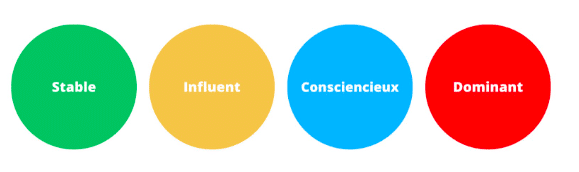
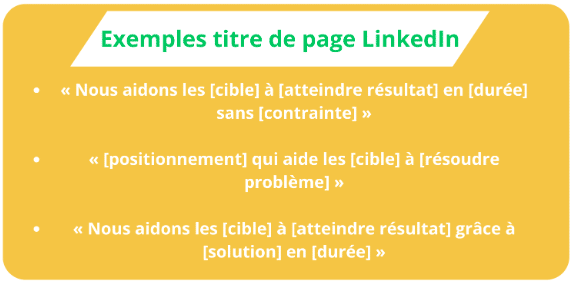
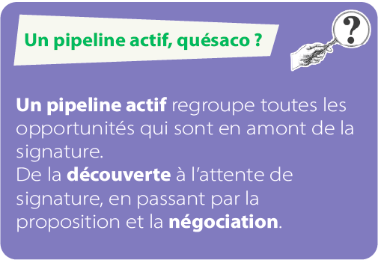

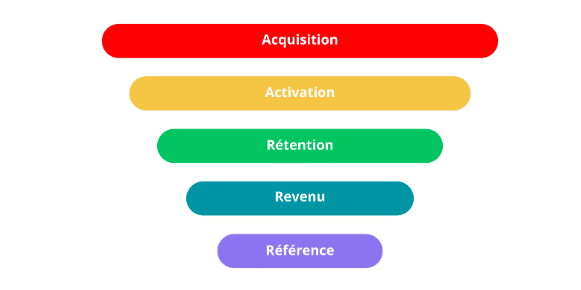
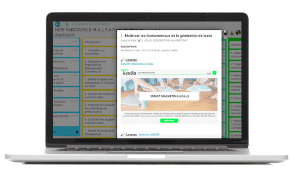


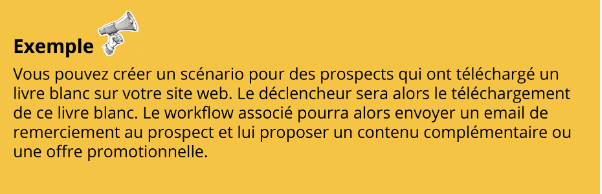



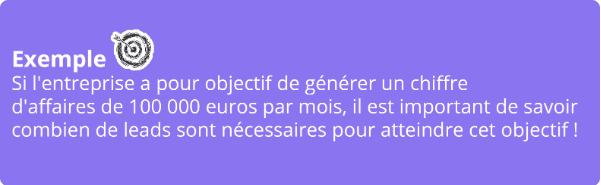
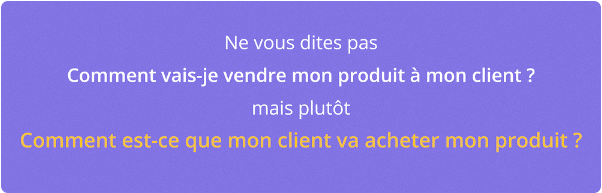
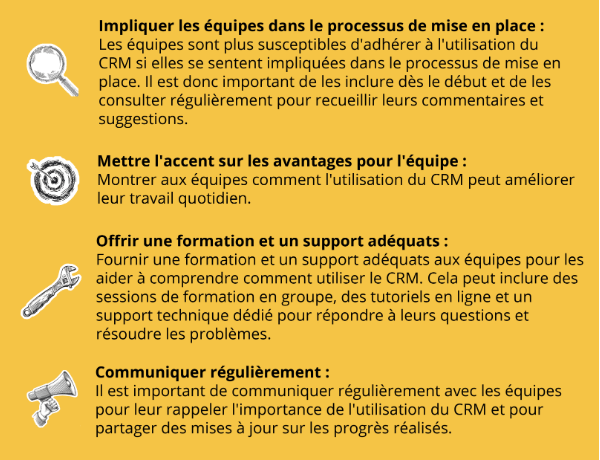


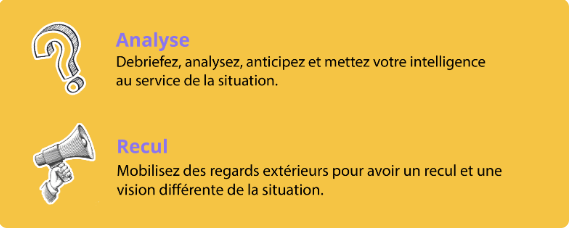
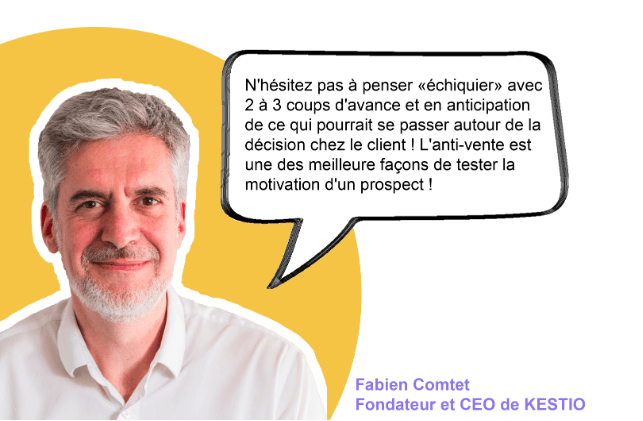

When we think about commercial negotiation, we often envision a communication approach based primarily on the salesperson's skills, such as active listening or the ability to respond to objections.
It's essential but not enough.
Because in many cases, this will result in discounts, conflicts, tensions, failure to negotiate at all, and ultimately accepting the buyer's conditions.
Commercial negotiation must be a structured approach based on 3 key concepts that we will present to you:
-
- Defining objectives 🎯
- Concessions / Counterparts 💬
- Understanding the interests 🔍
KEY #1 – Define your objectives
The success of a negotiation largely depends on the quality of its preparation. Before starting any negotiation, it is important to clearly define your objectives and determine how to achieve them.
Specifically, how to prepare?
This work is not about your entire offer, but about each point of the offer: the price, the length of commitment, etc.
Once these elements have been defined, it is necessary to do the same analysis for the person in front of you.
By applying the same reasoning to the stakeholder, you will obtain the probable zone of agreement – which is called ZOPA – that is, the area between your respective opening and resistance points in which you can find a point of agreement.
Obviously, the smaller this zone, the more difficult it will be to find a point of agreement. Conversely, the larger it is, the more likely you are to reach an agreement.
This work is fundamental and must be carried out throughout the negotiation process, with updates as information is gathered.
To best prepare you for your sales negotiation, we offer a FREE 30-minute session to define your opening offer, your target, and your breaking point.

KEY #2 – Prepare your counter-offers/concessions
Concessions and counterparts are essential in any business negotiation.
Everyone must be prepared to achieve their objectives while enabling the other party to reach theirs. You need to be able to exchange efforts by making concessions and requesting something in return.
Before a sales negotiation, it's important to list the concessions you can make and the counter-offers you want to obtain. Concessions and counter-offers always go hand in hand, so you should ask for a counter-offer every time you grant a concession.
Furthermore, in the way you phrase things, it's preferable to make it a prerequisite that the effort is first validated by the stakeholder.
To secure this essential part of any good negotiation, there is a preparation phase to identify concessions and trade-offs, and an extremely precise way of formulating that ensures the concession and the trade-off are respected by both parties. This allows you to effectively play the concessions and trade-offs game.
In this case, you have exchanged a contract duration on one side for a discount on the other, but in the way you formulated it, you made it a prerequisite that the effort be validated first by the stakeholder.
A concession is a benefit granted to the other party, to which they are attached. The counterparty is a benefit obtained, to which you are attached.
There are several steps to follow to get something in return during a business negotiation. Dominique Seguin, General Manager of KESTIO, elaborates on them in the webinar « Négocier Zen ». Click below to watch the replay

KEY #3 – Identify interests
The last important key in business negotiation is to understand that interests are not positions.
This distinction is particularly important because positions are often visible elements, while interests are hidden. You may already know this, but there are many similarities between sales and chess.
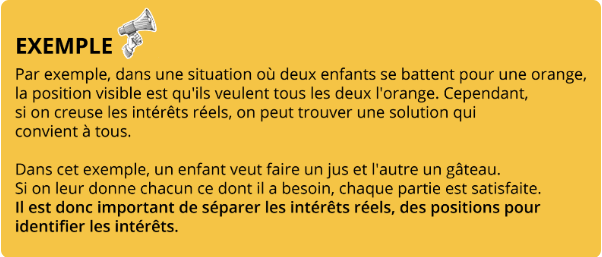
A second crucial element is to separate people from problems. Anglo-Saxon cultures find it easier to focus on problems without blaming individuals.
In French culture, there is often a tendency to associate the problem with the person. This can create tension and make negotiation more difficult. It is therefore important to remain logical and set emotions aside in order to maintain a structured and collaborative exchange. To learn more, you can read our article: The 5 tips inspired by good salespeople to sell your project.
Do you want to go further to improve your negotiation skills? We have gathered the 5 golden rules of a good sales negotiation for you. Click on the button below to watch our video and then test your knowledge via a quiz.

KEY #4: Expert advice
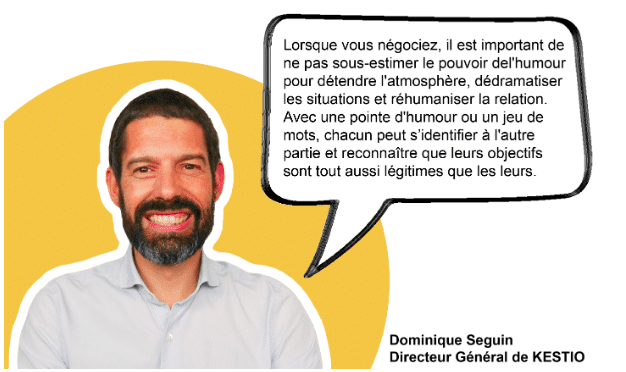

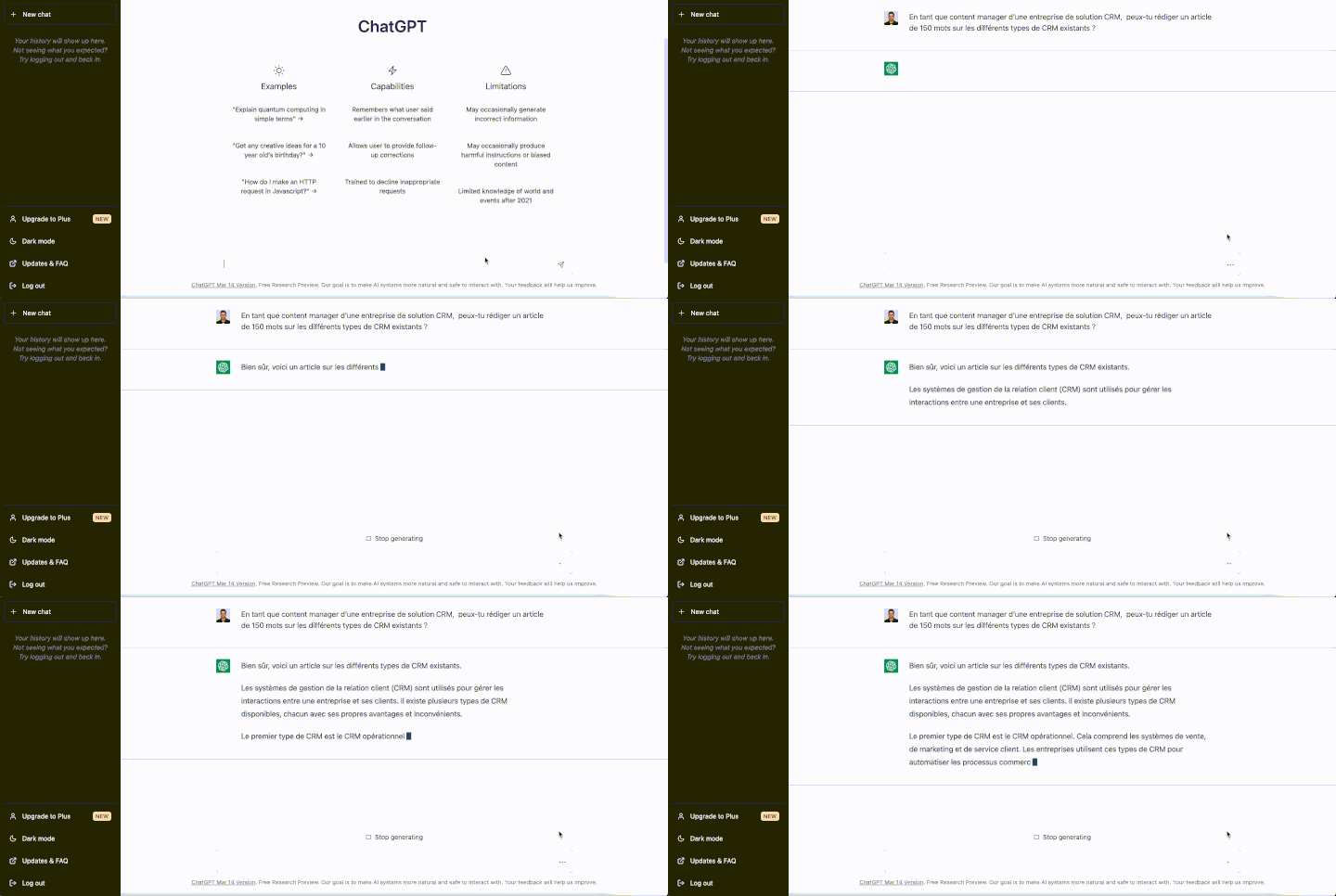
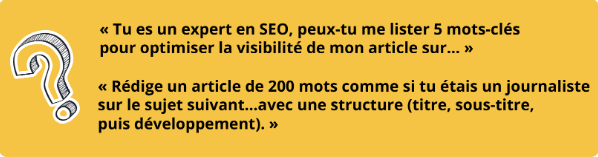
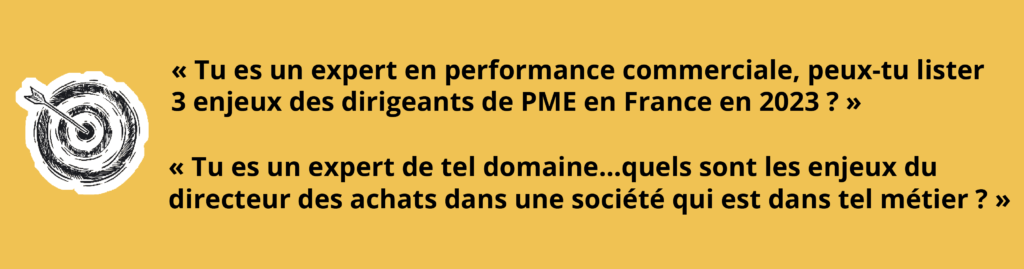

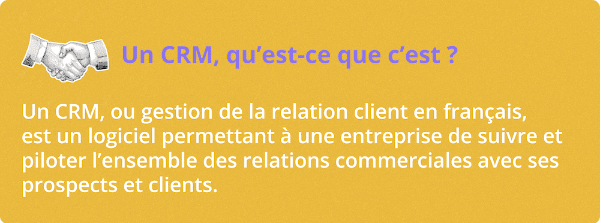





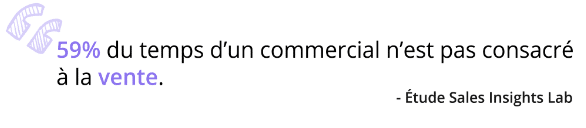
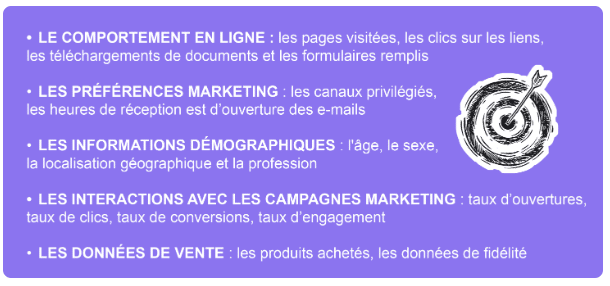
Ask a leader if their company's sales strategy is clear to their employees, and they will tell you "yes!" without any hesitation.
Now, ask one of their sales representatives if they know why they need to get 5 appointments per week, and the answer will be much less clear!
This difference in perception reflects a challenge you likely face: getting your teams to buy into your sales strategy.
Achieving your goals depends on your employees implementing your company strategy.
How then to make your teams perceive the benefits of this strategy and implement it in the field?
*Source: Forbes survey
KEY #1 – Translate your strategy into actions
One of the most frequent mistakes when discussing sales strategy with sales representatives is focusing solely on the results achieved.
Why? Because you can no longer influence the results! They only represent the visible part of the sales activity.
However, you can influence the various commercial actions that lead to these results.
Implementing a Commercial Action Plan will allow you to define 3 essential levers for your commercial activity, reflecting your strategy:
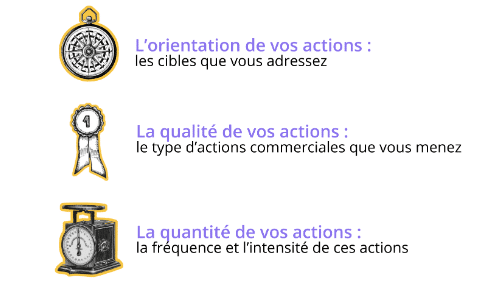
By focusing on the sales activities of your teams, you provide your sales representatives with two key elements: a clear understanding of your strategy and concrete ways to achieve the established goals.
Because it's one thing to ask your sales representatives to sell 5,000 units of your flagship product... It's quite another for your teams to achieve that goal.
By detailing the steps in your sales process and associating them with concrete sales activities, you help your employees identify their strengths and areas for improvement.
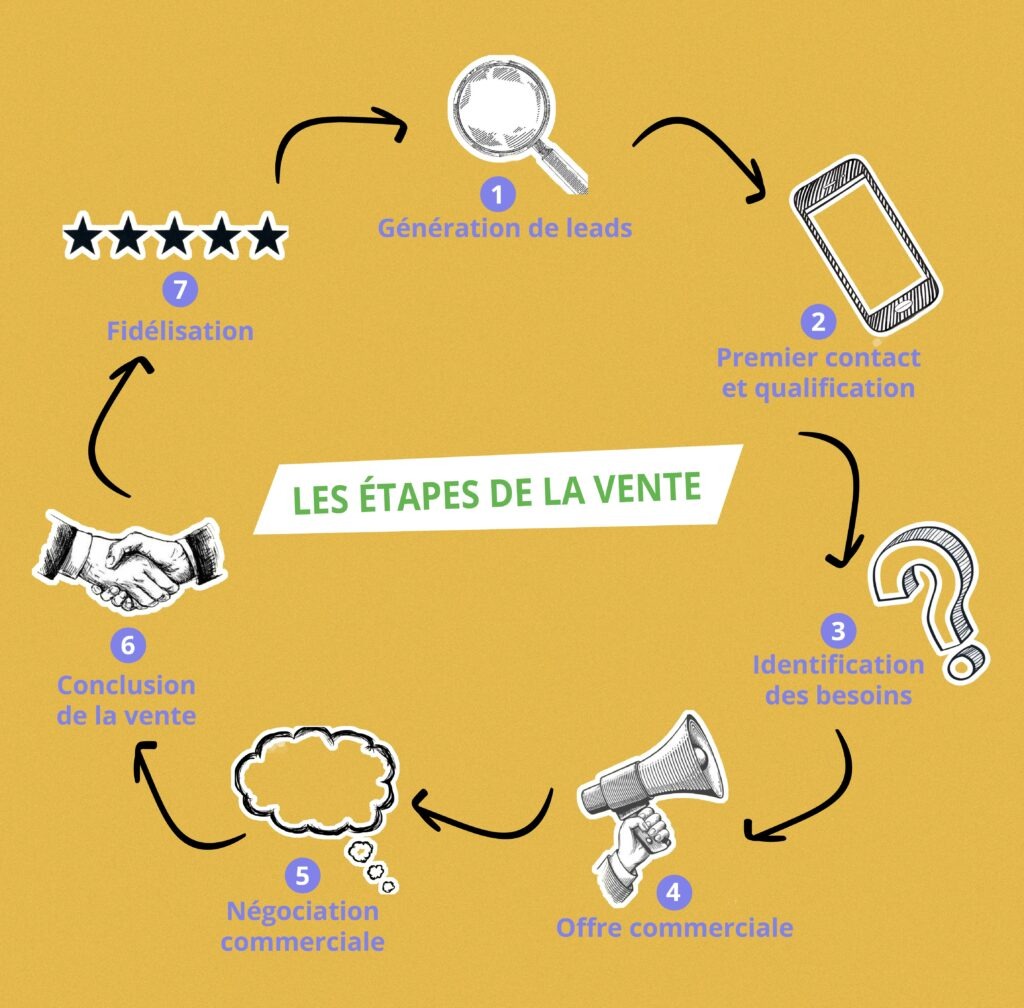
To enable your teams to optimize their sales efforts, we share our “Go/No go” scoring table.
This tool, to be completed daily, helps you select the opportunities with the most potential thanks to various criteria covering the main stages of a sales process!
KEY #2 – Enhance your resources
Today, customer expectations have greatly evolved in terms of sales. Influenced by technological changes and purchasing habits, customers are increasingly demanding and have expectations that include:
- A personalized experience: sales representatives must identify unique needs by providing added value.
- Real-time communication: customers want to be able to communicate with sales representatives quickly and efficiently.
- Transparency : sales representatives must be transparent about the products and services they sell, including prices and conditions.
- In-depth knowledge: Sales representatives must have in-depth knowledge of the products and services they sell, including the advantages and disadvantages.
From this perspective, it's important for sales representatives to adapt to these new expectations in order to maintain their relevance and competitiveness in the market. Therefore, promote the resources you make available to sales representatives so that they can implement the sales strategy in the field.
List these resources with two objectives: firstly, to make them known to your sales representatives so they can take ownership of them, and secondly, to boost their motivation by showing them that the company is investing to give them the means to achieve the targeted results.
Examples of resources:
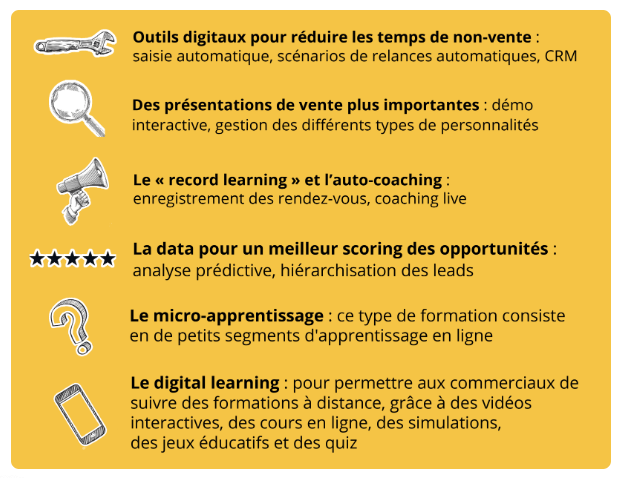
At Kestio, our digital learning team offers interactive and engaging training modules to meet the personalized expectations of our clients. If this still seems unclear to you, watch a video presenting our approach.
And if you are interested, you can chat with one of our digital learning experts!
Talk to a digital
learning expert
KEY #3 – Work on your mindset
The mindset of sales teams plays a key role in achieving their goals. A positive attitude can lead to successful negotiations and customer satisfaction.
The manager's role will be to give a positive boost to their team, by celebrating successes and offering positive prospects for the future. This can be accomplished by asking the team about their victories of the week, by exchanging on the new things that have worked, by being empathetic with the team members and by seeking out the unspoken.
Link the sales strategy and objectives for the coming months to the victories won over the past year by asking yourself the following questions:
- What lessons have you learned from it?
- How are these leveraged in the current strategy?
- How can you duplicate them or draw inspiration from them to build a scalable model from the variables observed on a certain scale?
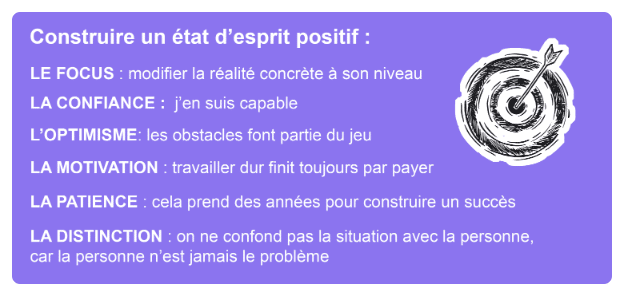
Webinar – Which motivational levers to adopt for
each employee?
KEY #4: Expert advice
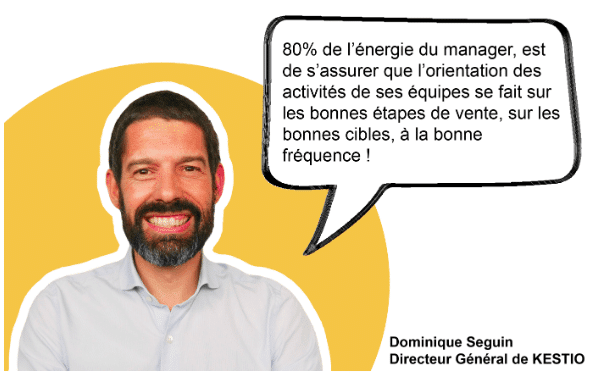
10%,
A company loses an average of 10% of its customers each year! While the causes may vary (no longer a need to be met, disappointment with the service, departure for the competition, etc.), the result is the same: your company must find a solution to compensate for these departures and not lose revenue.
Knowing the investment required to acquire new customers, reactivating your former customers is a strategic approach! Even if they no longer use your services, they are already familiar with your company, your expertise, and your working methods.
They will be more inclined to collaborate with you again for a future project. Today, we are giving you the steps to follow to reactivate your former clients!
*Source: Harvard Business School
STEP #1 – Identify your lost customers
To implement an effective customer reactivation campaign, you must be able to clearly identify which customers have left your company.
To achieve this, the daily use of a CRM will be essential. It will allow you to obtain a comprehensive view of your clients' history: when were their last transactions? How did your last interactions go?
By using the various targeting filters in your CRM, particularly on the date of activity of your customers, you will be able to identify your inactive customers.
And thanks to the contact data collected for each customer, you will be able to personalize your reactivation campaigns according to their expectations.
If you need help identifying your lost customers within your CRM, check out our special CRM “KESTIO Questions-Answers” webinar!
Discover the webinar
"Kestions-Réponses" CRM

Thanks to your CRM, you will be able to calculate your attrition rate.
Also known as 'churn rate,' the attrition rate refers to the percentage of customers lost relative to your total number of customers.
| Once the extent of your attrition rate has been measured, you can investigate the reasons for these departures and implement your recapture strategy! |
💥 STEP #2 – Refine your value proposition
An essential step in a relevant marketing approach, the value proposition is the simple and precise formulation of the added value of a product or service as perceived by the customer.
In other words, it demonstrates the profitability (savings achieved, revenue generated) of the proposed solution and alleviates concerns about the risks associated with the project. By making your proposal unique, it allows you to stand out from your competitors and facilitate your client's purchasing process.
If the value proposition is not clearly identified by the customer, it may be the cause of its loss. If you are in this case, it is therefore essential to rework the wording.
How to build your value proposition?
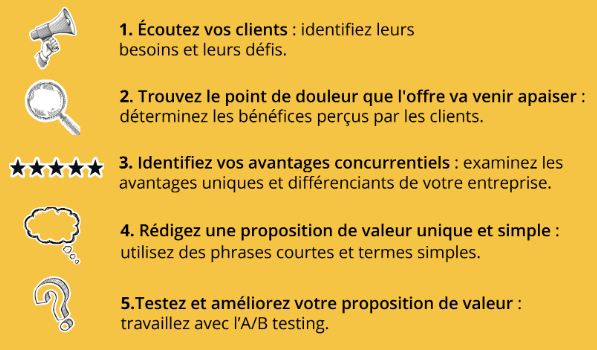
Does your target audience understand your offer?
Are its differences clear?
Are the members of your company able to talk about it easily?
These are the questions that help identify whether your value proposition is effective!
Download the value
Proposition canvas
🤝🏻 STEP #3 – Focus on relationship marketing
The cost of acquiring a new customer is higher than that of reactivating old customers. It may be more effective for companies to recover lost customers. For this, relationship marketing appears as an interesting strategy to reconnect and develop a privileged and lasting relationship.
The goal will be to understand the specific needs of customers, their preferences, and their behaviors, to encourage them to trust you again and ensure the future of exceptional customer service.
There are several methods for implementing a relationship marketing strategy
to win back lost customers:
- Customer segmentation: Use the data you have on your lost customers to segment them into groups, based on their needs, purchasing behaviors, and preferences. This will allow you to tailor your recapture strategy to each group.
- Personalized communication : respond to specific needs, via social networks or emailing campaigns.
- Loyalty program: consider setting up a loyalty program to reward returning customers and/or a referral system.
- Customer service: Offer impeccable customer service to your lost customers by providing quick and effective responses to their requests.
- Customer feedback: identify areas for improvement by sending out satisfaction surveys or implementing call campaigns.
By using these relationship marketing techniques to win back lost customers, you can also improve your retention rate and reduce the costs of acquiring new customers.
Talk to a relational
Marketing expert
💡 STEP N°4: Expert advice


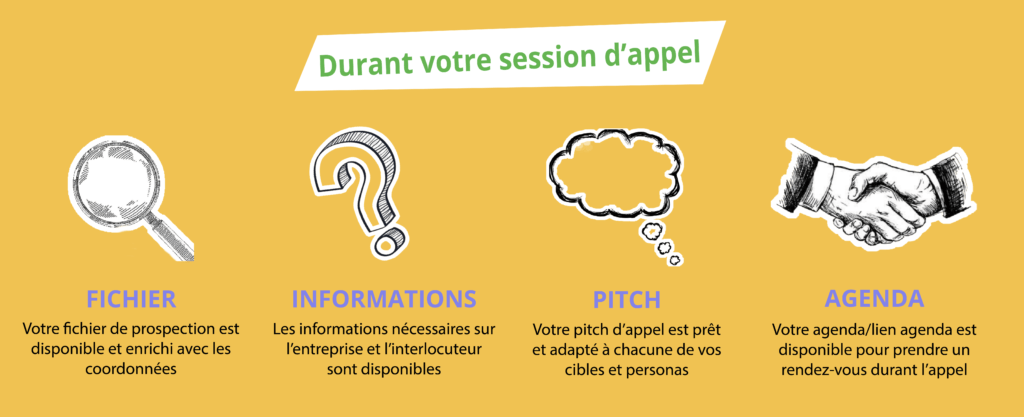
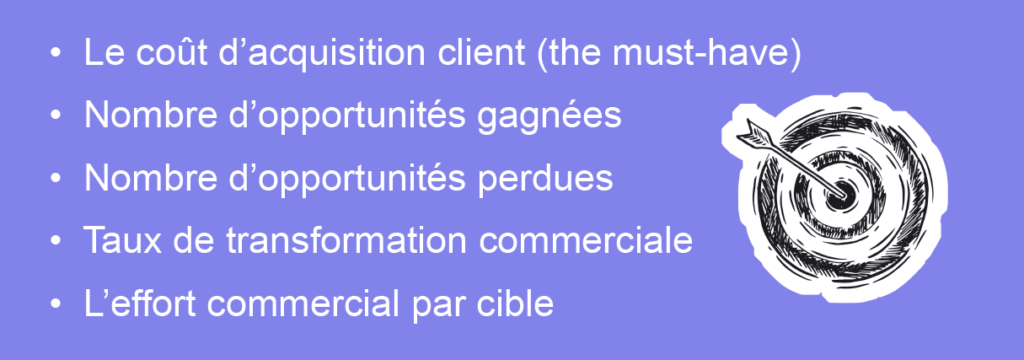
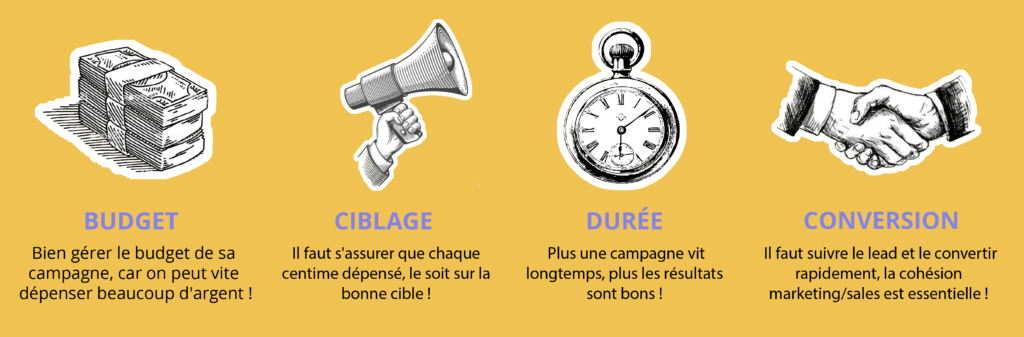
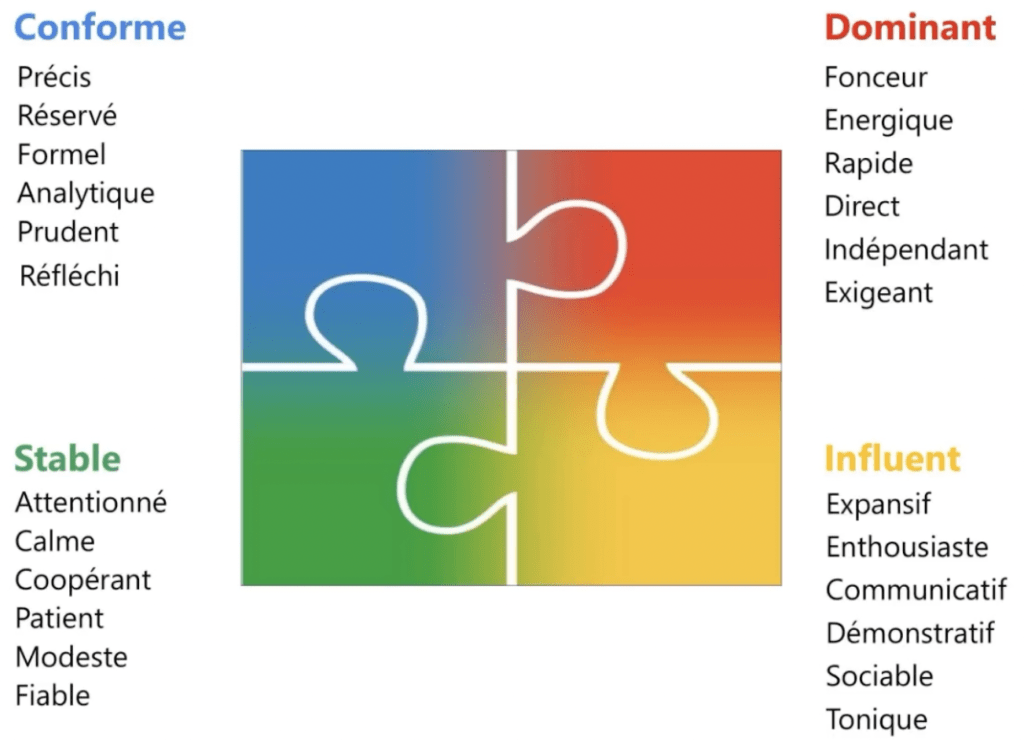
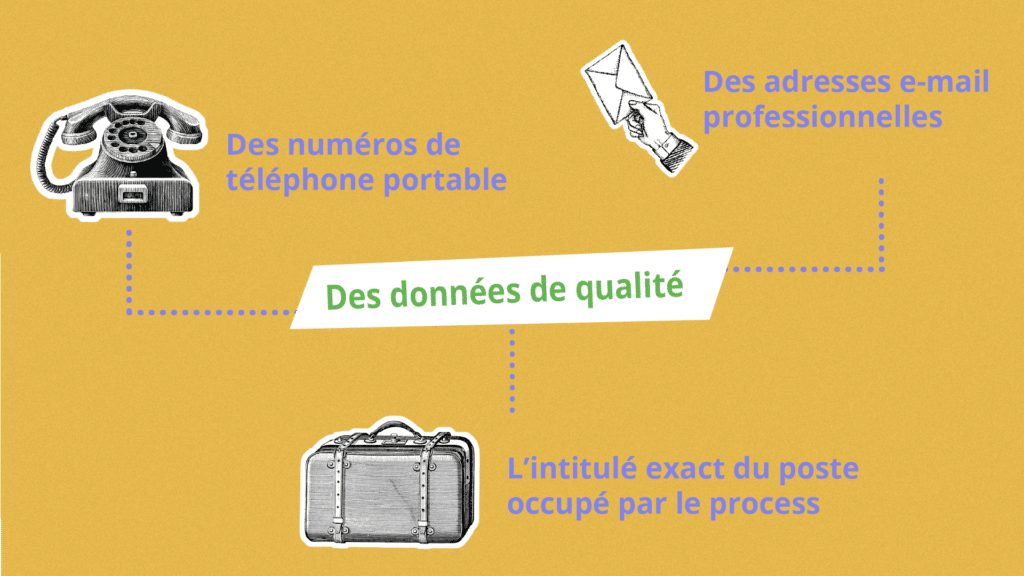

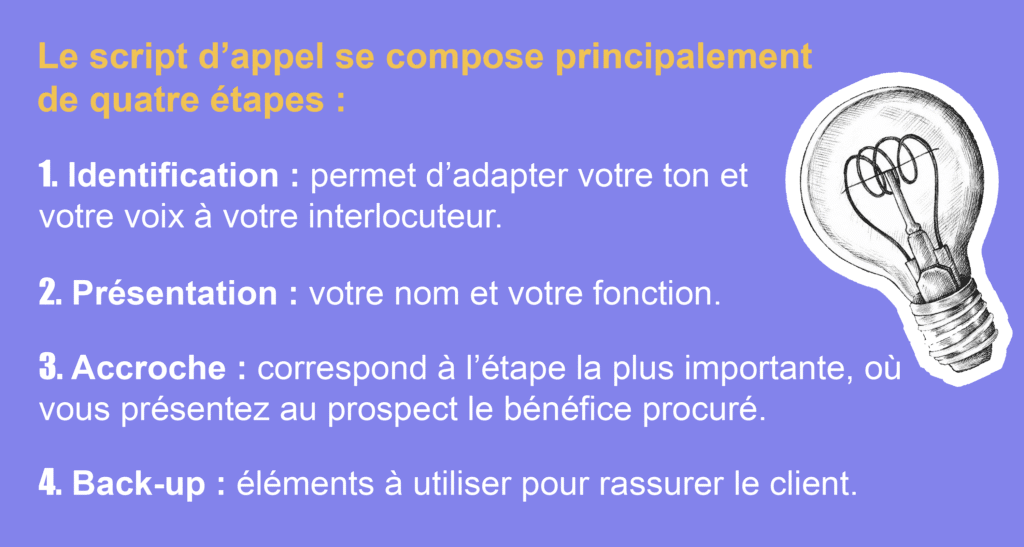

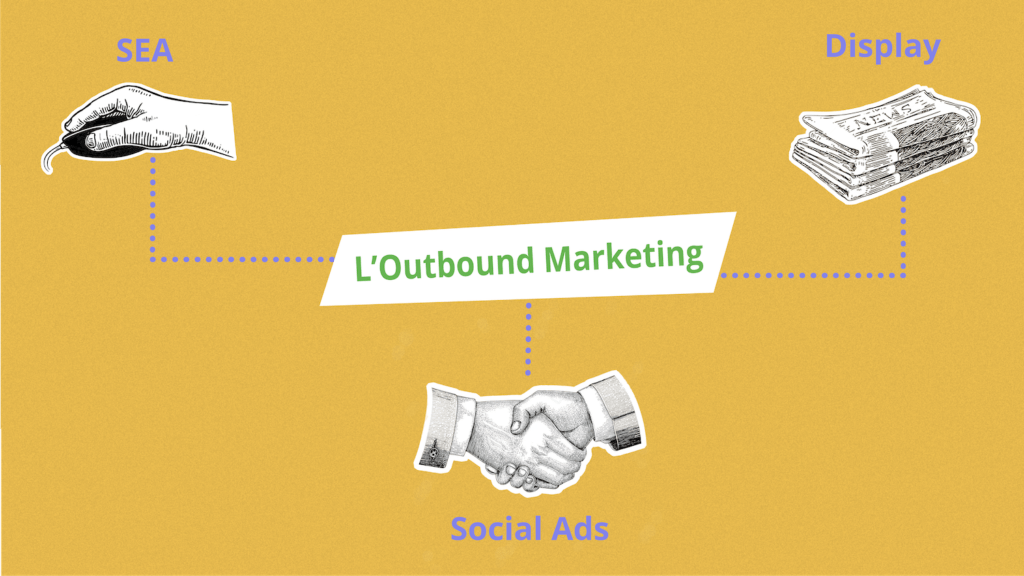

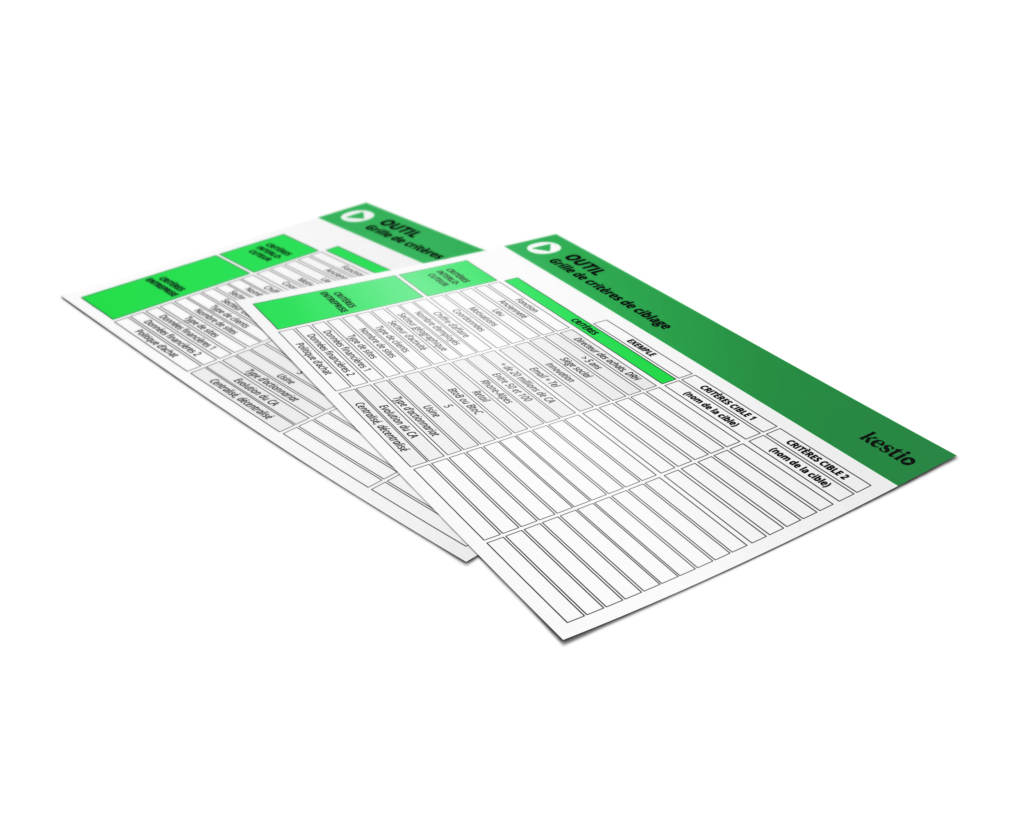
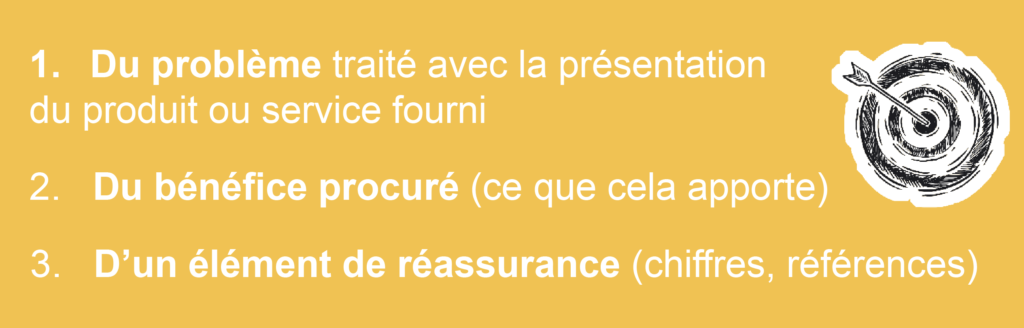

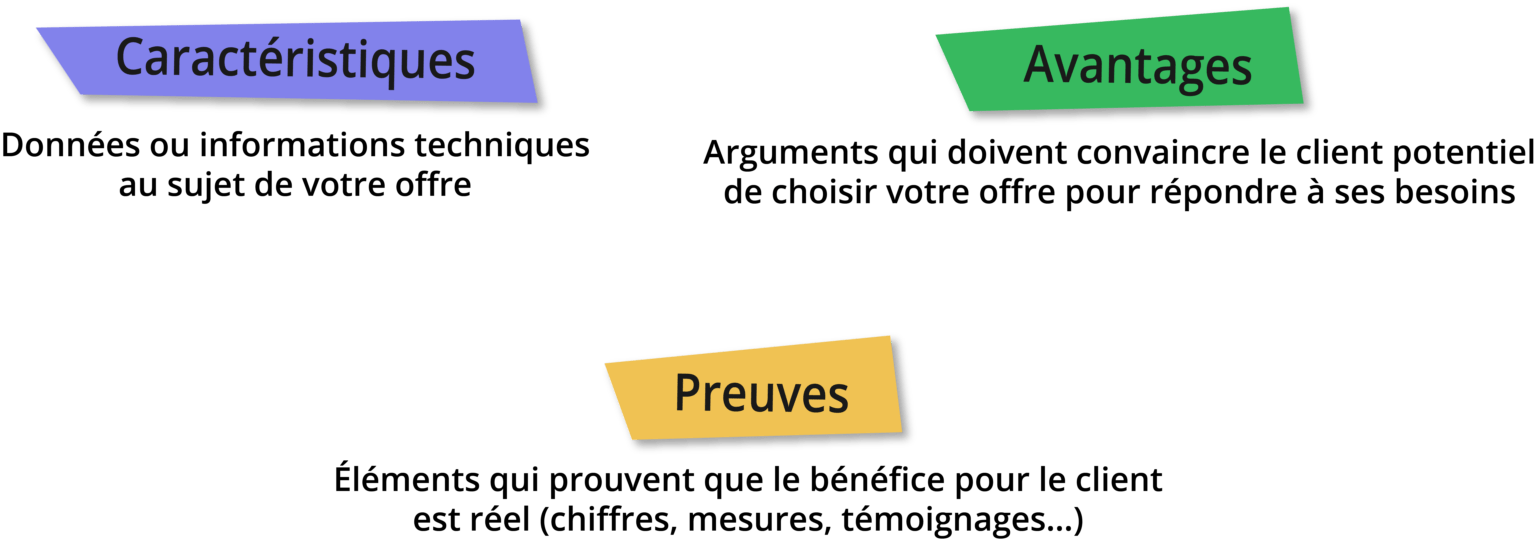


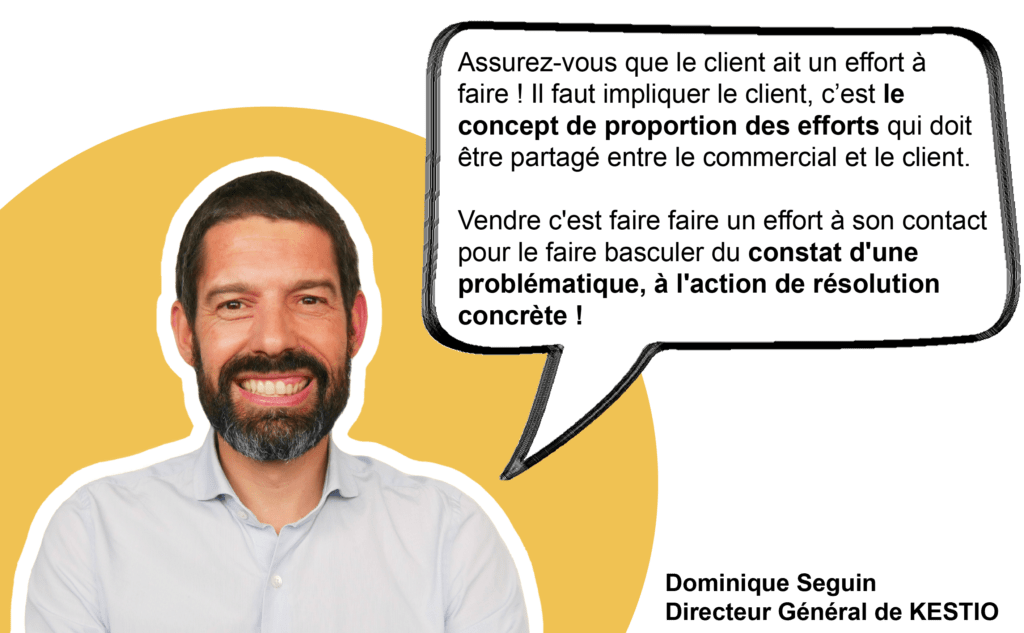

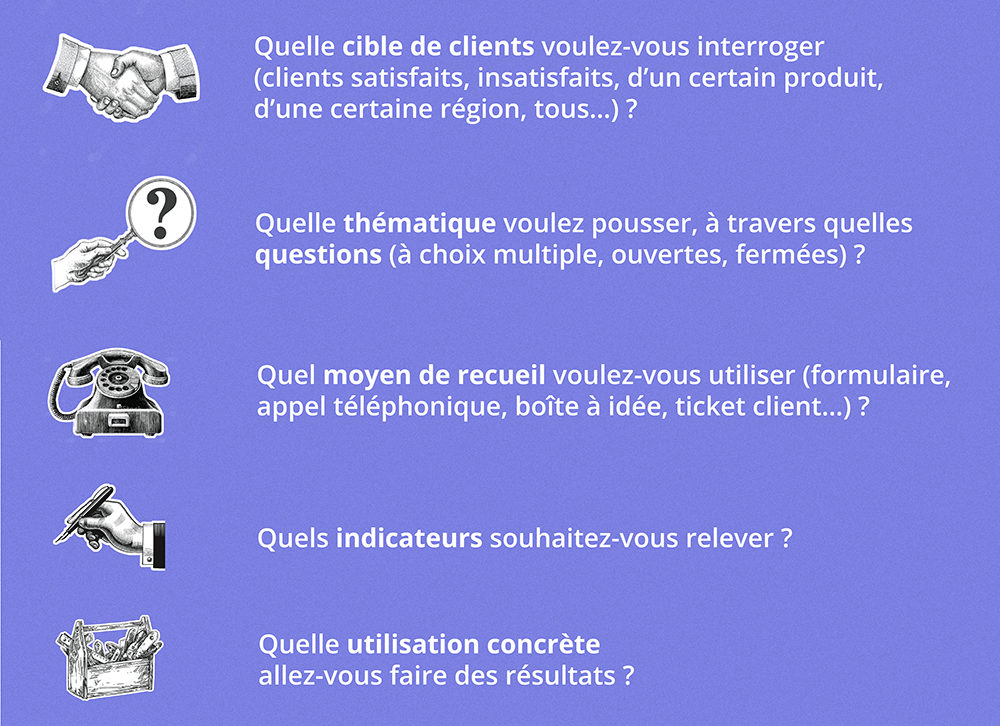
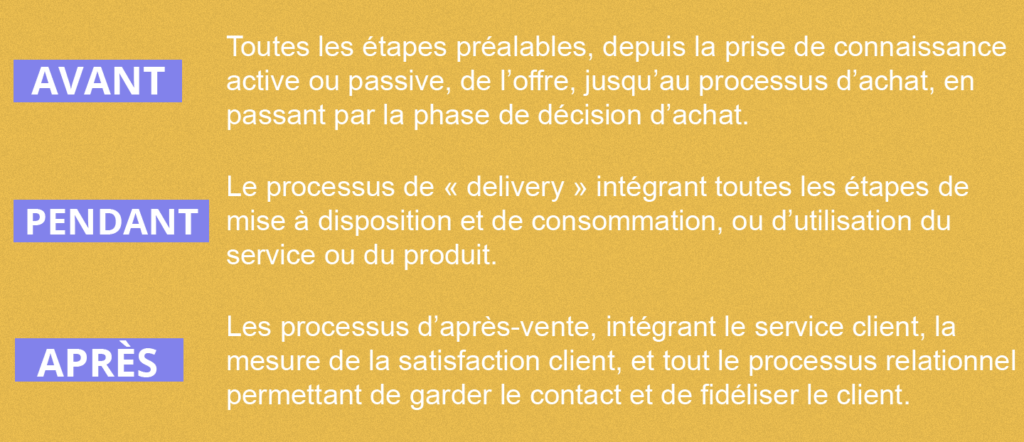
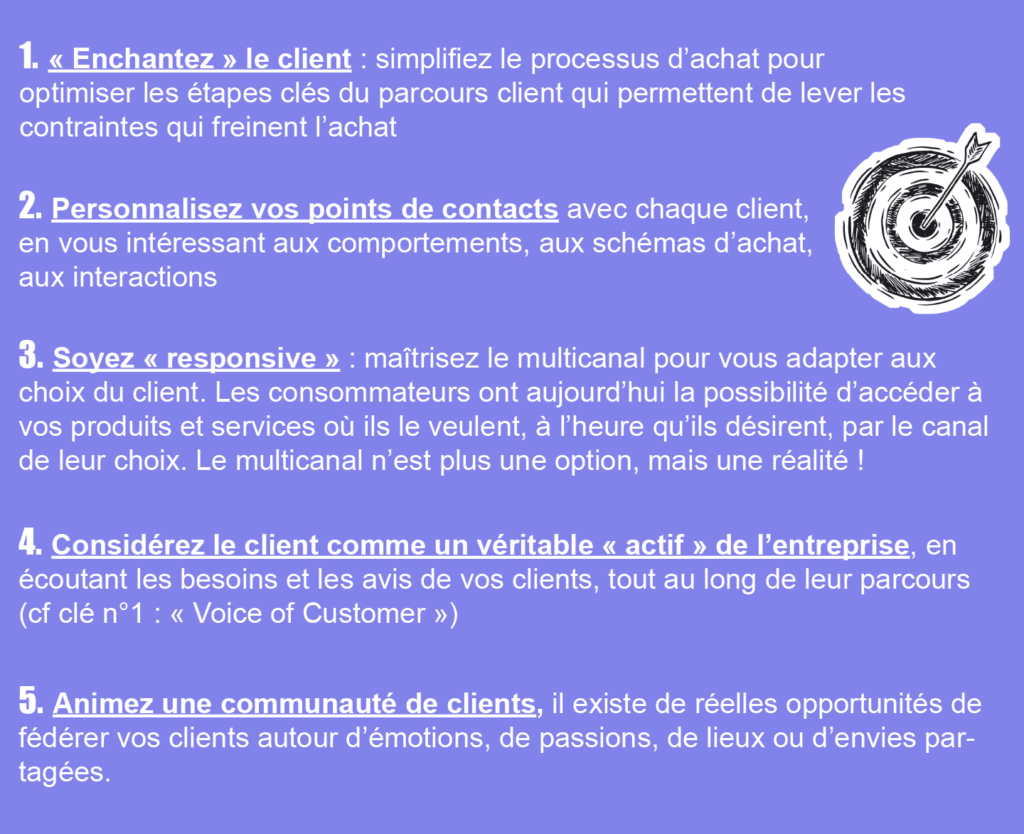
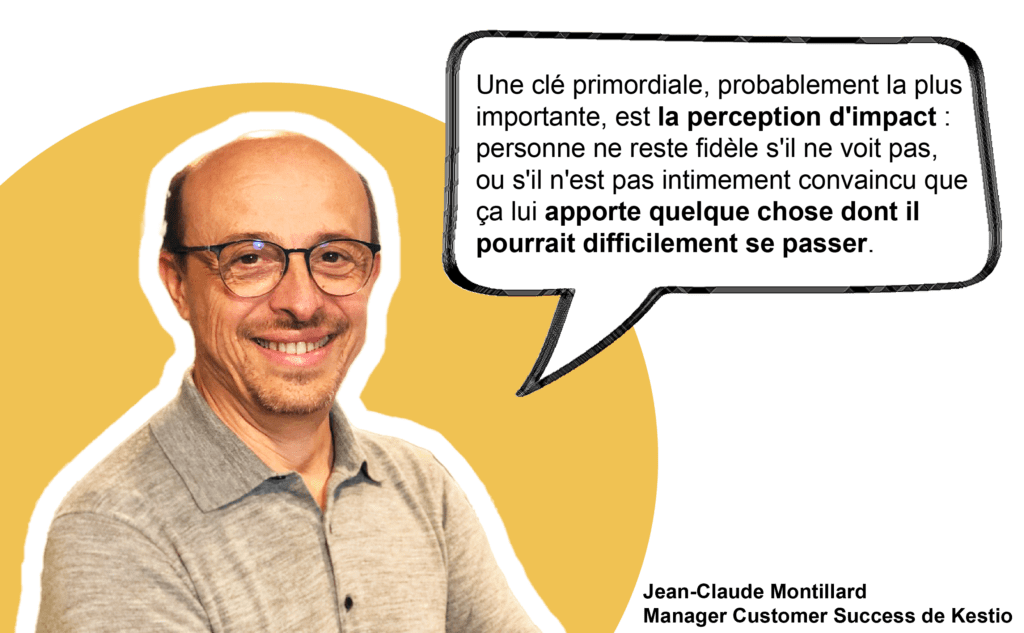

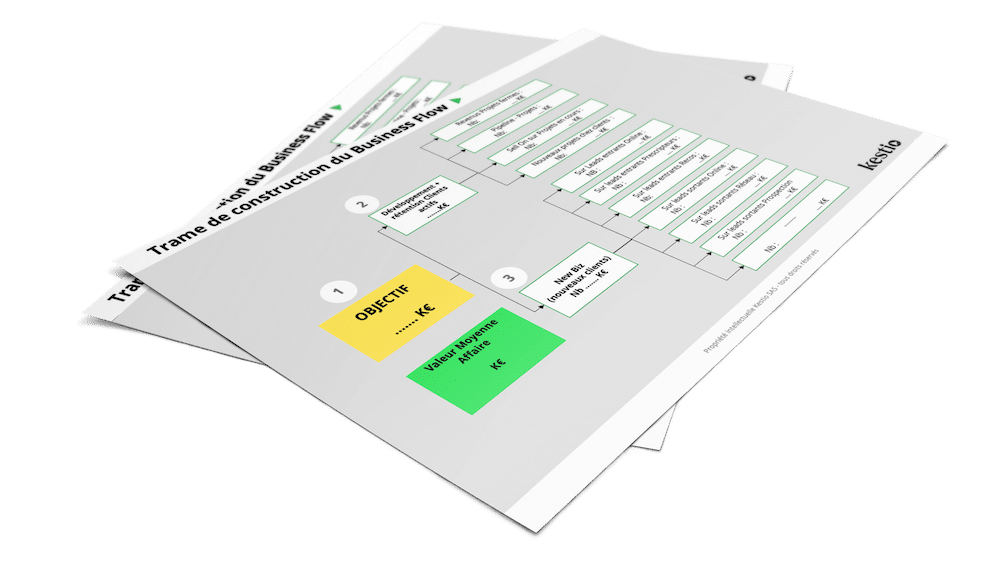

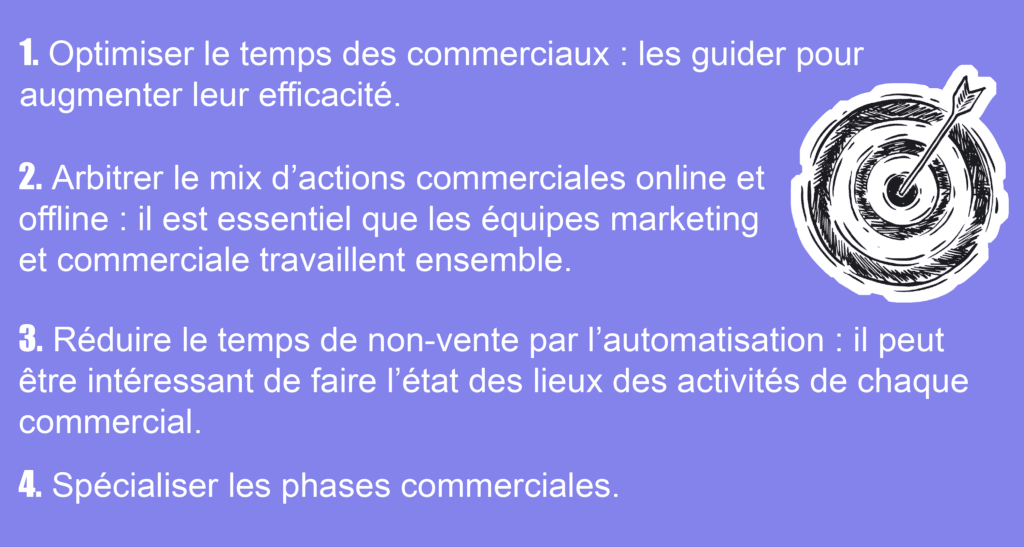
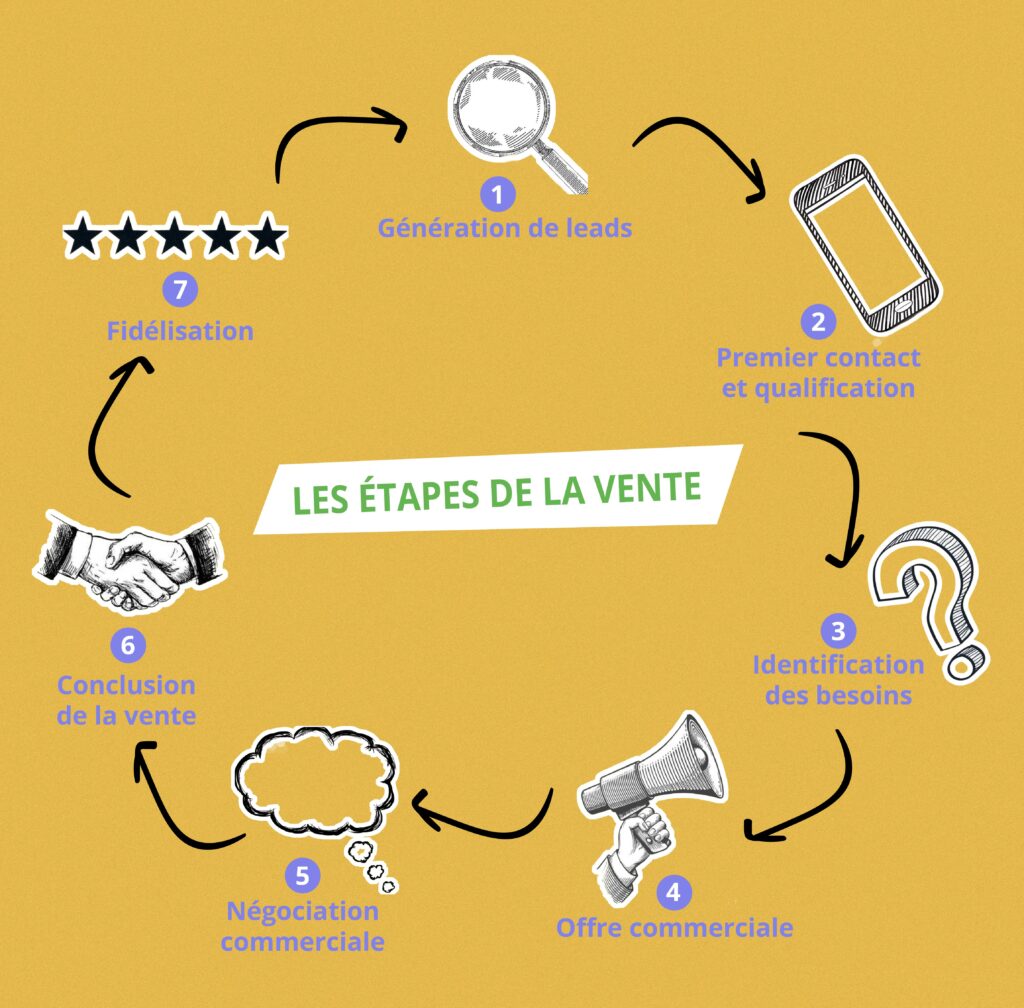
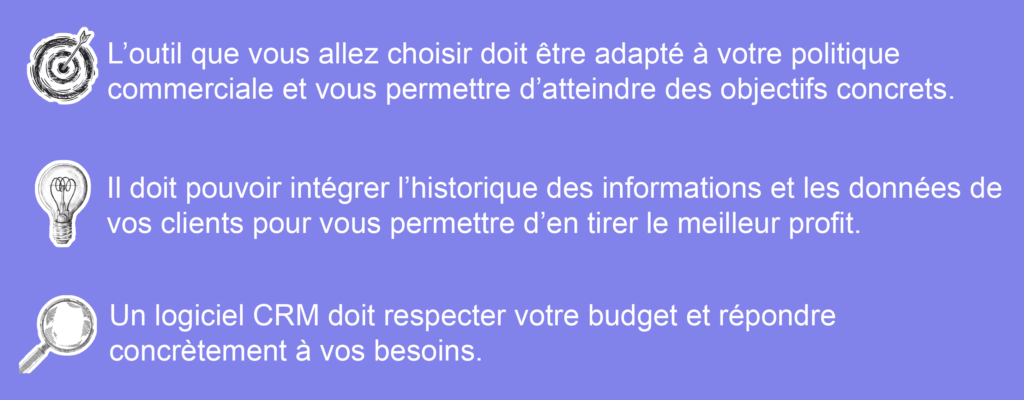
And the results speak for themselves: in just a few months, we managed to save our sales representatives 50% of their working time! They now dedicate this time exclusively to selling, finally freed from the less interesting tasks. This provides a triple benefit for the company: optimizing salary costs, increasing sales, and improving the motivation of sales representatives. Would you also like to optimize your sales representatives' working time?
Here are 3 key steps on how to save them valuable time, for both them and you.
STEP 1: Specify your objectives
First and foremost, it's important to specify the objective you wish to achieve by optimizing your sales team's working time. This will directly impact the choice of levers to activate subsequently: the stage of the sales cycle concerned, the nature of the tasks to be "lightened", the new processing method adopted for these tasks, etc.
Generally, optimizing the working time of sales representatives falls under one of these 3 objectives:
« DO AS MUCH WITH LESS »:
Are you, for example, forced to manage a constant workload with fewer salespeople, following the unexpected departure of a member of your sales team.
The other team members must then divide the absent salesperson's client portfolio and the corresponding workload among themselves. To prevent them from putting these new accounts on the back burner or neglecting their current clients due to lack of time, it is necessary to relieve them of some of their daily tasks.
« DO MORE WITH AS MUCH »:
Do you want your sales representatives to be able to dedicate time to a new strategic priority, alongside their usual activities?
For example, your company is launching a brand new offer that you are betting heavily on. You want your sales representatives to "go all out" on this offer, and on the targets it addresses. Since their other activities have not disappeared, they will have to find a way to free up time in their usual schedule…
« DO BETTER WITH AS MUCH »:
Have you identified that you regularly lose opportunities due to the disorganization of your sales representatives, and you want them to remain as focused as possible on their core business and your customers.
Have you noticed, for example, that your salespeople spend up to 50% of their time on tasks other than selling (searching for data to enrich their contact files, following up with prospects after a missed appointment, sending follow-up emails, updating the CRM, etc.)?
Not only do these tasks take up a lot of their time (time they don't spend selling), but this time is also costly for you, even though many of these tasks don't require the skills of a salesperson!
Once your main objective is clarified, it's time to move on to step two and identify the priority areas for optimization that will allow you to achieve it.
STEP 2: Identify areas for optimization
To identify the levers for optimizing your salespeople's working time with the greatest impact, a preliminary inventory of their daily tasks is essential.
Several methods can be used to carry out this inventory:
- Start from a typical day in the life of a salesperson and note one by one all the tasks performed during the day.
- Start from the key stages of the sales cycle (lead generation, prospecting, discovery, closing...) and list all the operations attached to them.
Once your list (as exhaustive as possible) is established, you can assess the potential for optimization of each activity.
This evaluation is based on 4 criteria:
- The average task duration (short / medium / high)
- Usual frequency (daily / weekly / monthly)
- Estimated complexity (low / medium / high)
- The sales representative's "added value" in their performance (low / medium / high)
For example, you could assign a degree of "potential for optimization" from 1 to 3 to the task, based on each of these criteria, to then obtain an overall score, as in the example shown below:

The longer and more frequent it is, the more beneficial it is to optimize the time spent on a task, as the impact of this optimization on the overall working time of your sales representatives will be greater.
But don't stop at these two criteria alone: the degree of complexity of a task and the added value brought by the salesperson in its realization are also to be taken into account. The higher these two values are, in fact, the more difficult the task will be to delegate or automate. And therefore, the less you should consider it as a priority in your optimization process.
In our example, three tasks stand out as having a high potential for optimization: qualifying the prospect file, making an appointment with a prospect after a missed first appointment, and sending follow-up emails after an appointment.
Once your priority areas for optimization are defined, all that remains is to define how you can reduce the time spent by sales representatives on each of these tasks. This is the purpose of step 3.
STEP 3: Optimize the sales process
Regardless of the areas for improvement identified, you generally have several options available to optimize the time your sales representatives spend on these tasks.
They mainly fall into 3 categories:
INTERNAL REORGANIZATION:
It involves redistributing certain tasks internally – usually according to a logic of "specialization" – to maximize efficiency.
A purely administrative task, such as entering sales representatives' travel expenses, for example, can be reassigned to the administrative team. Or, entering customer information into the CRM can be entrusted to the sales administration team.
OUTSOURCING:
You can also choose to outsource certain tasks (preferably the most time-consuming ones and those for which salespeople bring the least added value).
This is the case with qualifying contact files, for example. Indeed, many companies specialize in collecting and enriching qualified data to populate prospecting files.
AUTOMATION:
Finally, we can also automate certain tasks, or even certain stages of the sales process. When possible, this option is often the most effective and the least expensive, since it no longer requires any human resources once it is set up.
Various tools can be used for this purpose, depending on the task to be automated: tools linked to the sales representatives' calendars to facilitate appointment scheduling, to their mailbox to set up automated workflows, to their accounts on social networks to automate the publication of posts on LinkedIn / Facebook or Twitter, for example.
However, CRM remains the leader in this area, as it generally combines all these possibilities and options into a single tool, allowing for centralized monitoring of these different actions.
In our case, it is a mix of these three options (depending on the tasks to be optimized) that has allowed us to achieve the enviable result of 50% of our sales representatives' working time being re-allocated to sales!
You will find more details on our internal optimization approach in the article "Optimize your sales process: stop paying your sales representatives not to sell!" published previously on this blog. You can draw inspiration from it to save your sales representatives time and optimize your sales efficiency. So, when are you going to start?
Is optimization your watchword? Then discover in this webinar how to maximize the performance of your sales representatives by saving them 50% of their time:
Faced with this situation, some employers end up resigning themselves and abandoning their recruitment project or choosing profiles that do not fully meet their expectations. However, alternatives to recruiting a new salesperson exist, and they may even prove more profitable for your company. Here are some of them.
1. Improve the sales efficiency of your current team
Did you know that the average conversion rate for sales representatives in the B2B sector is around 10%? This means that 90% of the working time of sales representatives is spent on deals that are destined to be lost!
This is enough to make business leaders feel dizzy... The good news is that it is entirely possible to significantly improve this result, as we prove daily in the field.
Aiming for an average success rate of 30% on commercial proposals is entirely realistic, even in B2B, and it's a desirable minimum.
If your sales representatives are not at this level today, there's no need to recruit new ones to boost your growth: you already have considerable room for improvement with the same human resources (and therefore salary costs)!
We generally manage to significantly improve the success rates of our clients by supporting their sales teams in their progress, particularly in 2 areas: the quality of targeting and the quality of sales actions carried out with their prospects.
The advantage of such an approach is that it not only increases your turnover, but also, and more importantly, optimizes your profitability, which a new hire would not necessarily have achieved.
2. Opting for a more segmented sales organization.
Here's what we most often observe with our clients regarding sales organization: the salesperson is multi-tasking and handles the entire sales chain, from lead generation to closing, including appointment setting, needs analysis, commercial proposal creation, and follow-ups.
This organization presents several disadvantages:
- On the one hand, versatility can lead to a certain 'scattering' between the various tasks and therefore a loss of efficiency.
- Furthermore, it is rare to find sales professionals who are proficient in all these tasks, which complicates the search for the ideal candidate.
- Finally, not all of these tasks offer the same level of interest to an "experienced" salesperson, which can encourage talent turnover.
Formalizing and segmenting the sales process by breaking it down into different phases, then distributing these phases among several people according to their skills and inclinations, is often much more effective.
This generally leads to a significant productivity gain, as each person is focused on a single type of task, gradually gaining experience, speed, and efficiency.
We generally advise breaking down the sales process into at least four phases (identifying prospects, making appointments, conducting interviews and preparing the sales proposal, for example), and then assigning each of these phases to a team member, without exceeding two phases per person.
This type of organization can, in some cases, "spare" you an additional recruitment, thanks to the productivity gains achieved. Failing that, and at a minimum, it simplifies your recruitment process by narrowing the range of skills required for each position.
Discover KESTIO webinars, where we discuss
All topics related to sales performance with our experts:
Fabien Comtet, CEO
Dominique Seguin, CEO
Nicolas Boissard, Marketing Director
3. Use substitute or supplementary sales forces.
Another alternative to hiring versatile salaried sales representatives is to use an outsourced sales force: a specialized company (in telephone prospecting, for example), or a freelance business developer.
Using external sales forces has several advantages: with a lower cost price than a permanent recruitment, it can be stopped more simply and is generally accompanied by a commitment to results.
It also offers more flexibility: external sales representatives can intervene permanently or occasionally, on a part-time basis, provide reinforcement during a period of high workload, or be dedicated to a particular target...
Compared to hiring a permanent employee, it represents a financial saving and a controlled risk.
Another advantage of this approach is that the outsourced tasks are generally the least complex (generating contact files, telephone prospecting, etc.), which allows the permanent sales team to concentrate on tasks with 'higher added value'.
However, to be effective, the use of an outsourced sales force must:
- Focus on a well-defined scope and follow an established, internally controlled process
- Ensure regular monitoring of key performance indicators via a CRM or ad hoc dashboards.
- Rely on sales support tools designed and validated internally: sales book, standard emails, references and arguments per target, etc.)
This implies having well-documented your sales cycle, but also demonstrating a certain agility to ensure a smooth handover between external and internal teams.
At one of our clients, this strategy made it possible to optimally manage an activity marked by strong seasonality, by reducing the number of permanent recruitments initially planned from 5 to 2, to achieve a higher objective!
4. Retain your current sales representatives!
The three alternative solutions we have just presented aim to address the business development situations that motivate a large proportion of sales recruitment projects. Another part of these recruitment projects is, however, linked to the sometimes significant turnover observed in these positions.
Since the demand from companies for experienced sales profiles is significantly higher than the supply, market conditions favor talent volatility: 38% of salespeople have received job offers without actively searching, according to a study on sales employment conducted by Stepstone.3
To retain your sales representatives in general, and the best among them in particular, it is therefore essential to value the sales function as such.
Compensation is obviously an important motivator, but competition is fierce in this area as well: salespeople's salaries are 57% higher than the average salary in France, according to a study by the Uptoo firm4…
To stand out, ensure that your sales representatives' daily work is interesting and stimulating: high-quality working environment and conditions, effective tools, a clear and relevant sales action plan, a management style that promotes personal growth, internal opportunities for advancement, recognition of initiatives and successes... All these elements matter to your employees and encourage their long-term commitment!
By working on all or part of these 4 areas, you can significantly reduce the number of sales recruitments to be carried out for your company, while effectively meeting your growth and sales development objectives.
To stay competitive and maximize your chances of converting leads into future customers, it is important to optimize the performance of your commercial assets. Find out how by watching this webinar:
1: According to the 2018 talent shortage survey conducted by ManPowerGroup: http://www.manpowergroup.fr/penurie-talents-recrutement-2018/
2: Source ParisJob: https://www.parisjob.com/actualites/commercial-chiffres-paris.htmls://www.parisjob.com/actualites/commercial-chiffres-paris.html
3 : Quoted by France Info : https://www.francetvinfo.fr/replay-radio/c-est-mon-boulot/la-grande-penurie-de-commerciaux_1766077.html
Alors ? Un danger pour la performance des commerciaux à combattre à tous prix les routines ?
Pas sûr ! Si elles cachent parfois un manque de motivation, une perte de confiance ou encore un déficit de compétences, certaines routines servent aussi à structurer et baliser l’activité commerciale. Elles deviennent les repères fixes d’une activité par nature mobile, des passages obligés qu’il faut savoir identifier pour rester maître de son temps.
On distingue généralement deux types de routines. Il y a d’abord celles à combattre, celles qui enferment les commerciaux dans des logiques contre productives, qui les freinent dans leurs actions commerciales. Et il y a surtout celles à entretenir, qui doivent devenir des marqueurs, celles qui conduisent à une meilleure efficience dans la relation client. L’enjeu pour le manager ? Les identifier et en faire un outil de management !
Sachez repérer les routines « négatives » !
Parmi les routines contre-productives pour la performance des commerciaux on trouvera bien évidemment les petits rites que chacun aime souvent suivre, au début ou pendant la journée : prendre un café, vérifier ses mails, surfer sur ses sites favoris… Ceux-ci sont récurrents, mais représentent un temps qui ne pénalise pas réellement fortement l’activité. Il faut plutôt les voir comme des sas qui permettent de passer d’un environnement personnel à un environnement professionnel.
En revanche d’autres habitudes peuvent être prises et devenir clairement contre-productives. Comme par exemple celle qui consiste à rester dans un emploi du temps subi sur les tâches de back office. Vous l’avez déjà vécu ?
Un commercial qui va s’enfermer dans une surcharge de devis à faire, qui va accepter systématiquement tous ses mails entrants et les gérer dans la foulée, qui va solliciter son manager, ses collègues à tout bout de champs… Résultat ?
Le job essentiel n’est pas fait : les routines surinvestissent le temps disponible et il ne reste rien pour exploiter les opportunités commerciales, chercher des prospects, vendre.
Autre exemple avec le téléphone…
Le commercial est un routinier de l’échange téléphonique qui devient un réflexe pour faire avancer ses dossiers et génère de nombreuses routines négatives liées aux modes de communication. Qui n’a pas vu un commercial rester dans une logique purement réactive, c’est-à-dire attendre les appels entrant pour proposer un rendez-vous ou une action ?
Le commercial s’enferme alors dans une attitude qui l’empêche de conduire, de piloter la relation dans l’intérêt du client et l’évolution favorable de leur business. Il n’optimise alors ni son temps ni sa performance, et il augmente de plus le risque de voir la relation se déliter. Les routines téléphoniques l’empêchent de prendre du recul sur son action. Pire ! Elles lui donnent l’illusion qu’il est totalement actif et contributeur alors qu’il n’en est rien.
Encouragez les routines efficientes !
Il existe heureusement des routines bénéfiques que les commerciaux peuvent et même doivent intégrer dans leur activité : consulter le CRM quotidiennement, suivre ses indicateurs d’activité, s’informer sur l’actualité des clients…
Le commercial efficace sait mettre en place ces routines. Non pas pour combler des trous d’activité, mais au contraire pour s’assurer de ne rien rater et plus encore garder le lead sur la conduite des relations et la bonne fin de ses opportunités. Répétitif comme le protocole avant le décollage d’un avion ou l’échauffement du sportif avant sa compétition, il garantit la performance.
D’autres routines positives peuvent être activées dans le cas de dossiers difficiles par exemple. Elles permettent de ne pas fuir le problème, de rester dans une dynamique positive, efficiente.
Qu’il s’agisse de solliciter un expert interne ou son manager, consulter l’intranet, peu importe du moment qu’une routine réflexe existe pour franchir la difficulté. Qu’elle ne soit pas en place, et c’est la porte ouverte aux comportements contre-productifs !
Développer ces routines, c’est capitaliser sur la connaissance, planifier et optimiser son temps, s’appuyer sur des repères simples et fiables pour maîtriser sa performance.
Et c’est pourquoi un coach doit intervenir pour s’assurer que ces routines structurantes sont bien connues des équipes et effectivement en place.
On peut considérer que chacun est potentiellement sous l’influence de routines positives et négatives. L’enjeu pour le manager c’est donc de pouvoir les identifier afin d’agir de la bonne manière et au bon endroit.
Les routines contre-productives donneront l’occasion d’une action managériale riche, avec d’abord un dialogue pour la prise de conscience avant de voir ensuite comment les abandonner ou les remplacer par de meilleures.
Par exemple habituer son commercial à se poser les bonnes questions avant d’agir : quelle est la meilleure action à mener maintenant ? Combien de temps y consacrer et de quelle manière ?
Quant aux habitudes positives elles permettent de poser avec le commercial les éléments de sa conduite autonome du portefeuille et de son emploi du temps, d’aller vers une attitude et des pratiques vertueuses. Le manager peut ainsi créer avec son équipe des points de convergence, des repères routiniers et partagés qui créent des référents communs pour être encore plus efficaces, individuellement et collectivement.
C’est un axe de travail fort pour le manager et son équipe. Une manière positive de se retrouver et de progresser. Faire sortir ses collaborateurs de leurs routines solitaires, c’est aussi créer une dynamique de pratiques communes et alimenter la montée en compétences.
L’accompagnement collaboratif KestioLive permet au manager de travailler efficacement dans cette direction. Aider le manager à se poser la question de sa connaissance réelle des routines de son équipe à un niveau collectif et individuel. Trouver comment identifier et casser les routines négatives sur la durée et faciliter la prise de conscience de leur impact sur les résultats ; mettre en évidence les routines positives, en favoriser le partage et l’appropriation par chacun au bénéfice de la performance collective.
Saviez-vous que 95% de votre réussite est liée à votre état d’esprit? Afin d’apprendre à gérer sa charge emotionnelle plus efficacement, découvrez la méthode de la Triade dans ce webinar : Comment gérer sa charge émotionnelle avec efficacité ?
Pour devenir un véritable levier d’amélioration des résultats, le pilotage commercial doit non seulement s’appuyer sur les bons indicateurs clés de performance, mais aussi être utilisé comme un outil d’aide à la décision et un déclencheur d’actions.
Voici comment passer du traditionnel « relevé des compteurs » à un échange dynamique et utile, en temps réel, permettant d’améliorer concrètement les performances de vos commerciaux.
La mesure des performances des commerciaux : un enjeu majeur
Pour commencer, il est utile de rappeler l’importance du suivi des résultats des commerciaux pour votre activité, et de revenir sur sa vocation même.
J’observe en effet sur le terrain que dans de nombreux cas, ce suivi est effectué selon une fréquence et des modalités qui ont été pensées essentiellement pour s’assurer que les objectifs quantitatifs seront bien atteints sur la prochaine échéance.
Or, si c’est un point majeur, bien sûr, les enjeux du suivi commercial vont bien au-delà, et ils sont multiples. Bien mené, ce dernier permet notamment de :
- Disposer d’une vision complète de la situation commerciale à l’instant T, et de prévisions fiables pour les mois à venir
- Faire apparaître les éventuels besoins d’ajustement par rapport à la stratégie commerciale définie
- Identifier les points de difficulté individuels et/ou collectifs et en comprendre les causes sous-jacentes
- Analyser les facteurs de succès pour les dupliquer et transmettre les bonnes pratiques en interne
Autrement dit, le suivi des performances des commerciaux, lorsqu’il est bien effectué et utilisé à bon escient, permet de prendre des décisions éclairées et d’agir en temps réel sur les leviers qui produiront les résultats commerciaux de votre entreprise. Pour en savoir plus, vous pouvez consulter notre article sur le guide des managers ambitieux.
De l’importance du choix des indicateurs clés de performance…
Pour y parvenir, cependant, il faut garder à l’esprit une règle simple :
En matière de performance commerciale, on ne peut améliorer que ce que l’on évalue !
Une évidence qu’il est parfois utile de rappeler, car la tendance générale consiste à se focaliser sur les indicateurs quantitatifs de résultat (chiffre d’affaire, taux de marge, nouveaux clients acquis…) qui ont le mérite d’être les plus simples à mesurer et à suivre, parfois au détriment d’indicateurs qualitatifs tout aussi essentiels, relatifs aux « moyens » d’atteindre ces résultats (volume des leads et des opportunités détectées, adéquation entre « l’effort commercial » voulu par segment client et le réalisé, adéquation des opportunités détectées par rapport aux critères de ciblage, taux de transformation, etc…).
J’ai déjà observé ce cas de figure chez un client qui ne comprenait pas pourquoi les taux de transformation de ses commerciaux étaient faibles, faute de s’être intéressé de plus près à la qualité de leur ciblage : ses vendeurs, dont les objectifs étaient fixés en nombre de rendez-vous à réaliser, menaient pour les atteindre des entretiens avec des prospects qui ne correspondaient pas à leur cible, faisant ainsi chuter leur efficacité globale !
Dans le domaine du pilotage commercial, le risque principal est donc de « passer à côté » d’une information clé ou de mal interpréter les résultats obtenus faute de vision globale, et d’en tirer des conclusions erronées qui vous feront prendre de mauvaises décisions par la suite.
… à celle des modalités de suivi et d’analyse
Au-delà du choix des KPI (indicateurs clés de performance) en tant que tels, la fréquence et les modalités de suivi ont également leur importance :
- Si vous vous contentez de « relever les compteurs » à la fin de chaque mois ou trimestre, par exemple, cela revient à constater une situation a posteriori, en vous privant de la possibilité d’infléchir les résultats observés s’ils s’avèrent négatifs.
- De la même façon, si vous analysez les résultats d’une période donnée sans les mettre en perspective dans le temps, vous risquez d’avoir une vision fausse, ou en tout cas partielle, de la performance effective de vos commerciaux.
Un pipeline commercial très peu alimenté en nouvelles opportunités peut venir relativiser un objectif mensuel atteint « haut la main » par un commercial, par exemple, ou a contrario, un pipeline « plein de promesses » compenser un résultat mensuel en berne.
Je souhaite être accompagné dans le suivi de mes commerciaux
Utiliser le suivi des commerciaux comme un véritable levier d’amélioration des performances
Alors, quelles sont les bonnes pratiques en matière de monitoring de la performance des commerciaux ?
En voici six qui me semblent déterminantes :
1. Définir des indicateurs « quanti » et « quali » pour chaque étape du cycle de vente :
La vente est un process. Au moment d’établir vos tableaux de bord, prenez le temps d’identifier l’ensemble des indicateurs pertinents à suivre pour chaque étape du cycle de vente (génération des leads, qualification de l’opportunité, proposition commerciale, négociation et closing), sur le plan qualitatif comme sur le plan quantitatif.
Voici par exemple les KPI que vous pouvez suivre :
- Sur l’étape génération des leads : Volume (nombre de nouveaux leads générés) + Qualité des leads (correspondance avec les critères de la cible définie)
- Sur l’étape qualification des opportunités : Volume (nombre d’opportunités détectées) + Valeur brute potentielle de l’opportunité + Taux de transformation prévisionnel. Cela vous permettra d’obtenir une « Valeur nette pondérée » pour chaque opportunité (Valeur brute x Taux de transformation prévisionnel).
Sur le plan qualitatif, vous pouvez établir une grille de scoring de l’opportunité précisant les éléments d’informations dont le commercial doit disposer à ce stade pour considérer une opportunité comme suffisamment « qualifiée » (par ex. : organisation interne du client, décisionnaires, enjeux et points de tensions…).
2. Analyser les résultats à la lumière du modèle commercial
En fonction de votre contexte, et surtout, de votre modèle commercial, les résultats observés appellent une interprétation différente.
Si vous réalisez l’essentiel de vos ventes à distance sur une prestation très standardisée, vous aurez probablement un taux de transformation peu élevé, mais un volume très important de devis réalisés en ligne ou suite à un simple entretien téléphonique.
Les contenus du recueil d’informations client et les relances de devis seront alors des éléments clés pour améliorer la performance.
Si vous vendez un service complexe et très spécifique à une clientèle de grands comptes, les opportunités seront beaucoup moins nombreuses, mais un travail de qualification et de co-construction avec le client sera déterminant pour obtenir des taux de transformation et un panier moyen beaucoup plus élevés.
Dans le premier cas, vous considèrerez peut-être que 25% est un très bon taux de transformation, alors que dans le second, vous le qualifierez plutôt de mauvais.
Pour aller plus loin, découvrez le webinar, animé par Laurence Bonhomme, sur les leviers de motivation des collaborateurs.
Webinar : Quels leviers de motivation adopter pour chaque collaborateur
3. Adopter une vision dynamique des résultats
N’oubliez pas, également, que les résultats observés doivent s’analyser et être mis en perspective dans le temps, comme évoqué plus haut dans l’exemple d’un commercial présentant un mauvais CA mensuel assorti d’un pipeline très prometteur.
La notion de temporalité intervient également dans l’analyse des étapes du cycle de vente : ces dernières doivent être franchies dans un certain timing, faute de quoi la probabilité pour qu’une opportunité se réalise baisse progressivement.
Il est donc important que vos commerciaux renseignent dans votre CRM la date à laquelle ils identifient une opportunité et qu’ils identifient le passage d’une étape à l’autre du process de vente, en mettant à jour le montant estimé de l’opportunité (qui s’affine au cours du temps) et le taux de probabilité que la vente aboutisse favorablement.
La fiabilisation de ce taux de probabilité doit reposer sur des critères objectifs partagés entre les commerciaux.
Théoriquement, plus une opportunité se rapproche de l’étape du closing, plus le taux de transformation espéré doit augmenter. Si ce n’est pas le cas, c’est qu’il y a un problème dans le process de vente et cette donnée doit vous alerter.
4. Évaluer – et améliorer si nécessaire – la fiabilité des données utilisées
Il est utile également de vérifier dans le temps le réalisme des hypothèses avancées par les commerciaux lorsqu’ils évaluent le montant prévisionnel d’une opportunité ou leurs chances de l’emporter.
Si l’écart avec la réalité constatée est trop important, en effet, cela risque de fausser votre pilotage et vos décisions, avec parfois un impact lourd (ces prévisions sont notamment utilisées pour planifier les commandes de stock ou la mise en production de marchandises…).
5. Identifier et expliquer les écarts de résultats entre commerciaux
De la même façon, les écarts de résultat entre les commerciaux (sur le C.A., le panier moyen ou le taux de transformation, par exemple) doivent être relevés et étudiés : sont-ils nombreux ou rares, importants ou peu significatifs… ?
Lorsqu’ils existent, ils doivent être analysés et expliqués : la différence de C.A. entre deux commerciaux s’explique-t-elle par un écart de séniorité / d’expérience ? Par la nature de leurs cibles ? Des caractéristiques liées à la zone géographique sur laquelle ils interviennent ? Si ce n’est pas le cas, vous devrez vous demander quelle difficulté ou lacune cela révèle pour le commercial concerné afin de trouver un moyen de les résoudre.
6. Mixer revues commerciales individuelle et collective
Enfin, la situation que j’observe le plus couramment sur le terrain est la suivante : les commerciaux effectuent un reporting individuel régulier fondé sur des indicateurs quantitatifs (C.A., marge, nombre de RDV, taux de transformation…), et leur manager anime une revue commerciale collective hebdomadaire durant laquelle les résultats des différents commerciaux sont passés au crible.
Il est souvent beaucoup plus productif d’organiser des revues commerciales individuelles pour détecter les éventuelles difficultés d’un commercial ou pour l’accompagner efficacement dans le traitement de ses opportunités, et de réserver les temps collectifs à l’évocation des succès, au partage de bonnes pratiques ou encore à l’analyse des difficultés rencontrées sur une affaire quand elles peuvent servir d’exemple pour favoriser la résolution des suivantes.
Effectuer le suivi de vos commerciaux selon ces 6 grands principes vous permettra de développer une vision à la fois globale et précise de la situation commerciale de votre entreprise « en temps » réel, et d’en tirer le meilleur parti en termes de : prise de décision, mise en œuvre d’actions d’ajustement, et in fine, d’amélioration des performances.
Comment gérer votre équipe commerciale dans une situation difficile?
Découvrez dans ce webinar animé par Dominique Seguin, Directeur Général de KESTIO, les 4 clés pour reprendre le contrôle de la situation.
Découvrez également nos formations management pour aller plus loin dans la gestion de vos équipes commerciales.


The effectiveness of traditional methods for gathering information and securing appointments has decreased threefold in under a decade. In the 2000s, a day of calls would yield a minimum of two to three appointments.
Today, it's clear that most salespeople who make cold calls barely get one positive response!
Why? Because the internet has profoundly changed behavior! With search engines, prospects themselves carry out their initial information search and have access to almost all available offers. They no longer need salespeople to get information.
However, the challenges of sales management for the company remain the same: how to obtain enough contacts with prospects? How to maintain reasonable sales costs to continue to develop profitably?
To answer these questions, a new approach has been developed: with "lead generation".
Literally, « lead » means « track ». It is a term initially used in CRM software and which, in practice, now refers to a sales lead. Lead generation is all the actions taken to identify potential customers.
Your market today consists of hundreds or thousands of buyers who, from the moment they have identified their problems and needs, will begin searching for information using the most practical and cost-effective tool: the internet. All these Internet users, as long as they have not clicked on your site, are unknown and invisible to you. You know that they exist, that at some point they will have a need that you can meet, but for now you do not know them! The challenge is therefore to get in front of their radar during their research phase and turn them from anonymous visitors into active visitors on your site. For this, two prerequisites are necessary:
- first, be well referenced and well identified so that, whatever the user's search methods, they end up on your site (see our article on the attractiveness of websites on this subject),
- Next, offer attractive content in order to increase opportunities to obtain information from the visitor and encourage them to interact.
To generate leads, you should focus on high-quality and targeted content that positions you as a key "Consulting" player in your sector and geographical area. By doing so, you increase the chances of multiple visits, as users will associate you with their "favorites." You will generate leads that are in various stages of progression. First, there's the "unknown lead," which is limited to a location or even an IP address, but lacks sufficient qualifications to be useful. The second is the "identified lead," where we know, for example, their email address or phone number. The third is the "qualified lead," who has increased their activity: a higher number of pages visited, several articles read, multiple visits, and has provided usable information. At this stage, if this lead is passed on to a salesperson, it can become a prospect.
To encourage visitors to take action, you must create triggers so that they leave their contact information or even express their needs. White papers, webinars, video conferences, online questionnaires to conduct a free audit... there are many solutions that must be defined according to your market and the specific needs of your clientele. After several visits, reassured by the quality of the content and the match between the offer and their needs, the user will become an active visitor.
Generating a lead means converting a contact from an unknown to a qualified status.
The problem for companies today revolves around the management of three strategic phases.
It is clear in this new approach that the preliminary work to capture contacts mobilizes significant resources (technical mastery, available time, monitoring, information sharing, etc.).
Lead generation doesn't stop at qualifying a prospect. There are three key phases to this sales strategy that companies must master.
- The "lead acquisition", which consists of qualifying the lead through scenarios, specific targeted actions, and which we have described above.
- Lead nurturing involves creating and developing a strong connection by engaging the lead, prompting reactions, offering content, and inviting them to offline events. The key is to find the right balance, avoiding being too pushy or not engaging enough. The connection should be a dynamic but not overly strained thread.
- Lead conversion is the critical moment when the salesperson comes into play. This is a delicate stage because it involves direct interaction and requires the right sales skills, the right attitude, and the right distance to avoid mistakes.
Management and monitoring
Of course, all these steps happen simultaneously. At any given moment, a company has leads, prospects, and customers, a whole volume of contacts at different stages of progress, with a lot of data to manage. All of this creates a complex and constantly moving environment that requires new skills and a different approach, a new perspective.
KESTIO Live, with its pragmatic and tailored approach, helps SMEs structure a customized Lead Generation strategy and be effective in three key phases. First, we help define buyer personas, then develop the most effective interaction scenarios, and finally, assist in managing the entire process with regular contact that emphasizes long-term monitoring and performance.
Adopt a tool tailored to your business and expectations: choose the right CRM. To better understand its usefulness and choose a suitable CRM, watch this webinar:



A strong digital customer experience has become a key factor in conversion. Today, over 80% of consumers research online before making a purchase. To capture their attention and guide them through to the point of purchase, your digital setup (website, social media, mobile app) must meet their expectations at each stage of their journey.
At the risk of missing out on a major tool for improving Customer experience, and therefore transforming leads into customers! Are you one of these brands? To help you check quickly, we've put together a checklist of customer expectations that your digital setup absolutely must meet.
Here are the 5 fundamentals not to be overlooked.
1. Have clear product information
Your digital system must first and foremost respond to the searches of Internet users preparing to make a purchase.
This is of course if they are searching for your brand or products, but also if they are doing a more generic search on the types of products you sell.
80% of Internet users state that they use the internet to find information before buying a product or service… a score that reaches 87% in the Paris region and 92% among liberal professions and senior executives, according to a study carried out by Ifop in December 2014, entitled “The impact of e-reputation on the purchasing process”.1
Consumers must be able to to find rich and relevant information about the products or services that interest them on your site and through your pages on social networks. Information that will help them make the right choice, online or in store.
Most websites fulfill this « duty of information » and present their products and services, but is this presentation really useful and does it contribute to conversion? Is the product sheet complete enough, with a structured argument and concrete elements? Is the price clearly displayed? And if it is not, is a redirection to a quote request planned? Can the visitor easily access informative content to help them make their decision (customer reviews, product tests, use cases, etc.)? For an e-commerce site, are the delivery and return conditions visible and understandable, including from mobile browsing?
Enrich your product sheets to improve the digital customer experience
A simple description with a standard photo is no longer sufficient. Today, a key aspect of optimizing user experience lies in the ability to support the client's projection: helping them understand the concrete benefits of using the product, creating an emotional connection, and guiding them through a smooth and engaging digital customer journey.
In this logic, the product page should not be an endpoint, but a lever within a broader digital strategy. It can be enhanced with complementary formats such as video tutorials on YouTube, thematic blog articles shared on social networks, or even inspiration galleries on Pinterest. All of this content supports a structured conversion funnel, fueled by an effective CRM and a logic of continuous personalization.
Finally, by combining these elements with an approach focused on customer satisfaction and an omnichannel customer service, you increase the chances of supporting the user at each stage of their reflection and therefore transforming them into a loyal customer.
Discover our white paper on CUSTOMER EXPERIENCE:
Why your company needs to address this issue?
2. Contact customer service quickly
Having a contact to easily reach customer service in case of questions or problems seems obvious... and yet, it sometimes feels like an obstacle course on certain websites! So much so that one sometimes wonders if it is not intentional! Proceeding in this way would be a very bad calculation on the part of brands: it is not enough to "hide" the telephone number or email address of customer service to escape questions and other discontent. On the contrary, there's nothing like it to fuel customer impatience and frustration!
Especially today, in a context where the multiplicity of possible contact channels has made it essential in the eyes of users and customers to have an easy and immediate way to contact a brand.
'While online shoppers are attached to traditional means of contact, they still want to have a choice when it comes to customer service,' explains a CCM Benchmark / iAdvize study from April 2015.2
Online shoppers particularly appreciate the usefulness of real-time assistance methods to help them during critical stages of the purchasing process: payment issues, difficulties with identification, or problems completing the order form.
Facilitate online customer support to streamline the purchasing process
Let's not forget: most of the time, when a customer visits a brand's website, in addition to wanting to buy/find out about a product, it's because they are looking for help. The first step to helping them necessarily involves a frequently asked questions (FAQ) section, which, if well done, will avoid a certain number of calls to your customer service department.
Similarly, being able to download documentation about your products or access tutorials (video or otherwise) will avoid a number of direct calls or requests on social networks.
Implement an omnichannel customer service that is visible and responsive.
Ideally, offer clients a choice in how they contact you, and clearly specify this, as IKEA or Michel et Augustin do on their contact pages.
Once these basics are in place, you can offer a way to contact your customer service directly: email, phone, chat or social media. Make the available channels immediately visible and easily accessible. Clearly explain who will receive the email or who will answer the phone. Confirm that a request has been received and announce how long it will take to process it. In most cases, this "educational" approach is sufficient or greatly contributes to lowering the tension level of a dissatisfied customer!
Finally, don't neglect social networks. If you have a presence on Facebook or Twitter, make sure that the person in charge of these accounts (ideally your Community Manager) can quickly forward requests internally, according to an effective and formalized process to allow a quick and relevant response, and a shared and « historicized » follow-up. You can also create a Facebook page or a Twitter account dedicated to customer service, so as not to mix engagement conversations and customer service conversations.
3. Benefit from all services on your mobile
In 2016, offering a mobile-friendly version of your website became an essential prerequisite. Why? Because 1 in 3 people worldwide now owns a smartphone.
More importantly:
"Traffic from mobile devices has recently overtaken that of computers: today more than 50% of internet searches are carried out from a mobile device (smartphone or tablet).3
Your customers are therefore looking for your products and consulting your site or online content half the time from their personal phones!
And there is nothing more frustrating on a mobile than a site that is slow to load and display with tiny buttons that are impossible to click... It has therefore become difficult to do without a site adapted for consultation from a mobile device, especially for e-tailers.
Optimize mobile navigation for a seamless customer experience
Meeting this expectation of your customers requires paying particular attention to the information hierarchy, the image formats used, the page loading time, and the ability to perform key operations (such as online payment or downloading high value content) from a mobile device.
Search engines (such as Google or Bing) now offer specific tools that allow you to quickly and easily test the compatibility of your website with mobile devices.
Responsive design or mobile application: which solution should be preferred?
Not everyone has the ability or resources to create a second version of their website specifically adapted for mobile viewing. The simplest, most effective, and least expensive approach is to design your main site with a « responsive design » : its content and presentation will automatically adapt to the device being used.
You can also offer your customers a mobile application. This should have a real added value compared to your website, and in particular provide solutions to customer needs in a mobile context. For it to be downloaded and used, your customer must also find it beneficial to use regularly. If the service offered by your application is a "one-shot" service, then it is better to implement it on your site in responsive design, optimizing the referencing of the page linked to this service.
4. Easily find the nearest point of sale
Your website, whether it is an e-commerce site or a showcase site, should serve as a bridge between your online and physical presence.
Before making a purchase on the Internet, more than 77% of 18-24 year olds admit to evaluating or trying the product directly in a store. The figure is 79% among 25-34 year olds.1
Conversely, before making a purchase in store, 73% of French respondents consult online consumer reviews on blogs, forums or consumer sites.
In short, physical points of sale and websites are more connected than ever and do not cannibalize each other.
Connecting website and point of sale for a coherent customer experience
It is therefore important to provide a list of your points of sale, or if you do not distribute your products yourself, a list of your distributors. Ideally, and in keeping with the logic of presence and use in a mobile context, helping your customers to quickly locate the point of sale closest to their current position represents a real value-added service.
Geolocation and mobile services: helping customers find your store
You have probably already had to geolocate your stores on Google Maps. But today, beyond giving access to the complete and interactive map of your stores, it is also useful to be referenced by the many mobile applications allowing you to automatically receive on your mobile the current promotions of a store when you are nearby (Groupon City Deal), or to accumulate points/bonuses upon entering a store (Shopkick). Or even, to compare prices for the same product in all the stores that sell it near your current position (Géocompare)!
5. Benefit from a personalized and, if possible, « augmented » experience
When customer information is clear and structured, contact is simple, mobile navigation is optimized, and store locations are easily found, a major differentiating factor for your site will be to integrate "personalized" features.
Personalization: a powerful lever to enrich the digital customer experience
Recognizing your client upon arrival on the site by greeting them by their first name, or prioritizing the display of product offers for which they have already shown interest, are all elements that allow you to re-create « proximity » online.
My FeelBack, for example, thanks a person by their first name and cites the name of their company in its message displayed after downloading one of its white papers.
Cultivate unique client relationships through tailor-made features
You can also offer content that adapts to the profile and browsing history, send a personalized message with a specific promotion following an "abandoned cart", or create spaces reserved for "premium" customers, allowing them to access value-added content...
Or even offer a "different experience" thanks to an original design, unique messages, as the Michel et Augustin website does well, for example.
Or simply offer them the opportunity to subscribe to a thematic mailing list, allowing them to receive key information in advance (e.g., the launch of season ticket sales for a football team's matches).
Such features improve the user experience, allow you to further refine your performance, and above all, offer a strong and memorable emotional impact for your customers.
But before considering deploying this final stage of the digital rocket, don't forget the fundamentals detailed in this article: to generate the 'wow' effect by anticipating your clients' conscious expectations, you must first meet their primary expectations on the essential points!

Was this article helpful to you? Share it 🙂
- The impact of e-reputation on the purchasing process, IFOP, December 2014
- Online purchasing behaviors and customer engagement, CCM Benchmark – IAdvize, April 2015
- Uses and expectations of hyper-connected French people, Google – IPSOS, 2015
To explore this topic further, we invite you to discover and download our White Paper:
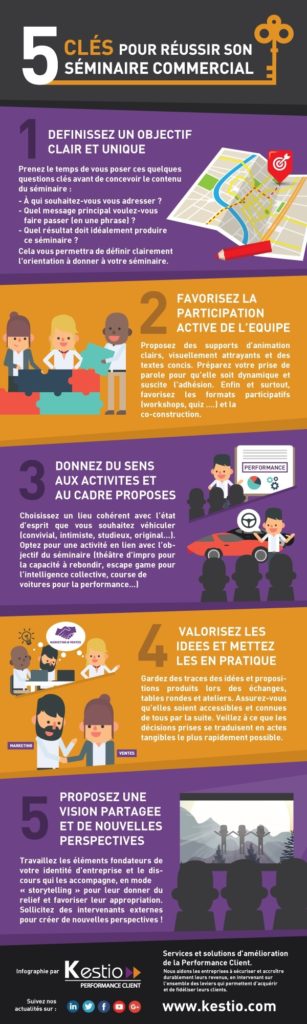
1. Define a clear and unique objective for your corporate seminar
Before diving headfirst into the logistical organization of your company seminar and the production of animation materials, take the time to reflect and clearly define the objective you set for this particular seminar: is it about communicating new strategic directions? Allowing team members to get to know each other to work better together? Undertaking an ambitious shift in the definition of your service offering? Updating the skills of your employees to establish commercial excellence?
Take the time to ask yourself these key questions before designing the content of the seminar: who do you want to address? What main message do you want to convey (in one sentence)? What result should this seminar ideally produce?
2. Encourage Active Team Participation
The annual company seminar is a symbolically strong moment in the life of the team and a unique opportunity to bring all its members together and exchange collectively on key subjects for the company. Nothing is more damaging to the group dynamic than to animate it in the manner of a lecture, with leaders who speak and collaborators who take notes without participating, expressing their opinions or communicating their ideas. More than ever, take care of your communication, and your sales management must think 'collaborative'!
Offer clear, visually appealing presentation materials and concise texts. Prepare your speech if necessary so that it is dynamic and encourages buy-in. Finally, and above all, promote participatory formats (workshops, quizzes, etc.).
3. Give meaning to the activities and framework offered.
Seminars are generally an opportunity to offer team members a moment that is out of the ordinary, to allow them to get to know each other, to relax and create common "good memories". You can also approach these more informal moments of relaxation as an additional opportunity to convey a strong message related to the main objective of your seminar: as Victor Hugo said, "form is content that rises to the surface"! Be aware of the unconscious impact of the chosen location and proposed activities.
Choose a venue that aligns with the mindset you want to convey (convivial, intimate, studious, original, etc.). Opt for an activity related to the seminar's objective (improvisational theater for the ability to adapt, escape game for collective intelligence, etc.).
4. Put into practice the ideas generated during your corporate seminar
The company seminar is often a fairly intense moment in terms of exchanging ideas and producing avenues for reflection and action to redefine your sales strategy. It would be a real shame if the energy and proposals born from this shared team moment were forgotten upon returning to daily life and remained a dead letter! Formalize the fruit of these exchanges, preferably in collaborative mode and on shared media... And above all, translate the proposals validated with the team into concrete actions. If the ideas raised have no concrete impact on the reality back in the office, the teams will not maintain their commitment.
Keep track of product ideas and suggestions during discussions, round tables, and workshops. Ensure they are accessible and known to everyone afterward. Make sure the decisions made translate into tangible actions as quickly as possible.
5. Offer a shared vision and new perspectives.
For team engagement to be real, during the seminar and in the months that follow, it is essential that the content is based on a solid "foundation" and a shared vision: the company's value proposition, strategic vision, customer commitment, company culture and identity, etc. These elements must be known to the team and make sense to everyone in order to generate collective momentum. Also, take advantage of the seminar to call on external speakers (lecturers, trainers, etc.) offering an original approach to develop new skills internally.
Work on the foundational elements of your company identity and the accompanying narrative, using a « storytelling » approach to add depth and encourage ownership. Invite external speakers to create new perspectives!
To go further, download the COMMERCIAL SEMINAR white paper:




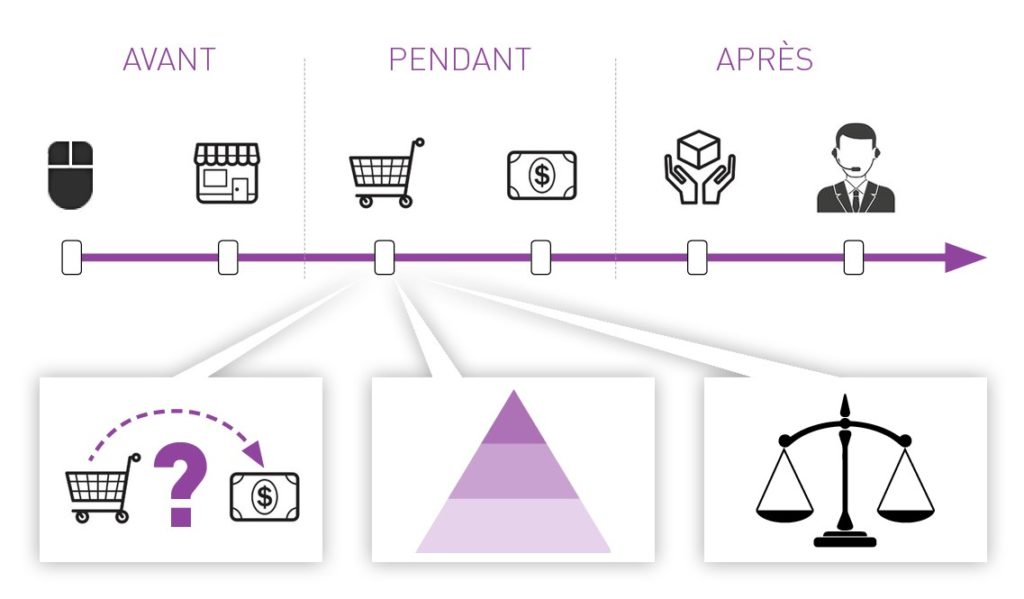

3- L’Expérience client, le meilleur remède à l’ « uberisation » des entreprises !
Beaucoup de grandes entreprises sont aujourd’hui tentées de s’ « auto-uberiser » pour garder la main : lancement de plateformes de location/vente entre particuliers, ouverture de rayons « occasion » au sein de leurs magasins… Une stratégie essentiellement destinée à barrer la route, à court terme, à de nouveaux concurrents potentiels, mais dont le modèle économique doit encore faire ses preuves.
A long terme, la stratégie payante pour les entreprises sera de bien identifier où se situe leur proposition de valeur aux yeux de leurs clients :





What is customer delight?
Meeting customer needs means ensuring their satisfaction. Exceeding their expectations means ensuring they are delighted.
Most often, delighting customers is the result of chance in business. It relies on the personality of an employee who will surprise the customer by exceeding their expectations: providing a service that goes beyond what they are supposed to do, creating a high-quality relationship, having attention, special gestures such as offering a gift, etc.
It is in these situations, experienced as exceptional, that the relationship transcends the transactional level and activates the emotional level.
Enchantment should not be the result of chance but created in a thoughtful, systematic, and reliable way. This means that within the company, it is necessary to identify the activities that will bring enchantment and generate profits.
Emotion as a positive marker of the customer experience
As explicitly described by the "Wow" effect, a positive emotional connection allows a client to remember their experience in the long term, and thus extend their loyalty. Therefore, pay attention – in particular – to the first and last impressions left in the customer journey.
Delight as a driver for recommendation.
The client is increasingly attentive to feedback from their peers and has made it a habit in their selection process to study the opinions and comments of other clients on social networks, forums, and comparison sites. And because a satisfied client does not share their feedback as easily as a dissatisfied client, one of the challenges is to make their clients "very satisfied" and therefore advocates, so that recommendations and positive buzz are generated.
Is delight profitable?
Surprising customers by exceeding their expectations is much more costly for the company than simply meeting their basic needs. It often requires greater availability from employees, for longer and more personalized interactions. However, it is worth evaluating the cost of creating customer delight in relation not only to the gains in customer loyalty but also to the rate of recommendation and positive word-of-mouth generated. Customers advertise for free to prospects, which saves a lot of effort!
Delight as the final stage of the Satisfaction rocket.


On this occasion, Fabien COMTET – President and founder of KESTIO, and Cédric RICHARD – Expert Consultant in Digital will present an expert conference on the theme: Measuring the Quality of Customer Experience: 5 steps to implement this system in your company.
Key takeaways from this conference:
Today, more and more companies are recognizing the critical importance of enhancing Customer Experience to develop strong and lasting relationships with their clients.
However, they ask themselves 3 major questions:
- How to define the steps of the multi-channel customer journey by taking into account the different customer segments and by pertinently identifying the critical moments?
- How to measure the quality of the customer experience delivered by the company throughout the journey?
- How to prioritize improvements to the journey to eliminate disappointing moments and create delight?
Through this conference, KESTIO will provide you with concrete answers and present its « WEX Score© » methodology as applied to its clients (CASTORAMA, GEMALTO).
You will discover in 5 key steps how to implement it within your company.
Practical information:
When and where?
April 14, 15 & 16, 2015, in PARIS – Portes de Versailles – Pavilion 7.1
Hours:
9 AM to 6 PM
Practical access information (train, public transport, car):
– Metro: Line 12 – Porte de Versailles station
– Bus: Lines 39, 80 – Porte de Versailles – Parc des Expositions stop
-Tram: T3 – Porte de Versailles – Parc des Expositions stop