

KESTIO

21%.

Only 21% of marketing leads become customers.*

Because while lead generation and prospecting are not easy, the efforts required to acquire new customers don't stop there!

The various exchanges between your sales representatives and your prospects represent a key moment in your sales process.


Your sales representatives need to convince your prospects to collaborate. If they aren't satisfied, your prospects can decide at any time not to use your services or products!

How to convert your prospects into clients?


Questioning, presenting arguments, power dynamics, etc. Numerous techniques exist to ensure your sales meetings run smoothly and guarantee a better conversion rate!
Discover 3 of them today.

KEY #1: Adapt your sales pitch

The argument is a valuable ally in improving your sales effectiveness. Personalized to the person you are talking to, it helps convince your prospects by activating their emotional trigger.


While this tool can be a relevant technique to help you develop your sales strategy, it can sometimes be difficult to develop an effective argument alone and without any method. 

The CAP method

An effective sales pitch must be able to answer all the questions your prospect asks themselves. Therefore, work on the technical characteristics of your product, its strengths, its weaknesses, its commercial characteristics... This will allow you to put forward the necessary arguments and anticipate your interlocutor's objections or questions.


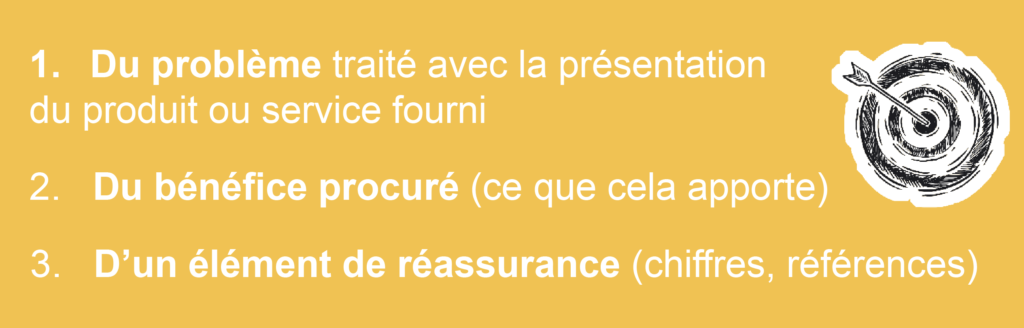
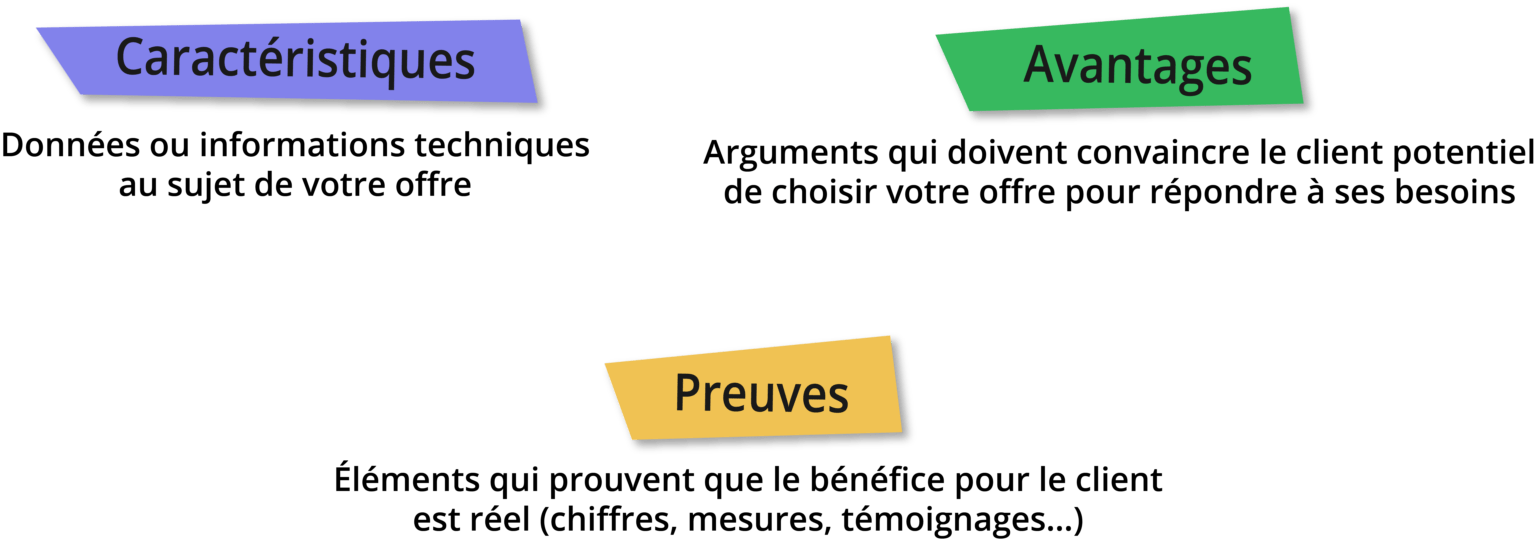
The CAP methodology helps determine the characteristics of an offer to develop effective sales arguments.

It is based on 3 essential aspects:

The SONCAS method

The SONCAS method, theorized by Jean-Denis Larrabet, is based on the psychological aspect of prospects.


This technique presents 6 major motivators to use to encourage your prospect to buy:

Security – Pride – Novelty – Comfort – Money – Friendliness


Do you want to discover the characteristics of each lever and how to exploit them during your commercial exchanges?


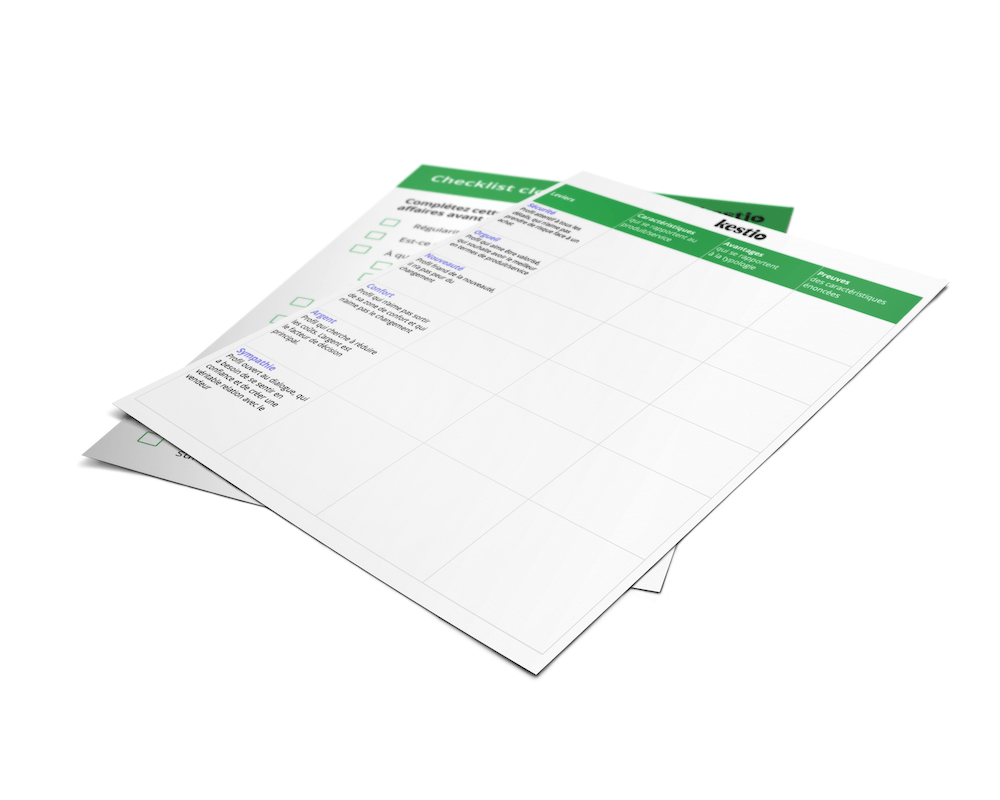
Download our analysis grid combining the Features, Advantages, Proof, and Benefits (FAB) and SONCAS (Security, Pride, Novelty, Comfort, Money, Sympathy) methods to complete during your interactions to identify your contact's profile!

A rock-solid sales pitch thanks to CAP SONCAS!

Far too many salespeople present the same sales pitch to their prospects, and often the result is not very successful.


By combining the two sales techniques CAP (Features, Advantages, Proof) and SONCAS (Security, Pride, Novelty, Comfort, Money, Sympathy), sales teams increase their closing rate by deploying sales arguments tailored to the prospect's profile and their issues!

KEY #2: The art of questioning

While a good salesperson must be able to answer all of their prospect's questions, they must also know how to ask the right questions in order to obtain the maximum amount of information, enabling them to make the most appropriate sales proposal for the needs of their contact!


To master the art of sales questioning, your employees can use the SPIN Selling method.


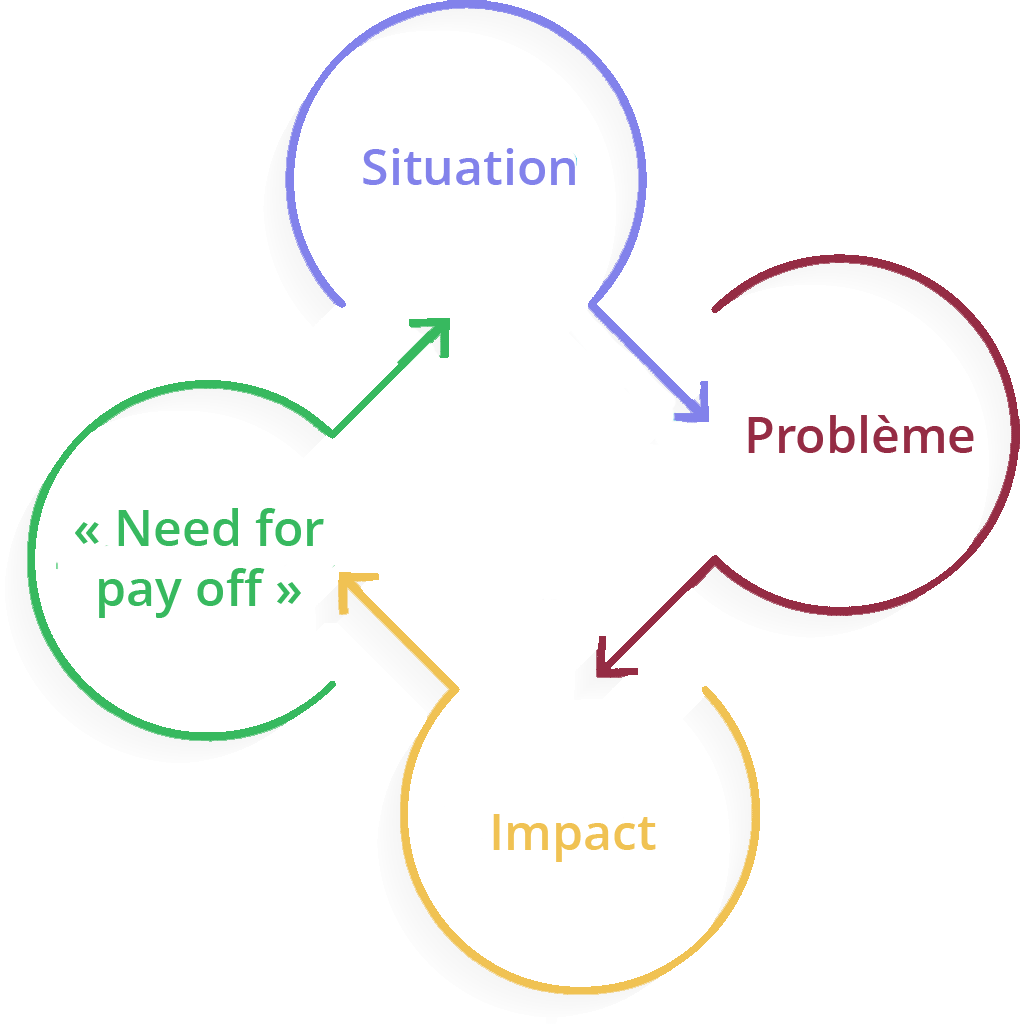
This technique is based on 4 main types of questions that make your prospect aware, by themselves, of their real need to buy (or not) your product or solution.
With this method, the prospect becomes an active participant in their purchase!

The 4 types of SPIN Selling questions:

Ask your prospect about:


    • Their Situation to define the context in which they are placed 
 
    • Their Problems to make them aware of the difficulties they are encountering
 
    • Highlight the impacts of these issues to make him realize the potential consequences if no action is taken.
 
    • Their “Need for Pay off ”, or needs to be met to make them aware of the benefits they can obtain when the problem is resolved. 

Once awareness has been triggered by the right questions asked thanks to SPIN, all that remains for your salesperson to do is highlight the benefits that your offer brings, based on what your client has told you.

Your chances of closing the sale will be significantly increased!


After the theory, are you ready to put it into practice? Discuss with our sales method experts and test the effectiveness of your questioning!

KEY #3: Expert Advice

7 times more expensive!

Acquiring a new customer costs 7 times more than retaining one.*


While acquiring new prospects is necessary for the successful development of your company, customer loyalty should also be a primary focus for you.

Indeed, investing in generating new leads without ensuring that they stay with you once they become customers is like trying to fill a leaky bathtub.
At best, you'll need a continuous supply of new prospects to compensate for the loss of your customers.
At worst, your investments won't be enough to maintain this balance, and your number of customers will fall!

What key elements should you focus on to ensure customer loyalty?

KEY #1 - Listen to Your Customers

But to know if your customers are satisfied (or not) with your services and products, you have to listen to them!
Because the "voice of your customers" is what you have most precious! Their feedback can allow you...


– To improve your customer experience
– To identify problems before they worsen
– To optimize the targeting and content of your marketing and sales strategy
– To evaluate your new ideas before launching them


Therefore, all departments of your company can benefit from customer feedback!
How do you gather their opinions?

Voice of Customer

The "Voice of Customer" refers to a methodology for gathering the needs and opinions of your customers throughout their journey.
The objective of this approach is to easily and regularly collect feedback from your customers in order to initiate optimizations!


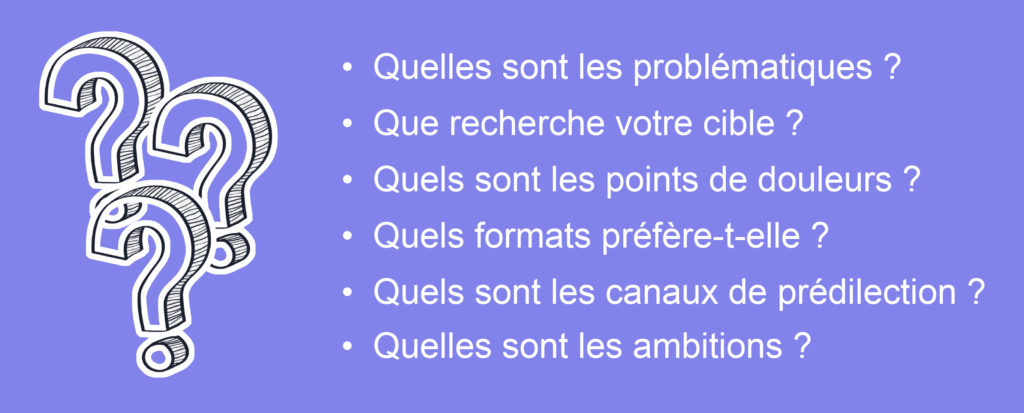
Discover the key questions to ask yourself to initiate a Voice of Customer strategy in your organization:

Want to start this process in your company? We can help! 


At KESTIO, our Customer Success teams conduct customer satisfaction surveys every year using this Voice of Customer methodology.


Result? A customer satisfaction score of 9.34/10 in 2022. 


Speak with a member of our team to begin the initial steps of this process!

KEY #2 - Customer Experience: the little extra that makes all the difference!

Customer Experience is one of the elements that allows you to optimize Customer Satisfaction. Based on perception and feeling, customer experience is more difficult to measure for each customer. To improve it, you must put yourself in the customer's shoes and understand what they are experiencing, or better, directly observe them in a relationship situation with the organization.

 What is the customer journey? 

It is a succession of points of contact with the customer. A point of contact is defined as an interaction between the customer and the company, via a specific channel, whether physical or digital. 


The interaction can be informational or transactional, and triggered either by the company (push) or by the customer (pull). This includes reading an online or magazine advertisement, receiving a promotional email, visiting the company's website, entering a store, calling customer service, receiving a package, receiving an order confirmation email, receiving an invoice, etc. Note: depending on its customer types, the company may offer different customer journeys!

The 3 main phases of the customer journey:

For example, SNCF has worked extensively on Customer Experience in recent years. It has facilitated the customer journey by increasing the number of contact points allowing users to purchase tickets through their preferred channel: the website, the mobile application for smartphone users, the call center, ticket counters for customers who need advice, kiosks at stations, etc. 


At the same time, it also works on emotion and comfort to create preference among its customers: welcome aboard trains, TGV magazines or others in first class, Grands Voyageurs reception areas, etc. So many services that should improve the Customer Experience from a global point of view over the entire journey.

5 tips to improve your customer journey:

KEY #3: Expert Advice

50% of salespeople's time is spent
on clients with no potential.

This figure reflects a real problem of alignment between a company's commercial strategy and the actions of its sales representatives.


How to build a sales action plan adapted to your strategy AND your teams?

KEY #1: Where do we start?

As a leader, director, or manager, you often think you know your company inside out and don't need to take stock to define your future sales action plan. But this is a mistake!


Conducting an "assessment" of your organization is a crucial step to ensure your plan aligns with your company's resources and performance.
We strongly advise completing this phase of introspection before defining the targets, actions, and sales cycle of your plan!


If the inimitable "SWOT" bores you, discover the "SpeedBoat" method!

Using the image of a boat, identify your organization's objective, resources, motivations, and obstacles:

Our advice: carry out this exercise with your teams to develop your collective intelligence and involve your employees!


However, gaining this perspective can be complex for people within the company.
The presence of an external perspective helps to frame this retrospective and reveals new elements of analysis!


That's why at KESTIO, we start our support programs by conducting a diagnostic of your sales organization.
In direct collaboration with you, your KESTIO expert has reviewed your practices through various interviews, questionnaires, and data analyses.


The outcome: identification of your growth opportunities and areas for improvement, and the development of a personalized program to leverage these drivers!

KEY #2: How do we get there?

A 'Business Flow' is a tree structure, usable collectively or individually, allowing you to link and compare the implementation of your actions. In other words, it's the roadmap that will allow you to achieve your goal!

What is it? 


This simple and powerful tool allows you to define your main objective, which will be divided between the development and retention of active customers and the development of new customers.

For active clients, it will be interesting to focus on:


    • Revenue from ongoing projects

    • New projects


For new clients, the "Business Flow" helps establish assumptions about the number of leads from different acquisition channels (to be adapted based on the channels you will use):


    • Incoming leads « online »    

    • Incoming leads from referrers

    • Incoming leads from networks

    •  Recommendations of entrants

    •  Prospecting campaigns for incoming leads

Why use this tool?

KEY #3: Expert advice

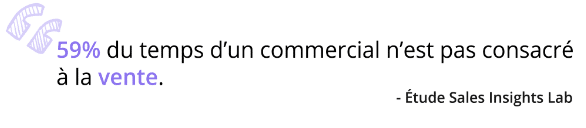
59% of a salesperson's time is not spent on selling*.


Information gathering on prospects, administrative tasks, sales tracking


So, how can you save your sales representatives time and optimize their performance?

*Sales Insights Lab Study

KEY #1: Equip yourself with the right tools

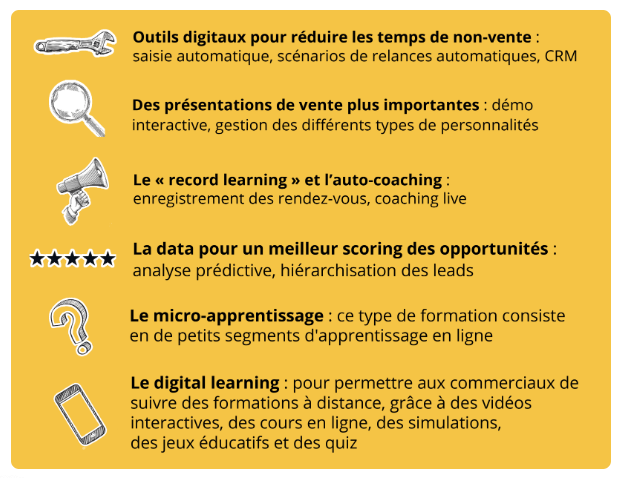
These are all steps that a salesperson must master! But they are not alone in this process... Thanks to the advent of marketing automation and Sales Enablement, many solutions have emerged to make life easier for your sales teams!


These different tools mainly function during the lead generation and prospecting phase, a step that does not represent the real added value of your sales representatives.


Chez Kestio, nos équipes utilisent au quotidien différents outils d’automatisation tels que :


  • Sparklane: Ultra-targeted lead generation!
  • Dataananas: sending personalized emails.
  • Ringover: Optimize your sales team's prospecting sessions.


With over 2,000 marketing automation solutions available in Europe in 2022, you're sure to find a tool that addresses your specific challenges!


But to help you find the rare gem, we have prepared a guide presenting 14 solutions, which can be downloaded for free by clicking here:

KEY #2: Use a CRM

Implementing a CRM (Customer Relation Management) strategy is a valuable asset for companies. 


Between lead generation, return on investment optimization and increased turnover... It offers numerous opportunities that make it an essential element to ensure the good development of companies and best support for sales teams

Improve your sales performance

A CRM strategy can help significantly improve the productivity of your sales representatives.


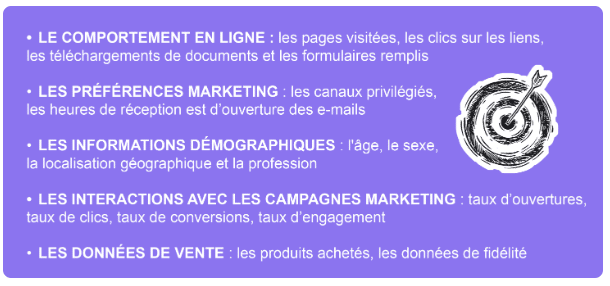
This is possible, in particular, through the use of software such as Salesforce, Microsoft Dynamics CRM, or Zoho CRM, etc. These provide, for example, the ability to work offline or via a mobile application.


The fully customizable nature of these CRM tools allows sales teams to save time by automating certain processes, such as data entry, allowing them to focus on their expertise: SALES!


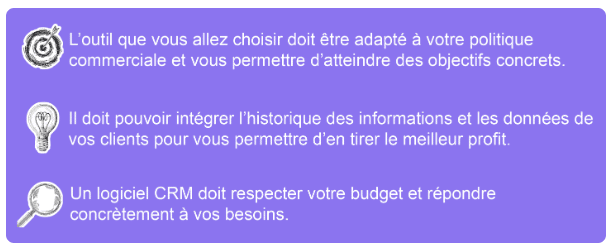
How to choose your CRM software?

By taking these three criteria into account, you will be able to choose the best tool for your customer portfolio management strategy. 


Et si cela reste toujours flou pour vous, sachez que Kestio peut vous aider à choisir la solution la plus pertinente pour vous.

KEY #3: Expert advice

Et vous, êtes-vous « accro » à vos meilleurs commerciaux ?

De quoi parle-t-on quand on évoque la menace d’une « trop forte dépendance à ses meilleurs commerciaux » ?

Il ne s’agit pas ici d’addiction (malgré ce titre de paragraphe un peu provocateur !) mais bien de la notion de dépendance au sens premier, définie comme « un rapport de liaison étroite entre quelque chose et ce qui le conditionne ». 

En d’autres termes :

Vous pouvez (et devez !) vous considérer comme dépendant de vos meilleurs commerciaux si un faible nombre de membres de votre équipe commerciale représente à lui seul une part vitale de votre chiffre d’affaire.

La question à vous poser est donc : y a-t-il parmi mes commerciaux un ou plusieurs membres dont le départ ou l’invalidité mettrait directement et dangereusement à mal la rentabilité de mon entreprise ?

Si la réponse est oui, vous avez tout intérêt à faire évoluer la situation (et à lire la suite de cet article !) pour rester maître de votre réussite commerciale !


Les dangers de la dépendance envers quelques commerciaux

Dans la pratique, il est courant d’observer des écarts de résultat entre les membres d’une équipe commerciale.

Lorsqu’on évalue la performance des commerciaux (uniquement) sur la base du chiffre d’affaire généré, voici le type de répartition que l’on observe le plus souvent :

    •  5 à 10 % de commerciaux « sur-performants », dont les résultats se situent très nettement au-dessus de la moyenne de l’équipe
    •  80 à 90 % de commerciaux « dans la moyenne » des résultats attendus et de ceux réalisés par leurs collègues
    •  5 à 10 % de commerciaux en « sous-performance » par rapport aux autres (à l’instant T ou plus durablement)

La situation commence à s’avérer inquiétante, lorsque la catégorie des « sur-performers » porte à elle seule 30 à 40% de votre chiffre d’affaires.


Vous entrez alors en zone de risques :

    •  Risque économique, d’abord : en cas de défaillance de leur part, la pérennité de votre entreprise peut être dangereusement mise à mal.
    •  Risque RH, ensuite : crainte de perdre l’un de ces précieux « piliers », difficulté à retrouver quelqu’un « d’aussi bon » en cas de départ, et sentiment d’inégalité (concurrence, jalousies…) au sein de l’équipe.


Alors, comment éviter d’aboutir à ce type de situation, ou en sortir si vous vous y trouvez actuellement ?


Discover KESTIO webinars, where we discuss

All topics related to sales performance with our experts: 

Fabien Comtet, CEO

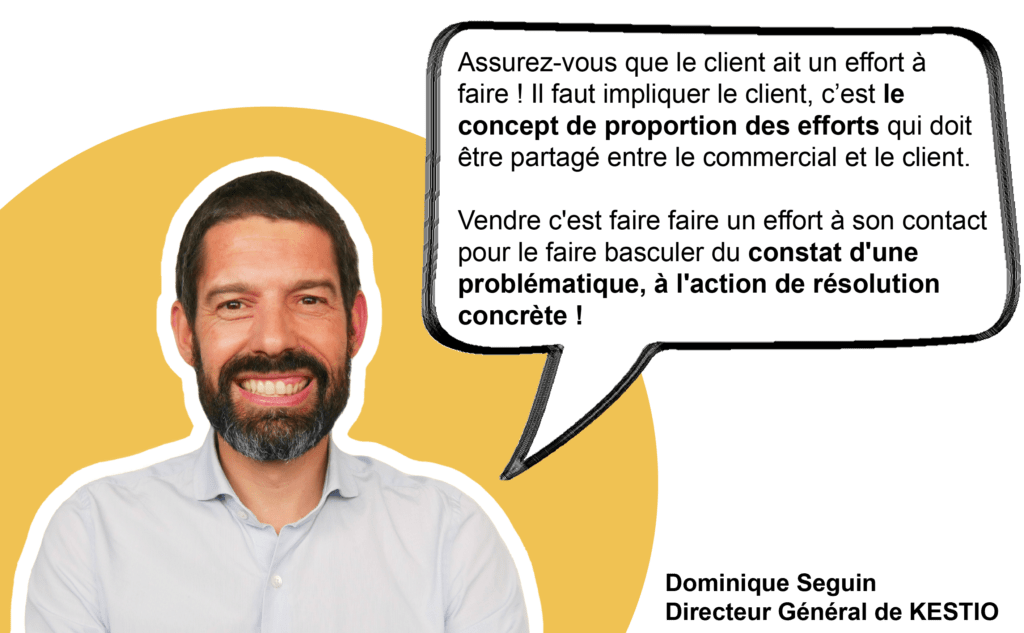
Dominique Seguin, CEO

Nicolas Boissard, Marketing Director


Talents individuels et efficacité collective


          1. DÉFINIR « DES POSTES » AU SEIN DE L’ÉQUIPE COMMERCIALE

Vous pensez que tous vos commerciaux ne peuvent pas être des performers, et vous vous êtes résignés à cette idée ?

Et si ce n’était en définitive qu’une question de point de vue ?

C’est vrai, vos commerciaux ne performent pas tous, tout le temps, sur tous les plans et dans tous les contextes, mais en réalité ce sont TOUS de potentiels performers :  dans certains domaines et sous certaines conditions… qu’il faudra découvrir pour permettre à leurs points forts de s’exprimer et de se développer.

Définissez un process commercial bien segmenté dont l’efficacité ne reposera pas sur la maîtrise de l’ensemble des étapes par quelques individus particulièrement talentueux.

Concentrez-vous plutôt sur la maîtrise d’une à deux étapes bien définies par chacun d’entre eux.

Vous pourrez alors les affecter prioritairement – voire exclusivement – aux phases de votre process de vente sur lesquelles ils excellent : nourrir le fichier prospects, générer des leads, qualifier les opportunités, construire les propositions commerciales…

En bref, et pour employer une métaphore footbalistique : pour faire gagner l’équipe, mieux vaut distinguer les défenseurs des attaquants, et éviter de cantonner votre avant-centre dans les cages en lui demandant d’arrêter les buts adverses (il risque d’en souffrir… et le résultat du match, de s’en ressentir) !


          2. JOUER COLLECTIF

Cette répartition claire et précise des rôles individuels permet in fine de viser la plus grande efficacité collective.

Le découpage des tâches et l’affectation des rôles en fonction des talents et affinités vous assurent un haut niveau d’efficience à chaque étape et le meilleur résultat global au final, là où auparavant, chaque commercial devait maîtriser l’ensemble de la chaîne et se trouvait fortement pénalisé par les étapes pour lesquelles il avait moins d’aisance.

Pour que cette stratégie porte ses fruits, cependant, l’ensemble doit fonctionner de façon fluide et cohérente, ce qui suppose de travailler sur l’esprit d’équipe !

Diffusez une culture de la réussite collective en favorisant la confiance, le partage de bonnes pratiques, le « mentorat » entre collaborateurs, la solidarité dans l’action, et la communication interne.

Évitez de survaloriser un membre de l’équipe pour ses résultat individuels en oubliant les autres : non seulement cela pourrait nuire à l’équilibre général de l’équipe (en favorisant les jalousies et tensions), mais cela pourrait aussi générer d’autres effets pervers, comme l’amener à se recentrer son sur son intérêt individuel, ou le rendre plus « vulnérable » aux difficultés futures.

Le meilleur d’un jour n’est pas forcément celui du lendemain, et il est préférable de valoriser les réussites, les initiatives positives et les efforts (individuels et collectifs) que les personnes.


          3. FAIRE EN SORTE QUE CHACUN SE SENTE UN CHAMPION

L’intérêt d’une telle organisation caractérisée par des rôles individuels clairs au sein d’une tactique de jeu collective efficace, quand elle « fonctionne à plein », c’est de permettre à chacun de se sentir un champion.

Cela suppose d’adopter un nouveau point de vue sur la notion même de « performance » et de changer de perspective sur ce qu’elle recouvre : si l’on considère que le chiffre d’affaire directement généré n’est pas la seule façon de créer de la valeur pour l’entreprise (alimenter un fichier de prospects qualifiés est essentiel à la réussite des étapes suivantes du process de vente, et ce fichier en tant que tel représente un véritable capital pour l’entreprise, par exemple), alors le chiffre de vente n’est plus le seul axe de performance à évaluer. Et ceux qui produisent d’autres formes de valeur que celle-ci peuvent également prendre place au « tableau d’honneur » !

Cela amène en définitive les managers commerciaux à remplacer la survalorisation des « Performers » individuels par la recherche des profils que l’on appelle les « A Players »

Ces derniers sont caractérisés par leur capacité à :

    •      Percevoir les opportunités et les saisir
    •      Accepter de se remettre en question
    •      Faire preuve d’humilité et avoir conscience de l’aspect éphémère des succès
    •      Trouver en eux-mêmes leurs ressources et s’auto-motiver
    •      Transmettre aux autres, partager et « jouer collectif »


Bref, là où auparavant vous étiez focalisé sur les chiffres réalisés par vos commerciaux, accordez aujourd’hui une grande partie de votre attention à leur état d’esprit.

Ainsi, la charge globale sera plus équitablement répartie entre tous les membres de l’équipage, et le navire sera beaucoup moins soumis aux aléas individuels !


To discover more about using specialized and adapted tools to adopt, check out this webinar on optimizing the performance of your commercial asset:

And the results speak for themselves: in just a few months, we managed to save our sales representatives 50% of their working time! They now dedicate this time exclusively to selling, finally freed from the less interesting tasks. This provides a triple benefit for the company: optimizing salary costs, increasing sales, and improving the motivation of sales representatives. Would you also like to optimize your sales representatives' working time?


Here are 3 key steps on how to save them valuable time, for both them and you.


STEP 1: Specify your objectives

First and foremost, it's important to specify the objective you wish to achieve by optimizing your sales team's working time. This will directly impact the choice of levers to activate subsequently: the stage of the sales cycle concerned, the nature of the tasks to be "lightened", the new processing method adopted for these tasks, etc.

Generally, optimizing the working time of sales representatives falls under one of these 3 objectives:


« DO AS MUCH WITH LESS »:

Are you, for example, forced to manage a constant workload with fewer salespeople, following the unexpected departure of a member of your sales team.

The other team members must then divide the absent salesperson's client portfolio and the corresponding workload among themselves. To prevent them from putting these new accounts on the back burner or neglecting their current clients due to lack of time, it is necessary to relieve them of some of their daily tasks.


« DO MORE WITH AS MUCH »:

Do you want your sales representatives to be able to dedicate time to a new strategic priority, alongside their usual activities?

For example, your company is launching a brand new offer that you are betting heavily on. You want your sales representatives to "go all out" on this offer, and on the targets it addresses. Since their other activities have not disappeared, they will have to find a way to free up time in their usual schedule…


« DO BETTER WITH AS MUCH »:

Have you identified that you regularly lose opportunities due to the disorganization of your sales representatives, and you want them to remain as focused as possible on their core business and your customers.

Have you noticed, for example, that your salespeople spend up to 50% of their time on tasks other than selling (searching for data to enrich their contact files, following up with prospects after a missed appointment, sending follow-up emails, updating the CRM, etc.)?

Not only do these tasks take up a lot of their time (time they don't spend selling), but this time is also costly for you, even though many of these tasks don't require the skills of a salesperson!

Once your main objective is clarified, it's time to move on to step two and identify the priority areas for optimization that will allow you to achieve it. 


STEP 2: Identify areas for optimization

To identify the levers for optimizing your salespeople's working time with the greatest impact, a preliminary inventory of their daily tasks is essential.

Several methods can be used to carry out this inventory:

  • Start from a typical day in the life of a salesperson and note one by one all the tasks performed during the day.
  • Start from the key stages of the sales cycle (lead generation, prospecting, discovery, closing...) and list all the operations attached to them.

Once your list (as exhaustive as possible) is established, you can assess the potential for optimization of each activity.

This evaluation is based on 4 criteria:

  •   The average task duration (short / medium / high)
  •   Usual frequency (daily / weekly / monthly)
  •   Estimated complexity (low / medium / high)
  •   The sales representative's "added value" in their performance (low / medium / high)

For example, you could assign a degree of "potential for optimization" from 1 to 3 to the task, based on each of these criteria, to then obtain an overall score, as in the example shown below: 


potential_optimization_sales_task


The longer and more frequent it is, the more beneficial it is to optimize the time spent on a task, as the impact of this optimization on the overall working time of your sales representatives will be greater.

But don't stop at these two criteria alone: the degree of complexity of a task and the added value brought by the salesperson in its realization are also to be taken into account. The higher these two values are, in fact, the more difficult the task will be to delegate or automate. And therefore, the less you should consider it as a priority in your optimization process.

In our example, three tasks stand out as having a high potential for optimization: qualifying the prospect file, making an appointment with a prospect after a missed first appointment, and sending follow-up emails after an appointment.

Once your priority areas for optimization are defined, all that remains is to define how you can reduce the time spent by sales representatives on each of these tasks. This is the purpose of step 3.


STEP 3: Optimize the sales process

Regardless of the areas for improvement identified, you generally have several options available to optimize the time your sales representatives spend on these tasks.

They mainly fall into 3 categories:


INTERNAL REORGANIZATION:

It involves redistributing certain tasks internally – usually according to a logic of "specialization" – to maximize efficiency.

A purely administrative task, such as entering sales representatives' travel expenses, for example, can be reassigned to the administrative team. Or, entering customer information into the CRM can be entrusted to the sales administration team.


OUTSOURCING:

You can also choose to outsource certain tasks (preferably the most time-consuming ones and those for which salespeople bring the least added value).

This is the case with qualifying contact files, for example. Indeed, many companies specialize in collecting and enriching qualified data to populate prospecting files.


AUTOMATION:

Finally, we can also automate certain tasks, or even certain stages of the sales process. When possible, this option is often the most effective and the least expensive, since it no longer requires any human resources once it is set up.

Various tools can be used for this purpose, depending on the task to be automated: tools linked to the sales representatives' calendars to facilitate appointment scheduling, to their mailbox to set up automated workflows, to their accounts on social networks to automate the publication of posts on LinkedIn / Facebook or Twitter, for example.

However, CRM remains the leader in this area, as it generally combines all these possibilities and options into a single tool, allowing for centralized monitoring of these different actions.


In our case, it is a mix of these three options (depending on the tasks to be optimized) that has allowed us to achieve the enviable result of 50% of our sales representatives' working time being re-allocated to sales!

You will find more details on our internal optimization approach in the article "Optimize your sales process: stop paying your sales representatives not to sell!" published previously on this blog. You can draw inspiration from it to save your sales representatives time and optimize your sales efficiency. So, when are you going to start?


Is optimization your watchword? Then discover in this webinar how to maximize the performance of your sales representatives by saving them 50% of their time:


Faced with this situation, some employers end up resigning themselves and abandoning their recruitment project or choosing profiles that do not fully meet their expectations. However, alternatives to recruiting a new salesperson exist, and they may even prove more profitable for your company. Here are some of them.

1. Improve the sales efficiency of your current team

Did you know that the average conversion rate for sales representatives in the B2B sector is around 10%? This means that 90% of the working time of sales representatives is spent on deals that are destined to be lost!

This is enough to make business leaders feel dizzy... The good news is that it is entirely possible to significantly improve this result, as we prove daily in the field.

Aiming for an average success rate of 30% on commercial proposals is entirely realistic, even in B2B, and it's a desirable minimum.

If your sales representatives are not at this level today, there's no need to recruit new ones to boost your growth: you already have considerable room for improvement with the same human resources (and therefore salary costs)!

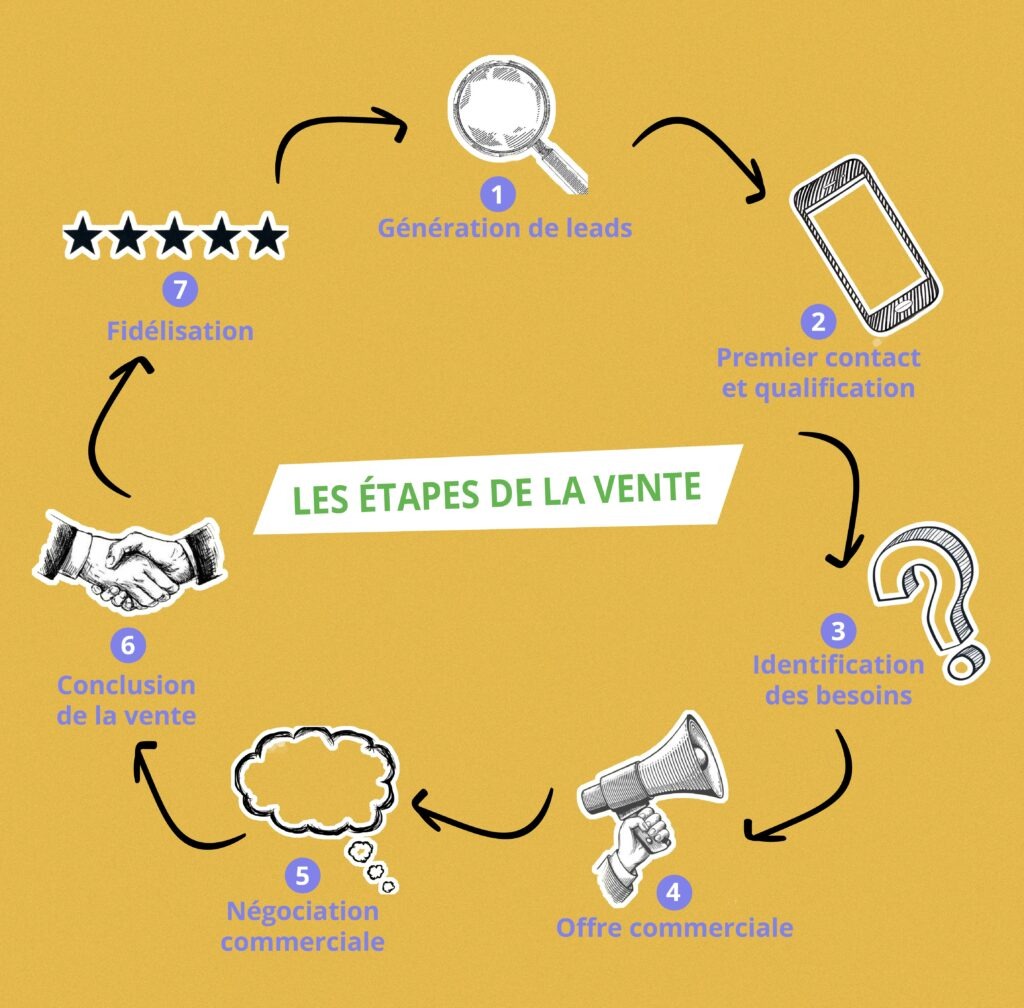
We generally manage to significantly improve the success rates of our clients by supporting their sales teams in their progress, particularly in 2 areas: the quality of targeting and the quality of sales actions carried out with their prospects.

The advantage of such an approach is that it not only increases your turnover, but also, and more importantly, optimizes your profitability, which a new hire would not necessarily have achieved.

2. Opting for a more segmented sales organization.

Here's what we most often observe with our clients regarding sales organization: the salesperson is multi-tasking and handles the entire sales chain, from lead generation to closing, including appointment setting, needs analysis, commercial proposal creation, and follow-ups.

This organization presents several disadvantages:

  • On the one hand, versatility can lead to a certain 'scattering' between the various tasks and therefore a loss of efficiency.
  • Furthermore, it is rare to find sales professionals who are proficient in all these tasks, which complicates the search for the ideal candidate.
  • Finally, not all of these tasks offer the same level of interest to an "experienced" salesperson, which can encourage talent turnover.

Formalizing and segmenting the sales process by breaking it down into different phases, then distributing these phases among several people according to their skills and inclinations, is often much more effective.

This generally leads to a significant productivity gain, as each person is focused on a single type of task, gradually gaining experience, speed, and efficiency.

We generally advise breaking down the sales process into at least four phases (identifying prospects, making appointments, conducting interviews and preparing the sales proposal, for example), and then assigning each of these phases to a team member, without exceeding two phases per person.

This type of organization can, in some cases, "spare" you an additional recruitment, thanks to the productivity gains achieved. Failing that, and at a minimum, it simplifies your recruitment process by narrowing the range of skills required for each position.


Discover KESTIO webinars, where we discuss

All topics related to sales performance with our experts:

Fabien Comtet, CEO

Dominique Seguin, CEO

Nicolas Boissard, Marketing Director


Access our webinars


3. Use substitute or supplementary sales forces.

Another alternative to hiring versatile salaried sales representatives is to use an outsourced sales force: a specialized company (in telephone prospecting, for example), or a freelance business developer.

Using external sales forces has several advantages: with a lower cost price than a permanent recruitment, it can be stopped more simply and is generally accompanied by a commitment to results.

It also offers more flexibility: external sales representatives can intervene permanently or occasionally, on a part-time basis, provide reinforcement during a period of high workload, or be dedicated to a particular target...

Compared to hiring a permanent employee, it represents a financial saving and a controlled risk.

Another advantage of this approach is that the outsourced tasks are generally the least complex (generating contact files, telephone prospecting, etc.), which allows the permanent sales team to concentrate on tasks with 'higher added value'.

However, to be effective, the use of an outsourced sales force must:

  • Focus on a well-defined scope and follow an established, internally controlled process
  • Ensure regular monitoring of key performance indicators via a CRM or ad hoc dashboards.
  • Rely on sales support tools designed and validated internally: sales book, standard emails, references and arguments per target, etc.)

This implies having well-documented your sales cycle, but also demonstrating a certain agility to ensure a smooth handover between external and internal teams.

At one of our clients, this strategy made it possible to optimally manage an activity marked by strong seasonality, by reducing the number of permanent recruitments initially planned from 5 to 2, to achieve a higher objective!

4. Retain your current sales representatives!

The three alternative solutions we have just presented aim to address the business development situations that motivate a large proportion of sales recruitment projects. Another part of these recruitment projects is, however, linked to the sometimes significant turnover observed in these positions.

Since the demand from companies for experienced sales profiles is significantly higher than the supply, market conditions favor talent volatility: 38% of salespeople have received job offers without actively searching, according to a study on sales employment conducted by Stepstone.3

To retain your sales representatives in general, and the best among them in particular, it is therefore essential to value the sales function as such.

Compensation is obviously an important motivator, but competition is fierce in this area as well: salespeople's salaries are 57% higher than the average salary in France, according to a study by the Uptoo firm4

To stand out, ensure that your sales representatives' daily work is interesting and stimulating: high-quality working environment and conditions, effective tools, a clear and relevant sales action plan, a management style that promotes personal growth, internal opportunities for advancement, recognition of initiatives and successes... All these elements matter to your employees and encourage their long-term commitment!

By working on all or part of these 4 areas, you can significantly reduce the number of sales recruitments to be carried out for your company, while effectively meeting your growth and sales development objectives.

To stay competitive and maximize your chances of converting leads into future customers, it is important to optimize the performance of your commercial assets. Find out how by watching this webinar:

1: According to the 2018 talent shortage survey conducted by ManPowerGroup: http://www.manpowergroup.fr/penurie-talents-recrutement-2018/

2: Source ParisJob: https://www.parisjob.com/actualites/commercial-chiffres-paris.htmls://www.parisjob.com/actualites/commercial-chiffres-paris.html

3 : Quoted by France Info : https://www.francetvinfo.fr/replay-radio/c-est-mon-boulot/la-grande-penurie-de-commerciaux_1766077.html

Alors ? Un danger pour la performance des commerciaux à combattre à tous prix les routines ?

Pas sûr ! Si elles cachent parfois un manque de motivation, une perte de confiance ou encore un déficit de compétences, certaines routines servent aussi à structurer et baliser l’activité commerciale. Elles deviennent les repères fixes d’une activité par nature mobile, des passages obligés qu’il faut savoir identifier pour rester maître de son temps.


On distingue généralement deux types de routines. Il y a d’abord celles à combattre, celles qui enferment les commerciaux dans des logiques contre productives, qui les freinent dans leurs actions commerciales. Et il y a surtout celles à entretenir, qui doivent devenir des marqueurs, celles qui conduisent à une meilleure efficience dans la relation client. L’enjeu pour le manager ? Les identifier et en faire un outil de management !

Sachez repérer les routines « négatives » !

Parmi les routines contre-productives pour la performance des commerciaux on trouvera bien évidemment les petits rites que chacun aime souvent suivre, au début ou pendant la journée : prendre un café, vérifier ses mails, surfer sur ses sites favoris… Ceux-ci sont récurrents, mais représentent un temps qui ne pénalise pas réellement fortement l’activité. Il faut plutôt les voir comme des sas qui permettent de passer d’un environnement personnel à un environnement professionnel.


En revanche d’autres habitudes peuvent être prises et devenir clairement contre-productives. Comme par exemple celle qui consiste à rester dans un emploi du temps subi sur les tâches de back office. Vous l’avez déjà vécu ?

Un commercial qui va s’enfermer dans une surcharge de devis à faire, qui va accepter systématiquement tous ses mails entrants et les gérer dans la foulée, qui va solliciter son manager, ses collègues à tout bout de champs… Résultat ?

Le job essentiel n’est pas fait : les routines surinvestissent le temps disponible et il ne reste rien pour exploiter les opportunités commerciales, chercher des prospects, vendre.


Autre exemple avec le téléphone…

Le commercial est un routinier de l’échange téléphonique qui devient un réflexe pour faire avancer ses dossiers et génère de nombreuses routines négatives liées aux modes de communication. Qui n’a pas vu un commercial rester dans une logique purement réactive, c’est-à-dire attendre les appels entrant pour proposer un rendez-vous ou une action ?

Le commercial s’enferme alors dans une attitude qui l’empêche de conduire, de piloter la relation dans l’intérêt du client et l’évolution favorable de leur business. Il n’optimise alors ni son temps ni sa performance, et il augmente de plus le risque de voir la relation se déliter. Les routines téléphoniques l’empêchent de prendre du recul sur son action. Pire ! Elles lui donnent l’illusion qu’il est totalement actif et contributeur alors qu’il n’en est rien.

Encouragez les routines efficientes !

Il existe heureusement des routines bénéfiques que les commerciaux peuvent et même doivent intégrer dans leur activité : consulter le CRM quotidiennement, suivre ses indicateurs d’activité, s’informer sur l’actualité des clients…

Le commercial efficace sait mettre en place ces routines. Non pas pour combler des trous d’activité, mais au contraire pour s’assurer de ne rien rater et plus encore garder le lead sur la conduite des relations et la bonne fin de ses opportunités. Répétitif comme le protocole avant le décollage d’un avion ou l’échauffement du sportif avant sa compétition, il garantit la performance.


D’autres routines positives peuvent être activées dans le cas de dossiers difficiles par exemple. Elles permettent de ne pas fuir le problème, de rester dans une dynamique positive, efficiente.

Qu’il s’agisse de solliciter un expert interne ou son manager, consulter l’intranet, peu importe du moment qu’une routine réflexe existe pour franchir la difficulté. Qu’elle ne soit pas en place, et c’est la porte ouverte aux comportements contre-productifs !


Développer ces routines, c’est capitaliser sur la connaissance, planifier et optimiser son temps, s’appuyer sur des repères simples et fiables pour maîtriser sa performance.

Et c’est pourquoi un coach doit intervenir pour s’assurer que ces routines structurantes sont bien connues des équipes et effectivement en place.


On peut considérer que chacun est potentiellement sous l’influence de routines positives et négatives. L’enjeu pour le manager c’est donc de pouvoir les identifier afin d’agir de la bonne manière et au bon endroit.


Les routines contre-productives donneront l’occasion d’une action managériale riche, avec d’abord un dialogue pour la prise de conscience avant de voir ensuite comment les abandonner ou les remplacer par de meilleures.

Par exemple habituer son commercial à se poser les bonnes questions avant d’agir : quelle est la meilleure action à mener maintenant ? Combien de temps y consacrer et de quelle manière ?


Quant aux habitudes positives elles permettent de poser avec le commercial les éléments de sa conduite autonome du portefeuille et de son emploi du temps, d’aller vers une attitude et des pratiques vertueuses. Le manager peut ainsi créer avec son équipe des points de convergence, des repères routiniers et partagés qui créent des référents communs pour être encore plus efficaces, individuellement et collectivement.


C’est un axe de travail fort pour le manager et son équipe. Une manière positive de se retrouver et de progresser. Faire sortir ses collaborateurs de leurs routines solitaires, c’est aussi créer une dynamique de pratiques communes et alimenter la montée en compétences.


L’accompagnement collaboratif KestioLive permet au manager de travailler efficacement dans cette direction. Aider le manager à se poser la question de sa connaissance réelle des routines de son équipe à un niveau collectif et individuel. Trouver comment identifier et casser les routines négatives sur la durée et faciliter la prise de conscience de leur impact sur les résultats ; mettre en évidence les routines positives, en favoriser le partage et l’appropriation par chacun au bénéfice de la performance collective.


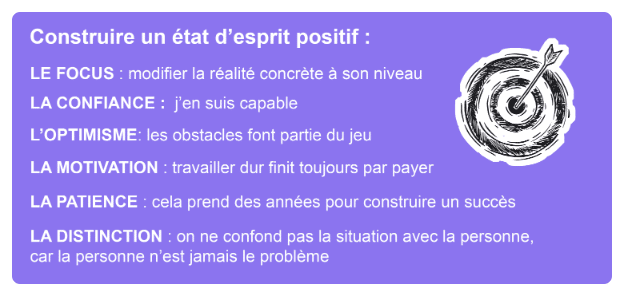
Saviez-vous que 95% de votre réussite est liée à votre état d’esprit? Afin d’apprendre à gérer sa charge emotionnelle plus efficacement, découvrez la méthode de la Triade dans ce webinar : Comment gérer sa charge émotionnelle avec efficacité ? 

How to develop a multi-channel approach while strengthening your brand?

 The omnichannel customer experience must reflect the brand's identity.

A real challenge, at a time when customer behaviors are evolving and becoming more complex with the advent of the omnichannel customer journey

This trend compels companies – Customer Relations and/or Marketing departments – to precisely define the desired customer experience in line with the identity and values of their brand.


Today, at each stage of their customers' journey, companies must implement everything that will create a successful customer experience to maximize the chances of building loyalty.


Faced with all the parameters on which companies must act to ensure a high qualitative level for this customer experience, it is sometimes complex to prioritize efforts. The equation is all the more complicated since the advent of digital technology and the generalization of the multi-channel customer journey, which multiplies the points of contact and the actions to be put in place... We are now faced with truly cumbersome decision-making matrices.


Decision-makers are then torn between meeting the fundamental needs of everyone and offering a personalized experience with a few priority segments. How to choose? What criteria should be considered?

Ensure consistency across all your action plans, broken down by target or channel

For KESTIO, the answer to this dilemma lies in the brand, its promise, and its values.


By integrating brand-specific elements into the customer experience, you move beyond basic needs and make the customer experience unique and attributable to that brand.

Thus, in the same way that a customer recognizes a product or service from a brand to which they are loyal, they will recognize the experience they will have with it! The brand: the foundation of a strong and differentiating customer experience.


That's why, at KESTIO, we support companies that develop a strong customer approach to help them align: Customer Journey, Customer Relationship, and Customer Experience.

 Through the definition of identity markers, we deploy a methodology that brings a strong coherence to the experienced experience, regardless of the complexity of the journeys, channels, or segmentation.


When Marketing and/or Customer Relations Departments seek our expertise on this subject, we assist companies in defining and deploying their brand's Relational Identity.


If for many years, brands have understood the need to guarantee the consistency of the signs emitted in communication through a graphic charter, they now want to go further, and guarantee the consistency of the signs emitted through an identity charter of the customer experience.


This work not only strengthens customer loyalty but also enhances the BRAND, an intangible asset that is the foundation of value creation in the company.

Would you like to know more, benefit from feedback on this subject? Leave us your contact details, we will be happy to answer your questions.